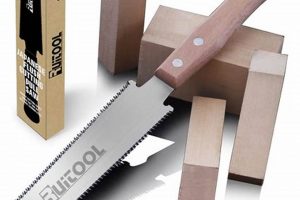
This specialized area encompasses the selection, application, and maintenance of specific cutting tools originating from Japan within the broader field of creating objects from wood. These tools, characterized by their thin blades and pulling action, enable precise and controlled cuts, differing significantly from European-style push saws. For example, constructing intricate joinery, such as dovetails in drawer making, often relies on the unique capabilities of these instruments.
The utilization of these tools offers several advantages, including cleaner cuts, reduced material waste, and improved control, especially beneficial for intricate projects. Historically, the design evolved to suit the specific characteristics of Japanese wood and construction techniques, emphasizing efficiency and precision. The resulting quality and efficiency gained from these methods continue to make them valued among woodworkers.
Understanding the nuances of tooth geometry, blade hardness, and handle design is paramount for successful application. Furthermore, mastering sharpening techniques ensures peak performance and longevity. The subsequent sections will delve into specific types, optimal usage scenarios, and maintenance protocols for these specialized implements.
Tips for Optimal Results
Achieving precision and efficiency requires a strategic approach, respecting both the tool and the material.
Tip 1: Select the Appropriate Tool: Different tasks require different saw types. For example, a Ryoba saw, with both rip and crosscut teeth, offers versatility, while a Kataba saw, with its stiff spine, is suitable for precise cuts.
Tip 2: Employ the Pull Stroke: The inherent design of these tools relies on the pull stroke. This method minimizes blade buckling and allows for thinner, cleaner cuts. Initiate the cut gently, using the back of the saw to create a starting kerf.
Tip 3: Maintain Consistent Angle: Maintaining a consistent cutting angle is crucial for straight, accurate cuts. Visual alignment with the cut line throughout the stroke is paramount.
Tip 4: Avoid Excessive Pressure: The saw’s sharpness and design eliminate the need for excessive downward pressure. Over-forcing can lead to blade binding, inaccurate cuts, and potential damage to the tool or workpiece.
Tip 5: Sharpen Regularly: Consistent sharpness is essential. Dull blades require more force, leading to less control and increased risk of splintering. File teeth based on saw type and use.
Tip 6: Protect the Blade: Store saws in a manner that prevents contact with other tools or surfaces. Blade guards or dedicated storage racks are recommended to avoid accidental damage.
Tip 7: Kerf Knowledge: Consider the kerf of the blade. A thin kerf yields less waste material. Remember that the resultant groove width must be part of the design consideration.
Implementing these suggestions maximizes performance and ensures quality results. These techniques offer significant benefit to those who craft with wood.
With these techniques in mind, continued learning in these tools is beneficial.
1. Blade Geometry

The design of cutting teeth represents a critical element, influencing the efficiency and precision achievable when crafting wood. Tooth shape, set, and rake angle work in concert to determine the tool’s cutting characteristics. Rake angle affects the aggressiveness of the cut; a steeper angle excels in ripping along the grain, whereas a shallower angle is suitable for crosscutting. The set, or offset of the teeth, creates a wider kerf, preventing binding and enabling smoother operation. The absence of or reduction in set in some designs minimizes material waste, a desirable trait for conservation and high-value projects. Understanding these variations provides the woodworker with the ability to match tools appropriately with the material and task at hand. For example, working with hardwoods benefits from a blade with a greater set to prevent binding, while a thin, finely toothed blade excels when creating delicate joinery in softwoods.
The relationship between tooth design and intended wood grain direction has a direct impact on cut quality. Ripping blades typically feature larger teeth with a more aggressive rake angle, designed to sever fibers parallel to the grain efficiently. Crosscut blades, conversely, have smaller, more numerous teeth with less rake, optimized to sever fibers perpendicular to the grain, producing a cleaner edge. Blades that offer both rip and crosscut teeth a feature of some designs provide versatility, allowing for adaptability across different tasks. Consider the process of creating a tenon shoulder; a crosscut tooth pattern would be necessary to ensure a clean, precise cut to form a tightly fitting joint.
In summary, tooth design is indispensable to the functionality and effectiveness of such implements. Careful consideration of factors such as rake angle, set, and tooth pattern enables informed tool selection and optimized cutting performance. Understanding the nuanced characteristics of a blade is fundamental to achieving desired outcomes in fine woodworking and joinery. Further research into blade design characteristics is always beneficial.
2. Pull Stroke
The cutting mechanism inherent in these tools relies on a pulling action, a fundamental divergence from traditional European-style push saws. This design characteristic dictates technique and influences the precision and efficiency achievable during woodworking operations.
- Reduced Blade Buckling
The tension generated during the pull stroke straightens and stabilizes the blade, mitigating the risk of buckling. This inherent stability enables the use of thinner blades, resulting in narrower kerfs and reduced material waste. For example, thin blades are less likely to wander off the cut line when creating intricate dovetails, an advantage directly attributable to the pull stroke design.
- Enhanced Control
The pulling motion brings the force vector towards the operator, enhancing control and precision. This ergonomic advantage allows for greater accuracy, particularly when executing fine cuts or working with delicate materials. The ability to maintain a consistent angle and trajectory during the cut is improved, resulting in cleaner edges and reduced tear-out.
- Ergonomic Considerations
The pull stroke often requires a different body posture compared to push sawing. This altered stance can reduce strain on the user’s shoulders and arms, potentially leading to reduced fatigue over extended periods. The action allows for a more natural and controlled motion, minimizing the need for excessive force, a characteristic beneficial for intricate and repetitive tasks.
- Specialized Applications
The pull stroke design lends itself well to specific woodworking tasks. For example, flush-cutting dowels or pegs requires a tool that can be used close to a surface without damaging it. The control afforded by the pull stroke enables precise removal of excess material, ensuring a clean and flush finish. The pull stroke is also well suited for creating deep, narrow cuts required for certain types of joinery.
In essence, the pull stroke is not merely a difference in technique but an integral design element shaping the performance characteristics and applications of these tools. Its impact on blade stability, control, ergonomics, and suitability for specialized tasks underscores its significance within the realm of woodworking.
3. Wood Type

Wood’s inherent characteristicsdensity, hardness, grain orientation, and moisture contentexert a significant influence on the effectiveness and outcome. Selecting the appropriate saw and technique requires a thorough understanding of these material properties.
- Hardness and Tooth Geometry
The hardness of the wood directly impacts the selection of saw tooth geometry. Hardwoods, such as oak or maple, necessitate blades with hardened teeth and specific rake angles to efficiently sever the dense fibers. Conversely, softwoods, like cedar or pine, benefit from finer tooth patterns and less aggressive rake angles to prevent splintering. Incorrect tooth selection can result in inefficient cutting, blade damage, and compromised surface quality.
- Grain Orientation and Cutting Technique
Grain orientation dictates the appropriate cutting technique. Ripping, cutting parallel to the grain, requires saws designed for efficient fiber separation along the wood’s length. Crosscutting, severing fibers perpendicular to the grain, demands a blade that minimizes tear-out and produces a clean edge. Understanding grain direction and selecting the appropriate saw prevents ragged edges and ensures precise cuts.
- Moisture Content and Blade Friction
Moisture content significantly affects blade friction. High moisture content can increase friction, leading to blade binding and difficulty in maintaining a straight cut. Seasoned or kiln-dried wood, with lower moisture content, provides a smoother cutting experience. Consideration of wood moisture level and blade lubrication contributes to efficient and accurate results. In addition, higher moisture content changes the density.
- Wood Figure and Saw Selection
Complex wood figure, such as curly maple or burl wood, presents challenges due to irregular grain patterns. These patterns require saws with fine teeth and a high degree of control to navigate the undulating grain and prevent tear-out. Selection of a flexible saw allows for more precise navigation of wood figure.
The interplay between wood type and the selection of blade significantly impacts cutting performance and quality. An informed approach, considering hardness, grain orientation, moisture content, and figure, is essential for achieving optimal results in woodworking. The mastery of the tool is not enough, as working with the wrong tool can ruin even the best stock.
4. Sharpening Method

Maintaining a keen edge is crucial for realizing the full potential. The design of these tools, often featuring hardened steel blades and unique tooth geometries, necessitates specialized sharpening techniques to preserve cutting performance and extend tool longevity. Neglecting proper maintenance results in inefficient cutting, increased effort, and compromised accuracy.
- Tooth Geometry Preservation
Preserving the precise geometry is paramount. Unlike western saws, many feature individually filed teeth with complex angles. Sharpening must maintain these angles to ensure proper cutting action. Failure to do so results in diminished cutting efficiency and increased risk of tooth damage. For example, altering the rake angle can cause the saw to become overly aggressive or conversely, ineffective.
- Specialized Files and Techniques
Achieving and maintaining the required sharpness demands specific files and honing techniques. Traditional methods employ specialized saw files of varying shapes and sizes, appropriate for different tooth pitches and geometries. Sharpening involves careful manipulation of the file to hone each tooth individually, maintaining consistent angles and avoiding rounding of the cutting edges. Improper file selection or technique can lead to uneven tooth height and inconsistent cutting performance.
- The Importance of Set Maintenance
While some of these tool types feature teeth with minimal or no set, those that do require careful maintenance of the set during sharpening. The set, or offset of the teeth, provides clearance for the blade to move freely through the wood. Over time, the set can be reduced due to wear or improper sharpening. Maintaining the appropriate set ensures efficient cutting and prevents binding. Specialized tools, such as saw-setting pliers, are often employed to restore the set without damaging the teeth.
- Preventing Overheating
Overheating during sharpening can compromise the temper of the steel, rendering the blade soft and prone to dulling. Sharpening should be performed slowly and deliberately, avoiding excessive pressure or friction. Regular lubrication with honing oil can help to dissipate heat and prevent damage. Careful monitoring of the blade temperature is essential for preserving its hardness and ensuring long-term cutting performance.
The sharpening method represents a crucial aspect, directly impacting cutting performance and tool longevity. A meticulous approach, employing appropriate tools and techniques, is essential for preserving the unique characteristics and realizing the full potential of these specialized implements. Improper sharpening methods lead to a degradation of tool performance, while proper upkeep maintains the qualities that distinguish them.
5. Joint Precision
The achievement of exacting joinery is central to fine woodworking. The tools originating from Japan are uniquely suited to attaining this level of accuracy, largely due to their design and the techniques they facilitate. The characteristics inherently promote precise and intricate joints.
- Thin Kerf and Minimal Material Loss
The thin blades, a hallmark, produce exceptionally narrow kerfs. This minimizes material loss, allowing for tighter fitting joints. Consider a dovetail joint where the precision fit is crucial for strength and appearance. The minimal waste from these saws translates directly into a more accurate and visually appealing joint.
- Pull Stroke and Blade Control
The pull stroke provides greater control over the blade, particularly important when creating complex joinery such as mortise and tenon joints. The tension on the blade during the pull stroke reduces buckling and allows for more accurate cuts along the intended line. The resultant accuracy impacts the strength and alignment of the joined components.
- Specialized Tooth Geometry for Clean Edges
The specialized tooth geometry, engineered for cutting efficiency, results in cleaner, crisper edges. This is critical when crafting joints where tight seams are essential. For instance, when creating a miter joint, the clean, precise edges produced contribute to a virtually invisible seam and a structurally sound corner.
- Accurate Depth Control for Inlays and Veneers
The fine control allows for accurate depth control, essential for intricate inlays and veneer work. The ability to precisely remove material enables the creation of seamless transitions between different woods or materials. This depth control results in a visually stunning and structurally sound finished product.
The connection between joint precision and these specialized implements is clear. The thin kerf, pull stroke, specialized tooth geometry, and accurate depth control contribute to joints of exceptional quality. This focus on accuracy aligns with the broader principles of craftsmanship, ensuring durable and aesthetically pleasing results.
6. Handle Ergonomics
Handle design plays a pivotal role in the effective utilization of tools. In the context of these cutting implements, the handle directly influences control, precision, and user fatigue, thereby affecting the quality and efficiency of woodworking tasks.
- Grip Style and Control
Traditional handles often feature a cylindrical or slightly oval shape, designed for a secure and comfortable grip. The shape encourages a specific hand position that optimizes control during the pull stroke. For example, the D-shaped handle found on some models allows for a firm grasp, facilitating precise cuts, particularly when working with dense hardwoods. Inadequate grip design compromises blade control and increases the risk of inaccurate cuts.
- Material and Vibration Dampening
Handle material significantly affects vibration transmission and user comfort. Wood, often used in traditional designs, possesses natural vibration-dampening properties, reducing fatigue during prolonged use. Synthetic materials, such as polymers or elastomers, offer enhanced grip and vibration absorption. The choice of material influences both the feel of the tool and the level of stress exerted on the user’s hand and wrist. Excessive vibration leads to discomfort and decreased precision.
- Handle Angle and Force Transmission
The angle at which the handle is attached to the blade influences the transmission of force and the ease of maintaining a consistent cutting angle. An optimally angled handle aligns the user’s wrist and forearm, minimizing strain and promoting a natural cutting motion. Conversely, an improperly angled handle requires awkward wrist positions, increasing fatigue and the potential for injury. The positioning of handle assists force and precision.
- Handle Length and Leverage
Handle length affects leverage and the amount of force required to execute a cut. Longer handles provide greater leverage, reducing the effort needed for demanding cuts, while shorter handles offer increased maneuverability in tight spaces. The selection of handle length depends on the type of woodworking task and the user’s physical strength and dexterity. Choosing the correct length has positive effects on the results.
These elements illustrate the critical role that handle ergonomics plays. The design contributes significantly to the overall effectiveness and user experience, highlighting the importance of considering handle characteristics when selecting tools for woodworking endeavors. Neglecting these considerations may lead to reduced efficiency, increased fatigue, and compromised results.
7. Material Waste

The efficient utilization of resources is a paramount consideration in woodworking. The implements originating from Japan, known for their precision and control, offer a means to minimize material waste, contributing to both economic savings and environmental responsibility. The following aspects highlight the key factors that link these tools to reduced wastage.
- Thin Kerf Blades
A defining characteristic is the exceptionally thin blade, resulting in a narrow kerf (the width of the cut). This reduces the amount of material converted to sawdust during the cutting process. Consider the creation of fine joinery; a thinner kerf preserves more of the valuable wood stock, maximizing its yield and minimizing the need for replacement material. The benefit becomes more pronounced with expensive or rare wood species.
- Precision Cutting and Reduced Error
The design and the technique promote greater control during the cutting process, reducing the likelihood of errors that lead to unusable pieces. This precision is particularly relevant when crafting intricate components, where even slight miscalculations can render the entire piece unusable. The improved control reduces the need to recut or discard portions of the workpiece.
- Efficient Use of Small Stock
Their design often allows for efficient cutting of smaller pieces of wood, which might be difficult or dangerous to handle with larger power tools. This enables the use of offcuts and salvaged material, reducing the amount of wood discarded. The ability to effectively work with smaller stock allows for the creation of projects using resources that might otherwise be considered waste.
- Reduced Need for Sanding
The clean, smooth cuts produced by these tools minimize the need for extensive sanding to achieve a finished surface. This reduced sanding effort preserves the original dimensions of the wood and avoids the removal of valuable material. Furthermore, minimizing sanding reduces the amount of airborne sawdust generated, contributing to a cleaner and healthier work environment.
In summation, the design and utilization of these tools significantly contribute to minimizing material waste in woodworking. From the thin kerf blades to the precision cutting they facilitate, each element plays a role in optimizing resource utilization and promoting sustainable practices. The efficient use of materials is not merely a matter of cost savings but also a reflection of responsible craftsmanship.
Frequently Asked Questions
The following section addresses common inquiries regarding the application and nuances of these specialized cutting tools in woodworking. Clarity on these matters facilitates informed tool selection and effective utilization.
Question 1: What distinguishes this tool from Western saws?
The primary distinction lies in the cutting action. These tools cut on the pull stroke, whereas Western saws typically cut on the push stroke. This difference necessitates a different technique and results in a thinner kerf and improved control.
Question 2: Are these tools suitable for all types of wood?
While versatile, the suitability depends on the wood’s properties. Hardwoods require saws with hardened teeth and specific rake angles, whereas softwoods necessitate finer tooth patterns to prevent splintering. Species selection remains a factor.
Question 3: How does one properly sharpen this style of cutting implement?
Sharpening requires specialized saw files and honing techniques to preserve the tooth geometry. Maintaining the correct rake angle and set is crucial for optimal performance. Professional sharpening is often recommended for complex tooth patterns.
Question 4: What are the advantages of a pull stroke versus a push stroke?
The pull stroke allows for thinner blades due to the tension applied during the cutting action, reducing blade buckling. This results in a narrower kerf, improved control, and minimized material waste. The ergonomics is important too.
Question 5: How does handle design affect performance?
Handle design influences grip, control, and user fatigue. A comfortable and secure grip enables precise cuts, while vibration-dampening materials reduce strain during prolonged use. Angle and length also affect the users force.
Question 6: What factors contribute to minimizing material waste when using this technique?
The thin kerf blades, precision cutting capabilities, and efficient use of small stock all contribute to reduced material waste. These factors promote economic savings and environmental responsibility.
In summary, understanding the unique characteristics, proper sharpening methods, and the influence of wood type and handle design are paramount for effectively utilizing these tools and achieving optimal results. It is important to maintain these implements.
The subsequent section will delve into the historical context and evolution of this specialization within the broader field of woodworking.
Conclusion
This exploration has illuminated the multifaceted aspects of Japanese saw woodworking, emphasizing its distinctive attributes and contributions to the craft. The precision derived from thin kerfs, the control afforded by the pull stroke, and the material efficiencies realized through specialized techniques collectively define this domain. Sharpening methods, wood type considerations, and handle ergonomics further contribute to the nuanced understanding required for effective application. These considerations are important for maintaining quality.
The enduring principles of Japanese saw woodworking offer continued relevance in contemporary woodworking practice. Proficiency in these methods necessitates dedicated study and diligent practice. The commitment to excellence in execution ensures the preservation of this specialized technique for future generations. Further adoption is encouraged.

![Best Types of Electric Saws for Woodworking [Guide] | Step-by-Step Guides, Tools & Inspiration to Build Beautiful Wooden Decor on a Budget](https://woodfromhome.com/wp-content/uploads/2026/04/th-207-300x200.jpg "Best Types of Electric Saws for Woodworking [Guide] Step-by-Step Guides, Tools & Inspiration to Build Beautiful Wooden Decor on a Budget")