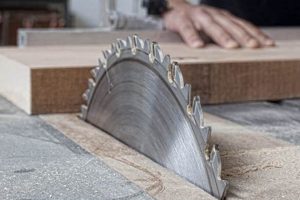
Tools specifically designed for cutting wood in various ways represent a fundamental aspect of the craft. These instruments come in a wide range of designs, each optimized for particular tasks, from rough shaping to precise joinery. A handsaw, for instance, relies on manual power to create a kerf, while a table saw utilizes a motor to drive a circular blade through stock.
The proper selection and application of these tools directly impacts project quality, efficiency, and safety. Understanding the characteristics of these specialized implements also offers insight into the evolution of woodworking techniques and traditions. Historically, mastery of these cutting tools was a hallmark of skilled artisans, enabling intricate designs and durable constructions.
The following sections will delve into specific types, examining their features, uses, and advantages. This detailed exploration intends to provide a comprehensive overview of the instruments employed to shape and dimension lumber.
Effective Utilization
Optimizing performance requires adherence to specific guidelines. This section presents practical advice to enhance precision, safety, and overall effectiveness.
Tip 1: Blade Selection: Choose the appropriate blade for the material and cut type. A fine-toothed blade minimizes tear-out when crosscutting hardwoods, while a coarser blade expedites ripping softwood.
Tip 2: Workpiece Stabilization: Secure the material adequately to prevent movement during cutting. Clamps, vises, and jigs enhance control and accuracy, particularly with smaller or awkwardly shaped pieces.
Tip 3: Maintain Sharpness: Regularly sharpen or replace blades to ensure clean, efficient cuts. Dull blades require excessive force, increasing the risk of kickback and splintering.
Tip 4: Dust Control: Implement a dust collection system to minimize airborne particles. This safeguards respiratory health and improves visibility of the cut line.
Tip 5: Kerf Allowance: Account for the blade’s kerf (the width of the cut) when measuring and marking material. Failure to do so can result in inaccuracies and undersized components.
Tip 6: Push Sticks: Use push sticks or blocks when working with table saws or jointers. These tools maintain a safe distance between hands and the cutting blade.
Following these recommendations will maximize the usefulness of each cutting tool and lead to improved project outcomes. Prioritize safety protocols and maintenance to ensure long-term efficiency.
The following sections will present a conclusion of this topic.
1. Hand Saws
Hand saws represent a fundamental category within woodworking, embodying a direct connection between artisan and material. These tools, powered by human effort, offer a level of control and sensitivity often unmatched by mechanized alternatives. Their varied designs address a spectrum of tasks, from coarse stock removal to the creation of precise joinery.
- Types and Specializations
Within the realm of hand saws, diverse forms serve specific purposes. Crosscut saws are designed to sever wood fibers perpendicularly, while rip saws are optimized for cutting along the grain. Dovetail saws, with their fine teeth and rigid blades, excel in creating intricate joints. Each specialization reflects a tailored approach to manipulating wood, maximizing efficiency for a given task.
- Material Interaction and Control
The manual operation of hand saws allows for nuanced feedback from the material. Resistance, grain patterns, and density become palpable, informing the user’s technique and preventing errors. This tactile connection fosters a deep understanding of wood properties, contributing to refined craftsmanship.
- Historical Significance and Enduring Relevance
Hand saws possess a rich historical legacy, predating widespread electrification. Their enduring presence in woodworking underscores their reliability and adaptability. Even with the proliferation of power tools, hand saws remain indispensable for delicate operations and situations where portability or noise reduction is paramount.
- Maintenance and Sharpening
The longevity and performance of hand saws depend on proper maintenance. Sharpening, setting, and occasional repair are essential practices. These tasks not only preserve the tool’s cutting ability but also connect the woodworker to the tool’s mechanics, promoting a deeper appreciation for its construction and function.
In conclusion, hand saws exemplify the core principles of woodworking. Their versatility, control, and enduring relevance solidify their position as essential components within a comprehensive set of wood-cutting implements. Proficiency with hand saws complements and enhances the capabilities of other woodworking tools, both manual and powered.
2. Power Saws
Power saws represent a significant category within the broader spectrum of implements for cutting lumber. These tools utilize electric motors or combustion engines to drive a blade, offering increased efficiency and speed compared to manual methods. Their prevalence in modern woodworking necessitates a clear understanding of their diverse forms and applications.
- Circular Saws: Versatility and Ripping Capabilities
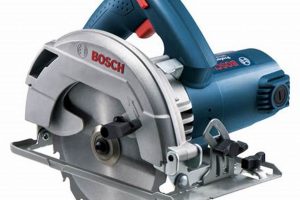
The circular saw, a staple in construction and woodworking, employs a rotating circular blade for making straight cuts. It excels at ripping boards and sheets of plywood. Blade selection is critical; a combination blade offers acceptable performance for both ripping and crosscutting, while specialized blades enhance efficiency and cut quality for specific materials.
- Table Saws: Precision and Repeatability
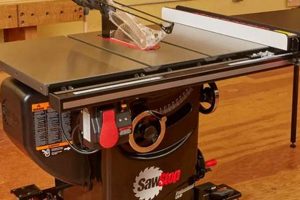
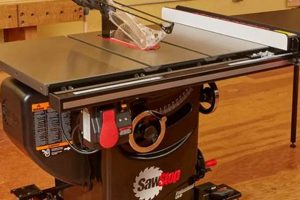
The table saw provides a stable platform for cutting lumber with high precision. The blade protrudes through the table surface, allowing the operator to guide the workpiece along a fence or miter gauge. It is commonly used for dimensioning stock, cutting dadoes, and creating tenons. Its ability to produce repeatable cuts makes it invaluable for cabinetry and furniture making.
- Miter Saws: Accurate Angle Cuts
Miter saws, also known as chop saws, are designed for making accurate crosscuts and miter cuts. The blade pivots to create angled cuts, and compound miter saws allow for bevel cuts as well. These tools are essential for framing, trim work, and any application requiring precise angled joints. Digital miter saws offer even greater accuracy and repeatability.
- Jigsaws: Curvilinear Cutting and Versatility
The jigsaw utilizes a reciprocating blade for making curved and intricate cuts. It is suitable for cutting shapes, patterns, and internal holes in wood, plastic, and metal. Variable speed control allows the operator to adjust the cutting speed to the material being used. Blade selection is crucial for achieving clean cuts and preventing tear-out.
The selection of a power saw depends on the specific task, material, and desired level of precision. While offering increased speed and efficiency, power saws require adherence to stringent safety protocols to prevent injury. Their integration into woodworking practices has transformed the craft, enabling complex designs and efficient production.
3. Blade Geometry

Blade geometry fundamentally influences the performance of wood-cutting tools. The configuration of teeth, their set, and the overall blade profile determine cutting speed, smoothness, and suitability for specific materials and operations. Understanding these elements is essential for selecting the appropriate blade for any woodworking task.
- Tooth Count and Spacing
The number of teeth per inch (TPI) dictates the cut’s fineness. Higher TPI blades yield smoother cuts with less tear-out, ideal for hardwoods and delicate joinery. Lower TPI blades remove material more aggressively, suitable for ripping softwood. For example, a dovetail saw utilizes a high TPI to create clean, precise cuts, while a rip saw employs a lower TPI to efficiently cut along the grain.
- Tooth Angle and Rake
The tooth angle, or rake, impacts the aggressiveness of the cut. A positive rake angle provides a more aggressive cut, ideal for ripping, while a negative or neutral rake reduces tear-out in crosscutting applications. Miter saws often feature blades with a neutral or slightly negative rake to minimize splintering when cutting trim.
- Tooth Set and Kerf Width
The set, or the alternating offset of teeth, creates a kerf (the width of the cut) wider than the blade body, preventing binding. Insufficient set results in friction and overheating. An excessively wide kerf wastes material and requires more force. The kerf width must be considered when planning joinery to ensure accurate fit. For example, when cutting a groove for a tongue and groove joint, the groove must match the tongue’s dimensions, accounting for the blade’s kerf.
- Blade Grind and Material Compatibility
The grind, or the shape of the cutting edge, is optimized for specific materials. Bevel grinds excel in hardwoods, while triple-chip grinds are suitable for abrasive materials like plywood and composites. Using the incorrect grind can lead to excessive wear, poor cut quality, and potential blade damage. Saw blades designed for cutting aluminum or plastics typically incorporate specialized grind profiles to prevent melting or chipping.
The interplay of these geometric factors profoundly influences the effectiveness of wood-cutting implements. Skillful blade selection, grounded in an understanding of these parameters, optimizes cutting performance, ensures quality results, and extends tool longevity.
4. Cutting Action
The efficacy of lumber-shaping implements hinges significantly on their inherent cutting action. This action, defined as the method by which the tool severs wood fibers, varies considerably across different designs, directly impacting speed, precision, and surface finish. A reciprocating saw, for example, employs a back-and-forth motion to remove material, suitable for demolition or rough cuts. Conversely, a rotary saw utilizes a spinning blade, capable of smoother, more controlled cuts. The selection of tool fundamentally dictates the outcome.
Understanding the cutting action is crucial for optimizing performance and preventing material damage. Aggressive actions, like that of a chainsaw, excel at rapid stock removal but can leave a coarse surface requiring further refinement. Finer actions, inherent in tools such as fret saws, allow for intricate curves and detailed work. Selecting the appropriate cutting action, therefore, involves balancing speed and precision with the requirements of the project. In cabinetry, a clean, splinter-free cut is paramount, necessitating a saw with a shearing or slicing action. When felling trees, speed is prioritized, making a chainsaw the logical choice.
The cutting action also dictates safety considerations. Tools with high-speed rotary actions demand greater attention to control and blade guarding. Reciprocating tools, while generally safer, can produce significant vibration and require secure workpiece clamping. Choosing the correct woodworking implement is not merely a matter of efficiency; it also significantly impacts operator safety and project success. Awareness of how each instrument interacts with wood under different cutting actions is thus a core skill for any proficient woodworker.
5. Material Compatibility

The relationship between material compatibility and saws is critical for achieving quality results in woodworking. Selecting the appropriate saw type and blade for a given material ensures clean cuts, minimizes tear-out, and prolongs the tool’s lifespan. Incompatible combinations can lead to inefficiency, damage to the material, or even hazardous conditions.
- Hardwood vs. Softwood Selection
Hardwoods, such as oak or maple, possess dense, interlocking grain patterns requiring blades with finer teeth and a higher cutting angle to prevent splintering. Softwoods, like pine or fir, are less dense and can be cut with blades featuring coarser teeth designed for rapid material removal. The tooth configuration must match the material’s density to optimize cutting performance and prevent blade binding or excessive tear-out.
- Plywood and Laminates Considerations
Plywood and laminates present unique challenges due to their layered construction and potentially abrasive surfaces. Saw blades designed specifically for these materials feature a high tooth count and a scoring tooth configuration to minimize chipping on both sides of the cut. Using a standard blade on plywood often results in significant tear-out, compromising the aesthetic quality of the workpiece.
- Exotic Wood Species
Exotic wood species, such as ebony or teak, often contain oils, resins, or silica, which can dull blades rapidly. Carbide-tipped blades are recommended for these materials due to their superior hardness and resistance to wear. Regular blade cleaning and maintenance are crucial when working with exotic woods to prevent resin buildup and maintain optimal cutting performance.
- Metal-Embedded Wood
Reclaimed wood or salvaged lumber may contain hidden nails, screws, or other metal objects. Using a standard wood-cutting blade on metal-embedded wood can cause severe blade damage or even kickback, posing a significant safety hazard. Specialized metal-cutting saws or blades designed to cut through both wood and metal should be employed in these situations.
These facets highlight the importance of considering material characteristics when selecting wood-cutting implements. The appropriate selection of tools minimizes material waste, improves project quality, and ensures safety during woodworking operations. Ignoring material compatibility can lead to costly errors and potentially dangerous situations.
6. Joinery Applications

The selection of woodworking implements is inextricably linked to joinery applications. Specific joint types demand unique cutting actions and levels of precision, rendering certain implements more suitable than others. The mortise and tenon joint, a foundational element in furniture construction, exemplifies this relationship. Creating the mortise often requires a mortising machine or a drill press with a mortising attachment, while the tenon may be shaped using a tenon saw or a table saw with a tenoning jig. Deviations from these methods can compromise the joint’s structural integrity and aesthetic appeal.
Dovetail joints, prized for their strength and visual appeal, present further considerations. The creation of dovetails typically involves a dovetail saw, characterized by its thin blade and fine teeth, allowing for precise cuts along the marked angles. While power tools, such as routers with dovetail jigs, can expedite the process, the initial layout and final fitting often necessitate the manual precision afforded by specialized hand tools. The choice between manual and power methods is contingent on the desired level of control and the complexity of the design.
Miter joints, commonly used in framing and trim work, rely on accurate angle cuts. Miter saws, designed specifically for this purpose, provide a repeatable and precise method for creating angled surfaces. However, achieving a seamless miter joint often requires fine-tuning with hand planes or sanding blocks to eliminate any imperfections. Understanding the interplay between implements and joinery techniques ensures strong, aesthetically pleasing, and durable connections, fundamental to successful woodworking projects.
7. Safety Protocols
Operation of woodworking implements necessitates strict adherence to defined safety protocols. Disregard for these procedures can result in severe injury due to the inherent risks associated with high-speed cutting actions and sharp blades. Each instrument, from a simple hand saw to a complex table saw, presents unique hazards demanding specific preventative measures. For instance, the potential for kickback on a table saw requires the consistent use of a riving knife and push sticks. Failure to employ these safeguards significantly increases the likelihood of workpiece ejection and potential contact with the blade. Similarly, operating a chainsaw without appropriate personal protective equipment (PPE), such as eye protection and chainsaw chaps, elevates the risk of lacerations and eye injuries. Therefore, safety protocols must be considered an integral component of using any wood-cutting instrument.
The effectiveness of safety protocols is directly correlated with operator training and comprehension. Knowing the mechanics of each implement, recognizing potential failure points, and understanding the correct procedures for mitigating risks are essential. Regular inspection and maintenance of tools are equally important. Dull blades, loose guards, or malfunctioning switches can compromise safety, regardless of operator skill. Furthermore, maintaining a clean and organized workspace reduces the likelihood of trips, falls, and other accidents. Case studies of woodworking accidents often reveal a chain of contributing factors, including inadequate training, improper tool maintenance, and disregard for established safety guidelines. These incidents underscore the practical significance of comprehensive safety protocols.
In conclusion, safety protocols constitute a non-negotiable aspect of employing any wood-cutting tool. Understanding the specific risks associated with each implement, implementing appropriate safeguards, and maintaining a culture of safety are paramount. While woodworking offers significant creative and practical benefits, these advantages must be balanced with a commitment to responsible and safe practices. The effective integration of safety protocols minimizes the potential for injury and ensures a sustainable and rewarding woodworking experience.
Frequently Asked Questions
This section addresses common inquiries regarding selection, application, and maintenance of implements used to cut wood. The following questions aim to clarify misconceptions and provide practical guidance for woodworkers of all skill levels.
Question 1: What is the primary distinction between a crosscut saw and a rip saw?
The distinction lies in their intended direction of cut relative to the wood grain. A crosscut saw is designed to cut perpendicular to the grain, severing wood fibers, while a rip saw is optimized for cutting along the grain, separating fibers. The tooth geometry reflects this difference, with crosscut saws featuring teeth that act as knives and rip saws having teeth that resemble chisels.
Question 2: Why are carbide-tipped blades often recommended for working with hardwoods?
Carbide is significantly harder than high-speed steel, the material commonly used in standard saw blades. Hardwoods, such as oak and maple, exhibit greater density and abrasive properties than softwoods. Carbide-tipped blades retain their sharpness longer when cutting hardwoods, reducing the frequency of sharpening and improving cut quality.
Question 3: What factors contribute to “kickback” when operating a table saw?
Kickback occurs when the workpiece is caught between the blade and the fence, causing it to be violently ejected back towards the operator. Factors contributing to kickback include improper blade alignment, failure to use a riving knife or splitter, feeding the workpiece against the blade’s rotation, and using dull or inappropriate blades. Adherence to safety protocols and proper tool maintenance are crucial for preventing kickback.
Question 4: How does tooth count affect the quality of cut in plywood?
Plywood’s layered construction is prone to splintering, particularly on the face veneers. Higher tooth count blades produce smoother cuts with less tear-out due to the increased number of cutting points. Specialized plywood blades often feature a scoring tooth configuration to further minimize chipping on both sides of the cut.
Question 5: What is the purpose of “setting” the teeth on a saw blade?
Setting refers to the alternating offset of teeth on a saw blade. This offset creates a kerf (the width of the cut) wider than the blade body, preventing the blade from binding within the cut. Proper setting ensures smooth, efficient cutting and reduces the risk of overheating and damage to the blade or workpiece.
Question 6: How frequently should saw blades be sharpened?
Sharpening frequency depends on several factors, including the type of wood being cut, the blade material, and the frequency of use. Signs that a blade requires sharpening include increased cutting resistance, burning marks on the wood, and a decline in cut quality. Regular inspection and maintenance, coupled with prompt sharpening when necessary, are essential for maintaining optimal performance and extending blade life.
This FAQ section intends to provide clarity on frequently encountered questions related to the use of cutting tools. Understanding these fundamental concepts is crucial for both safety and achieving high-quality results in woodworking.
The following sections will explore practical applications of these tools within specific woodworking projects.
Conclusion
The preceding exploration has elucidated the variety of implements employed to shape and dimension wood. From manual saws requiring skilled hand manipulation to power saws offering increased speed and efficiency, each tool serves a specific purpose. Factors such as blade geometry, cutting action, and material compatibility influence tool selection and dictate the quality of the final result. Adherence to established safety protocols remains paramount in all operations.
Mastery of these tools represents a foundational element of woodworking proficiency. Continued investigation and refinement of technique are essential for achieving consistent, high-quality outcomes. The responsible and informed application of these tools will contribute to the continued advancement and preservation of the woodworking craft.