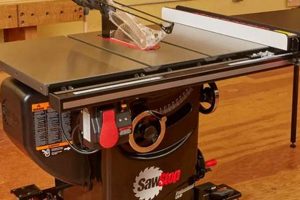
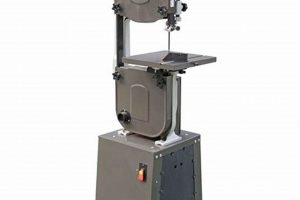
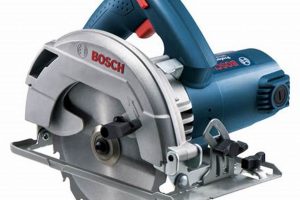
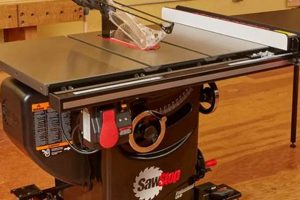
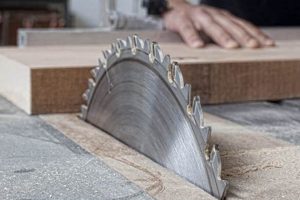
The phrase describes the concept of constructing a table saw within a do-it-yourself framework, intended for woodworking applications. This often involves utilizing pre-existing components, salvaged materials, or a combination thereof to create a functional cutting tool for wood. An example includes building a saw using a circular saw motor mounted within a custom-built table, complete with a fence and miter gauge for accurate cuts.
The significance lies in the potential for cost savings and customization. Constructing a tool offers a viable alternative to purchasing a commercially manufactured model, potentially freeing up resources for other workshop necessities. Furthermore, it allows the builder to tailor the device to their specific needs and workspace constraints, resulting in a highly personalized and efficient cutting solution. Historically, such projects have been driven by resourcefulness and the desire for greater control over the woodworking process.
The following sections will delve into the key considerations for a successful fabrication, encompassing design principles, material selection, safety protocols, and step-by-step instructions. These elements are vital for ensuring the creation of a safe, reliable, and effective woodworking tool.
Key Considerations for Do-It-Yourself Table Saw Construction
The following provides essential guidelines to consider when embarking on a woodworking table saw construction project. Adherence to these points will promote safety, accuracy, and the longevity of the resulting tool.
Tip 1: Prioritize Safety Features. Incorporate essential safety mechanisms, such as a blade guard, anti-kickback pawls, and a riving knife or splitter. These components mitigate the risk of common table saw injuries.
Tip 2: Ensure a Stable Base. The table surface must be flat, rigid, and stable to prevent vibrations and ensure accurate cuts. A robust frame constructed from steel or sturdy hardwood is recommended.
Tip 3: Implement a Precise Fence System. A well-designed fence is crucial for consistent and repeatable cuts. Consider using a T-square style fence that locks securely in place and allows for fine adjustments.
Tip 4: Choose an Appropriate Motor. Select a motor with sufficient horsepower to handle the intended workload. A motor that is too weak will strain and potentially overheat, leading to premature failure.
Tip 5: Calibrate Blade Alignment. Meticulously align the saw blade to the miter slots and fence. Misalignment will result in inaccurate cuts and increase the risk of kickback.
Tip 6: Employ Dust Collection. Integrate a dust collection system to remove sawdust, which is both a health hazard and a fire risk. A shop vacuum or dedicated dust collector can be adapted for this purpose.
Tip 7: Regularly Inspect and Maintain. Periodically inspect all components for wear and tear. Lubricate moving parts and replace worn blades to maintain optimal performance and safety.
By adhering to these guidelines, the creation of a woodworking table saw will be safer and yield a tool that meets specific needs.
The subsequent sections will provide in-depth explorations of specific design choices and practical construction techniques.
1. Motor Horsepower

Motor horsepower is a critical determinant in the functionality and versatility of a do-it-yourself woodworking table saw. The selection of an adequately powered motor directly impacts the tool’s capacity to cut through various wood types and thicknesses efficiently and safely. Insufficient horsepower can lead to motor strain, reduced cutting speed, and increased risk of kickback.
- Wood Density and Thickness
Higher density woods, such as hardwoods like oak or maple, and thicker workpieces require greater motor horsepower to maintain a consistent cutting speed without stalling or overheating. A saw with insufficient power will struggle, resulting in uneven cuts and potential damage to the motor. For example, ripping a 2-inch thick piece of oak necessitates significantly more power than cutting thin plywood.
- Blade Type and Diameter
The type and diameter of the saw blade also influence the required motor horsepower. Larger diameter blades and specialized blades, such as those designed for ripping thick lumber, demand more power. Using an underpowered motor with an inappropriate blade can lead to inefficient cutting and premature motor failure. A large-diameter ripping blade, for instance, creates a greater load on the motor than a smaller combination blade.
- Duty Cycle and Overheating
Motor horsepower affects the duty cycle, which refers to the amount of time the saw can operate continuously without overheating. A more powerful motor can handle longer periods of use before requiring a cooling period. An underpowered motor is more susceptible to overheating, especially during prolonged or demanding cutting tasks, potentially shortening its lifespan and increasing the risk of fire.
- Kickback Potential
Insufficient motor horsepower increases the risk of kickback, a dangerous phenomenon where the workpiece is suddenly ejected back towards the operator. A motor struggling to maintain cutting speed is more likely to experience binding, which can trigger a kickback event. Selecting a motor with adequate power is therefore crucial for operator safety and mitigating this risk.
The selection of appropriate motor horsepower is integral to the overall performance and safety of a do-it-yourself woodworking table saw. Careful consideration of wood types, blade selection, anticipated workload, and safety factors is paramount to ensuring a reliable and effective cutting tool. Conversely, neglecting the relationship between motor horsepower and these factors could lead to unsatisfactory results or create a dangerous working environment.
2. Blade Alignment

Blade alignment is a fundamental factor influencing the precision, safety, and overall performance of a woodworking table saw. In the context of a do-it-yourself (DIY) woodworking table saw, meticulous attention to blade alignment becomes even more critical due to the absence of factory calibration and the potential for variations in construction. Ensuring proper alignment mitigates risks and promotes accurate cutting results.
- Parallelism to Miter Slots
The saw blade must be perfectly parallel to the miter slots machined into the table surface. This parallelism is essential for accurate crosscuts and mitered cuts when using a miter gauge. If the blade is not parallel, cuts will be inconsistent, leading to inaccurate joinery and potential workpiece waste. For example, an out-of-parallel blade will produce angled cuts when attempting a square crosscut using a miter gauge.
- Perpendicularity to Table Surface
The blade should be precisely perpendicular to the table surface. Deviation from perpendicularity results in beveled cuts when attempting square cuts. This is particularly problematic when cutting dados or rabbets, where the bottom of the cut needs to be flat and square. Achieving perpendicularity often involves shimming or adjusting the trunnion assembly that supports the saw’s motor and blade.
- Alignment with the Fence
The blade’s alignment relative to the rip fence directly impacts the accuracy of rip cuts. Ideally, the blade should be parallel to the fence to ensure consistent width along the entire cut. A slight misalignment can cause the workpiece to bind against the fence, increasing friction and the risk of kickback. Even minor deviations accumulate over longer cuts, resulting in significant dimensional inaccuracies.
- Minimizing Vibration and Runout
Proper blade alignment contributes to minimizing vibration and blade runout. Runout refers to the wobbling of the blade as it rotates. Excessive runout compromises cut quality and increases the risk of blade damage. Careful alignment, combined with the use of high-quality blades and appropriate blade stabilizers, helps reduce vibration and runout, resulting in smoother and more precise cuts.
In summary, blade alignment is a critical adjustment for any table saw, and this is particularly true for do-it-yourself constructions. Correct alignment ensures that the tool operates safely and produces accurate cuts, enabling the creation of high-quality woodworking projects. Neglecting this aspect introduces risk and limits the potential of the equipment.
3. Fence Accuracy

Fence accuracy is paramount for the effective operation of a do-it-yourself (DIY) woodworking table saw. The fence serves as a guide against which material is pushed, dictating the width of the cut. Inaccurate fence positioning or instability directly translates into dimensional errors in the workpiece. Consequently, projects requiring precise joinery, such as cabinet making or furniture construction, are rendered significantly more challenging, if not impossible, to execute successfully. A fence that is not square to the blade, for instance, will produce tapered cuts, resulting in gaps in joints and structurally unsound assemblies. The construction quality, design, and adjustment mechanisms of the fence system are therefore critical components of the overall tool.
Achieving and maintaining fence accuracy on a DIY woodworking table saw requires careful attention to detail during the build process and ongoing maintenance. The fence must be constructed from rigid materials to resist deflection during cutting operations. Additionally, the locking mechanism must provide a secure and repeatable hold, preventing movement once the desired position is set. Consider a scenario where a craftsman needs to repeatedly cut boards to a specific width for a cabinet door. An accurate fence allows for consistent cuts, ensuring that all door components fit together seamlessly. Conversely, a fence that drifts or is difficult to adjust will lead to frustration and wasted material.
In conclusion, fence accuracy forms a cornerstone of the functionality and precision achievable with a DIY woodworking table saw. While cost savings and customization are primary motivators for constructing such a tool, neglecting the importance of a precise and stable fence undermines the entire endeavor. The challenges associated with building an accurate fence can be significant, often requiring ingenuity and meticulous craftsmanship. However, the benefits of a well-executed fence system far outweigh the initial investment of time and effort, ultimately enabling the creation of high-quality woodworking projects.
4. Table Stability
Table stability is a fundamental prerequisite for the safe and accurate operation of a woodworking table saw, especially within the context of a do-it-yourself (DIY) construction. A stable table provides a consistent reference surface, minimizing vibrations and preventing movement during cutting operations. Instability directly contributes to inaccurate cuts, increased risk of kickback, and compromised operator safety. The table serves as the foundation for all cutting actions; its integrity directly impacts the quality of the finished product.
The consequences of an unstable table are manifold. Vibrations can cause the workpiece to shift during the cut, leading to uneven edges and dimensional inaccuracies. Furthermore, instability increases the likelihood of blade binding, which can result in dangerous kickback incidents. In practical terms, attempting to rip a long, narrow board on an unstable table may result in the board wandering off the intended cut line, rendering it unusable. Another example involves attempting to create precise mitered cuts for a picture frame; table instability would compromise the accuracy of the angles, leading to gaps in the finished frame. A robust and well-constructed table mitigates these risks, ensuring both safety and precision.
The achievement of table stability in a DIY woodworking table saw presents specific challenges. Unlike commercially manufactured saws, DIY constructions require careful attention to design and material selection. The frame must be constructed from rigid materials, such as heavy-gauge steel or solid hardwood, and securely joined to prevent racking or flexing. The table surface itself should be flat and dimensionally stable, resisting warping or deflection under load. Addressing these challenges through meticulous planning and execution is essential for realizing the full potential of a DIY woodworking table saw and ensuring its safe and reliable operation. Table stability is non-negotiable.
5. Safety Mechanisms
Safety mechanisms represent critical components in the operation of any woodworking table saw, and their significance is amplified within the realm of do-it-yourself (DIY) constructions. Given the inherent variability and potential for deviations from established manufacturing standards in DIY projects, incorporating robust safety features becomes paramount. These mechanisms serve to mitigate the risks associated with table saw operation and protect the user from potential injury.
- Blade Guards
Blade guards act as a physical barrier between the operator and the rotating saw blade, preventing accidental contact. They are typically constructed from transparent materials, allowing the operator to maintain visibility of the cutting area. In DIY table saw construction, the design and integration of an effective blade guard require careful consideration, ensuring it does not impede operation while providing adequate protection. For example, a well-designed blade guard will automatically adjust to accommodate different material thicknesses.
- Riving Knives/Splitters
Riving knives or splitters are strategically positioned behind the saw blade, preventing the workpiece from pinching and binding, thereby reducing the risk of kickback. These devices maintain the kerf (the cut made by the blade) open, allowing the wood to pass freely without exerting lateral pressure on the blade. In DIY table saw designs, the accurate alignment and proper positioning of the riving knife or splitter are essential for its effective function. A poorly aligned riving knife can actually increase the risk of kickback.
- Anti-Kickback Pawls
Anti-kickback pawls are toothed devices that engage the workpiece if it begins to move backward against the rotation of the saw blade. These pawls prevent the workpiece from being forcefully ejected towards the operator, mitigating the risk of kickback injuries. In DIY table saw constructions, ensuring the reliable and consistent engagement of the anti-kickback pawls is crucial. The pawls must be made from durable materials and properly positioned to effectively grip the workpiece during a kickback event.
- Emergency Stop Switch
An emergency stop switch provides a means to quickly halt the operation of the table saw in the event of an emergency. This switch should be easily accessible and clearly marked, allowing the operator to immediately stop the blade rotation. In DIY table saw designs, the integration of a reliable emergency stop switch is essential. It should be wired directly to the motor’s power supply, ensuring that activation of the switch immediately cuts off power to the motor.
These safety mechanisms, while essential for all table saws, are particularly critical in the context of DIY woodworking table saw construction. Their proper design, integration, and maintenance are vital for ensuring the safe and effective operation of these tools, protecting the user from potential hazards. The absence of these safety features significantly elevates the risk of injury.
6. Dust Collection

Effective dust collection is an indispensable component of any woodworking table saw setup, but its significance is amplified in the context of a do-it-yourself construction. The uncontrolled dispersal of fine wood particles poses significant health risks and operational challenges. Wood dust, particularly from hardwoods and treated lumber, is a known respiratory irritant and potential carcinogen. Prolonged exposure can lead to chronic respiratory illnesses and allergic reactions. Furthermore, accumulated dust creates a fire hazard, especially in enclosed workshop environments. A well-designed dust collection system mitigates these hazards.
The integration of dust collection into a DIY woodworking table saw requires careful planning and execution. Common methods involve connecting a shop vacuum or a dedicated dust collector to the saw’s blade shroud and enclosure. The effectiveness of the system hinges on factors such as airflow volume, filter efficiency, and the design of the dust collection ports. For instance, a small shop vacuum may prove inadequate for capturing the substantial volume of dust generated during ripping operations on thicker stock. Conversely, a properly sized dust collector with a high-efficiency particulate air (HEPA) filter can significantly reduce airborne dust levels, creating a safer and cleaner working environment. The placement of the dust port to capture the most particles is also very critical to make a better dust collection system. Therefore, the dust collection system must be planned and integrated at the very beginning during the planning stage.
In summary, dust collection is not merely an optional accessory for a DIY woodworking table saw but an essential safety measure and operational necessity. While the construction of the saw itself may focus on cutting accuracy and stability, neglecting dust collection compromises both the health of the operator and the overall efficiency of the workshop. A robust dust collection system transforms the DIY woodworking table saw from a potentially hazardous tool into a safer and more productive asset. Careful planning and selection of the dust collection method are important to make the table saw safer and more efficient.
Frequently Asked Questions
The following addresses common inquiries regarding the construction and utilization of woodworking table saws within a do-it-yourself framework. The intention is to provide clear and concise information to aid in safe and effective practices.
Question 1: Is constructing woodworking table saw a feasible project for novice woodworkers?
The feasibility depends heavily on the individual’s skill set, available resources, and understanding of woodworking principles. While a relatively simple table saw design might be manageable for a beginner, more complex designs involving intricate joinery or electrical work require a higher level of expertise. Thorough research and careful planning are essential before commencing such a project.
Question 2: What are the primary safety considerations when operating a DIY woodworking table saw?
The paramount safety consideration is the implementation of appropriate safety mechanisms, including blade guards, riving knives or splitters, and anti-kickback pawls. Proper training in table saw operation is also crucial, as is the consistent use of personal protective equipment, such as safety glasses and hearing protection.
Question 3: What types of motors are suitable for use in a DIY woodworking table saw?
Induction motors are generally preferred due to their durability, quiet operation, and ability to provide consistent power. The horsepower rating should be appropriate for the intended workload, with higher horsepower required for cutting thicker and denser materials. Universal motors can be used, but tend to be more noisy and less durable.
Question 4: How can accurate blade alignment be achieved in a DIY woodworking table saw construction?
Accurate blade alignment requires meticulous attention to detail and the use of precision measuring tools. The blade must be parallel to the miter slots and perpendicular to the table surface. Adjustments may involve shimming or modifying the trunnion assembly that supports the motor and blade. It is recommended to use high-quality measuring tools, such as a dial indicator, for precise alignment.
Question 5: What are the most common causes of kickback on woodworking table saws?
Kickback is primarily caused by the workpiece pinching the blade, typically due to misalignment, internal stresses in the wood, or improper cutting techniques. A dull blade, lack of a riving knife or splitter, and feeding the material against the direction of blade rotation can also contribute to kickback.
Question 6: What type of dust collection system is appropriate for a DIY woodworking table saw?
The appropriate dust collection system depends on the scale of the operation. A shop vacuum can be effective for small-scale projects, while a dedicated dust collector with a higher cubic feet per minute (CFM) rating is recommended for larger workshops and more frequent use. HEPA filters are recommended to capture fine dust particles.
These frequently asked questions represent only a subset of the considerations involved in the construction and operation of a woodworking table saw within a do-it-yourself context. Thorough research and ongoing adherence to safe practices are crucial for a successful and incident-free woodworking experience.
The following section will provide further information related to troubleshooting common issues encountered during DIY table saw construction.
Conclusion
This article has explored the multifaceted aspects of constructing a woodworking table saw within a do-it-yourself framework. The discussions encompassed critical elements ranging from motor selection and blade alignment to fence accuracy, table stability, integrated safety mechanisms, and effective dust collection strategies. Each facet significantly influences the tool’s operational effectiveness, precision, and the overall safety of the user. Careful consideration of these elements is paramount.
The successful fabrication and operation of woodworking table saw demands a rigorous commitment to safety protocols, meticulous attention to detail, and a comprehensive understanding of woodworking principles. While the potential for cost savings and customization motivates such projects, it is imperative that safety remains the foremost priority. The principles outlined herein serve as a foundational guide for achieving a reliable and secure tool. The user is urged to exercise caution and diligently apply all relevant safety measures. Always check your local laws about safety standards.