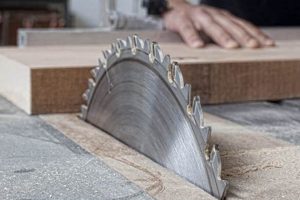
Various cutting tools exist for shaping wood, each designed for specific tasks and offering unique capabilities. These tools utilize blades with teeth to remove material, achieving desired forms and dimensions. Their selection hinges on factors such as the type of wood, the desired cut’s precision, and the project’s overall complexity. For example, a fine-toothed saw is preferable for delicate joinery, while a larger saw is suitable for rough cuts in thicker stock.
The application of appropriate cutting implements is critical in carpentry and furniture construction, impacting project efficiency, quality, and safety. Using the right tool minimizes waste, reduces the risk of damage to the material, and ensures accurate and clean cuts. Historically, the evolution of these implements has mirrored advancements in metallurgy and manufacturing techniques, resulting in tools with improved performance and durability.
The following sections will categorize and examine several common categories of these tools, outlining their distinct features and typical applications within woodworking. This exploration will cover both hand-powered and power-driven options, providing an overview of the advantages and disadvantages of each, as well as their typical application.
Effective Saw Selection for Woodworking
Selecting the appropriate tool for a woodworking project is crucial for achieving accurate cuts, minimizing material waste, and ensuring personal safety. Understanding the nuances of each tool type is paramount for efficient and professional results.
Tip 1: Match the Tooth Count to the Task: Higher tooth counts (TPI) create smoother cuts in hardwoods but cut slower. Lower TPI saws are better for fast, aggressive cuts in softer woods.
Tip 2: Consider the Kerf Width: The kerf, or width of the cut, impacts material yield and joinery precision. Thin-kerf saws minimize waste and are ideal for delicate work, while thicker kerfs are suitable for rough cutting.
Tip 3: Evaluate the Blade Material: High-carbon steel blades are cost-effective but require frequent sharpening. High-speed steel (HSS) and carbide-tipped blades offer extended durability and are better suited for demanding applications.
Tip 4: Use a Back Saw for Precision Joinery: Back saws, reinforced with a spine along the top edge, provide greater rigidity and control, making them ideal for cutting dovetails, tenons, and other intricate joints.
Tip 5: Maintain Sharpness: A dull blade requires more force, leading to inaccurate cuts and increased risk of injury. Regularly sharpen blades or replace them as needed to maintain optimal performance.
Tip 6: Select the Right Saw for the Cut Direction: Crosscut saws are designed to cut perpendicular to the wood grain, while rip saws are optimized for cutting along the grain. Using the correct saw type ensures clean and efficient cutting.
Tip 7: Employ Proper Safety Gear: Always wear safety glasses to protect eyes from flying debris and use appropriate hearing protection, especially when operating power tools. Secure workpieces firmly to prevent movement during cutting.
Selecting the correct type of tool, paired with proper maintenance and safety practices, allows for safer, cleaner, and more effective woodworking processes. Knowledge of the various cutting methods is a must for the serious woodworker.
These insights offer a foundation for informed decision-making, leading to enhanced project outcomes and a more rewarding woodworking experience. Subsequent sections will delve further into specific applications and advanced techniques.
1. Hand Saws

Hand saws represent a foundational category within the broader spectrum of cutting tools employed in woodworking. Their reliance on manual power distinguishes them from motorized alternatives, offering distinct advantages in control and precision, particularly in intricate joinery and detail work. As a subset of the encompassing category, their characteristics significantly shape the craftsperson’s approach to shaping and assembling wood components.
The relationship between hand saws and overall woodworking techniques stems from their inherent limitations and strengths. While less efficient for large-scale material removal compared to power saws, hand saws allow for tactile feedback and nuanced adjustments during cutting. This attribute is critical when creating tight-fitting joints, such as dovetails or mortise-and-tenon connections, where accuracy is paramount. For instance, a skilled woodworker using a dovetail saw can achieve a nearly seamless fit, minimizing the need for fillers or adhesives. The understanding of these tools is the corner-stone in all types of woodworking.
In summary, hand saws are a critical subset within the larger domain, influencing not only the methods employed but also the quality and integrity of finished woodworking projects. Recognizing the interplay between manual tools and power-driven options allows for informed tool selection and application, optimizing both efficiency and craftsmanship. While advancements in power tools have undoubtedly transformed woodworking, the enduring relevance of manually operated implements persists, cementing their continued importance in a modern shop.
2. Power saws
Power saws form a crucial component within the broader category of tools used in woodworking. Their introduction has dramatically altered woodworking, enabling faster material processing and greater precision for repetitive tasks. The integration of electric motors or other power sources allows these tools to perform cuts that would be physically demanding or time-consuming with manual implements. The impact of power saws is evident in large-scale furniture manufacturing, construction framing, and complex joinery projects, where speed and accuracy are paramount.
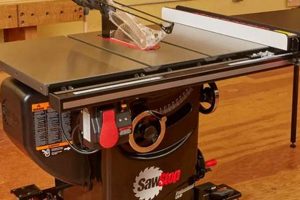
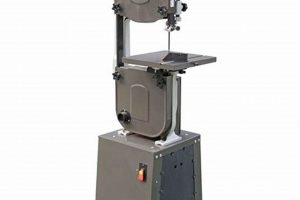
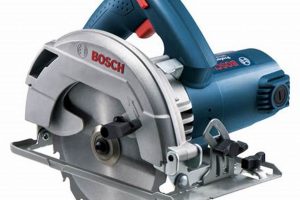
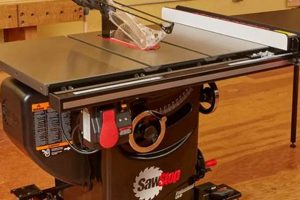
The significance of power saws in contemporary woodworking stems from their capacity to enhance efficiency and consistency. For example, a table saw is a fundamental tool in many workshops, providing the ability to create rip cuts and crosscuts with precise angles and dimensions. Circular saws offer portability and adaptability for on-site construction. Miter saws enable repeated angular cuts for framing and molding. Band saws facilitate curved cuts and resawing operations. Each type addresses specific cutting requirements, increasing the versatility of woodworking applications.
Ultimately, power saws enhance productivity and precision. Selecting the appropriate tool for a given task is essential to maintaining high quality workmanship. This knowledge enables safe, efficient, and effective operations. While hand saws maintain relevance for delicate work, power saws have emerged as indispensable tools for efficient material processing and large-scale fabrication.
3. Blade Material
The material composition of a saw blade is a primary determinant of its cutting performance, longevity, and suitability for specific woodworking tasks. The interplay between blade material and the type of saw directly impacts cut quality, efficiency, and the ability to process various wood species. For instance, a hand saw with a high-carbon steel blade is readily sharpened, making it suitable for detail work in softer woods. Conversely, a table saw equipped with a carbide-tipped blade excels at processing hardwoods due to its superior wear resistance. The selection of blade material must align with the saw’s intended purpose to optimize cutting performance.
Consider the example of resawing thick stock on a band saw. A standard carbon steel blade would dull quickly under the heat and friction generated by prolonged cutting. A bimetal blade, containing a high-speed steel cutting edge welded to a flexible steel back, offers increased heat resistance and edge retention, enabling more efficient and accurate resawing. Similarly, abrasive blades used on chop saws or metal-cutting saws rely on a matrix of hard particles to remove material. Blade material also affects safety. The blade used to cut plastic must not melt the plastic during the cutting. Understanding the composition and properties of various blade materials ensures that the appropriate blade is selected for each woodworking task, minimizing the risk of blade failure and maximizing cutting efficiency.
In summary, blade material is a critical factor influencing the performance and versatility of woodworking saws. Choosing the appropriate material is as crucial as selecting the saw itself. A detailed understanding of the properties of different blade compositions allows woodworkers to optimize their tools for specific tasks, improving both the quality of their work and the lifespan of their equipment. Neglecting the blade’s material characteristics inevitably leads to inefficient cutting, premature blade wear, and potentially unsafe working conditions.
4. Tooth Configuration
Tooth configuration is a critical factor that determines the performance characteristics of saws employed in woodworking. The geometry, arrangement, and set of teeth directly influence the saw’s cutting speed, surface finish, and suitability for specific materials and applications. Consequently, a thorough understanding of tooth configuration is essential for selecting the appropriate saw for a given woodworking task.
- Tooth Shape and Angle
The shape and angle of a saw tooth dictate its cutting action. Crosscut saws feature teeth that are sharpened to a knife-like edge, designed to sever wood fibers perpendicular to the grain. Rip saws, conversely, have teeth with a chisel-like profile optimized for removing material along the grain. The angle at which the teeth are set also influences the aggressiveness of the cut and the amount of force required. An aggressive tooth angle facilitates faster cutting, while a shallower angle provides greater control and a smoother finish. For instance, a dovetail saw utilizes a fine tooth pitch and a shallow rake angle to produce clean, precise cuts for intricate joinery.
- Tooth Pitch (TPI)
Tooth pitch, measured in teeth per inch (TPI), signifies the density of teeth along the saw blade. A higher TPI results in a finer cut with less tear-out, making it suitable for hardwoods and delicate applications. Conversely, a lower TPI offers faster material removal but can produce a rougher surface finish, making it better suited for softwoods and rough carpentry. For example, a band saw used for resawing thick stock typically employs a low TPI blade to efficiently remove material, while a coping saw utilizes a high TPI blade for intricate curved cuts in thin materials.
- Tooth Set
Tooth set refers to the alternating offset of teeth from the plane of the blade. This offset creates a kerf, or the width of the cut, that is wider than the blade itself, preventing the blade from binding within the cut. The amount of set varies depending on the saw type and intended application. Excessive set can lead to a rough cut and increased friction, while insufficient set can cause the blade to bind. For example, a hand saw used for ripping typically has a more pronounced set than a hand saw used for crosscutting, reflecting the different cutting actions required.
- Gullet Size and Shape
The gullet is the space between the teeth that serves to remove saw dust from the cut, prevent clogging and ensure effective operations. Gullet size and shape affect the saw’s cutting ability and its efficiency. Wider gullets are able to collect more saw dust and are usually seen in ripsaws, which remove a lot of material in the process of cutting. Smaller gullets can be found on saws that need a finer cut as the main objective.
These elements determine the suitability of the saw for different materials and cutting tasks. A saw designed for ripping hardwood will have a drastically different tooth configuration than a saw designed for fine crosscutting or intricate detail work. Woodworkers must therefore carefully consider tooth configuration when selecting a saw to ensure optimal performance and achieve desired results. The configuration and type of saw, therefore, directly impacts the quality, speed and effectiveness of all woodworking.
5. Specific Applications
The utility of woodworking saws is inherently defined by the applications for which they are designed. A correlation exists between the nature of a woodworking task and the specific type of cutting tool employed. A saws design features including blade material, tooth configuration, and power source are optimized for particular operations. Therefore, understanding intended applications is crucial for selecting the appropriate cutting implement. In essence, applications serve as the driving force behind the development and refinement of each unique instrument.
For instance, consider the construction of mortise and tenon joints, a fundamental woodworking technique. A mortise, or the recessed cavity, is often shaped using a mortise chisel. However, a tenon, the projecting tongue that fits into the mortise, frequently necessitates the precision of a tenon saw. This saw, characterized by its stiff blade and fine teeth, enables controlled removal of material, facilitating accurate shaping of the tenon. A power saw, conversely, will allow the quick cutting of wood but would not allow for the very tight tolerances of a hand-cut mortise and tenon. Alternatively, producing long, straight cuts in sheet goods, such as plywood, is commonly achieved with a table saw or a track saw. The design of these saws prioritizes stability and accuracy over long distances, essential for achieving consistent dimensions in large panels. A coping saw is most helpful for cutting curves.
In summary, a symbiotic relationship exists between cutting implements and intended applications. The selection of a saw is determined by the specific requirements of the woodworking task at hand. While a comprehensive understanding of cutting tasks and tool characteristics is critical for achieving successful project outcomes, the appropriate choice ensures efficiency, accuracy, and safety in woodworking operations. Inadequate tool selection can lead to inefficiency, material waste, and potential hazards. Thus, the specific application determines the ultimate success in any woodworking project.
Frequently Asked Questions
This section addresses common inquiries regarding various saws for woodworking, clarifying usage, maintenance, and application.
Question 1: What distinguishes a rip saw from a crosscut saw, and when is each appropriate?
A rip saw is designed to cut along the grain of wood, featuring teeth configured like chisels. A crosscut saw is optimized for cutting perpendicular to the grain, employing knife-like teeth that sever wood fibers. Rip saws excel at efficient material removal along the grain, while crosscut saws provide cleaner cuts across the grain.
Question 2: What factors should be considered when selecting a blade for a band saw?
Blade selection for band saws involves considering blade width, tooth pitch (TPI), and blade material. Wider blades offer greater stability for straight cuts, while narrower blades facilitate curved cuts. Higher TPI blades produce smoother finishes, while lower TPI blades enable faster material removal. Blade material, such as carbon steel or bimetal, affects durability and heat resistance.
Question 3: How does the kerf width of a saw blade impact woodworking projects?
Kerf width, the width of the cut made by a saw blade, influences material yield and the precision of joinery. Thin-kerf blades minimize material waste and are preferred for delicate work, while thicker kerfs require more material removal and are suitable for rough cuts.
Question 4: What are the safety precautions associated with operating a table saw?
Operating a table saw requires adherence to strict safety protocols. These include wearing safety glasses and hearing protection, using push sticks and feather boards to maintain control, ensuring proper blade alignment, and avoiding loose clothing or jewelry. Always disconnect power when changing blades or making adjustments.
Question 5: What is the best method for sharpening hand saws?
Sharpening hand saws involves using specialized files and techniques to restore the teeth to their original geometry. The process includes jointing, shaping, setting, and sharpening the teeth. Precise sharpening is critical for maintaining the saw’s cutting efficiency and accuracy.
Question 6: How do oscillating multi-tools differ from other power saws?
Oscillating multi-tools employ a rapid oscillating motion rather than a circular or linear cutting action. This allows for precise plunge cuts, detail work, and accessing tight spaces. They are versatile tools suitable for various tasks, including cutting, sanding, and scraping, but generally slower than dedicated power saws.
Careful consideration of these points enhances the selection and use of saws, leading to improved woodworking outcomes.
The following segment explores different types of wood joinery techniques and how saws are very useful to get more precise outcome.
Diverse Saw Selection in Woodworking
The preceding discussion has highlighted the breadth of tools available for woodworking, from manual saws offering precision to power saws enabling efficiency. The selection of an appropriate tool hinges on variables such as the material type, the cut’s geometry, and the project’s overall demands. Blade material, tooth configuration, and power source each contribute to the saw’s performance, underscoring the need for informed decision-making.
As woodworking evolves, the integration of advanced materials and technologies will likely yield further refinement in cutting tool design. Proficiency in woodworking necessitates a commitment to ongoing learning, ensuring the application of optimal techniques for safe and high-quality project execution. Continued research and hands-on experience remain essential for mastering the art of the craft.