The selection of appropriate cutting tools is paramount to achieving precise and efficient results in woodworking projects. These tools are specifically designed to interact with wood fibers, severing them cleanly to create desired shapes and dimensions. Various types exist, each engineered for specific cutting tasks and wood types, directly influencing the quality and speed of the final product.
Employing the right cutting implement ensures clean edges, minimizes tear-out, and maximizes material yield. This choice affects project timelines, material costs, and the overall professional appearance of finished pieces. Historically, advancements in metallurgy and manufacturing techniques have led to a wide array of specialized options, enabling woodworkers to tackle increasingly complex designs with greater accuracy and ease.
The following sections will delve into the diverse range of available options, considering factors such as tooth geometry, blade material, and application. Detailed analysis will address the considerations necessary for matching the proper cutting implement to individual woodworking needs, resulting in improved project outcomes.
Guidance on Optimal Cutting Tool Selection
This section provides actionable guidance for selecting the most suitable implement for specific woodworking applications. Proper selection contributes to increased efficiency, improved cut quality, and extended tool lifespan.
Tip 1: Prioritize Material Compatibility: Different wood species exhibit varying densities and grain patterns. Hardwoods necessitate blades with a higher tooth count and durable construction to prevent premature dulling. Softwoods can often be cut effectively with blades featuring fewer teeth and a more aggressive rake angle.
Tip 2: Evaluate Tooth Geometry: The tooth configuration significantly impacts the cut’s characteristics. ATB (Alternate Top Bevel) teeth are versatile for general-purpose cutting, while FTG (Flat Top Grind) teeth are preferred for ripping operations, producing flat-bottomed grooves. TCG (Triple Chip Grind) teeth excel in cutting non-ferrous metals and laminated materials, reducing chipping.
Tip 3: Consider Blade Kerf: Kerf refers to the width of the cut produced by the blade. Thin-kerf blades minimize material waste and require less power from the saw, particularly beneficial when working with expensive hardwoods. However, thin-kerf blades may be more prone to deflection in thicker materials.
Tip 4: Match Blade Diameter to Saw Capacity: Employ the correct diameter as specified by the saw manufacturer to ensure safe and efficient operation. Using an undersized or oversized option can compromise cutting performance and pose a safety hazard.
Tip 5: Inspect for Blade Quality: Examine the blade for consistent tooth alignment and sharpness. High-quality blades are typically constructed from hardened steel or carbide-tipped materials, offering superior durability and edge retention.
Tip 6: Maintain Sharpness: Regular sharpening is essential for optimal performance and prevents excessive strain on the saw motor. Dull blades produce rough cuts, increase the risk of kickback, and shorten the lifespan of the tool.
Tip 7: Account for the Type of Cut: Crosscutting, ripping, and dadoing each require different tooth configurations and blade characteristics. Select a blade specifically designed for the intended operation to achieve the best results.
By carefully considering these factors, woodworkers can optimize their cutting tool selection, leading to improved project outcomes and reduced material waste.
The following sections will discuss specific examples of the best options for various woodworking scenarios.
1. Tooth Geometry

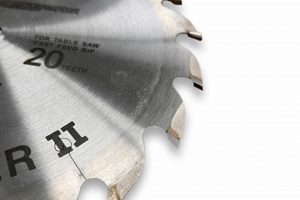
Tooth geometry is a critical determinant of performance within implements used for woodworking. The shape, angle, and arrangement of the teeth directly influence the cut’s quality, efficiency, and suitability for different wood types and cutting operations. Incorrect selection can lead to tear-out, splintering, or excessive material waste, thereby diminishing the final product’s quality. For example, a blade with Alternate Top Bevel (ATB) teeth is often chosen for crosscutting hardwoods, as the alternating bevels shear the wood fibers cleanly, minimizing splintering. Conversely, Flat Top Grind (FTG) teeth excel in ripping operations, creating flat-bottomed grooves with minimal side scoring.
The rake angle, the angle at which the tooth strikes the wood, also significantly impacts cutting performance. A positive rake angle is more aggressive, suitable for softer woods and faster cutting speeds. A negative rake angle is often used on non-ferrous metals and plastics, producing cleaner cuts with reduced vibration. Hook angle is another key factor, blades with a higher hook angle are more suitable for ripping, while those with a lower hook angle are better for crosscutting and materials prone to chipping. Consider the Triple Chip Grind (TCG) design, which combines a flat-topped tooth with beveled teeth, making it ideal for cutting abrasive materials like laminates and melamine, preventing excessive wear and tear on the blade while producing clean, chip-free cuts.
Therefore, understanding tooth geometry and its implications is fundamental to selecting the most effective cutting tool for woodworking. Matching the appropriate tooth configuration to the specific wood species and cutting task maximizes efficiency, reduces material waste, and enhances the overall quality of woodworking projects. The seemingly small differences in teeth design have a significant impact on the blade’s performance.
2. Blade Material

The composition of a saw blade is a primary determinant of its cutting performance, lifespan, and suitability for various woodworking tasks. Selecting the appropriate material for a given application is critical in achieving desired results and minimizing tool wear. The following details specific material types and their implications.
- High-Speed Steel (HSS)
HSS offers a balance of hardness and toughness, making it suitable for general-purpose woodworking applications. HSS blades can withstand high temperatures generated during cutting, maintaining their sharpness for a reasonable duration. They are typically less expensive than carbide-tipped options, making them a cost-effective choice for hobbyist woodworkers. However, HSS blades tend to dull more quickly when working with hardwoods or abrasive materials compared to other options.
- Carbide-Tipped
Carbide-tipped blades feature teeth made from tungsten carbide, a material significantly harder than steel. This hardness allows carbide-tipped blades to maintain their sharpness for extended periods, even when cutting hardwoods, plywood, or particleboard. While more expensive initially, their extended lifespan and ability to produce cleaner cuts make them a worthwhile investment for professional woodworkers. The carbide tips are brazed onto a steel body, providing a robust and durable construction.
- Diamond Grit
Diamond grit implements are specifically designed for cutting extremely hard or abrasive materials, such as ceramic tile, stone, and certain composite materials. While less common in traditional woodworking, they are invaluable when working with materials that would rapidly dull conventional blades. The diamond particles are bonded to a steel core, providing an exceptionally durable cutting edge. These blades are typically more expensive and specialized than HSS or carbide-tipped options.
- Bi-Metal
Bi-metal construction combines a high-speed steel cutting edge with a flexible alloy steel body. This combination provides both durability and resistance to breakage, making bi-metal blades well-suited for demanding applications and variable cutting conditions. They are commonly used in reciprocating saws and bandsaws, offering a balance of performance and longevity. The flexible body allows the blade to bend without snapping, reducing the risk of injury and extending the blade’s lifespan.
The selection of the appropriate material involves carefully assessing the specific requirements of the woodworking project, considering factors such as the type of wood, the frequency of use, and the desired level of precision. Carbide-tipped options are generally preferred for professional applications due to their extended lifespan and superior cutting performance, while HSS blades offer a cost-effective alternative for less demanding tasks. Diamond grit and bi-metal implementations are reserved for specialized applications involving extremely hard or abrasive materials. Therefore, understanding the characteristics of different blade materials is crucial to optimize performance and achieve desired outcomes.
3. Kerf Width

Kerf width, the breadth of the cut produced by a saw blade, directly impacts material yield and precision in woodworking. Employing the appropriate kerf width is integral to selecting implements suited for specific tasks, thereby influencing the overall effectiveness. A wider kerf removes more material, potentially leading to increased waste and diminished precision, particularly in intricate projects. Conversely, a narrower kerf reduces material loss but may require more saw power and increase the risk of blade deflection, resulting in inaccurate cuts. Choosing blades with optimal kerf widths contributes significantly to realizing the attributes defining high-performing implements. This element therefore constitutes a crucial parameter in the implement-selection process.
For example, when constructing intricate joinery or working with expensive hardwoods, thin-kerf blades are often favored to conserve material and minimize waste. Cabinetmakers frequently utilize thin-kerf blades in table saws when cutting panels and components for drawers or doors. This minimizes material removal and ensures dimensional accuracy, especially when working with costly wood species. In contrast, when ripping thicker stock, a blade with a slightly wider kerf may be preferable to reduce the risk of binding and overheating. Framing carpenters often use blades with a standard kerf for ripping lumber, balancing the need for efficient cutting with the acceptable level of material waste. Selection depends largely on weighing material-saving benefits against cut quality and power requirement.
In summary, kerf width is a fundamental consideration in selecting high-performing implements. Its impact on material usage, cutting efficiency, and precision makes it an essential factor for all woodworking applications. Understanding the interplay between kerf width and task requirements enables informed decision-making, leading to enhanced outcomes and reduced material waste. The challenge lies in balancing material conservation with the need for a stable and efficient cutting operation.
4. Saw Compatibility

Ensuring correct tool integration is paramount for safe and effective woodworking. The concept of saw compatibility directly influences cutting performance, tool longevity, and user safety. Consideration of compatibility is indispensable when seeking optimal implements.
- Arbor Size and Shape
The arbor size of a saw determines the diameter of the blade’s center hole. Employing a blade with an incorrectly sized arbor hole presents significant safety risks. A blade too small for the arbor may not mount securely, leading to vibration or detachment during operation. Adapters should be used with extreme caution and only when specified by the saw manufacturer. The arbor shape, often round with or without a diamond knockout, must also match the blade for secure mounting and torque transmission. Mismatched arbor sizes or shapes can result in blade slippage, inaccurate cuts, and potential damage to both the saw and the blade.
- Blade Diameter and Saw Capacity
Each saw model is designed to accommodate a specific range of blade diameters. Exceeding the maximum blade diameter can overload the motor, compromise cutting capacity, and increase the risk of kickback. Employing a blade that is too small for the saw may result in inadequate cutting depth and reduced stability. Referencing the saw manufacturer’s specifications is crucial to selecting a blade with the appropriate diameter, optimizing cutting performance while maintaining safe operating conditions. Selecting a blade with the correct diameter enables the saw to operate within its designed parameters, ensuring efficient power utilization and minimizing the risk of mechanical stress.
- Maximum RPM Rating
Each implement possesses a maximum safe operating speed, expressed in revolutions per minute (RPM). Exceeding this rating can cause the implement to vibrate excessively, overheat, or even disintegrate during operation. The saw’s RPM must be matched to, or be lower than, the blade’s maximum RPM rating. Operating a blade beyond its rated speed increases the risk of blade failure, potentially causing serious injury. The saw’s speed must never exceed the blade’s maximum RPM rating.
- Blade Thickness and Saw Power
The thickness of a blade, which contributes to the kerf width, affects the power required to make a cut. Thicker blades, while often more stable, demand more power from the saw motor. Using a thick implement on a saw with insufficient power can lead to reduced cutting speed, increased motor strain, and potential overheating. Conversely, excessively thin implements may be more prone to deflection, especially when cutting thicker materials. Matching blade thickness to the saw’s power output is crucial for achieving efficient cutting performance without overstressing the motor.
The aforementioned facets highlight the critical role of proper integration between saw and implement. Precise alignment of blade parameters with saw capabilities ensures operational efficiency, prevents damage, and prioritizes user safety. Selecting the appropriate cutting tool involves not only considering the material to be cut and the desired finish but also verifying compatibility with the intended power tool, culminating in optimum woodworking practice.
5. Cut Precision

Attaining exact dimensions and clean edges in woodworking hinges significantly on the implements utilized. Imprecise cuts lead to ill-fitting joints, structural weaknesses, and compromised aesthetics. Optimal implements are therefore crucial in realizing projects meeting established standards.
- Tooth Count and Blade Stability
Higher tooth counts generally yield smoother cuts, essential for fine woodworking and achieving seamless joints. A stable blade resists deflection, maintaining a consistent cutting path. Instances of furniture construction where tight-fitting joints are required demonstrate the importance of high tooth counts and blade stability. The consequences of selecting implements without adequate attributes results in gaps and structural compromises, undermining both visual appearance and functional integrity.
- Blade Material and Sharpness Retention
The blade materials capacity to retain a sharp edge directly influences the quality of the cut. Carbide-tipped blades, known for their hardness, maintain sharpness longer than high-speed steel blades, ensuring consistent performance over extended periods. Woodworkers engaged in repetitive cutting operations benefit from materials retaining sharpness. Dull blades produce splintered edges and necessitate excessive sanding, therefore prolonged sharpness becomes a critical parameter, decreasing processing time while raising overall surface integrity.
- Kerf Width and Material Removal
A narrower kerf reduces material waste and minimizes the force required to make a cut, contributing to enhanced control and precision. Thin-kerf blades are particularly advantageous when working with expensive hardwoods or intricate patterns. Instrument makers, for example, often prefer thin kerfs when cutting delicate components, conserving material and minimizing the risk of damage. Implement selection directly affects cut quality and the preservation of valuable resources, rendering selection a crucial aspect for informed woodworking practices.
- Vibration Dampening and Blade Design
Implement designs incorporating vibration dampening technology reduce chatter and improve cut quality. Anti-vibration slots or strategically placed dampening materials minimize resonance, resulting in smoother, more controlled cuts. Large panels benefit substantially from vibration dampened, cutting to large measurements precisely. Stable blade and reduced vibration lead to precise cuts that meet dimensional and aesthetic standards.
These factors collectively underscore the interconnectedness of implement features and cutting quality. Selecting implements aligned with project requirements elevates precision, reduces waste, and minimizes rework, thereby underscoring their importance in realizing superior woodworking outcomes. Optimal implements function as indispensable instruments for accomplishing high-caliber workmanship in all facets of woodworking, emphasizing precision is a prime parameter.
6. Blade Life

The longevity of a cutting implement is a significant factor in determining its overall value and suitability for woodworking applications. An extended lifespan translates to reduced replacement costs, decreased downtime, and sustained performance. Therefore, blade life is an important consideration in evaluating the effectiveness of cutting tools.
- Material Composition and Wear Resistance
The materials used in implement construction directly influence its ability to withstand wear and tear. Carbide-tipped blades, for instance, offer significantly greater wear resistance than high-speed steel blades, resulting in a longer lifespan, especially when cutting hardwoods or abrasive materials. Conversely, low-quality steel compositions can exhibit rapid dulling and increased susceptibility to breakage. The relationship between material composition and wear resistance impacts long-term cost-effectiveness.
- Tooth Hardness and Cutting Frequency
Tooth hardness determines the implement’s capacity to maintain sharpness over repeated use. Blades with harder teeth require less frequent sharpening, leading to extended periods of optimal cutting performance. Regular usage on dense materials will, however, accelerate wear. Therefore, selecting a blade with appropriate tooth hardness relative to the anticipated cutting frequency is critical to maximizing longevity.
- Blade Maintenance and Sharpening Practices
Proper maintenance and timely sharpening are essential for extending blade life. Regular cleaning to remove resin and debris prevents corrosion and reduces friction, while professional sharpening restores the cutting edge to its original geometry. Neglecting maintenance or employing improper sharpening techniques can shorten blade life and compromise cutting performance. Periodic maintenance and expert resharpening sustain implement efficacy.
- Operating Conditions and Load Factors
Operating a blade within its recommended parameters minimizes stress and extends its lifespan. Excessive feed rates, overheating, and improper blade tension can accelerate wear and increase the risk of blade failure. Adhering to manufacturer specifications and avoiding abusive operating conditions contributes to prolonged blade life and sustained cutting efficiency. Operating environments and imposed load stress durability.
These facets of blade life are key considerations for woodworkers aiming to optimize their cutting tool investments. Prioritizing implements with robust construction, proper maintenance, and adherence to recommended operating practices contribute to prolonged blade life, reduced costs, and sustained performance in woodworking applications. Therefore, assessing lifespan and considering wear potential is a critical component to selecting high-quality, top-performing implements.
Frequently Asked Questions About Cutting Implements for Woodworking
This section addresses common inquiries regarding the selection, use, and maintenance of cutting implements utilized in woodworking. The responses aim to provide clear, concise, and factual information to aid in informed decision-making.
Question 1: How does tooth count influence cutting performance?
Tooth count directly impacts the smoothness of the cut. Higher tooth counts generally produce finer finishes, while lower tooth counts are more suitable for rapid material removal. Applications requiring pristine edges benefit from elevated tooth densities.
Question 2: What distinguishes carbide-tipped implements from high-speed steel (HSS) variants?
Carbide-tipped implements offer superior wear resistance and prolonged sharpness retention compared to HSS implements. The enhanced durability makes carbide-tipped options more suitable for demanding applications and abrasive materials.
Question 3: How important is kerf width in selecting a cutting implement?
Kerf width affects material yield and cutting efficiency. Thin-kerf implements reduce material waste and require less power but may be more prone to deflection. Selecting a suitable kerf width optimizes material usage and cutting precision.
Question 4: How does saw compatibility influence blade performance?
Saw compatibility ensures safe and efficient operation. Employing implements with the correct arbor size, blade diameter, and RPM rating is crucial to prevent damage and ensure optimal cutting performance. Mismatched implements can compromise safety and reduce cutting quality.
Question 5: What are the key factors in maximizing blade lifespan?
Factors include selecting implements with durable materials, maintaining proper sharpness, avoiding abusive operating conditions, and implementing regular cleaning practices. Consistent maintenance and adherence to recommended usage parameters contribute to extended blade life.
Question 6: How does tooth geometry affect the type of cut?
Different tooth geometries are optimized for specific cutting tasks. Alternate Top Bevel (ATB) teeth are versatile for general-purpose cutting, while Flat Top Grind (FTG) teeth are preferred for ripping. Triple Chip Grind (TCG) teeth are suitable for non-ferrous metals and laminated materials. The right tooth geometry should align with intended task.
Proper selection of cutting implements based on these considerations ensures optimal woodworking results. Prioritizing quality, compatibility, and maintenance enhances project outcomes and extends the lifespan of valuable tools.
The following sections provide a summary of the key considerations discussed in this article.
Conclusion
This article has thoroughly examined the considerations involved in selecting appropriate implements for woodworking. From tooth geometry and blade material to kerf width, saw compatibility, precision, and lifespan, each parameter plays a critical role in achieving optimal results. A comprehensive understanding of these factors enables informed decision-making, leading to enhanced efficiency and superior craftsmanship.
The selection of implements directly impacts the quality and efficiency of woodworking projects. Investing in high-quality implements, matched to specific needs and maintained diligently, contributes significantly to the creation of durable and aesthetically pleasing woodworking projects. Continuous attention to evolving implement technology will further refine woodworking practices, promoting both innovation and enduring craftsmanship.