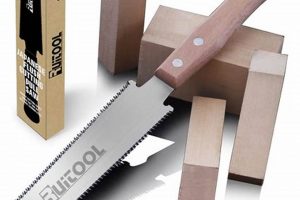
The practice involves employing a power tool equipped with a rotating toothed blade to cut various wood materials. This technique allows for the creation of straight cuts, bevels, and, with specific attachments, grooves and rabbets. Applications range from simple tasks like cutting lumber to length, to more intricate projects such as building furniture or framing structures. The tool’s portability and versatility make it a common choice for both professional woodworkers and hobbyists.
The use of this cutting method offers several advantages, including speed and precision. Compared to hand tools, it significantly reduces the time required to complete a project. Historically, its adoption revolutionized the woodworking industry, enabling faster production and more complex designs. The resulting efficiency contributed to the mass production of wooden goods and the development of modern construction techniques.
A more detailed exploration of blade selection, safety practices, cutting techniques, and available accessories for this tool will follow, providing a comprehensive understanding of its capabilities and limitations. Understanding these aspects is crucial for maximizing efficiency and ensuring safe operation.
Tips for Efficient Woodworking with a Circular Saw
The following tips outline crucial aspects for safe and effective woodworking utilizing a circular saw. Adherence to these principles optimizes project outcomes and minimizes potential hazards.
Tip 1: Blade Selection is Paramount: Choose a blade appropriate for the specific wood species and cut type. A blade with fewer teeth is suitable for ripping (cutting along the grain), while a blade with more teeth provides a smoother crosscut (cutting against the grain). Incorrect blade selection can lead to splintering, tear-out, and increased cutting effort.
Tip 2: Secure Workpiece Fixation: Ensure the workpiece is firmly clamped or otherwise secured before initiating the cut. Movement during operation can result in inaccurate cuts and potentially dangerous kickback.
Tip 3: Maintain a Steady Cutting Speed: Avoid forcing the saw through the material. Allow the blade to cut at its optimal rate. Excessive pressure can overheat the motor, dull the blade prematurely, and increase the risk of kickback.
Tip 4: Utilize a Guide for Straight Cuts: Employ a straight edge or rip fence to guide the saw when making long, straight cuts. This ensures accuracy and consistency, especially for projects requiring precise dimensions.
Tip 5: Practice Plunge Cutting Techniques: For internal cuts, master the plunge cutting technique. Carefully lower the rotating blade into the wood, ensuring a stable and controlled entry. Always wear appropriate eye protection during this procedure.
Tip 6: Inspect the Blade Regularly: Before each use, examine the blade for any signs of damage, such as chipped teeth or warping. A damaged blade compromises cutting performance and increases the risk of breakage during operation.
Tip 7: Wear Appropriate Safety Gear: Always wear safety glasses or a face shield to protect eyes from flying debris. Hearing protection is also recommended, especially during prolonged use. A dust mask or respirator is crucial to prevent inhalation of sawdust.
These tips, when implemented consistently, promote efficient and safe operation. Prioritizing careful technique and proper equipment maintenance are essential for successful woodworking projects.
The subsequent sections will delve into specific projects and advanced techniques that further demonstrate the versatility of this valuable woodworking tool.
1. Blade Selection

Proper blade selection is fundamental to successful and safe operation when utilizing a circular saw for woodworking. The chosen blade dictates the quality of the cut, the speed of the operation, and the overall suitability of the tool for a given task.
- Tooth Count and Geometry
The number of teeth on a circular saw blade directly correlates to the smoothness of the cut. Higher tooth counts are optimal for crosscutting, producing finer finishes with minimal splintering. Conversely, lower tooth counts are more efficient for ripping lumber, facilitating faster material removal along the grain. Tooth geometry, including the grind and hook angle, further influences cutting performance in different wood types.
- Kerf Thickness
The kerf, or width of the cut produced by the blade, impacts material yield and dimensional accuracy. Thinner kerf blades remove less material, resulting in increased efficiency and reduced waste, particularly crucial when working with expensive hardwoods. However, thicker kerf blades may offer increased stability and resistance to deflection, especially when cutting thicker stock or dealing with knots.
- Blade Material and Coating
The blade’s composition and any applied coatings significantly influence its longevity and cutting performance. Carbide-tipped blades offer superior durability and resistance to wear compared to steel blades, making them suitable for extended use and harder materials. Coatings such as Teflon reduce friction, minimizing heat build-up and improving cutting efficiency.
- Blade Diameter and Arbor Size
Compatibility with the circular saw is determined by the blade’s diameter and arbor size (the hole in the center of the blade). Using an incorrectly sized blade or arbor hole can lead to hazardous operating conditions and potential damage to the tool. Ensure the blade matches the saw’s specifications to maintain safe and efficient operation.
Therefore, informed blade selection is not merely a matter of preference but a critical decision impacting the efficiency, accuracy, and safety of any woodworking project involving a circular saw. Understanding the nuances of tooth count, kerf thickness, blade material, and compatibility ensures optimal results and prolongs the lifespan of both the blade and the tool.
2. Kerf Management

Kerf management is a crucial element in woodworking that directly affects the precision and material utilization when employing a circular saw. Accurate accounting for the blade’s kerfthe width of material removed by the saw bladeis essential for achieving desired dimensions and minimizing waste.
- Dimensional Accuracy
Failing to account for the kerf can lead to cumulative errors in projects involving multiple cuts. Each cut removes a small amount of material, and neglecting this removal can result in undersized components and misaligned assemblies. For example, when building a cabinet, even slight discrepancies accumulate, potentially preventing the doors from fitting properly.
- Material Optimization
Careful planning for kerf loss allows for efficient use of stock material. By strategically arranging cuts, woodworkers can minimize waste and maximize the number of usable pieces obtained from a board. This is particularly important when working with expensive hardwoods or in situations where material availability is limited.
- Joinery Implications
The kerf significantly impacts joinery, particularly in techniques like dadoes and rabbets. Accurate kerf management ensures that these joints are sized correctly to receive mating pieces without gaps or excessive tightness. Precise joinery contributes to the strength, stability, and aesthetic appeal of the finished product.
- Blade Selection Considerations
Kerf width varies depending on the blade used. Thin-kerf blades remove less material, offering advantages in material efficiency and reduced cutting effort. However, thicker-kerf blades may provide greater stability in certain cutting applications. Selection of the appropriate blade, coupled with accurate kerf accounting, is essential for optimal results.
Effective kerf management, therefore, is integral to achieving accurate, efficient, and high-quality results when using a circular saw for woodworking. It requires careful planning, precise execution, and a thorough understanding of how the blade’s kerf affects the overall project dimensions and material utilization.
3. Cutting angle
The cutting angle is a critical parameter in circular saw woodworking, directly influencing the form and function of fabricated elements. Altering the angle of the blade relative to the workpiece enables the creation of bevels, miters, and compound cuts, expanding the tool’s capabilities beyond simple straight cuts. An incorrect cutting angle compromises the structural integrity and aesthetic appeal of the finished product.
The utilization of accurate cutting angles is exemplified in framing applications, where precise miter joints are essential for creating strong and visually appealing corners. Similarly, in furniture construction, bevel cuts contribute to the ergonomic design and visual interest of components like table edges and chair backs. The ability to control the cutting angle also facilitates the creation of complex shapes and profiles, such as moldings and decorative trim. Failure to maintain the intended cutting angle can result in gaps, misalignments, and structurally weak joints.
In summary, mastery of cutting angle adjustment and control is paramount for achieving professional results in circular saw woodworking. Proper understanding and application of this parameter are essential for creating durable, aesthetically pleasing, and structurally sound projects. Challenges may arise from inaccuracies in angle measurement or inconsistent saw operation. Consistent technique and meticulous setup are critical for success.
4. Workpiece support
Adequate workpiece support is a fundamental element in woodworking involving a circular saw. The stability and positioning of the material being cut exert a direct influence on the safety, accuracy, and quality of the resulting cuts. Inadequate support introduces the potential for material movement, vibration, and kickback, all of which compromise operator safety and precision.
For example, when cutting a large sheet of plywood, insufficient support can cause the unsupported section to sag, binding the saw blade and increasing the risk of kickback. Similarly, when crosscutting long pieces of lumber, end supports are essential to prevent the material from tipping as the cut progresses, thereby maintaining a consistent cutting angle. The use of sawhorses, roller stands, and clamping systems are common strategies employed to provide secure and stable workpiece support. Proper support ensures the blade encounters a consistent cutting force, leading to smoother, more accurate cuts.
In conclusion, robust workpiece support is not merely a supplementary consideration but an integral component of safe and precise circular saw woodworking. Prioritizing proper support mitigates hazards, enhances cut quality, and contributes to the overall success of woodworking projects. The lack of attention to workpiece support is an open invitation to accidents.
5. Motor power
Motor power, measured in amps or watts, is a critical determinant of a circular saw’s capability and effectiveness within woodworking applications. The available power dictates the tool’s capacity to cut through various wood densities and thicknesses without stalling or experiencing significant reductions in blade speed. Inadequate motor power results in slower cutting speeds, increased risk of kickback, and potential damage to both the workpiece and the tool. For instance, attempting to rip thick hardwood with a low-powered saw can lead to motor overheating and compromised cut quality. A sufficiently powered motor maintains consistent blade speed under load, enabling smooth, controlled cuts across a range of materials, from softwoods to dense hardwoods.
The practical significance of understanding motor power is exemplified when selecting a circular saw for specific woodworking tasks. A saw with higher amperage is advantageous for projects involving substantial lumber or frequent use with hardwoods, providing the necessary torque to maintain consistent cutting performance. Conversely, for lighter-duty applications, such as cutting thin plywood or trim, a lower-powered saw may suffice. The choice is, therefore, not solely a matter of cost but a function of matching the tool’s capabilities to the demands of the intended tasks. Furthermore, understanding the relationship between motor power and blade type allows users to optimize cutting performance. For example, using a thin-kerf blade on a saw with adequate motor power can further enhance cutting speed and reduce material waste.
In summary, motor power represents a fundamental aspect of circular saw woodworking, governing the tool’s versatility, efficiency, and safety. Selection of a saw with appropriate motor power, contingent upon the anticipated range of woodworking tasks, is crucial for achieving desired results and preventing premature tool failure. The interplay between motor power and other factors, such as blade selection and workpiece support, underscores the need for a holistic understanding of the factors contributing to successful circular saw operation. The challenge lies in discerning the optimal balance between power, portability, and cost, tailored to individual woodworking needs and applications.
6. Safety measures

Adherence to stringent safety measures is paramount in woodworking, particularly when utilizing a circular saw. The inherent risks associated with a high-speed rotating blade necessitate a comprehensive understanding and consistent implementation of protective protocols. Failure to prioritize safety can result in severe injury.
- Personal Protective Equipment (PPE)
The consistent use of appropriate PPE is fundamental to mitigating potential hazards. Safety glasses or a face shield protect the eyes from flying debris. Hearing protection reduces the risk of noise-induced hearing loss. A dust mask or respirator prevents the inhalation of fine sawdust particles, which can cause respiratory problems. Gloves offer a measure of protection against splinters and minor cuts. Proper PPE constitutes the first line of defense against common woodworking injuries.
- Safe Cutting Practices
Employing safe cutting practices minimizes the risk of kickback and other hazards. Securely clamping the workpiece prevents movement during the cut. Maintaining a firm grip on the saw and using a push stick when necessary keeps hands away from the blade. Avoiding overreach and maintaining a stable stance ensures control over the tool. Allowing the blade to reach full speed before contacting the wood prevents stalling and potential kickback. These practices promote controlled and predictable cutting operations.
- Tool Inspection and Maintenance
Regular inspection and maintenance are crucial for ensuring the safe and reliable operation of a circular saw. Inspecting the blade for damage, such as chipped teeth or warping, prevents blade failure during use. Ensuring the blade is properly secured and aligned minimizes vibration and improves cut quality. Checking the power cord for damage reduces the risk of electrical shock. Maintaining proper blade sharpness reduces cutting effort and the risk of kickback. A well-maintained saw operates more safely and efficiently.
- Awareness of Surroundings
Maintaining awareness of the work environment minimizes distractions and potential hazards. Ensuring adequate lighting improves visibility and reduces the risk of miscuts. Keeping the work area clear of obstructions prevents tripping hazards. Avoiding working when fatigued or under the influence of substances improves focus and reaction time. Establishing a designated safe zone free from bystanders prevents accidental injury. A safe and organized workspace contributes to a safer woodworking experience.
In conclusion, prioritizing safety measures is not merely a precautionary step but an ethical imperative in circular saw woodworking. Consistent adherence to these protocols minimizes the risk of injury, promotes a safer work environment, and contributes to the long-term enjoyment and sustainability of woodworking as a craft.
Frequently Asked Questions About Circular Saw Woodworking
The following addresses common inquiries regarding the safe and effective utilization of circular saws in woodworking. The responses are intended to provide clarity and promote informed decision-making.
Question 1: What is the appropriate blade for cutting plywood with minimal splintering?
A high tooth count blade (60 teeth or more) specifically designed for fine cuts is recommended. The blade should be designated for plywood or laminate cutting. Scoring the cut line with a utility knife prior to sawing can further reduce splintering.
Question 2: How can kickback be prevented when operating a circular saw?
Ensure the workpiece is securely clamped and properly supported. Maintain a firm grip on the saw and avoid forcing the blade through the material. Use a sharp blade and avoid cutting warped or knotted wood. Be vigilant for signs of binding, and immediately stop cutting if resistance is encountered.
Question 3: What is the correct technique for making a plunge cut with a circular saw?
Ensure the saw’s base plate is firmly supported on the workpiece. Tilt the saw forward so the blade is not in contact with the wood. Start the saw and allow it to reach full speed. Slowly lower the blade into the wood, maintaining a controlled and steady descent. Exercise caution to avoid kickback.
Question 4: How does blade kerf affect project dimensions?
The blade kerf, or the width of the cut made by the saw blade, removes material. This material loss must be accounted for when calculating cut lengths to ensure accurate project dimensions. Failure to compensate for kerf results in undersized components.
Question 5: What is the importance of wearing safety glasses when using a circular saw?
Safety glasses provide crucial protection against flying debris, such as sawdust and wood chips, which can cause serious eye injuries. Consistent use of safety glasses is essential for preventing permanent vision damage.
Question 6: How frequently should a circular saw blade be sharpened or replaced?
Blade sharpness depends on the frequency of use and the materials being cut. A dull blade requires more force to cut, increasing the risk of kickback and producing rough cuts. Blades should be sharpened or replaced when cutting becomes difficult, the cut quality deteriorates, or visible damage is present.
Proper technique, preventative measures, and regular maintenance are crucial for achieving safe and accurate results in circular saw woodworking. A proactive approach to safety and a thorough understanding of the tool’s capabilities are essential for minimizing risk and maximizing project success.
The subsequent section will delve into advanced techniques and project-specific considerations to further expand knowledge of circular saw woodworking.
Conclusion
This exploration of circular saw woodworking has underscored its significance as a fundamental skill within the craft. The discussions have detailed blade selection’s critical role, the imperative of managing kerf for dimensional accuracy, the importance of cutting angle precision, the necessity of robust workpiece support, the ramifications of adequate motor power, and the unwavering demand for adherence to safety protocols. Mastery of these elements dictates the quality, efficiency, and safety of woodworking endeavors employing this tool.
Effective application of circular saw woodworking techniques requires continuous learning and a steadfast commitment to safety. As technological advancements continue to shape the tools and methods available, maintaining a proactive approach to knowledge acquisition and skill development remains essential for both seasoned professionals and aspiring woodworkers. Consistent practice and rigorous attention to detail will ultimately determine the success and longevity of any engagement with this powerful and versatile tool.

![Best Types of Electric Saws for Woodworking [Guide] | Step-by-Step Guides, Tools & Inspiration to Build Beautiful Wooden Decor on a Budget](https://woodfromhome.com/wp-content/uploads/2026/04/th-207-300x200.jpg "Best Types of Electric Saws for Woodworking [Guide] Step-by-Step Guides, Tools & Inspiration to Build Beautiful Wooden Decor on a Budget")