![Best Types of Electric Saws for Woodworking [Guide]](data:image/svg+xml;base64,PHN2ZyB4bWxucz0iaHR0cDovL3d3dy53My5vcmcvMjAwMC9zdmciIHdpZHRoPSI0NzQiIGhlaWdodD0iNTIiIHZpZXdCb3g9IjAgMCA0NzQgNTIiPjxyZWN0IHdpZHRoPSIxMDAlIiBoZWlnaHQ9IjEwMCUiIHN0eWxlPSJmaWxsOiNjZmQ0ZGI7ZmlsbC1vcGFjaXR5OiAwLjE7Ii8+PC9zdmc+ "Best Types of Electric Saws for Woodworking [Guide] Step-by-Step Guides, Tools & Inspiration to Build Beautiful Wooden Decor on a Budget")
Powered cutting tools significantly enhance efficiency and precision in various woodworking applications. These tools replace manual methods, offering increased speed and accuracy for tasks ranging from simple cuts to complex joinery. This category encompasses a diverse range of equipment, each designed for specific functions and materials.
The adoption of mechanized cutting tools has revolutionized woodworking, enabling larger-scale projects and intricate designs previously unattainable. Enhanced safety features integrated into modern electric models contribute to a safer working environment. The ability to consistently produce accurate cuts reduces material waste and improves overall project quality.
The following sections will examine several distinct categories of electric powered saws commonly used in woodworking, outlining their individual characteristics, optimal applications, and operational considerations. These categories include circular saws, jigsaws, reciprocating saws, miter saws, table saws, and band saws.
Operational Guidance
Effective utilization of powered cutting tools requires careful consideration of both safety and operational best practices. These guidelines enhance the longevity of the equipment and ensure optimal results.
Tip 1: Blade Selection: The selection of the appropriate blade is crucial. Wood type, thickness, and the desired cut quality dictate the optimal blade configuration. For instance, fine-toothed blades are suited for hardwoods and intricate cuts, while coarser blades are more efficient for softwoods and rapid material removal.
Tip 2: Maintaining Blade Sharpness: Dull blades compromise cut quality and increase the risk of kickback. Regular inspection and sharpening of blades are essential for maintaining operational safety and precision.
Tip 3: Workpiece Securing: Securely clamping the workpiece prevents movement during cutting, minimizing the risk of inaccurate cuts and potential injury. Use appropriate clamps and fixtures to stabilize the material.
Tip 4: Proper Tool Support: When operating larger equipment, such as a table saw or miter saw, ensure adequate support for long workpieces to prevent material sag, which can lead to binding and kickback.
Tip 5: Dust Collection: Wood dust is a respiratory irritant and a potential fire hazard. Implementing an effective dust collection system maintains a clean and safe working environment.
Tip 6: Safety Gear: Always wear appropriate safety gear, including eye protection, hearing protection, and respiratory protection. Gloves may be necessary for certain operations, particularly when handling rough lumber.
Tip 7: Cord Management: Keep power cords clear of the cutting path to prevent accidental damage and potential electrocution hazards. Use extension cords of appropriate gauge and ensure they are properly grounded.
Adhering to these best practices contributes to safer, more efficient, and ultimately more successful woodworking endeavors.
The concluding section will offer a concise summary of considerations for selecting the most appropriate powered cutting tool for a given woodworking task.
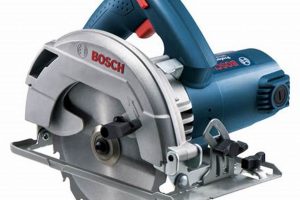
1. Circular Saws

Circular saws represent a fundamental category within powered cutting tools for woodworking. Their primary function is to execute straight cuts in wood, facilitated by a rotating circular blade. The connection between these saws and the broader classification lies in their contribution to the diverse range of capabilities offered by electrically powered cutting tools. The absence of circular saws would significantly limit the capacity to efficiently perform straight cuts, a task central to construction, carpentry, and numerous woodworking projects. For instance, framing a house heavily relies on the speed and precision of circular saws to cut lumber to the required dimensions. Failing to recognize this connection can result in inefficient tool selection, leading to increased project time and potentially compromised quality.
The design of circular saws allows for variations in blade size, motor power, and cutting depth, tailoring them to specific applications. Smaller handheld models offer maneuverability for on-site work, while larger benchtop versions provide increased stability and capacity for handling larger materials. Different blade types further enhance their versatility, enabling cuts in various wood types and even non-ferrous metals. Construction sites provide a practical example; carpenters utilize circular saws for tasks ranging from cutting plywood sheets to trimming studs, showcasing their adaptability.
The correct understanding of this relationship is essential for informed tool purchases and effective woodworking practice. Overlooking the suitability of circular saws for specific tasks can lead to the selection of less efficient or inappropriate alternatives. The effectiveness of this tool underscores its critical role within the array of powered cutting tools available to woodworkers. This section also sets the stage to consider types of blades for electric circular saw.
2. Jigsaws

Jigsaws, distinguished by their reciprocating blade action, represent a vital category within electric cutting tools for woodworking. Their utility stems from the capacity to execute curved and intricate cuts, a function not readily achievable with other types of saws. This capability solidifies their place within the spectrum of powered cutting tools available to woodworkers.
- Curvilinear Cutting
Jigsaws excel in creating non-linear cuts, facilitating the production of shapes and designs that would be challenging or impossible with straight-bladed saws. Examples include cutting curves in cabinet doors, creating decorative edges on furniture, or shaping wood for artistic projects. This characteristic makes them indispensable for projects requiring artistic flair and precise detailing. Their adaptability to creating complex shapes underscores their value.
- Blade Versatility
A wide range of jigsaw blades are available, each designed for specific materials and cut types. Blades vary in tooth count, material composition, and cutting angle, allowing the jigsaw to handle wood, metal, plastic, and other materials. The ability to switch blades quickly extends the tool’s functionality, making it a versatile option for diverse woodworking tasks. This flexibility allows a single tool to perform multiple tasks.
- Variable Speed Control
Many jigsaws feature variable speed controls, enabling users to adjust the blade speed to match the material being cut. Lower speeds are generally preferred for hardwoods and metals to prevent overheating and maintain control, while higher speeds are suitable for softer woods. This adaptability contributes to cleaner cuts and reduces the risk of blade breakage. The control offered by variable speed significantly impacts cut quality.
- Bevel Cutting Capability
Certain jigsaws incorporate a bevel cutting function, allowing the blade to be angled relative to the base plate. This feature enables angled cuts, useful for creating beveled edges or joining pieces at an angle. The inclusion of this function increases the jigsaw’s versatility and extends its applications in woodworking projects requiring non-perpendicular joints.
The collective attributes of jigsawscurvilinear cutting, blade versatility, speed control, and bevelingestablish their distinct position among electric saws for woodworking. Their capacity to address specific cutting requirements complements the functionalities of other tools, enhancing the overall efficiency and creative potential of woodworking endeavors. The absence of jigsaws would limit the execution of curved and intricate cuts, hindering artistic expression and design flexibility.
3. Miter Saws

Miter saws represent a specialized category within the broader spectrum of electric saws for woodworking, distinguished by their precision in executing accurate angle cuts. This capability makes them indispensable for tasks demanding precise joinery, such as creating picture frames, molding, and trim work. The effectiveness of miter saws directly enhances the quality and aesthetic appeal of woodworking projects where angular accuracy is paramount. For instance, in crafting a perfectly fitted crown molding around a room, a miter saw provides the necessary control to achieve seamless corners. Without this level of precision, projects may exhibit gaps or misalignments, detracting from the overall finish.
The operational mechanism of a miter saw involves a circular blade mounted on a pivoting arm. This design allows the blade to be lowered onto the workpiece at a pre-set angle. Compound miter saws further enhance functionality by enabling the blade to tilt, facilitating bevel cuts in addition to miter cuts. This dual capability proves advantageous in creating complex joints that require both angle and slope, such as those found in elaborate furniture designs or architectural details. The integration of laser guides or digital readouts on advanced models ensures even greater accuracy, minimizing errors and reducing material waste. The presence of such features directly correlates with the user’s ability to achieve professional-grade results.
In summary, miter saws occupy a critical niche within the classification of electric saws for woodworking. Their ability to deliver consistent and precise angle cuts directly impacts the quality and complexity of woodworking projects. Recognizing the specific applications and capabilities of miter saws is essential for woodworkers seeking to achieve accurate joinery and professional finishes. Understanding the operational principles and safety considerations of miter saws is vital for maximizing their potential while minimizing the risk of injury.
4. Table Saws
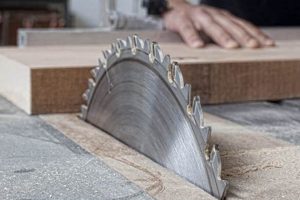
Table saws represent a cornerstone within the category of electric saws for woodworking. Characterized by a circular blade projecting through a flat table surface, these saws are primarily used for ripping (cutting along the grain) and crosscutting (cutting across the grain) lumber. Their relevance is rooted in their capacity to deliver precise, repeatable cuts, essential for a wide range of woodworking applications.
- Blade Height and Angle Adjustment
The ability to adjust both the height and angle of the blade is a defining feature. Blade height adjustment allows for controlling the depth of cut, accommodating varying thicknesses of wood. Angle adjustment enables bevel cuts, expanding the versatility of the saw for creating angled joints and decorative elements. For instance, crafting cabinet doors often requires both precise height and angle adjustments to ensure a seamless fit. This adjustability contributes significantly to the saw’s utility.
- Rip Fence and Miter Gauge
These are critical accessories that enhance the accuracy and safety of table saw operations. The rip fence serves as a guide for ripping lumber, ensuring consistent width cuts. The miter gauge allows for accurate crosscuts at specific angles. A practical example involves constructing a table leg, where the rip fence ensures uniform leg thickness, and the miter gauge guarantees precise angled cuts for attaching the legs to the tabletop. These accessories are integral to the saw’s functionality.
- Safety Features
Modern table saws incorporate various safety features to mitigate the risks associated with blade exposure. These features include blade guards, anti-kickback pawls, and riving knives. Blade guards provide a physical barrier to prevent accidental contact with the blade. Anti-kickback pawls prevent the workpiece from being thrown back towards the operator. Riving knives maintain the kerf (the cut made by the blade), reducing the risk of binding and kickback. Using these safety features during cutting is paramount.
- Dust Collection Integration
Woodworking generates substantial amounts of dust, posing health and safety hazards. Many table saws feature ports designed for connection to dust collection systems. Integrating a dust collector minimizes airborne dust, improving visibility and reducing the risk of respiratory issues. A clean workspace directly contributes to a safer and more efficient work environment. Thus, a dust collection system must be integrated when operating a table saw.
The features of blade height and angle adjustment, rip fence and miter gauge, built-in safety measures, and dust collection integration collectively define the role of table saws within electric saws for woodworking. The versatility and precision offered by table saws make them indispensable for both professional woodworkers and serious hobbyists.
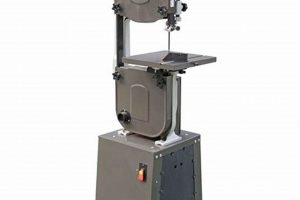
5. Band Saws
Band saws occupy a significant position within the category of electric saws for woodworking, characterized by a continuous, looped blade that moves in one direction. Their inclusion within this classification stems from their unique capabilities in resawing, cutting curves, and handling thick stock. Without band saws, certain woodworking tasks would become substantially more challenging or impossible, underscoring their importance as a specialized component. Cabinet makers often use band saws to cut curved legs for furniture or to resaw thick boards into thinner veneers, tasks where the blade’s continuous cutting action is crucial.
Band saws offer advantages in terms of material usage and precision when compared to some other saw types. The narrow blade kerf results in less material waste, a critical factor when working with expensive hardwoods. Furthermore, their ability to cut intricate curves accurately makes them indispensable for creating complex shapes and designs. For example, luthiers use band saws to shape the bodies of guitars and other stringed instruments, showcasing the tool’s capacity to execute fine and precise cuts. The relatively quiet operation of band saws, compared to some other power saws, also contributes to a more comfortable working environment.
In summary, the connection between band saws and the overall set of electric saws for woodworking is defined by their unique cutting abilities, particularly in curved cuts and resawing. While other saw types excel in straight cuts, band saws provide a complementary capability that enhances the versatility of a woodworking shop. Selecting the appropriate saw for a specific task is essential for efficient and precise woodworking, and the band saw is a crucial tool for certain specialized applications. The effective use of band saws, coupled with the proper maintenance and blade selection, enables woodworkers to expand their design possibilities and achieve high-quality results.
Frequently Asked Questions
The following section addresses commonly encountered queries regarding the selection and application of electric saws in woodworking. Clarification of these points facilitates informed decision-making and promotes safer, more effective woodworking practices.
Question 1: What is the primary distinction between a circular saw and a table saw?
The primary distinction lies in their mode of operation and typical applications. A circular saw is a handheld tool used for making cuts on materials in situ, while a table saw is a stationary tool where the material is guided across a rotating blade. Circular saws offer portability, whereas table saws prioritize precision and repeatability for dimensional lumber.
Question 2: When is a jigsaw the preferred choice over other saw types?
A jigsaw is most suitable when executing curved or intricate cuts. Its reciprocating blade allows for maneuvering along non-linear paths, a capability not readily available with circular or table saws. Applications include creating decorative edges, cutting openings for sinks, and shaping artistic elements.
Question 3: What determines the appropriate blade selection for a miter saw?
Blade selection for a miter saw depends on the material being cut and the desired cut quality. Fine-toothed blades are recommended for hardwoods and achieving smooth, splinter-free cuts. Coarser blades are more efficient for softwood and rapid material removal. Aluminum requires specialized non-ferrous metal cutting blades.
Question 4: What safety precautions are essential when operating a band saw?
Essential safety precautions include wearing eye protection, keeping fingers away from the blade, using push sticks for small pieces, and ensuring proper blade tension. Additionally, the operator should be familiar with the saw’s operation and emergency stop procedures. Avoid wearing loose clothing.
Question 5: How does the throat capacity of a band saw affect its utility?
The throat capacity of a band saw refers to the distance between the blade and the frame of the saw. A larger throat capacity allows for cutting wider pieces of material. Therefore, the throat capacity should be considered in relation to the dimensions of the workpieces typically encountered.
Question 6: What are the key considerations when selecting a cordless circular saw?
Key considerations for cordless circular saws include battery voltage, amperage, blade size, and motor type. Higher voltage and amperage translate to greater power and runtime. Brushless motors offer increased efficiency and longevity. Blade size determines the maximum cutting depth.
This FAQ provides a foundational understanding of common questions. Always consult manufacturer guidelines and seek professional instruction for safe and effective operation.
The following section will conclude this document with a summary of key recommendations for safe and efficient sawing.
Conclusion
The examination of “types of electric saws for woodworking” reveals a diverse array of tools, each tailored to specific cutting tasks. From the portability of circular saws to the precision of miter saws and the versatility of band saws, woodworkers possess a range of options for achieving accurate and efficient results. Appropriate selection depends on project requirements, material properties, and desired outcomes. Prioritizing safety through adherence to operational guidelines and the use of protective equipment remains paramount.
Mastery of woodworking demands a thorough understanding of tools and techniques. Continued exploration of emerging technologies and innovative approaches will further enhance the craft. Diligence in safety practices and dedication to skill development are essential for ensuring both personal well-being and the production of high-quality work. The informed and responsible use of power tools contributes to the longevity and sustainability of the woodworking tradition.