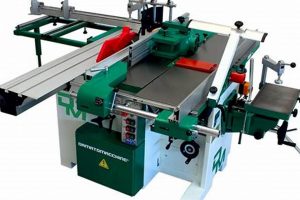
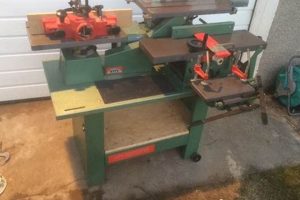
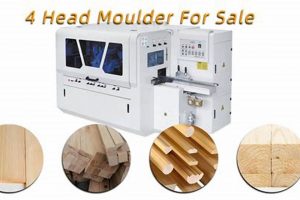
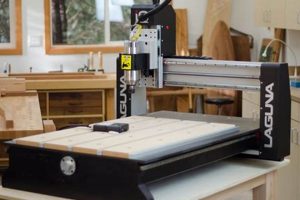
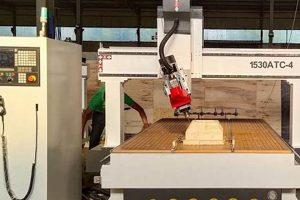
A specialized power tool employed in carpentry, cabinetmaking, and related crafts, this device shapes wood through the precise removal of material by a rotating cutter. These tools are frequently utilized to create intricate designs, joinery, and decorative elements in wood projects. For example, one might employ this type of equipment to cut dovetail joints for drawers or to create raised panels for cabinet doors.
The importance of this equipment lies in its capacity to deliver repeatable accuracy and intricate detailing, tasks often difficult or impossible to achieve by hand. Historically, it has evolved from simpler manual machines to sophisticated computer-controlled (CNC) versions, enabling greater precision and automation in woodworking processes. This evolution has allowed for increased production efficiency and the ability to create complex geometries.
The following sections will delve into the various types of these machines, their specific applications within the field, safety considerations when operating them, and the criteria for selecting the most suitable model for different woodworking needs.
Operating a Woodworking Milling Machine
This section provides vital recommendations for optimizing performance, safety, and project quality when utilizing a woodworking milling machine.
Tip 1: Secure Workpiece Clamping: Prior to initiating the milling process, ensure the workpiece is rigidly secured to the machine’s table. Insufficient clamping can result in material movement, leading to inaccurate cuts and potential safety hazards. Employ appropriate clamps and fixtures to maintain stability throughout the operation.
Tip 2: Cutter Selection and Speed Optimization: The choice of cutting tool significantly impacts the finish and efficiency of the milling operation. Select cutters designed for the specific wood type and desired profile. Optimize spindle speed based on cutter diameter and material hardness to prevent burning or splintering.
Tip 3: Gradual Material Removal: Avoid attempting to remove excessive material in a single pass. Implement multiple shallow cuts to reduce stress on the cutter and minimize the risk of tear-out, particularly when working with hardwoods. This approach enhances precision and surface quality.
Tip 4: Maintaining Cutter Sharpness: Dull cutting tools increase friction, generate heat, and produce substandard results. Regularly inspect and sharpen cutters to ensure optimal performance and extend their lifespan. Consider professional sharpening services for complex cutter profiles.
Tip 5: Dust Collection Implementation: Woodworking milling generates significant dust. Employ a dedicated dust collection system to maintain a clean and safe working environment. Effective dust removal improves visibility, reduces health risks, and prolongs the life of the machine’s components.
Tip 6: Proper Machine Maintenance: Regular maintenance is crucial for the longevity and accurate function of a woodworking milling machine. Consistently lubricate moving parts, check belt tension, and clean the machine after each use to remove debris. A well-maintained machine ensures consistent and precise results.
Tip 7: Adherence to Safety Protocols: Always wear appropriate personal protective equipment, including safety glasses, hearing protection, and a dust mask. Be aware of the machine’s emergency stop mechanisms and operating procedures. A commitment to safety prevents accidents and injuries.
These tips are essential for safe and efficient operation, contributing to superior woodworking outcomes. Adherence to these guidelines enhances the precision, safety, and overall quality of projects.
The subsequent sections will expand upon the practical applications of woodworking milling machines and provide guidance on selecting the appropriate machine for specific woodworking needs.
1. Precision Material Removal

Precision material removal constitutes a core function of equipment designed for wood shaping. This capability allows the controlled subtraction of wood fibers to achieve specified dimensions, shapes, and surface finishes. The efficacy of this process is fundamentally linked to the mechanics, design, and operational technique applied to the woodworking apparatus. For instance, in crafting intricate molding profiles, the precise and repeatable action of the machines cutter against the wood blank determines the fidelity of the replicated design. A failure in precision leads to dimensional inaccuracies, aesthetic defects, and potential structural weakness in the finished product. In mass production settings, deviation from precise material removal parameters compromises the interchangeability of components, resulting in assembly difficulties and quality control issues.
The achievement of precision material removal relies on several factors. Cutter geometry and sharpness, spindle speed, feed rate, and work-holding methods all contribute to the accuracy of the milling operation. Computer Numerical Control (CNC) variants exemplify the pinnacle of this technology, permitting the programming of tool paths to execute complex cuts with micrometer-level precision. These machines are critical in manufacturing scenarios where uniformity and intricate designs are paramount, such as in the production of musical instruments, furniture components, and architectural millwork. Furthermore, effective dust collection mitigates the impact of airborne particles on the cutting process, ensuring consistent visibility and reducing the risk of dimensional drift due to accumulated debris.
In summary, precision material removal is not merely a characteristic, but rather a foundational principle underlying its value within woodworking. It dictates the quality, repeatability, and complexity of achievable projects. Understanding the interplay between machine parameters and material properties is essential for optimizing performance and minimizing waste. The ongoing evolution of milling technology continues to drive improvements in precision, enabling woodworking professionals to achieve increasingly sophisticated designs and tighter tolerances.
2. Versatile Cutter Options

The operational adaptability of woodworking milling machines is significantly enhanced by the availability of diverse cutting tools, each designed for specific material removal tasks. This range of options allows for a broad spectrum of applications, enabling the creation of complex designs and precise joinery.
- Profile Cutters
These cutters, characterized by their shaped edges, are employed to create decorative moldings, edging, and complex profiles on wood surfaces. Examples include Roman ogee, cove, and chamfer bits. The selection of appropriate profile cutters determines the aesthetic characteristics of finished woodworking projects, impacting the visual appeal of furniture, cabinetry, and trim work.
- Joinery Cutters
Specialized cutters facilitate the creation of interlocking joints essential for constructing sturdy and durable wooden structures. Dovetail cutters, mortise and tenon cutters, and rabbeting bits fall into this category. The precision and strength of these joints directly influence the structural integrity and longevity of assembled wood products, such as drawers, frames, and casework.
- Surface Planing Cutters
These cutters are utilized to flatten and smooth wood surfaces, preparing them for subsequent finishing or assembly. Fly cutters and surfacing bits are common examples. The quality of the prepared surface impacts the adhesion of finishes, the accuracy of subsequent machining operations, and the overall aesthetic of the completed project.
- Specialty Cutters
A variety of specialty cutters cater to niche applications and unique design requirements. Examples include carving bits, lettering bits, and slotting cutters. These specialized tools enable the creation of custom embellishments, personalized details, and intricate features that distinguish high-end woodworking pieces.
The availability of these cutter options directly influences the machine’s utility in a woodworking environment. A comprehensive selection allows operators to execute a wide range of tasks with precision and efficiency, from basic material removal to intricate decorative work. The capacity to adapt to diverse project requirements through the interchange of cutters is a defining characteristic of a versatile and valuable woodworking milling machine.
3. Variable Speed Control
Variable speed control is an integral function in woodworking milling machines, enabling the operator to adjust the rotational velocity of the cutting tool. This capability directly influences the quality of the cut, the efficiency of material removal, and the longevity of the cutting tool itself.
- Material Hardness Adaptation
Different wood species exhibit varying degrees of hardness. Variable speed control allows the operator to reduce the spindle speed when working with hardwoods such as oak or maple, preventing excessive heat buildup and reducing the risk of burning or scorching the wood. Conversely, softer woods like pine or cedar can be milled at higher speeds to maximize material removal rates without compromising surface finish. Adjustment of speed allows for optimal processing parameters to be achieved.
- Cutter Diameter Optimization
Larger diameter cutting tools typically require lower spindle speeds than smaller diameter tools. Operating a large-diameter cutter at an excessively high speed can lead to vibration, chatter, and potentially hazardous tool breakage. Variable speed control enables the operator to reduce the spindle speed to match the cutter diameter, ensuring smooth and stable operation. Speed selection is critical to matching optimal cutting speeds.
- Surface Finish Enhancement
The rotational speed of the cutting tool directly affects the surface finish of the milled wood. Lower speeds generally produce smoother surfaces with less tear-out, particularly when working against the grain. Variable speed control allows the operator to fine-tune the spindle speed to achieve the desired surface finish, minimizing the need for subsequent sanding or polishing operations. Quality can be controlled by parameter settings.
- Safety and Tool Longevity
Operating a milling machine at an inappropriate speed can compromise safety and reduce the lifespan of the cutting tools. Excessive speeds increase the risk of kickback, splintering, and tool breakage. Conversely, insufficient speeds can cause the cutter to bind or stall, potentially damaging the motor or workpiece. Variable speed control enables the operator to select a safe and efficient operating speed, minimizing the risk of accidents and extending the life of the cutting tools.
In summary, variable speed control is a critical feature that allows for the optimization of milling parameters based on wood type, cutter diameter, and desired surface finish. Its presence enhances the machine’s versatility, improves the quality of the finished product, and promotes safe and efficient operation. The absence of variable speed control limits the machine’s adaptability and increases the risk of producing substandard results.
4. Secure Workpiece Clamping

Secure workpiece clamping constitutes a foundational principle for the safe and accurate operation of a woodworking milling machine. The connection between the two is one of direct consequence; inadequate clamping introduces a cascade of potential problems ranging from dimensional inaccuracies to outright safety hazards. The rotating cutter of the machine exerts significant forces upon the wood, and if the material is not firmly anchored, it will shift during the cutting process. This movement leads to imprecise cuts, ruining the intended dimensions and contours of the project. Furthermore, a loose workpiece can be ejected from the machine with considerable force, posing a serious risk of injury to the operator. A simple example is attempting to mill a small tenon; if the wood is not rigidly clamped, the cutter can grab the piece and throw it, potentially causing harm.
The effectiveness of workpiece clamping hinges on several factors, including the type of clamps used, their placement, and the nature of the material being milled. Various clamp types, such as toggle clamps, hold-down clamps, and vacuum fixtures, offer different levels of holding force and are suitable for different workpiece shapes and sizes. The strategic placement of clamps ensures that the clamping force is distributed evenly across the workpiece, preventing warping or distortion during the milling operation. For instance, when milling a large panel, multiple clamps must be used to prevent bowing or flexing under the cutter’s pressure. Moreover, the selection of appropriate clamping methods must consider the wood species; softer woods are more susceptible to damage from excessive clamping pressure, while hardwoods require robust clamping to prevent movement.
In conclusion, secure workpiece clamping is not merely an ancillary consideration but rather an indispensable component of safe and accurate woodworking. The investment in proper clamping equipment and the development of sound clamping techniques directly translate to improved project quality, reduced material waste, and, most importantly, a safer working environment. Failure to prioritize secure workpiece clamping undermines the capabilities of even the most sophisticated milling machine, rendering it a potential source of inaccuracies and hazards.
5. Integrated Safety Features

The presence of integrated safety features within a woodworking milling machine directly mitigates inherent risks associated with high-speed rotating cutters and potential workpiece ejection. These features represent a critical investment in operator well-being and the prevention of workplace accidents. An example of a common safety feature is a cutter guard, designed to shield the operator from direct contact with the rotating cutting tool. Activation of emergency stop mechanisms upon detection of anomalies, such as excessive vibration, is another critical safety measure, halting the machine’s operation to prevent further damage or injury. The effectiveness of these integrated elements hinges on proper design, adherence to safety standards, and consistent maintenance.
Dust collection systems, often integrated directly into the milling machine’s housing, represent a dual safety benefit. They minimize the inhalation of harmful wood dust particles, reducing the risk of respiratory illnesses, and improve visibility during operation. Interlock systems that prevent the machine from starting unless guards are in place, or immediately shut down the machine if guards are removed during operation, are additional examples of crucial integrated safety measures. Furthermore, clearly labeled controls and readily accessible emergency stop buttons facilitate quick and effective responses to unforeseen events, minimizing reaction time in potentially hazardous situations.
In conclusion, integrated safety features are not optional enhancements but fundamental components of a well-designed woodworking milling machine. Their presence significantly reduces the risk of accidents, improves operator comfort, and ensures a safer working environment. Regular inspection, maintenance, and operator training are essential to maximizing the effectiveness of these features and maintaining a proactive approach to safety within the woodworking shop.
6. Effective Dust Extraction
The operation of woodworking milling machines inherently generates substantial quantities of airborne particulate matter. Effective dust extraction is therefore inextricably linked to their safe and efficient utilization. The causal relationship is straightforward: milling machines produce fine wood dust, and without adequate extraction, this dust contaminates the work environment. The importance of this connection manifests in several key areas, namely operator health, machine performance, and the quality of the finished product. For instance, prolonged exposure to wood dust without proper ventilation can lead to respiratory illnesses, including asthma and occupational rhinitis. Moreover, accumulated dust can interfere with the machine’s precision, obstruct visibility, and pose a fire hazard.
Effective dust extraction systems typically employ a combination of strategically positioned collection ports, high-velocity airflow, and filtration mechanisms. These systems capture dust at the source, preventing it from becoming airborne and circulating throughout the workshop. Examples include cyclone separators, which remove large particles before they reach the filter, and HEPA filters, which capture even the finest dust particles. Furthermore, the proper sizing and design of the dust collection system are crucial for its effectiveness. An undersized system will be unable to maintain adequate airflow, while a poorly designed system may create dead zones where dust accumulates. In practical application, a well-maintained dust extraction system minimizes the need for manual cleanup, reduces the risk of health problems, and contributes to a cleaner, safer, and more productive work environment.
In conclusion, effective dust extraction is not merely an ancillary consideration but a fundamental requirement for the responsible and efficient operation of woodworking milling machines. Its benefits extend beyond regulatory compliance to encompass operator health, machine longevity, and product quality. The challenges associated with dust extraction, such as selecting the appropriate system and maintaining its performance, underscore the need for careful planning and ongoing attention to detail. Prioritizing dust extraction is essential for ensuring the long-term viability and sustainability of woodworking practices.
7. Durable Machine Construction

The sustained performance and operational lifespan of equipment depend significantly upon the robustness of their construction. Within the context of equipment employed for shaping wood, durability assumes paramount importance due to the demanding nature of the tasks performed, the vibrational forces encountered, and the potential for exposure to abrasive materials.
- Cast Iron Framework
The utilization of cast iron for critical structural components, such as the base and column, provides exceptional rigidity and vibration damping. A cast iron framework minimizes deflection under load, contributing to enhanced accuracy and reduced tool wear. The increased mass inherent in cast iron construction further dampens vibrations, resulting in a smoother cutting action and improved surface finish. In contrast, lighter-weight materials are prone to flexing and vibration, negatively impacting performance and longevity.
- Precision Spindle Assembly
The spindle assembly, which houses the rotating cutting tool, is subject to high-speed rotation and substantial cutting forces. Durable machine construction necessitates the use of precision-engineered bearings, hardened steel spindles, and robust lubrication systems. High-quality bearings minimize friction and heat generation, extending the lifespan of the spindle assembly and maintaining accurate cutting performance. Proper lubrication further reduces wear and tear, ensuring smooth and consistent operation over extended periods. Deficiencies in the spindle assembly manifest as increased vibration, reduced accuracy, and premature failure.
- Robust Drive System
The drive system, responsible for transmitting power to the spindle, must be capable of delivering consistent torque and speed under varying load conditions. Durable machine construction incorporates heavy-duty motors, reinforced belts or gears, and reliable speed control mechanisms. A robust drive system ensures consistent cutting performance, prevents stalling, and extends the lifespan of the machine. Under-engineered drive systems are susceptible to overheating, belt slippage, and premature motor failure, leading to operational downtime and reduced productivity.
- Protective Coatings and Finishes
The application of durable coatings and finishes protects the machine’s components from corrosion, abrasion, and the accumulation of wood dust. Protective coatings, such as powder coating or epoxy paint, provide a barrier against moisture and chemical exposure, preventing rust and degradation. Abrasion-resistant finishes protect critical surfaces from wear and tear caused by repeated contact with workpieces or tooling. The absence of protective coatings accelerates the deterioration of the machine’s components, reducing its lifespan and potentially compromising its performance.
These construction elements collectively contribute to a machine’s ability to withstand the rigors of continuous use, maintaining accuracy, performance, and safety over an extended operational lifespan. Choosing such equipment will lead to higher efficiency.
Frequently Asked Questions
The following section addresses common inquiries regarding the selection, operation, and maintenance of woodworking milling machines. The information presented aims to provide clarity and guidance for both novice and experienced woodworkers.
Question 1: What are the primary differences between a router and a woodworking milling machine?
Routers are typically handheld tools designed for edge profiling and shallow cuts, whereas milling machines are stationary power tools engineered for precision material removal across larger workpieces. Milling machines generally offer greater rigidity, power, and accuracy than routers.
Question 2: What safety precautions should be observed when operating a woodworking milling machine?
Mandatory safety measures include wearing appropriate personal protective equipment (PPE), such as safety glasses, hearing protection, and dust masks. The operator should also ensure that the workpiece is securely clamped, guards are in place, and emergency stop mechanisms are readily accessible. Proper machine maintenance is also crucial.
Question 3: What types of cutting tools are compatible with woodworking milling machines?
These machines accommodate a wide variety of cutting tools, including profile cutters, joinery cutters, surface planing cutters, and specialty cutters. The selection of cutting tools depends on the specific woodworking task and the desired profile or shape.
Question 4: How is spindle speed optimized for different wood species and cutting tools?
Spindle speed should be adjusted based on the hardness of the wood and the diameter of the cutting tool. Harder woods and larger diameter cutters generally require lower spindle speeds to prevent burning or splintering. Consulting manufacturer guidelines for specific recommendations is advisable.
Question 5: What are the key considerations when selecting a woodworking milling machine for a home workshop?
Factors to consider include the available workspace, budget constraints, power requirements, and desired level of precision. Smaller benchtop milling machines are often suitable for home workshops, while larger floor-standing models offer greater capacity and power for professional applications.
Question 6: How frequently should a woodworking milling machine undergo maintenance?
Regular maintenance is essential for preserving the machine’s performance and extending its lifespan. Lubricating moving parts, checking belt tension, cleaning the machine after each use, and inspecting cutting tools for sharpness are all important maintenance tasks. A preventative maintenance schedule should be established based on usage frequency and manufacturer recommendations.
These questions and answers provide a foundational understanding of woodworking milling machines. Additional research and training are recommended for advanced applications and complex woodworking projects.
The subsequent section will delve into case studies that demonstrate the practical applications of milling machines in various woodworking projects.
Conclusion
The preceding exploration of milling machine for woodworking has illuminated its multifaceted role in shaping wood materials with precision and efficiency. Critical aspects, including the selection of appropriate cutter types, implementation of secure workpiece clamping, and adherence to stringent safety protocols, directly impact the quality and safety of woodworking endeavors. The adaptability afforded by variable speed control and the benefits derived from effective dust extraction underscore the machine’s complexity and the need for informed operational practices.
The continuous evolution of this technology promises further advancements in accuracy, automation, and material versatility. A commitment to mastering the principles outlined herein will enable woodworkers to harness the full potential of the milling machine for woodworking, contributing to both enhanced craftsmanship and safer working environments. Continued research and rigorous adherence to established best practices remain essential for sustained progress within the craft.