



A work-holding device used in woodworking secures materials together or to a work surface. These tools apply pressure to maintain a fixed position during assembly, gluing, or finishing processes. An example involves using several of these devices to hold pieces of wood while adhesive sets, ensuring a strong and accurate bond.
The utility of these devices is paramount in achieving precise and stable woodworking projects. They ensure components remain aligned, preventing shifting or movement that can compromise the integrity of the final product. Historically, their design has evolved from simple wooden wedges to sophisticated mechanical systems, reflecting advancements in both materials and manufacturing techniques, all to enhance efficiency and holding power.
The following sections will examine various types of these tools, their specific applications, and best practices for their utilization in a woodworking environment. Factors such as size, material, and clamping force will be considered to provide a thorough understanding of selecting the appropriate tool for a given task.
Essential Usage Tips
Effective utilization of work-holding devices in woodworking significantly enhances project quality and efficiency. Adherence to the following guidelines will optimize performance and ensure reliable results.
Tip 1: Select the Appropriate Type. Consider the material thickness, joint configuration, and required pressure. Using an undersized or mismatched tool compromises holding power and project stability.
Tip 2: Protect Wood Surfaces. Employ protective pads or cauls between the device and the wood to prevent indentations or damage, particularly with softer woods or delicate finishes. Scratches degrade both appearance and structural integrity.
Tip 3: Distribute Pressure Evenly. Utilize multiple devices strategically placed across the workpiece. Concentrated pressure at a single point leads to uneven clamping and potential distortion.
Tip 4: Avoid Over-Tightening. Excessive force risks damaging the wood fibers, weakening the joint, or stripping the device’s threads. Apply only sufficient pressure to secure the components firmly.
Tip 5: Maintain Cleanliness. Remove adhesive residue and sawdust from the device’s threads and surfaces after each use. Contamination reduces clamping force and accelerates wear.
Tip 6: Inspect Regularly. Periodically examine the device for signs of wear, such as bent spindles, cracked jaws, or stripped threads. Replace damaged tools immediately to prevent failure during critical assembly stages.
Tip 7: Utilize a Consistent Clamping Sequence. Establish a sequence to ensure uniform pressure and minimize the risk of misalignment. Tightening devices in a staggered pattern helps distribute stress effectively.
Proper selection, application, and maintenance of these devices are essential for achieving strong, accurate, and professional-looking woodworking projects. Ignoring these fundamentals can lead to wasted materials, compromised joints, and unsatisfactory results.
The subsequent sections will delve into advanced techniques and specialized devices for unique woodworking applications, building upon the foundational knowledge presented herein.
1. Holding Power

Holding power, in the context of woodworking tools, directly relates to the ability of a device to maintain consistent and secure pressure on workpieces. This attribute dictates the accuracy and strength of joinery and is a critical factor in determining the suitability of a specific device for a particular woodworking task.
- Clamping Force and Material Resistance
Clamping force, measured in pounds or kilograms, quantifies the pressure exerted by the device. The required clamping force is directly proportional to the resistance of the materials being joined. Harder woods, such as maple or oak, demand higher force than softer woods like pine or cedar. Insufficient force leads to incomplete bonding and weakened joints, while excessive force risks damage to the wood fibers.
- Surface Area and Pressure Distribution
The surface area of the clamping jaws and the method of pressure distribution significantly impact holding power. Devices with wider jaws distribute force over a larger area, reducing the risk of localized damage and improving the overall grip. Devices with non-parallel jaws, or those used without cauls, concentrate pressure at specific points, potentially causing indentations or distortion. Even distribution is paramount for achieving uniform adhesion and structural integrity.
- Mechanism Design and Thread Integrity
The design and construction of the devices mechanism play a crucial role in maintaining holding power over time. Devices with robust threaded spindles and locking mechanisms are less prone to slippage or loosening under pressure. Worn or damaged threads compromise the clamping force and increase the risk of joint failure. Regular maintenance and inspection are essential for ensuring the devices mechanism operates reliably.
- Joint Type and Adhesive Properties
The type of joint being created and the properties of the adhesive used influence the necessary holding power. More complex joints, such as mortise and tenon or dovetail joints, may require higher clamping force to ensure proper alignment and secure bonding. Adhesives with slower curing times necessitate sustained pressure for extended periods. The device selected must be capable of maintaining the required pressure throughout the adhesive’s curing process.
The correlation between holding power and device selection dictates the success of woodworking projects. Understanding the interplay between clamping force, material resistance, mechanism integrity, and joint characteristics enables the selection of the appropriate device for achieving strong, accurate, and durable results. Neglecting these considerations leads to compromised structural integrity and aesthetically flawed outcomes.
2. Surface Protection
In woodworking, surface protection during the clamping process is a critical consideration, directly influencing the final quality and aesthetic appeal of a project. These devices, while essential for secure assembly, can exert significant pressure, potentially leading to indentations, scratches, or compression damage on the wood surface. The cause-and-effect relationship is straightforward: direct contact between the device’s jaws and the workpiece often results in undesired surface imperfections. This underscores the importance of implementing protective measures as an integral component of the process.
The implementation of surface protection techniques demonstrates a commitment to preserving the integrity of the material. Examples include the use of cauls, which are typically thin pieces of wood or other resilient materials placed between the device and the workpiece. These cauls distribute the clamping force more evenly, minimizing localized pressure points and preventing damage. Similarly, the application of protective pads made of cork, leather, or specialized foam provides a cushioning effect, absorbing pressure and preventing direct contact. The choice of protective material depends on the wood species, finish, and the required clamping force. For instance, when working with delicate veneers or softwoods, softer pads and lower clamping pressure are necessary to avoid irreversible damage.
Neglecting surface protection during clamping can lead to costly rework or material waste. The practical significance of understanding and implementing appropriate protection measures extends beyond aesthetics. Compressed or damaged wood fibers weaken the joint, potentially compromising the structural integrity of the finished piece. Therefore, surface protection is not merely a cosmetic consideration; it is a fundamental aspect of achieving reliable and durable woodworking outcomes. The integration of these protective measures into standard operating procedures ensures consistent quality and reduces the risk of costly errors.
3. Pressure Distribution

Pressure distribution is a critical factor in the effective use of work-holding devices in woodworking. The consistency and uniformity with which force is applied directly influence the strength, accuracy, and aesthetic quality of the final product. Uneven pressure distribution can lead to compromised joints, distorted workpieces, and ultimately, project failure.
- Jaw Design and Contact Area
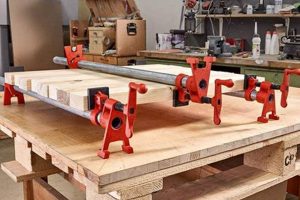
The design of a clamp’s jaws significantly impacts pressure distribution. Jaws that are not parallel or that have a small contact area concentrate force on specific points, increasing the risk of indentations and uneven clamping. Utilizing clamps with broad, flat jaws or incorporating cauls (protective pieces of wood) distributes pressure more evenly across the workpiece. An example involves using parallel-jaw clamps for edge gluing, ensuring consistent pressure along the entire seam.
- Clamping Sequence and Placement
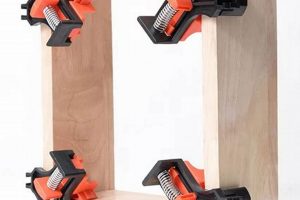
The order in which devices are tightened and their placement on the workpiece directly affect pressure distribution. Tightening devices sequentially from one end to the other can create a wave of pressure, potentially misaligning components. Staggered tightening, where devices are tightened incrementally in an alternating pattern, helps distribute force more uniformly. For instance, when assembling a frame, placing a device at each corner and tightening them in small increments prevents racking and ensures squareness.
- Material Compliance and Elastic Deformation
The compressibility of the wood being worked influences pressure distribution. Softer woods compress more easily under pressure, requiring less force to achieve a secure hold. However, excessive force can lead to crushing and permanent deformation. Harder woods require greater clamping force but are less susceptible to compression. Consideration of wood species and appropriate pressure adjustment are essential for preventing damage. An example is using lighter clamping pressure with softwood drawer boxes to avoid crushing the corners.
- Adhesive Properties and Joint Integrity
The type of adhesive used and the geometry of the joint being clamped interact with pressure distribution to affect joint integrity. Adhesives that require close contact for optimal bonding benefit from even pressure across the entire joint surface. Complex joints, such as mortise and tenon, require devices to maintain precise alignment while the adhesive cures. For example, using multiple devices to clamp a mortise and tenon joint ensures intimate contact between the mating surfaces, maximizing bond strength.
Optimal pressure distribution is a prerequisite for successful woodworking. By carefully considering device selection, clamping sequence, material properties, and adhesive requirements, woodworkers can ensure that their projects are strong, accurate, and aesthetically pleasing. Neglecting these factors leads to compromised results and potentially costly rework.
4. Material Compatibility
Material compatibility, in the context of work-holding devices, addresses the interaction between the device’s components and the materials being worked on. This compatibility is crucial to prevent damage, contamination, or unwanted reactions that can compromise the integrity and aesthetics of the finished woodworking project.
- Jaw Material and Wood Hardness
The material composition of the clamp jaws directly affects its suitability for different wood species. Metal jaws, particularly those made of hardened steel, can easily mar softer woods like pine or cedar, leaving indentations or compression marks. To mitigate this, devices with softer jaw materials, such as wood or plastic, are preferable for delicate projects. Alternatively, the use of protective pads or cauls between the metal jaw and the wood surface provides a barrier, preventing direct contact and minimizing the risk of damage. An example includes using wooden hand screws on delicate instrument building projects to avoid marking the wood.
- Adhesive Compatibility and Residue Transfer
Some devices incorporate materials that can react with certain adhesives used in woodworking. Residue from the device, such as oil or grease, can contaminate the adhesive bond line, weakening the joint. Conversely, some adhesives can corrode or degrade the device’s components. Careful consideration of adhesive compatibility is essential. Cleaning the surfaces of the devices thoroughly before use helps prevent contamination. Selecting devices with materials resistant to common woodworking adhesives further minimizes the risk. For example, epoxy resins can sometimes react negatively with rubber pads if they are not epoxy-safe.
- Moisture Content and Corrosion Resistance
The moisture content of the wood being clamped and the environment in which the work is performed affect the corrosion resistance of the device. High moisture levels can accelerate corrosion of metal components, reducing the device’s lifespan and potentially transferring rust or stains to the wood. Devices made from corrosion-resistant materials, such as stainless steel or aluminum, are preferable for humid environments or when working with moisture-sensitive woods. Regular cleaning and lubrication of metal devices help prevent corrosion. For instance, using stainless steel devices when working with green wood helps avoid staining from rust.
- Finish Compatibility and Contamination
The materials used in a device can interact with finishes applied to the wood. Certain plastics or rubber compounds can leach chemicals that contaminate the finish, causing discoloration or adhesion problems. Metal jaws can transfer oils or residues that interfere with the finish’s ability to bond to the wood surface. Thoroughly cleaning the wood surface before finishing and selecting devices with materials known to be finish-compatible minimize these risks. The use of wax paper or plastic sheeting as a barrier between the device and the finished surface provides additional protection. Consider an oil finish on a woodworking clamp to prevent the transfer of substances to the wood during finish application.
The careful consideration of material compatibility is fundamental to achieving high-quality woodworking outcomes. Selecting the appropriate devices and implementing protective measures ensures that the clamping process does not compromise the integrity or aesthetics of the finished piece. By understanding the potential interactions between the device’s components, the wood species, the adhesive, and the finish, woodworkers can minimize the risk of damage and maximize the longevity and beauty of their creations.
5. Thread maintenance
The longevity and operational efficiency of woodworking devices are directly correlated with consistent thread maintenance. The threaded components of these tools are integral to their functionality, enabling the application and retention of clamping pressure. Neglecting thread maintenance compromises their ability to perform effectively, leading to decreased clamping force, slippage, and eventual failure.
- Debris Accumulation and Thread Functionality
Wood dust, adhesive residue, and other particulate matter inevitably accumulate within the threads of the device. This accumulation impedes smooth operation, increases friction, and reduces the thread’s ability to grip effectively. For example, dried glue within the threads of a screw device can significantly reduce its clamping pressure. Regular cleaning with a wire brush and solvent removes accumulated debris, restoring thread functionality and ensuring consistent performance.
- Lubrication and Friction Reduction
Proper lubrication reduces friction between the threads, allowing for easier tightening and minimizing wear. Dry threads require more force to turn, increasing the risk of stripping or damaging the threads. Applying a light lubricant, such as a dry PTFE lubricant or silicone spray, reduces friction and prolongs the lifespan of the device. The appropriate lubricant selection is crucial; some lubricants attract dust, exacerbating the problem of debris accumulation. Improper lubrication can cause seizing and premature wear.
- Corrosion Prevention and Material Degradation
Exposure to moisture and certain chemicals can cause corrosion of the threaded components, particularly those made of steel. Corrosion weakens the threads, reducing their ability to withstand clamping pressure. Applying a corrosion-inhibiting lubricant or coating to the threads provides a protective barrier, preventing rust and degradation. Regular inspection for signs of corrosion and prompt treatment are essential for maintaining the device’s integrity. A device used in a humid environment may require more frequent lubrication to prevent corrosion.
- Thread Inspection and Damage Assessment
Regular inspection of the threads is crucial for identifying signs of wear, damage, or deformation. Stripped threads, bent spindles, or cracked nuts compromise the device’s ability to apply and maintain clamping force. Damaged components must be repaired or replaced to ensure safe and effective operation. Neglecting thread inspection can lead to catastrophic failure during use, potentially damaging the workpiece or causing injury. Visual inspection and thread engagement testing are common methods for assessing thread condition.
Maintaining the threads of woodworking devices is a fundamental aspect of ensuring their continued functionality and longevity. By implementing a routine thread maintenance program that includes cleaning, lubrication, corrosion prevention, and inspection, woodworkers can maximize the performance of their tools and minimize the risk of project failures. Proper thread care is not merely a cosmetic consideration; it is a critical component of safe and effective woodworking practices.
Frequently Asked Questions
The following addresses common inquiries regarding the selection, usage, and maintenance of tools employed to secure workpieces during woodworking operations.
Question 1: What clamping force is required for a given woodworking project?
The necessary clamping force depends on factors such as wood species, joint type, and adhesive properties. Hardwoods generally require more force than softwoods. Complex joints, such as mortise and tenon, often demand higher force to ensure proper alignment. Consult adhesive manufacturer guidelines for recommended pressure during curing.
Question 2: How can indentations on wood surfaces be prevented when using devices?
Protective cauls, typically made of wood or plastic, should be inserted between the device’s jaws and the workpiece. These cauls distribute pressure evenly, minimizing the risk of localized indentations. Selecting devices with wider jaws also reduces pressure concentration.
Question 3: What is the appropriate clamping sequence to ensure even pressure distribution?
A staggered clamping sequence, where devices are tightened incrementally in an alternating pattern, promotes uniform pressure distribution. Avoid tightening devices sequentially from one end to the other, as this can create uneven stress and misalignment.
Question 4: How often should the threads of a device be cleaned and lubricated?
Threads should be cleaned and lubricated after each use to remove accumulated debris and reduce friction. A wire brush and appropriate solvent, followed by a dry PTFE lubricant or silicone spray, are recommended.
Question 5: What materials are best suited for jaws that will contact delicate wood surfaces?
Jaws made of wood, plastic, or rubber are less likely to mar delicate wood surfaces compared to metal jaws. Alternatively, protective pads made of cork or leather can be affixed to metal jaws to provide a cushioning effect.
Question 6: How can corrosion be prevented on metal devices used in humid environments?
Devices made from corrosion-resistant materials, such as stainless steel or aluminum, are preferable for humid environments. Regular cleaning and the application of a corrosion-inhibiting lubricant to metal components help prevent rust and degradation.
Understanding these fundamental principles ensures the proper application and care of work-holding devices, contributing to successful and durable woodworking outcomes.
The next section will delve into specialized types of these tools and their specific applications in advanced woodworking techniques.
Conclusion
This exploration has illuminated the multifaceted role of the woodworking clamp as an indispensable tool in the craft. The discussion encompassed the importance of holding power, surface protection, pressure distribution, material compatibility, and thread maintenance. Each aspect contributes significantly to the quality and longevity of woodworking projects, underscoring the necessity for informed selection and diligent application of these devices.
The effective utilization of the woodworking clamp directly correlates with the success of woodworking endeavors. It is incumbent upon practitioners to diligently consider the principles outlined herein to ensure the attainment of precise, durable, and aesthetically pleasing results. Continued adherence to best practices will invariably elevate the standard of craftsmanship and contribute to the enduring legacy of woodworking traditions.
![Top-Rated: Best Quick Clamps for Woodworking Projects [2024] | Step-by-Step Guides, Tools & Inspiration to Build Beautiful Wooden Decor on a Budget](https://woodfromhome.com/wp-content/uploads/2026/04/th-264-300x200.jpg "Top-Rated: Best Quick Clamps for Woodworking Projects [2024] Step-by-Step Guides, Tools & Inspiration to Build Beautiful Wooden Decor on a Budget")