![Best Woodworking Planing Machine [Guide] - Reviews](data:image/svg+xml;base64,PHN2ZyB4bWxucz0iaHR0cDovL3d3dy53My5vcmcvMjAwMC9zdmciIHdpZHRoPSI0NzQiIGhlaWdodD0iMTAwIiB2aWV3Qm94PSIwIDAgNDc0IDEwMCI+PHJlY3Qgd2lkdGg9IjEwMCUiIGhlaWdodD0iMTAwJSIgc3R5bGU9ImZpbGw6I2NmZDRkYjtmaWxsLW9wYWNpdHk6IDAuMTsiLz48L3N2Zz4= "Best Woodworking Planing Machine [Guide] - Reviews Step-by-Step Guides, Tools & Inspiration to Build Beautiful Wooden Decor on a Budget")
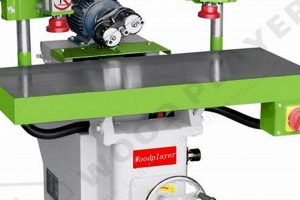
This equipment, used in woodworking, ensures timber surfaces achieve a consistent and even thickness, producing pieces with parallel faces. For instance, it can transform a rough, uneven plank into a smooth, dimensionally accurate component ready for joinery.
Dimensional accuracy and surface quality are substantially improved through its use, which streamlines subsequent assembly processes. Historically, achieving such precision required significant manual labor and specialized skill; the introduction of motorized versions significantly enhanced efficiency and repeatability, leading to widespread adoption in workshops of all sizes.
The following sections will delve into the various types of these devices, their operational principles, safety considerations, and maintenance requirements, providing a comprehensive overview for both novice and experienced woodworkers.
Operating Precision Wood Surface Flattening Devices
Maximizing the performance and longevity of this equipment requires adherence to specific operational and maintenance protocols. The following guidelines aim to optimize workflow and enhance safety.
Tip 1: Material Preparation: Prior to initiating the flattening process, thoroughly inspect the wood for foreign objects, such as nails or staples. Failure to remove these obstructions can result in significant damage to the blades and the machine itself.
Tip 2: Grain Direction Considerations: Always orient the wood with the grain running in the direction of the cut. Planing against the grain can cause tear-out, resulting in a rough, unsatisfactory surface.
Tip 3: Depth of Cut Adjustment: Implement incremental depth adjustments. Taking excessively deep cuts can strain the motor and lead to an uneven finish. Multiple passes with shallower cuts are generally preferable.
Tip 4: Consistent Feed Rate: Maintain a consistent feed rate when pushing the wood through the device. Hesitation or abrupt changes in speed can lead to inconsistencies in the surface finish.
Tip 5: Blade Sharpness Maintenance: Regularly assess the sharpness of the blades. Dull blades necessitate increased force, potentially leading to motor overload and compromised results. Sharpen or replace blades as needed.
Tip 6: Dust Collection System Integration: Ensure the dust collection system is properly connected and functioning. Efficient removal of wood shavings not only improves visibility but also mitigates the risk of respiratory irritation and fire hazards.
Tip 7: Regular Maintenance Schedules: Adhere to a routine maintenance schedule, including lubrication of moving parts and inspection of belts and pulleys. Preventative maintenance extends the equipment’s lifespan and ensures consistent performance.
Implementing these best practices will contribute to enhanced efficiency, improved surface quality, and a safer working environment when utilizing wood surface flattening machinery.
The subsequent sections will address specific models and advanced techniques to further refine woodworking skills.
1. Surface Finish

The surface finish achieved by a planing device is a direct consequence of the machine’s configuration, operation, and maintenance. The sharpness of the blades is paramount; dull blades tear wood fibers, resulting in a rough surface. Proper blade alignment ensures consistent material removal across the width of the workpiece, preventing ridges or unevenness. The rate at which the wood is fed through the machine also plays a critical role. A feed rate that is too fast can overwhelm the blades, leading to chatter and a poor finish. Conversely, a rate that is too slow can cause burning or scorching of the wood.
The benefits of a superior surface finish extend beyond mere aesthetics. A smooth, accurately planed surface provides an ideal foundation for subsequent processes such as sanding, staining, and finishing. It minimizes the amount of material that needs to be removed in these later stages, saving time and resources. Furthermore, a well-planed surface improves the adhesion of glues and finishes, resulting in stronger and more durable joints. For example, in cabinetmaking, achieving a flawlessly smooth surface on face frames ensures a professional appearance and long-lasting integrity.
In summary, the quality of the surface finish attainable through the use of planing machinery is inextricably linked to meticulous operation and upkeep. Addressing factors like blade sharpness, feed rate, and machine calibration ensures an optimal surface for all subsequent woodworking steps. Understanding this connection is pivotal for professional results.
2. Dimensional Accuracy

Dimensional accuracy, in the context of woodworking, refers to the precision with which a piece of wood conforms to specified measurements. The planing device plays a central role in achieving and maintaining this accuracy, transforming rough stock into components suitable for precise joinery and assembly.
- Parallelism of Surfaces
One primary function is to ensure that two opposing surfaces of a board are parallel. This is essential for constructing square or rectangular frames, drawers, and casework. Without parallel faces, assembly becomes difficult and the resulting structure may be unstable. For instance, if the stiles of a cabinet door are not precisely parallel after planing, the door will not close squarely within the frame.
- Thickness Consistency
This equipment is used to bring wood to a uniform thickness across its entire surface. This consistency is crucial for applications like flooring, tabletops, and drawer bottoms, where variations in thickness would lead to uneven surfaces and structural weaknesses. In constructing a multi-board tabletop, failure to ensure consistent thickness before joining will result in an uneven surface requiring extensive sanding.
- Precise Material Removal
Controlled material removal is fundamental to achieving desired dimensions. The ability to incrementally remove thin layers of wood allows for fine-tuning the dimensions of a workpiece to match specific design requirements. This level of control is critical when fitting complex joinery, such as dovetails or mortise-and-tenon joints, where even small discrepancies can compromise the integrity of the assembly.
- Elimination of Warping and Twist
While not a direct function, using this equipment can aid in correcting minor warping or twisting in lumber. By systematically removing material from high spots, the wood can be gradually flattened and straightened. However, it is important to note that severe warping may require more extensive methods, such as steaming or laminating. Using this equipment to address twisting, therefore, is best applied to stock that exhibits only minor deviations.
In summary, this machines contribution to dimensional accuracy significantly impacts the quality, stability, and appearance of finished woodworking projects. The ability to create surfaces that are parallel, consistently thick, and precisely dimensioned is essential for realizing complex designs and ensuring the long-term durability of wooden structures. Achieving accurate dimensions saves time, reduces waste, and elevates the overall craftsmanship of woodworking endeavors.
3. Material Removal

The primary function of this equipment resides in its ability to precisely remove material from a wooden workpiece. This controlled subtraction is not merely about reducing dimensions; it is fundamental to achieving flatness, parallelism, and a desired surface finish. The depth of each pass dictates the amount of wood shaved away, requiring careful calibration to prevent over-removal or surface defects such as tear-out. The relationship between blade sharpness, feed rate, and the depth of cut directly influences the efficiency and quality of the material removal process. For example, attempting to remove excessive material in a single pass with dull blades will invariably lead to a rough, uneven surface and potential damage to the machine itself. Consequently, understanding the material properties of the wood being worked, such as its density and grain direction, is crucial for optimizing material removal parameters.
The accuracy of material removal directly translates to the precision of the final product. In scenarios where tight tolerances are required, such as in the construction of fine furniture or musical instruments, even slight variations in material removal can have significant consequences. If a component requires a specific thickness of 19mm, for example, consistent and controlled material removal is essential to avoid undershooting or overshooting this dimension. Undershooting necessitates the fabrication of a new component, while overshooting can weaken the structure or require time-consuming corrective measures. Therefore, mastering the art of material removal involves a delicate balance of machine setup, wood selection, and operator skill.
In conclusion, the capability for precise material removal is intrinsic to the utility of this equipment. Its effectiveness hinges on a thorough understanding of the interplay between machine settings, material characteristics, and operational technique. Challenges in material removal, such as tear-out or uneven thickness, can be mitigated through proper blade maintenance, careful selection of feed rates, and a mindful approach to wood preparation. This core principle ensures that the benefits of surface smoothing, uniformity, and dimensional precision are fully realized during wood preparation.
4. Blade Sharpness
Blade sharpness constitutes a critical factor in the effective operation of this equipment. The state of the blade directly impacts the quality of the cut, the effort required to feed the wood, and the overall safety of the process. A sharp blade severs wood fibers cleanly, producing a smooth surface with minimal tear-out. Conversely, a dull blade crushes and tears the wood, resulting in a rough surface that requires additional sanding or planing. The relationship is causative: decreased blade sharpness directly leads to decreased surface quality and increased effort on the part of the operator.
The performance of this equipment is inextricably linked to maintaining blade sharpness. Dull blades necessitate increased force to push the wood through the machine, potentially leading to operator fatigue and a higher risk of kickback. Consider the example of planing a dense hardwood like maple; a sharp blade allows for smooth, controlled passes with minimal effort, while a dull blade requires significantly more force and results in a choppy, uneven surface. Regularly sharpening or replacing blades is, therefore, not merely a matter of convenience, but a fundamental aspect of responsible machine operation and safety.
In summary, understanding the critical role of blade sharpness is essential for anyone using this equipment. The sharpness of the blade is a primary determinant of cut quality, operational safety, and overall efficiency. Consistent maintenance of blade sharpness, through regular honing or replacement, is a prerequisite for achieving professional results and prolonging the lifespan of the planing machine. Neglecting this aspect undermines the machine’s functionality and increases the risk of producing subpar results or causing injury.
5. Feed Rate
Feed rate, in the context of planing equipment, denotes the speed at which a workpiece is advanced through the cutting mechanism. This parameter is integral to both the quality of the finished surface and the operational safety of the machinery. An appropriate feed rate optimizes material removal, minimizes defects, and contributes to the longevity of the equipment.
- Surface Finish and Feed Rate
The velocity at which wood passes through the machine directly influences the resulting surface finish. Excessively rapid advancement can lead to tear-out, where wood fibers are ripped rather than cleanly severed, resulting in a rough texture. Conversely, an unduly slow feed rate may induce burning or scoring of the wood due to prolonged exposure to the rotating cutter head. Optimal surface quality is achieved through a balanced feed rate that allows the blades to efficiently shear the wood fibers without excessive force or heat buildup.
- Motor Load and Feed Rate
The rate of feed directly affects the load placed on the motor. Pushing wood too quickly forces the motor to work harder to maintain consistent blade speed. Over time, this can lead to overheating, premature wear, and even motor failure. An appropriate feed rate allows the motor to operate within its designed parameters, prolonging its lifespan and ensuring consistent performance. For instance, when planing dense hardwoods like maple, a slower feed rate is necessary to prevent motor overload.
- Operator Control and Feed Rate
Maintaining consistent control over the workpiece during the planing process is essential for safety and accuracy. A feed rate that is too fast can make it difficult to maintain a firm grip on the wood, increasing the risk of kickback. A slower, more deliberate feed rate allows the operator to exert greater control, ensuring the wood remains flat against the table and preventing unintended deviations. Thus, operator skill and physical strength must be adequate to manage the feed rate effectively.
- Material Characteristics and Feed Rate
The characteristics of the wood itself play a significant role in determining the appropriate feed rate. Softer woods, like pine, can generally be planed at a faster rate than harder woods. Furthermore, the grain direction and presence of knots or irregularities can also influence the optimal speed. Planing against the grain, for example, typically requires a slower feed rate to minimize tear-out. Therefore, the operator must assess the material properties of the wood and adjust the feed rate accordingly.
In conclusion, feed rate is a critical parameter in the operation of woodworking planing equipment. Balancing the demands of surface finish, motor load, operator control, and material characteristics ensures both the quality of the finished product and the safe, efficient operation of the machine. Careful consideration of these facets is essential for achieving optimal results.
6. Safety Protocols
Adherence to established safety protocols is paramount when operating wood planing machinery. These protocols mitigate the inherent risks associated with high-speed rotating blades and the potential for workpiece kickback, ensuring operator well-being and preventing equipment damage. Strict adherence to these guidelines is non-negotiable for safe and efficient operation.
- Eye and Ear Protection
The operation of planing equipment generates significant noise levels and ejects wood chips at high velocity. Failure to wear appropriate eye and ear protection can result in irreversible hearing damage and serious eye injuries. Safety glasses or a face shield protect against flying debris, while earplugs or earmuffs attenuate noise levels to prevent auditory impairment. For example, a small knot ejected from a workpiece could cause severe corneal abrasion if protective eyewear is not worn.
- Proper Clothing and Restraints
Loose clothing, jewelry, and long hair pose entanglement hazards when working near rotating machinery. Loose items can be caught by the cutter head, pulling the operator into the machine and causing severe injury. Wearing close-fitting clothing, removing jewelry, and securing long hair minimizes these risks. Similarly, gloves should only be worn when handling rough stock; their use is generally discouraged during operation to prevent entanglement.
- Guarding and Safety Devices
Planing machines are equipped with guards designed to prevent accidental contact with the blade. These guards must be properly adjusted and maintained. Anti-kickback pawls and push sticks are essential safety devices. Kickback, the sudden ejection of the workpiece, can occur when the wood binds against the cutter head. Anti-kickback pawls engage the wood to prevent it from being thrown back towards the operator. Push sticks allow the operator to safely guide the workpiece through the machine without placing hands near the blade. For example, the bridge guard must always be in proper working order when planing.
- Machine Inspection and Maintenance
Regular inspection and maintenance are essential for identifying and addressing potential hazards before they lead to accidents. This includes checking blade sharpness, belt tension, and the condition of safety devices. A dull blade requires more force, increasing the risk of kickback, while loose belts can cause erratic machine performance. Consistent lubrication of moving parts reduces friction and prevents overheating. Any damaged or malfunctioning components should be repaired or replaced immediately. For instance, before each use, the machine should be inspected for any loose hardware and the blade sharpness tested.
In conclusion, the preceding safety protocols are integral to mitigating risks associated with wood planing machinery. The use of personal protective equipment, adherence to proper clothing guidelines, employment of safety devices, and diligent machine maintenance collectively minimize the potential for injury and equipment damage. Strict adherence to these protocols is not discretionary, but a fundamental requirement for safe and responsible woodworking practices.
7. Maintenance Schedule

The operational lifespan and efficiency of a wood planing machine are directly correlated to the stringency and consistency of its maintenance schedule. A well-defined maintenance schedule serves as a preventative measure, mitigating potential mechanical failures and ensuring optimal performance. The absence of such a schedule precipitates a cascade of negative consequences, ranging from diminished surface quality to outright equipment failure.
Specific components, such as the cutterhead bearings, require regular lubrication to minimize friction and prevent premature wear. Neglecting this aspect leads to increased heat generation, eventual bearing seizure, and consequential motor overload. Blade sharpness is also fundamentally linked to the maintenance schedule; dull blades not only compromise surface finish but also place undue strain on the motor, accelerating wear and potentially causing damage. For instance, a machine used daily in a professional setting necessitates more frequent blade sharpening and overall inspection compared to a machine used sporadically in a hobbyist’s workshop. The dust collection system, often an integrated component, requires regular cleaning to maintain optimal airflow and prevent motor overheating due to restricted ventilation. The ineffectiveness of dust collection can also lead to compromised air quality, posing a health risk to the operator.
In summary, adherence to a comprehensive maintenance schedule is not merely an optional task, but an integral component of responsible planing machine ownership. It directly affects the machine’s longevity, operational efficiency, and the safety of its operator. Ignoring this critical aspect translates into increased repair costs, diminished performance, and a heightened risk of equipment failure, negating the potential benefits of owning such a device.
Frequently Asked Questions
The following questions address common inquiries regarding the function, operation, and maintenance of woodworking planing equipment, providing concise and authoritative answers.
Question 1: What distinguishes a jointer from a thickness planer?
A jointer is primarily used to create flat, square edges and faces on lumber, essential for preparing stock before further processing. A thickness planer, conversely, reduces the thickness of a board to a consistent dimension across its entire surface.
Question 2: How frequently should planer blades be sharpened or replaced?
Blade sharpness depends on usage frequency and the type of wood being planed. Dullness is indicated by increased effort required for feeding the stock, a rough surface finish, or the presence of tear-out. Blades should be sharpened or replaced at the first sign of these symptoms.
Question 3: What safety precautions are paramount when operating planing equipment?
Essential safety precautions include wearing appropriate eye and ear protection, ensuring all guards are properly positioned, using push sticks to guide the workpiece, and maintaining a clean and uncluttered work area. Never reach over or around the cutter head while the machine is in operation.
Question 4: What causes tear-out during planing, and how can it be prevented?
Tear-out occurs when wood fibers are ripped rather than cleanly cut. It is often caused by planing against the grain, using dull blades, or taking too deep of a cut. Preventative measures include planing with the grain, using sharp blades, and taking shallow passes.
Question 5: How critical is dust collection for planing equipment?
Effective dust collection is crucial for maintaining a safe and healthy working environment. Wood dust is a known respiratory irritant and potential fire hazard. A properly functioning dust collection system removes airborne particles, improving visibility and minimizing health risks.
Question 6: What routine maintenance tasks should be performed on planing equipment?
Routine maintenance includes lubricating moving parts, inspecting belts and pulleys for wear, cleaning the machine to remove accumulated dust and debris, and regularly checking and adjusting blade alignment. Refer to the manufacturer’s instructions for specific maintenance recommendations.
Understanding these fundamental principles contributes to safer and more effective utilization of planing equipment.
The following sections will explore advanced techniques and troubleshooting procedures for planing equipment.
Conclusion
This exposition has clarified the operational principles, safety considerations, and maintenance requirements intrinsic to the effective utilization of a woodworking planing machine. Mastering the machine’s capabilities, from achieving dimensional accuracy to maintaining blade sharpness, directly influences the quality and efficiency of woodworking projects. Diligence in adhering to safety protocols and implementing a comprehensive maintenance schedule are not optional extras but fundamental prerequisites for responsible operation.
The woodworking planing machine, when wielded with skill and respect, remains an indispensable tool for achieving precision and quality in woodworking endeavors. Its potential to enhance efficiency and elevate craftsmanship underscores its enduring significance. Continued refinement of operational techniques and adherence to best practices will ensure its continued contribution to the field of woodworking for generations to come.