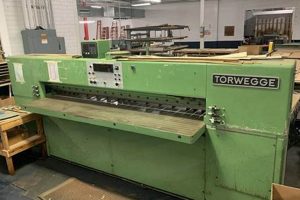
This technique involves specialized equipment designed to produce or utilize cylindrical wooden rods for joinery. These machines facilitate the creation of strong and precise connections in woodworking projects. For instance, a cabinet maker might employ this method to assemble drawers, ensuring structural integrity and a clean aesthetic.
Its significance lies in the enhanced strength and accuracy it brings to wood joints. Historically, creating these joints was a time-consuming manual process. The advent of mechanization has greatly improved efficiency and consistency. This has led to more robust and aesthetically pleasing finished products in various applications, from furniture construction to larger scale timber framing.
The following sections will delve into the different types of equipment used, the various techniques employed, and the considerations necessary for achieving optimal results with this approach.
Essential Guidelines for Effective Implementation
The following provides practical advice for maximizing the benefits of utilizing specialized equipment to create or utilize cylindrical wooden rods for joinery. These guidelines are aimed at ensuring accuracy, efficiency, and the production of high-quality results.
Tip 1: Material Selection is Critical: The choice of wood species for dowels impacts joint strength and durability. Hardwoods such as maple or oak offer superior resistance to shear stress compared to softwoods like pine.
Tip 2: Precise Dowel Diameter is Paramount: Ensure dowels are sized appropriately for the corresponding holes. Undersized dowels compromise joint strength, while oversized dowels can cause wood splitting during assembly.
Tip 3: Glue Application Technique Matters: Apply glue evenly to both the dowel and the inside surface of the hole. Excess glue can hinder proper seating, while insufficient glue weakens the bond.
Tip 4: Proper Alignment During Assembly is Key: Use clamping devices or jigs to maintain accurate alignment during glue-up. Misalignment diminishes joint integrity and affects the overall appearance of the finished piece.
Tip 5: Adequate Clamping Pressure is Necessary: Apply sufficient clamping pressure to ensure full contact between the dowel and the surrounding wood. Insufficient pressure can lead to gaps and weak joints.
Tip 6: Moisture Content Should Be Considered: The moisture content of both the dowels and the surrounding wood should be relatively consistent. Significant differences in moisture content can cause joint failure due to expansion or contraction.
Tip 7: Regularly Inspect Equipment: Routine maintenance of the equipment is crucial. Sharpening drill bits and verifying the accuracy of hole placement mechanisms will improve precision and prolong the lifespan of the machine.
Adhering to these guidelines will significantly improve the quality and longevity of wood joints. It is essential to prioritize precision and material compatibility to achieve optimal results.
The subsequent sections will delve into specific applications and troubleshooting strategies associated with this specialized form of joinery.
1. Precision Dowel Creation
Precision dowel creation is fundamental to the success of joinery relying on cylindrical wooden rods. The inherent accuracy attainable via specialized machinery directly impacts the structural integrity and aesthetic quality of woodworking projects employing this technique. Substandard dowel dimensions or inconsistencies compromise the entire assembly.
- Dimensional Accuracy
Dimensional accuracy refers to the adherence of dowels to specified measurements, particularly diameter and length. Specialized machinery can produce dowels with minimal deviation, ensuring a tight and consistent fit within drilled holes. Inaccurate dimensions lead to loose joints prone to failure or overly tight joints that can cause splitting during assembly. A cabinet, for instance, relying on imprecise dowels in its frame will exhibit instability and reduced lifespan.
- Surface Finish Quality
The surface finish of the dowel significantly affects glue adhesion. A smooth, consistent surface provides optimal bonding with the wood substrate. Automated processes, such as sanding and polishing, incorporated into the machine’s operation, produce dowels free from imperfections or contaminants. Rough or uneven surfaces reduce the surface area available for adhesion, resulting in weaker joints. The lack of a smooth surface can result in joint failures that cause parts to pull apart from each other.
- Material Uniformity
Uniformity in wood density and moisture content is crucial for consistent performance. Machines can be configured to sort and process wood stock based on these parameters, ensuring each dowel exhibits similar properties. Variations in density or moisture content can lead to differential expansion and contraction, weakening the joint over time. Example: Wood with non-uniform density can cause glue to set improperly due to moisture imbalance.
- Automated Production Efficiency
The implementation of automated dowel creation significantly enhances production efficiency. Machines can rapidly produce large quantities of consistent dowels, reducing labor costs and minimizing human error. This efficiency translates into faster project completion times and increased output for woodworking operations. For woodworking businesses, this results in cost reduction and higher profits.
These facets of precision dowel creation are intrinsically linked to specialized methods. The use of advanced machinery allows for a level of control and consistency that is unattainable through manual methods. This control is paramount in achieving strong, durable, and aesthetically pleasing woodworking projects that utilize dowel joinery.
2. Joint Strength Enhancement
The enhancement of joint strength is a primary objective in woodworking, and methods that produce or utilize cylindrical wooden rods for joinery play a crucial role in achieving this goal. The introduction of accurately placed wooden elements into a joint significantly increases its resistance to shearing forces. Specifically, the dowels act as reinforcing pins, distributing stress across a wider surface area. This contrasts with simpler joinery methods, such as butt joints, which rely solely on adhesive strength. A tangible illustration is found in furniture construction where dowel-reinforced joints in chair frames withstand repeated stress from use, preventing premature failure.
The degree of enhancement is directly proportional to the precision and quality of the utilized elements. The machines employed facilitate repeatable accuracy in dowel placement and hole alignment, which is difficult to achieve manually. Furthermore, material selection influences the overall strength; hardwoods generally provide superior reinforcement compared to softwoods. An example is the use of hardwood elements in cabinet construction, where the joints must endure significant weight and pressure. In addition to strength, the tight tolerances achievable through mechanization minimize gaps and promote optimal glue adhesion, further contributing to the robustness of the joint.
In conclusion, the effective enhancement of joint strength is intrinsically linked to the precision and control offered by machines designed for this form of joinery. The dowels’ ability to distribute stress and improve adhesive bonding, when combined with accurate placement and appropriate material selection, creates joints capable of withstanding significant forces. While challenges related to material compatibility and proper assembly techniques remain, the benefits to joint integrity are substantial and demonstrably improve the lifespan and functionality of woodworking projects.
3. Efficient Wood Assembly
Efficient wood assembly is a direct outcome of the precision afforded by specialized equipment that produce or utilize cylindrical wooden rods for joinery. The predetermination of dowel locations and the consistent execution of drilling operations significantly reduce the time required for manual alignment and adjustments during glue-up. This efficiency is particularly noticeable in projects involving multiple joints or repetitive components. For example, the mass production of cabinet frames benefits from the rapid and accurate assembly facilitated by mechanized dowel insertion, contrasting sharply with the slower, more labor-intensive methods of hand-cut joinery. The reduction in assembly time translates directly to cost savings and increased throughput for woodworking businesses.
The standardized nature of dowel joinery also simplifies the assembly process, reducing the skill level required for certain tasks. Less experienced workers can efficiently assemble components when dowel placement is consistently accurate. This allows for a division of labor within a woodworking shop, with specialized tasks assigned based on skill level, thereby optimizing overall productivity. Furthermore, the consistent alignment provided by dowels minimizes the need for extensive clamping during glue-up, reducing both clamping time and the risk of misalignment under pressure. Consider the assembly of a large bookcase; precise dowel placement ensures shelves are level and uniformly spaced, decreasing the potential for structural instability or aesthetic imperfections.
In summary, the utilization of machines that produce or utilize cylindrical wooden rods for joinery is fundamentally linked to efficient wood assembly. The accuracy and repeatability of the process minimize manual adjustments, reduce labor costs, and simplify the assembly process, leading to increased productivity and consistent product quality. Although initial investment in specialized equipment is required, the long-term benefits of efficient assembly make it a worthwhile consideration for woodworking operations of all scales. This efficiency becomes a critical advantage in competitive markets where both cost and quality are paramount.
4. Alignment Accuracy

Alignment accuracy is a critical factor determining the success and structural integrity of joinery methods that produce or utilize cylindrical wooden rods. Precise alignment ensures that mating components fit together seamlessly, distributing stress evenly across the joint and maximizing its strength. Failure to achieve accurate alignment can result in weak joints, aesthetic imperfections, and reduced lifespan of the assembled product. Specialized equipment is designed to mitigate these risks.
- Dowel Hole Precision
The accurate drilling of dowel holes is paramount. Dowel machines incorporate precise drilling mechanisms that ensure holes are positioned correctly relative to each other and to the edges of the workpiece. For example, a dowel machine might utilize a laser-guided system to locate drilling points with sub-millimeter accuracy. Imprecise hole placement leads to misalignment during assembly, creating stress points and compromising joint strength. In cabinet making, for instance, misaligned dowel holes can cause drawers to bind or frames to warp.
- Component Registration Systems
Many dowel machines feature component registration systems that ensure workpieces are consistently positioned during the drilling process. These systems may include fences, clamps, or vacuum hold-downs that precisely locate the workpiece relative to the drilling head. This consistency is crucial for achieving accurate alignment, especially in mass production scenarios. Without proper registration, variations in workpiece positioning can lead to cumulative errors, resulting in significant misalignment in the final assembly.
- Dowel Insertion Accuracy
The act of inserting dowels into the pre-drilled holes must also be performed with accuracy. Some machines automate dowel insertion, ensuring that dowels are fully seated and aligned correctly within the holes. This is particularly important when using tight-fitting dowels, where misalignment can cause splitting or damage to the workpiece. Manual dowel insertion, even with pre-drilled holes, introduces the potential for human error, which automated systems minimize.
- Impact on Joint Strength and Aesthetics
Ultimately, alignment accuracy directly affects both the strength and the aesthetics of the finished product. Accurate alignment ensures that the joint is able to withstand the intended loads, preventing premature failure. It also contributes to a clean and professional appearance, with minimal gaps or visible misalignments. A well-aligned, dowel-reinforced joint exhibits both structural integrity and visual appeal, reflecting the precision and care taken during the assembly process.
The aforementioned factors underscore the critical role of specialized equipment in achieving alignment accuracy in woodworking involving dowel joinery. The inherent precision of these machines minimizes the potential for human error, resulting in stronger, more durable, and aesthetically pleasing finished products. The investment in such equipment is therefore justified by the improved quality and efficiency it brings to the woodworking process. This is very true in dowel machine woodworking.
5. Material Consistency
Material consistency represents a crucial element in realizing the full potential of specialized equipment to produce or utilize cylindrical wooden rods for joinery. Variations in material properties can undermine the precision and strength benefits otherwise offered by these methods. Consequently, maintaining uniformity in both dowels and the surrounding wood is paramount for achieving reliable and long-lasting results.
- Moisture Content Equilibrium
Moisture content disparities between dowels and surrounding wood can induce dimensional changes, leading to joint failure. Ideally, all components should be acclimatized to a similar moisture content level prior to assembly. For instance, using kiln-dried dowels in conjunction with air-dried lumber can result in the dowels shrinking and loosening over time. Conversely, using dowels with higher moisture content can cause them to swell and exert undue pressure on the surrounding wood, potentially leading to splitting or warping. Proper storage and conditioning of materials are, therefore, essential prerequisites for stable and durable joints. The goal is to minimize stress and maintain the structural integrity of the assembly.
- Wood Density Uniformity
Variations in wood density affect the ability of dowels to effectively transfer load within a joint. Softwood dowels inserted into hardwood framing members may crush under stress, negating their reinforcing function. Conversely, overly dense dowels inserted into softer woods may cause splitting or tear-out during insertion or subsequent expansion. The selection of wood species with comparable densities for both dowels and surrounding materials is crucial for even stress distribution. Consider a scenario where oak dowels are used in pine framing; the inherent density difference will lead to uneven load bearing and premature joint failure under stress.
- Grain Orientation Considerations
Grain orientation affects the expansion and contraction characteristics of wood and consequently impacts joint stability. Dowels should ideally be oriented with their grain direction running parallel to the grain of the surrounding wood to minimize differential movement. Improper grain orientation can lead to stress concentrations and potential joint failure. For example, inserting dowels with a perpendicular grain orientation into a wood panel can result in warping or cracking as the panel expands and contracts with changes in humidity. Careful attention to grain alignment during dowel fabrication and insertion is thus essential for long-term joint stability. This meticulous approach is vital to preventing structural compromise and ensuring the lasting performance of the wooden construct.
- Adhesive Compatibility and Penetration
The type of wood influences the penetration and bonding effectiveness of adhesives used in conjunction with dowels. Certain wood species, due to their cellular structure, may absorb glue more readily than others. Consistent wood density and porosity within a joint allow for more uniform glue distribution and bonding. For instance, a porous wood, such as ash, might require a different adhesive or application technique compared to a dense wood like maple to achieve optimal bond strength. Surface preparation, such as sanding to a consistent grit, also plays a role in promoting even glue penetration. Ultimately, matching adhesive properties to the specific wood species enhances the overall strength and durability of the dowel-reinforced joint, particularly as these joints are critical for structural support.
These facets of material consistency collectively contribute to the reliability and longevity of joinery techniques. The methods that are used to produce or utilize cylindrical wooden rods for joinery can be significantly enhanced by a rigorous adherence to these considerations, ensuring the structural integrity and aesthetic quality of the final product. The goal is not merely to create a joint but to engineer a connection that will withstand the test of time and usage. Consistent and high-quality materials will improve and solidify woodworking.
6. Application Versatility

The capacity of methods producing or utilizing cylindrical wooden rods for joinery to be adapted across a broad spectrum of woodworking projects constitutes a significant advantage. This versatility stems from the fundamental principles of dowel joinery and the adaptability of the associated machinery. The cause is the inherent strength and alignment precision offered, while the effect is the suitability for diverse applications. Application versatility is not merely an added benefit; it is a core component of the value proposition, influencing its adoption across various industries and project scales. For example, the construction of intricate furniture pieces, such as chairs and tables, benefits from the precise alignment and joint reinforcement provided. Similarly, in larger-scale applications, such as cabinet making or architectural millwork, the efficiency and consistency of dowel joinery make it a viable choice. This contrasts with more specialized joinery techniques that are limited to specific contexts. The practical significance of this understanding lies in enabling woodworkers to select a joinery method that can be applied consistently across their projects, simplifying processes and reducing the need for multiple specialized tools and techniques.
Beyond these core applications, this approach extends to less conventional areas, such as musical instrument construction and model making. In instrument making, the precise alignment and joint stability are crucial for achieving optimal acoustic properties. The method is then used to carefully constructed wooden pieces that form the body of the instruments which needs alignment for the final construction. The small scale and intricate details of model making also demand a high degree of precision, which is attainable using specialized miniature equipment. Furthermore, the use of standardized dowel sizes and readily available materials simplifies the repair and restoration of antique furniture, allowing for the replacement of damaged or weakened joints without compromising the original design. The applicability of dowel joinery to both large and small-scale projects, coupled with its compatibility with a wide range of wood species and adhesives, further contributes to its widespread adoption. The methods adaptability is a key reason for its enduring popularity and continued relevance in modern woodworking practices.
In conclusion, the adaptability of methods involving cylindrical wooden rods for joinery represents a critical feature, influencing the selection and implementation of this technique across a wide range of woodworking applications. The ability to achieve both strength and precision, combined with the ease of use and widespread availability of materials, makes it a versatile and cost-effective solution for diverse projects. While challenges related to specific material compatibility and joint design considerations exist, the overall benefits of application versatility make it a valuable asset for woodworkers of all skill levels. The future of these methods will likely involve further advancements in machinery and materials, expanding the scope of applications and enhancing its efficiency and effectiveness.
Frequently Asked Questions
This section addresses common inquiries regarding methods involving machines to create and utilize cylindrical wooden rods for joinery. The information provided aims to clarify key aspects and dispel potential misconceptions.
Question 1: What are the primary advantages of utilizing specialized equipment for this type of joinery compared to traditional methods?
The primary advantages lie in enhanced precision, increased efficiency, and improved joint strength. Machinery allows for accurate hole placement and consistent dowel dimensions, leading to stronger and more reliable joints. Automation also reduces labor costs and increases production throughput.
Question 2: What types of wood are best suited for dowels, and how does material selection impact joint performance?
Hardwoods, such as maple or oak, are generally preferred for dowels due to their high shear strength and resistance to deformation. The choice of wood species directly impacts joint strength and durability. Softwoods may be suitable for low-stress applications, but hardwoods provide superior performance in structural joints.
Question 3: How does moisture content affect the integrity of dowel joints, and what steps can be taken to mitigate potential issues?
Moisture content imbalances between dowels and surrounding wood can lead to dimensional changes and joint failure. It is crucial to acclimatize all components to a similar moisture content level prior to assembly. Proper storage and conditioning of materials are essential for maintaining joint stability.
Question 4: What is the recommended adhesive for use with dowel joints, and how should it be applied for optimal bonding?
Polyvinyl acetate (PVA) glue is commonly used for dowel joints due to its strong bonding properties and ease of application. The adhesive should be applied evenly to both the dowel and the inside surface of the hole, ensuring full coverage and penetration. Proper clamping pressure is necessary to achieve a strong and durable bond.
Question 5: How often should machines used for dowel joinery be maintained, and what maintenance procedures are essential for optimal performance?
Regular maintenance is crucial for ensuring the accuracy and reliability of machinery. Drill bits should be sharpened or replaced as needed, and alignment mechanisms should be periodically checked and adjusted. Routine lubrication of moving parts is also essential for smooth operation and extended equipment lifespan.
Question 6: What are some common mistakes to avoid when implementing this method, and how can they be prevented?
Common mistakes include using undersized or oversized dowels, improper hole placement, insufficient glue application, and inadequate clamping pressure. These issues can be prevented by carefully following manufacturer’s instructions, using precision measuring tools, and implementing quality control procedures throughout the assembly process.
The information presented in this FAQ section provides a concise overview of key considerations related to the implementation. Adherence to these guidelines will contribute to the successful completion of projects and the creation of durable and aesthetically pleasing wood products.
The subsequent sections will provide further insights into specific applications and troubleshooting strategies associated with the use of machines designed for or using cylindrical wooden rods for joinery.
Conclusion
This exploration has detailed the significant facets of dowel machine woodworking. From the necessity of material consistency and alignment accuracy to the benefits of joint strength enhancement and efficient wood assembly, the employment of specialized equipment in this domain offers demonstrable advantages. The techniques versatility across a spectrum of woodworking projects, as highlighted, underscores its continued relevance in both modern and traditional applications.
Ultimately, informed application of dowel machine woodworking hinges on a comprehensive understanding of its principles and careful execution of its processes. Continued innovation in equipment design and material science promises further refinement of this essential woodworking practice, solidifying its position as a cornerstone of robust and aesthetically pleasing construction. The commitment to precision and quality remains paramount.