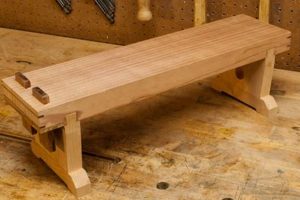
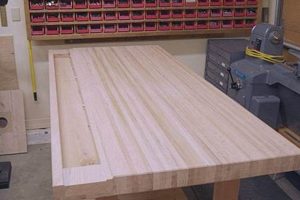
Detailed schematics and instructions used to construct a sturdy and functional surface for woodworking activities are fundamental to the craft. These documents specify dimensions, materials, and assembly procedures necessary to build a stable platform suitable for tasks such as sawing, planing, and joinery. An example would be a document outlining the construction of a Nicholson-style bench, complete with material lists and step-by-step illustrations.
The availability of well-designed guides is crucial for both novice and experienced woodworkers. These resources offer a structured approach, reducing the risk of errors and ensuring a robust final product. Historically, such guides were passed down through generations of artisans; today, they are readily accessible in print and digital formats, broadening access to the craft and fostering a culture of skill-sharing.
The subsequent sections will delve into different types of construction documents, essential features to consider during selection, and where to find appropriate resources to facilitate successful project completion. Considerations such as material choice, bench size, and intended usage will be discussed in detail, offering guidance for selecting the most appropriate set of instructions for individual needs and skill levels.
Construction Guidance
The following guidelines offer insights into effectively utilizing readily available resources to build a robust and functional workbench.
Tip 1: Prioritize Stability. Foundation stability is paramount. Select construction documents that emphasize a solid base and leg structure. Employing mortise-and-tenon joinery or robust bolting mechanisms is advisable.
Tip 2: Material Selection is Critical. Hardwoods, such as maple or beech, offer superior durability. However, softwood options like Douglas fir can be cost-effective alternatives, provided proper reinforcement is incorporated into the construction.
Tip 3: Bench Height Matters. Determine optimal working height by standing upright with arms bent at the elbows. The workbench surface should align approximately with the wrists. Adjust construction documents accordingly.
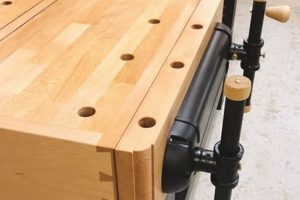
Tip 4: Incorporate Vise Placement. Vise placement should align with primary work tasks. Consider end vises for clamping long boards and face vises for general holding. Integrate mounting hardware according to the selected device’s specifications.
Tip 5: Plan for Dog Holes. Dog holes enhance versatility by allowing for secure workpiece clamping with bench dogs. Spacing should be consistent and aligned with frequently used dimensions.
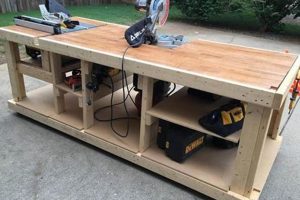
Tip 6: Consider Integrated Storage. Incorporate drawers or shelves beneath the workbench surface for convenient tool storage. Ensure that the additional weight does not compromise the overall stability.
Tip 7: Accuracy in Measurements. Precision is crucial. Prior to cutting any materials, double-check all dimensions specified within the construction documents. Slight discrepancies can compromise the structural integrity.
These guidelines, when diligently applied, will enhance the likelihood of constructing a high-quality, functional woodworking station.
The subsequent section will address common challenges encountered during the building process and strategies for effective troubleshooting.
1. Dimensions

Dimensions within construction documents directly dictate the functionality and suitability of the final product. Precise measurements outlined in these sets of instructions directly influence the workbench’s ability to accommodate intended projects. For example, if a plan specifies a bench width of only 24 inches, it may prove inadequate for working on larger panels, thereby limiting its utility. Conversely, excessive depth can impede access to tools and materials stored underneath. The correlation between specified measurements and actual usability constitutes a critical factor in assessing suitability. Inadequate adherence to specified measurements can lead to diminished performance, instability, or even structural failure.
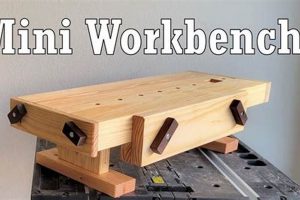
Different styles will have different dimensions. A traditional Roubo bench will likely be significantly larger and heavier than a portable workbench, and that difference in size and construction must be reflected in the corresponding construction documents. Ignoring dimensional considerations leads to difficulties in assembly, inaccurate alignment, and an overall reduction in the workbenchs capacity to perform its intended function. Choosing the wrong document can lead to a final construction that does not fit the users work style.
Therefore, accurate documentation is vital. Selection requires careful consideration of project scope, intended workspace, and individual ergonomic needs. The dimensional information represents a foundational element, its proper understanding contributing directly to the success or failure of a bench-building endeavor. The relationship between specified dimensions and real-world application is undeniable.
2. Material Selection

Material selection constitutes a pivotal aspect of any set of construction documents. The inherent properties of chosen materials directly influence the workbench’s durability, stability, and overall suitability for its intended purpose. Therefore, a careful evaluation of material options is paramount to successful project execution.
- Hardwood vs. Softwood
Hardwoods, such as maple, beech, and oak, offer superior strength and resistance to wear, making them ideal for workbench tops and legs, where durability is paramount. Softwoods, like pine and fir, provide a more cost-effective alternative but require careful consideration regarding reinforcement and intended use. A document detailing the construction of a heavy-duty workbench should specify hardwoods, while a simpler, lighter-duty option might incorporate softwoods.
- Dimensional Stability
Wood’s tendency to expand and contract with changes in humidity necessitates careful consideration of dimensional stability. Kiln-dried lumber minimizes these fluctuations, ensuring the workbench maintains its shape and integrity over time. Construction documents should specify moisture content requirements to mitigate potential issues. For example, specifying lumber with a moisture content between 6% and 8% is common practice.
- Material Cost and Availability
The economic feasibility of a woodworking bench project is directly tied to material costs and availability. Locally sourced lumber often presents a more affordable option than imported hardwoods. Furthermore, construction documents should account for standard lumber dimensions, minimizing waste and reducing the overall material expense. Utilizing readily available lumber sizes reduces the need for extensive milling and fabrication.
- Sustainability
Sustainably sourced lumber certifications such as FSC (Forest Stewardship Council) or SFI (Sustainable Forestry Initiative) ensures that the material comes from responsibly managed forests. Construction documents can highlight the use of sustainable materials as an added value. The integration of reclaimed wood in the overall project also offers sustainability to the construction of woodworking bench.
In conclusion, thoughtful material selection is instrumental in realizing a durable, functional, and cost-effective workbench. An appropriate set of construction documents provides clear guidance on material choices, ensuring the final product meets the intended specifications and performance requirements. Considering those factors with the project’s goal can improve it for the users.
3. Joinery Methods

The integrity of any workbench is inextricably linked to the joinery techniques employed in its construction. A construction document neglecting detailed joinery specifications is fundamentally incomplete, as the chosen methods directly dictate the workbench’s structural stability and long-term durability. Selecting an inappropriate joinery method for a particular application within the document can lead to premature failure of the structure under load. For instance, relying solely on butt joints secured with screws for the leg-to-apron connection of a heavy-duty workbench is inadvisable; mortise-and-tenon or dovetail joints, offering significantly greater strength and resistance to racking forces, are more appropriate. The document must provide detailed illustrations and specifications for each joint, outlining precise dimensions and assembly procedures.
Furthermore, the document must account for the experience level of the builder. A complex series of compound dovetails may be impractical for a novice woodworker, while a seasoned professional might find simpler methods inadequate. The document should offer alternative joinery methods where appropriate, providing guidance on selecting techniques that balance strength, ease of execution, and aesthetic considerations. For example, a plan utilizing hand-cut dovetails could also include instructions for using a router and jig to achieve similar results for builders with limited hand-tool skills. The document should also clearly specify the type and quantity of adhesive or fasteners required for each joint, ensuring a secure and lasting bond. Furthermore, detailing techniques such as draw-boring mortise and tenon joints to improve the strength of the connection is very valuable to any documentation.
In summary, the selection and execution of appropriate joinery methods are paramount to constructing a robust and reliable workbench. The document must provide comprehensive guidance on joinery selection, dimensions, and assembly, taking into account the builder’s skill level and the intended application of the workbench. A comprehensive plan is the foundation. Without well-executed joinery, a workbench will inevitably fall short of its intended purpose, compromising its usefulness and longevity.
4. Stability Factors

The structural integrity of a woodworking bench is directly contingent upon several stability factors meticulously detailed within a comprehensive set of plans. These factors, encompassing both design elements and material properties, collectively determine the workbench’s capacity to resist deformation under load and maintain a stable working surface. Instability in a workbench can translate directly into reduced precision, increased risk of injury, and compromised project quality. For instance, a bench prone to racking, or lateral movement, will hinder accurate sawing and planing operations. Conversely, a properly designed bench, incorporating features like a wide base, robust leg attachments, and a substantial top, will provide a solid foundation for a wide range of woodworking tasks.
One critical aspect of stability, often addressed within construction documents, is the distribution of weight. A workbench with a low center of gravity, achieved through a heavy base and strategically placed components, is inherently more stable than one with a top-heavy design. Furthermore, the choice of joinery plays a significant role. Robust joinery techniques, such as mortise-and-tenon joints or dovetails, effectively resist racking forces and prevent the bench from shifting or wobbling during use. Construction documents typically specify the dimensions and placement of these joints to ensure optimal structural integrity. Similarly, the type and thickness of the benchtop material directly impacts stability. A thick, solid wood benchtop, properly supported by a rigid frame, provides a stable and vibration-dampening surface for precision work.
In conclusion, the success of any woodworking bench project hinges on a thorough understanding and implementation of key stability factors. Construction documents must explicitly address these factors, providing detailed specifications for materials, joinery, and overall design. By adhering to these guidelines, woodworkers can construct a bench that not only meets their specific needs but also provides a safe, stable, and reliable platform for years of productive work. The inherent stability is the foundation for all tasks.
5. Workholding

Workholding represents an indispensable element of a functional woodworking bench. The effectiveness with which a workbench can secure a workpiece directly impacts the precision, efficiency, and safety of woodworking operations. Construction documentation, therefore, must explicitly address workholding solutions integrated into the bench design. These solutions range from simple vise placements to complex dog hole systems, each designed to accommodate specific types of work and workpieces. The absence of adequate workholding provisions within construction documentation renders the resulting workbench significantly less versatile and functional.
Consider, for instance, the common task of planing a board edge. Without a means of firmly securing the board to the workbench, the planing process becomes difficult and potentially hazardous. Construction instructions that incorporate a vise and a series of dog holes along the benchtop allow the board to be securely clamped, enabling the woodworker to apply consistent pressure and achieve a smooth, straight edge. Similarly, tasks such as dovetailing require precise control and immobilization of the workpiece. The inclusion of a tail vise or a face vise, coupled with strategically placed bench dogs, allows the woodworker to accurately align and cut the dovetails, minimizing errors and maximizing the strength of the joint. These examples illustrate the direct causal relationship between effective workholding mechanisms, as specified in documentation, and the success of woodworking tasks.
In conclusion, the planning phase concerning work-holding mechanisms represents a critical component of woodworking bench. The selection and integration of appropriate methods, detailed in clear and comprehensive instructions, determine the bench’s overall utility. Construction documentation that prioritizes workholding empowers woodworkers to tackle a wider range of projects with greater precision, safety, and efficiency. The inclusion of well-designed workholding elements transforms a basic surface into a sophisticated and versatile woodworking platform.
6. Ergonomics

The integration of ergonomic principles into woodworking bench design, as dictated by the documentation, directly influences the user’s posture, reach, and overall comfort during prolonged work sessions. A workbench lacking ergonomic considerations can contribute to musculoskeletal strain, fatigue, and potential long-term injuries. For instance, a bench that is too low forces the user to hunch over, placing excessive stress on the lower back. Conversely, a bench that is too high necessitates raised shoulders, leading to neck and shoulder pain. Well-designed plans specify bench heights appropriate for the user’s stature and incorporate features that promote a neutral body position. The effect of poor ergonomic design can lead to premature fatigue and injury and can negatively impact quality of work produced.
Ergonomics extend beyond bench height to encompass factors such as reach distance, tool placement, and the arrangement of workholding devices. Plans should recommend positioning frequently used tools within easy reach to minimize unnecessary stretching and twisting. Additionally, the placement and type of vises, along with the configuration of dog holes, should facilitate comfortable and efficient workpiece manipulation. For example, a tail vise positioned too far from the user’s body forces the worker to overreach, compromising stability and increasing the risk of injury. Likewise, poorly placed dog holes can hinder the secure clamping of workpieces, leading to frustration and potential errors. This attention to detail ensures optimal user experience.
In summary, ergonomic considerations are not merely an addendum to woodworking bench plans but rather an integral design component. Well-crafted plans prioritize user comfort and safety, reducing the risk of strain and injury while promoting efficiency and productivity. Failing to integrate ergonomic principles leads to a workbench that is not only uncomfortable to use but also potentially detrimental to the woodworker’s long-term health and well-being. A ergonomic-designed workbench extends and protects the life of any user.
Frequently Asked Questions Regarding Woodworking Bench Plans
The following addresses frequently encountered inquiries and misconceptions surrounding woodworking bench documents. It aims to provide clarity and informed guidance.
Question 1: What distinguishes a quality construction document from a substandard one?
A superior guide exhibits precision in dimensional accuracy, clarity in instructional language, and comprehensive details regarding material selection and joinery techniques. Substandard documents often lack these critical elements, leading to construction errors and structural deficiencies.
Question 2: Is it possible to modify a existing design to suit specific needs?
Modification is permissible, but prudence is advised. Alterations to dimensions or structural components can compromise stability if not carefully considered. Consulting experienced woodworkers or engineers is advisable before undertaking significant modifications.
Question 3: How crucial is the inclusion of a detailed material list within a construction document?
A comprehensive material list is essential for accurate cost estimation and efficient material acquisition. It minimizes waste and ensures that all necessary components are readily available before commencing construction.
Question 4: What role does joinery play in determining the overall durability of a woodworking bench?
Joinery is paramount. Robust joinery techniques, such as mortise-and-tenon or dovetail joints, provide superior strength and resistance to racking forces, thereby extending the workbench’s lifespan. The specifications should be detailed within the document.
Question 5: Can one realistically construct a workbench from plans without prior woodworking experience?
While achievable, prior woodworking experience significantly enhances the likelihood of successful project completion. Novices should select simpler designs with clear, step-by-step instructions and consider seeking guidance from experienced craftspeople.
Question 6: Where can one locate reliable and accurate resources?
Reputable sources include woodworking magazines, online forums, and established woodworking schools. Cross-referencing information from multiple sources is recommended to ensure accuracy and completeness. Be cautious of free documents of dubious origin.
In conclusion, careful consideration of construction document quality, modification risks, material list comprehensiveness, joinery importance, skill level prerequisites, and resource reliability is crucial for a successful project.
The subsequent section will provide a comprehensive list of reliable resources for acquiring quality documents.
Conclusion
This exploration of woodworking bench plans has underscored their central role in constructing a stable and functional workspace. Key considerations include dimensional accuracy, appropriate material selection, robust joinery methods, and ergonomic design principles. Thorough understanding and careful application of these elements, as specified within the selected documents, are crucial for a successful outcome.
Selecting well-vetted schematics is a commitment to precision and durability. It is an investment in future woodworking endeavors. By emphasizing quality resources and diligent execution, the woodworker builds not only a bench, but also a foundation for craftsmanship and skill. The choice now rests with the individual to prioritize diligence in the selection and utilization of these vital construction documents, thereby ensuring a workspace conducive to productivity and longevity.