Detailed instructions and blueprints for constructing a workbench from raw materials using personal labor are readily available. These resources provide guidance on dimensions, material selection, joinery techniques, and assembly procedures required to create a functional and customized workspace for woodworking projects. As an example, these resources might detail how to build a sturdy table with a specific height, integrated storage, and clamping capabilities.
The availability of such resources empowers individuals to create personalized workspaces tailored to their specific needs and spatial constraints. This approach fosters cost-effectiveness, skill development in woodworking, and the satisfaction of building a durable and customized tool. Historically, woodworkers often relied on self-developed designs, passed down through generations or adapted from existing furniture. The proliferation of accessible plans democratizes this process, allowing enthusiasts to benefit from collective knowledge and innovation.
The subsequent sections will delve into the considerations for selecting appropriate designs, understanding material choices, and mastering essential construction techniques required for successful workbench fabrication. This exploration will equip individuals with the knowledge to confidently embark on their own woodworking table construction project.
Essential Considerations for Workbench Construction
The following tips provide crucial insights for individuals undertaking a workbench building project, ensuring structural integrity, functional design, and longevity of the finished product.
Tip 1: Design Prioritization: Thoroughly analyze project requirements before selecting a design. Consider the types of woodworking activities to be performed, the necessary workspace size, and desired storage solutions. A design optimized for carving will differ substantially from one intended for large-scale assembly.
Tip 2: Material Selection: Choose hardwoods such as maple, beech, or oak for the workbench top to ensure durability and resistance to wear. Softwoods like pine or fir can be utilized for the base structure, but reinforcement may be necessary in high-stress areas.
Tip 3: Joinery Methods: Employ robust joinery techniques, such as mortise and tenon, dovetail, or lap joints, to create strong and stable connections. Screws and glue alone may not suffice for long-term structural integrity, particularly under heavy use.
Tip 4: Surface Flattening: Precisely flatten the workbench top to create a reliable reference surface. Use hand planes, a router sled, or specialized flattening services to achieve optimal flatness across the entire surface.
Tip 5: Vise Integration: Select and install vises appropriate for the anticipated woodworking tasks. A face vise is essential for general clamping, while a tail vise or wagon vise provides versatility for securing long workpieces.
Tip 6: Leg Stability: Ensure the workbench legs are securely fastened and adequately braced to prevent racking or wobbling. Consider adding stretchers or aprons to increase rigidity and distribute weight evenly.
Tip 7: Finish Application: Apply a durable finish to protect the workbench from moisture, stains, and abrasions. A penetrating oil finish or a hard-wearing varnish will enhance the appearance and prolong the lifespan of the workbench.
By adhering to these guidelines, individuals can significantly enhance the quality and functionality of their self-built workbenches, creating a valuable asset for woodworking endeavors.
The subsequent sections will cover strategies for preventing common construction errors and maintaining the finished workbench to ensure its longevity and optimal performance.
1. Dimensional Accuracy

Dimensional accuracy represents a critical component of successful workbench construction based on self-generated or acquired schematics. Deviations from specified dimensions, even seemingly minor ones, can propagate errors throughout the assembly process, leading to structural instability, misaligned joinery, and compromised functionality. For instance, inaccuracies in leg lengths can result in an uneven work surface, impacting precision tasks such as jointing or planing. Similarly, miscalculated dimensions in the frame can cause difficulties in fitting drawers or shelves, rendering storage solutions ineffective.
The impact of dimensional inaccuracies extends beyond immediate assembly challenges. A workbench built with compromised dimensions may exhibit reduced load-bearing capacity, increasing the risk of failure under heavy use. Inaccurate measurements in joinery elements, such as mortise and tenons, can weaken the connections between components, leading to premature wear and tear. Furthermore, a workbench with dimensional inconsistencies may necessitate significant rework or even abandonment, resulting in wasted time and materials. A practical example includes a workbench designed with undersized aprons, leading to excessive racking and instability during heavy clamping operations. This necessitates reinforcing the entire structure, adding significant cost and time to the project.
In conclusion, dimensional accuracy is not merely a desirable attribute, but a fundamental requirement for the successful execution of woodworking table schematics. Precise measurements and meticulous adherence to specified dimensions are essential for ensuring structural integrity, functional efficiency, and long-term durability. Ignoring this imperative can result in a flawed workbench, undermining its utility and posing potential safety hazards. Prioritizing precision in measurement and cutting is therefore paramount when undertaking such a project.
2. Material Durability

Material durability constitutes a pivotal consideration in the selection of schematics for self-constructed workbenches. The inherent properties of chosen materials directly impact the workbench’s longevity, resistance to wear, and ability to withstand the rigors of woodworking activities. Inadequate material selection inevitably leads to premature degradation, compromising the workbench’s structural integrity and functional utility.
- Work Surface Composition
The work surface, being the primary contact point for tools and materials, demands exceptional durability. Hardwoods like maple, beech, and oak are frequently chosen due to their density, resistance to indentation, and ability to withstand repeated impact. Conversely, softwoods such as pine are susceptible to denting and scratching, rendering them unsuitable for work surfaces subjected to heavy use. In self-developed schematics, specifying appropriate surface materials is essential to ensure long-term resistance to wear and tear. A workbench intended for heavy-duty use, such as metalworking in addition to woodworking, would benefit from a steel or composite work surface rather than a traditional wood top.
- Frame and Leg Stability
The frame and legs provide the structural support for the entire workbench. Material selection for these components must prioritize strength and resistance to bending or deformation under load. While softwoods can be utilized for the frame, they require careful design considerations to prevent racking or instability. Hardwoods or engineered wood products, such as plywood or laminated veneer lumber (LVL), offer enhanced strength and dimensional stability, reducing the risk of structural failure. Self-made plans should include adequate bracing and joinery techniques to maximize the load-bearing capacity of the frame, especially if less durable materials are employed.
- Joinery Integrity
The durability of joints, connecting various workbench components, depends on the selected materials and construction methods. Strong, durable woods, combined with robust joinery techniques like mortise and tenon or dovetail joints, are vital for creating a stable and long-lasting structure. Using weaker materials or less robust joinery can result in loosening or failure of joints over time, compromising the overall stability of the workbench. Well-documented schematics should clearly specify appropriate joint types and material compatibility to ensure long-term structural integrity.
- Finish Application and Protection
The application of a durable finish serves as a protective barrier against moisture, chemicals, and abrasion, extending the lifespan of the workbench. Oil-based finishes, varnishes, or polyurethane coatings can effectively seal the wood surface, preventing water damage and minimizing the impact of spills or solvents. In the context of personal construction guides, detailed instructions on finish selection and application are crucial for preserving the durability of the finished workbench and preventing premature degradation.
In conclusion, a comprehensive understanding of material properties and their impact on long-term performance is essential when implementing plans. Specifying appropriate materials, employing robust joinery techniques, and applying a durable finish collectively contribute to a workbench that can withstand the demands of woodworking tasks for years to come. Therefore, material durability serves as a fundamental design criterion for optimizing the functionality and longevity of the resulting workspace.
3. Structural Integrity

Structural integrity, the ability of a structure to withstand applied loads without failure, is paramount in the context of homemade woodworking table schematics. A workbench lacking adequate structural integrity poses significant risks, including instability during use, premature wear, and potential collapse under heavy loads.
- Joint Strength and Stability
The strength of joints connecting workbench components directly influences overall structural integrity. Joints must resist tension, shear, and compression forces generated during woodworking operations. Examples include mortise and tenon joints, dovetail joints, and robust screw-and-glue connections. If joinery is insufficient, the workbench may wobble, rack, or even disintegrate under load. Plans should specify joint types appropriate for anticipated stress levels.
- Material Load-Bearing Capacity
Each material possesses a characteristic load-bearing capacity, dictating its ability to withstand applied forces before deformation or failure. Wood species vary significantly in strength and stiffness. Plans should account for the material’s inherent properties when determining dimensions and component sizes. For example, legs constructed from a low-density softwood require larger dimensions compared to those made from hardwood to achieve equivalent load-bearing capacity. Failure to account for material properties compromises structural integrity.
- Bracing and Reinforcement
Bracing and reinforcement elements enhance structural integrity by distributing loads and preventing deformation. Diagonal braces, aprons, and stretchers stiffen the frame and prevent racking. Corner brackets and gussets reinforce joints. These elements are essential, particularly in designs utilizing less rigid materials or complex geometries. Absence of adequate bracing leads to instability and reduced load capacity. Construction guides should detail bracing strategies appropriate to the overall design.
- Foundation and Leveling
The foundation upon which the workbench rests significantly influences its stability. An uneven or unstable foundation introduces stresses and imbalances, compromising structural integrity. Leveling the workbench is crucial for ensuring even weight distribution and preventing rocking. Plans must address foundation requirements, including the need for a level surface and, if necessary, adjustable leveling feet. Neglecting foundation considerations can lead to premature failure, even with robust joinery and materials.
These facets collectively contribute to the overall structural integrity of workbenches created with instructions. Proper attention to joint strength, material properties, bracing, and foundation requirements is essential for constructing a safe, stable, and durable workbench that withstands the rigors of woodworking activities. Adequate structural integrity translates to a reliable workspace and prevents potentially hazardous failures.
4. Ergonomic Design
Ergonomic design, the science of fitting workplace conditions and job demands to the capabilities of workers, plays a critical role in the successful implementation of woodworking table schematics. In the context of self-built workbenches, neglecting ergonomic principles can lead to musculoskeletal disorders, reduced productivity, and increased risk of injury. The working height of the bench, for example, significantly impacts posture and strain. A workbench too low requires excessive bending, leading to back pain. Conversely, a bench too high can cause shoulder and neck discomfort. Effective schematics specify an appropriate working height based on the user’s stature and the types of tasks performed. This is often determined by measuring the distance from the floor to the user’s bent elbow, providing a comfortable and efficient working posture. Ignoring this critical measurement can result in chronic pain and reduced work efficiency.
The placement and accessibility of tools and materials also fall under the purview of ergonomics. A well-designed workbench incorporates storage solutions that minimize reaching, bending, and twisting. Integrated drawers, shelves, or tool racks provide convenient access to essential items, reducing the strain on joints and muscles. Moreover, the dimensions and configuration of the work surface should accommodate the types of projects undertaken. Sufficient workspace allows for comfortable maneuvering and minimizes the need for awkward postures. For instance, a workbench intended for carving might benefit from a tilting work surface, reducing neck and back strain. The strategic positioning of vises and other clamping devices also enhances ergonomics by facilitating secure workpiece holding without excessive force. Properly drafted designs will detail the ergonomic placement of key features.
In summary, integrating ergonomic design principles into plans is essential for creating a safe, comfortable, and productive woodworking environment. Addressing working height, tool accessibility, and workspace configuration minimizes the risk of musculoskeletal disorders and enhances work efficiency. Thoughtful consideration of ergonomic factors transforms a simple workbench into a valuable tool that supports the user’s physical well-being and enhances the quality of their woodworking endeavors. The challenges lie in accurately assessing individual needs and adapting plans accordingly, but the benefits significantly outweigh the effort involved.
5. Assembly Clarity

Assembly clarity, in the context of self-directed woodworking table construction guides, constitutes a critical factor determining project success. The comprehensibility and precision of assembly instructions directly influence the ease of construction, the likelihood of errors, and the overall quality of the finished workbench. Plans lacking adequate clarity often result in wasted time, material misallocation, and potentially unsafe structures.
- Detailed Diagrams and Illustrations
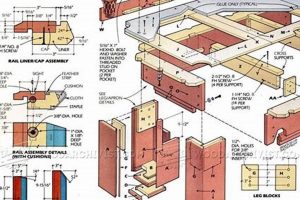
Visual aids, such as exploded-view diagrams and detailed illustrations, are essential for conveying complex assembly steps. These graphics provide a clear representation of component placement, joinery methods, and fastener locations. A plan lacking sufficient visual support increases the risk of misinterpretation and incorrect assembly. For example, a diagram illustrating the precise orientation of mortise and tenon joints is far more effective than a textual description alone. Effective plans utilize multiple views and perspectives to eliminate ambiguity.
- Step-by-Step Instructions
Clearly structured step-by-step instructions guide the user through the assembly process in a logical and sequential manner. Each step should be concise, unambiguous, and accompanied by corresponding visual aids. Plans lacking a clear sequence can lead to confusion and backtracking, increasing the probability of errors. Each step ought to clearly describe what needs to be done, how it should be done and, if applicable, why it is being done this way.
- Bill of Materials and Hardware List
A comprehensive bill of materials (BOM) and hardware list ensures that all necessary components are identified and readily available prior to assembly. The BOM should specify the dimensions, quantity, and material type for each component, while the hardware list details fastener types, sizes, and quantities. Missing or inaccurate information in either list can cause delays, material shortages, and project setbacks. Effective plans cross-reference the BOM and hardware list with the assembly instructions, further enhancing clarity.
- Troubleshooting and Error Mitigation
Comprehensive construction resources proactively address potential challenges and provide solutions for common errors. These may include troubleshooting tips for joint alignment, guidance on correcting miscuts, and recommendations for repairing minor structural defects. Plans that fail to anticipate and address potential problems leave the user ill-equipped to overcome challenges and may result in project abandonment. High quality assembly instructions contain “tips” and “warnings” sections.
The aforementioned features collectively contribute to assembly clarity in the context of woodworking table creation guides. A plan exhibiting these characteristics empowers individuals to construct a functional, safe, and durable workbench with a minimum of difficulty. Conversely, plans lacking assembly clarity often lead to frustration, wasted resources, and unsatisfactory results. Therefore, prioritizing assembly clarity is essential for both the plan creator and the end-user.
Frequently Asked Questions
This section addresses common inquiries regarding the selection, interpretation, and execution of woodworking table building guides. Understanding these points is crucial for a successful and safe construction project.
Question 1: What factors should be considered when selecting from available plans?
Workbench schematics should be selected based on project scope, skill level, material availability, and intended use. Designs should align with the types of projects to be undertaken, considering dimensions, weight-bearing capacity, and integrated features.
Question 2: How important is dimensional accuracy in construction?
Dimensional accuracy is paramount. Deviations from specified dimensions can compromise structural integrity, create assembly difficulties, and impact the workbench’s overall functionality. Precise measurements and cutting are essential.
Question 3: What are the most durable materials for workbench construction?
Hardwoods, such as maple, beech, and oak, are preferred for work surfaces due to their resistance to wear and impact. Softwoods can be utilized for the frame but require adequate bracing. Consider engineered wood products for enhanced stability.
Question 4: Why is structural integrity so important?
Structural integrity ensures the workbench can withstand applied loads without failure. Robust joinery, appropriate material selection, and adequate bracing are critical for a safe and stable structure.
Question 5: How does ergonomics relate to workbench design?
Ergonomic design optimizes the workbench for user comfort and efficiency. Proper working height, accessible tool storage, and adequate workspace minimize strain and reduce the risk of musculoskeletal disorders.
Question 6: What constitutes assembly clarity in plans?
Assembly clarity involves detailed diagrams, step-by-step instructions, a comprehensive bill of materials, and troubleshooting guidance. Clear and concise instructions minimize errors and facilitate a smooth construction process.
Key takeaways include the criticality of pre-project planning, precise execution, and consideration for both structural and ergonomic requirements. A well-chosen and meticulously executed design results in a valuable and lasting woodworking asset.
The subsequent section transitions to best practices for workbench maintenance and preservation, ensuring longevity and optimal performance.
DIY Woodworking Table Plans
The preceding exploration has elucidated critical facets of crafting workbenches using available schematics. Emphasis has been placed on dimensional accuracy, material selection impacting durability, structural integrity for withstanding loads, the imperative of ergonomic design, and the necessity of assembly clarity within instructional resources. These factors collectively determine the success and longevity of such endeavors. A comprehensive understanding and diligent application of these principles directly translate to a safer, more efficient, and ultimately more rewarding woodworking experience.
The responsible application of detailed woodworking table schemes is not merely a construction exercise; it represents an investment in personal skill development and the creation of a functional workspace tailored to individual needs. Prospective builders should, therefore, approach this undertaking with meticulous planning, a commitment to precision, and a thorough understanding of the principles outlined herein. The result is a durable and customized tool, extending the possibilities of woodworking pursuits for years to come.

![Best Woodworking Plans Drafting Table [Guide] for Table | Step-by-Step Guides, Tools & Inspiration to Build Beautiful Wooden Decor on a Budget](https://woodfromhome.com/wp-content/uploads/2026/05/th-80-300x200.jpg "Best Woodworking Plans Drafting Table [Guide] for Table Step-by-Step Guides, Tools & Inspiration to Build Beautiful Wooden Decor on a Budget")