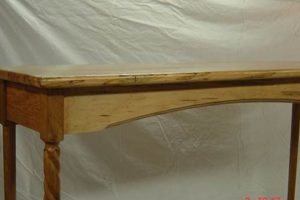
Platforms like Etsy facilitate the purchase of individually crafted wooden items tailored to specific buyer requests. This encompasses a broad range of products, from personalized furniture and decorative pieces to bespoke cabinetry and handcrafted toys. The availability of made-to-order wooden items allows for a high degree of customization, enabling customers to acquire unique pieces that precisely fit their needs and aesthetic preferences. As an example, a homeowner might commission a coffee table built to exact dimensions and featuring a particular wood type and finish.
The appeal of such offerings lies in several factors. They provide access to one-of-a-kind items not readily available through mass-market retailers. Furthermore, these creations often support independent artisans and small businesses, fostering a connection between the buyer and the maker. Historically, woodworking has been a valued craft, and the ability to obtain custom pieces continues this tradition in a modern, accessible format. The benefits extend to acquiring durable, high-quality goods made with attention to detail and a commitment to craftsmanship.
The following sections will delve into the diverse types of personalized wooden creations available, the process of commissioning a piece, factors influencing pricing, and considerations for selecting a skilled artisan to fulfill the specific requirements of a woodworking project. The impact of personalization options and sustainable sourcing practices will also be examined.
Essential Considerations for Engaging with Artisanal Woodcraft Platforms
This section provides crucial guidance for individuals seeking custom-made wooden items through online marketplaces. Adhering to these tips will facilitate a smoother, more satisfactory commissioning process.
Tip 1: Define Project Specifications Clearly: Prior to contacting artisans, establish precise dimensions, material preferences, and desired finishes. Detailed specifications minimize misunderstandings and ensure accurate project execution. For example, specify the exact shade of stain for a custom bookshelf.
Tip 2: Review Artisan Portfolios Thoroughly: Examine the artisan’s previous work to assess skill level and aesthetic alignment. Pay attention to the complexity of projects completed and the consistency of craftsmanship. A portfolio showcasing intricate carvings suggests a different skillset than one focused on simple furniture.
Tip 3: Request Detailed Quotations: Obtain comprehensive price breakdowns that include material costs, labor charges, and potential shipping fees. Understand the payment schedule and any associated deposit requirements. A detailed quote avoids unexpected expenses later in the project.
Tip 4: Inquire About Wood Sourcing Practices: Determine whether the artisan utilizes sustainably sourced wood. Environmentally conscious practices contribute to responsible consumption and long-term forest management. Consider asking about certifications or specific sourcing locations.
Tip 5: Establish Clear Communication Channels: Maintain consistent communication with the artisan throughout the project. Promptly respond to inquiries and provide timely feedback on design mockups. Regular communication ensures the project progresses according to expectations.
Tip 6: Clarify Revision Policies: Understand the artisan’s policy regarding revisions and alterations. Establish the number of permissible changes and any associated costs. A clearly defined revision policy prevents disputes over minor modifications.
Tip 7: Confirm Delivery and Installation Logistics: Coordinate delivery logistics, including shipping costs, packaging methods, and potential installation services. Confirm the artisan’s responsibility for damages incurred during transit. Proper planning ensures a smooth delivery process.
Adherence to these recommendations fosters a productive collaboration between customer and artisan, resulting in a high-quality, custom-made wooden item that meets specific needs and expectations. This proactive approach mitigates potential complications and enhances the overall satisfaction of commissioning personalized woodcraft.
The subsequent sections will explore the legal aspects of commissioning custom work, including intellectual property considerations and contract agreements.
1. Artisan Skill Level

The proficiency of the artisan is paramount when commissioning custom woodwork. The level of skill directly influences the quality, precision, and aesthetic appeal of the final product, thereby establishing the intrinsic value of the commissioned piece.
- Technical Proficiency
Technical proficiency encompasses the artisan’s mastery of woodworking techniques, including joinery, carving, turning, and finishing. An experienced artisan possesses a deep understanding of wood properties, grain direction, and appropriate tool usage, resulting in structurally sound and visually refined products. The ability to execute complex joinery, such as dovetail or mortise-and-tenon joints, demonstrates a high level of technical skill, contributing to the longevity and stability of the woodworking piece.
- Design Interpretation and Execution
An artisan’s skill level extends to the accurate interpretation and execution of design specifications. This includes the ability to translate drawings, sketches, or verbal instructions into tangible objects. The precision with which an artisan can replicate intricate designs, maintain consistent dimensions, and adhere to aesthetic guidelines reflects their ability to comprehend and realize the client’s vision. Flawless execution of intricate patterns or complex geometries underscores a high degree of skill.
- Material Knowledge and Manipulation
Expert artisans demonstrate comprehensive knowledge of various wood species, their unique characteristics, and appropriate applications. This includes understanding wood grain patterns, density, moisture content, and susceptibility to environmental factors. Skillful manipulation of wood involves selecting the appropriate material for the intended application, minimizing warping or cracking, and maximizing the wood’s natural beauty through thoughtful cutting and finishing techniques. For instance, using quarter-sawn oak for a tabletop due to its stability and resistance to cupping demonstrates sophisticated material knowledge.
- Problem-Solving and Adaptability
Custom woodworking inherently involves unforeseen challenges. An artisan’s skill level is reflected in their ability to identify and resolve issues that arise during the fabrication process. This includes adapting designs to accommodate material limitations, correcting imperfections, and devising innovative solutions to technical obstacles. The capacity to troubleshoot effectively and maintain project integrity under pressure distinguishes a highly skilled artisan.
In summary, the artisan’s skill level directly translates to the quality and value of customized woodwork. Technical proficiency, design interpretation, material knowledge, and problem-solving abilities are all essential components of a skilled artisan, resulting in personalized creations that meet exacting specifications and stand the test of time. Selecting an artisan with a proven track record of excellence ensures a satisfactory and enduring outcome.
2. Wood Material Selection

Wood material selection is a pivotal element in the realm of individually commissioned wooden creations available through online marketplaces. The choice of wood profoundly influences the aesthetic qualities, structural integrity, longevity, and ultimate value of bespoke pieces. Its careful consideration is essential for both the artisan and the client.
- Aesthetic Considerations
The visual appeal of the final product is intrinsically linked to the selected wood species. Grain patterns, natural color variations, and texture contribute significantly to the overall aesthetic. For instance, walnut offers rich, dark tones and intricate grain, often preferred for high-end furniture. Conversely, maple provides a lighter, more uniform appearance suitable for contemporary designs. In the context of custom woodwork, understanding these aesthetic nuances allows clients to tailor the wood selection to their specific design preferences.
- Structural Integrity and Durability
Different wood types exhibit varying degrees of strength, hardness, and resistance to wear and tear. Hardwoods, such as oak, cherry, and maple, are generally more durable and suitable for load-bearing applications like furniture frames and tabletops. Softwoods, such as pine and cedar, are often used for decorative elements or items that do not require high structural strength. Selecting the appropriate wood based on its structural properties ensures the longevity and stability of the commissioned piece. A custom-built outdoor bench, for example, should utilize rot-resistant wood like teak or cedar to withstand the elements.
- Workability and Artisan Skill
The ease with which a particular wood can be worked significantly impacts the labor involved and the final quality. Some woods are easier to cut, shape, and join than others. An artisan’s expertise plays a crucial role in selecting woods that align with their skill set and the complexity of the design. Exotic hardwoods, while visually stunning, may require specialized tools and techniques, potentially increasing the project cost and timeline. Open communication between the client and artisan regarding workability is crucial for a successful outcome.
- Sustainability and Sourcing
Ethical considerations increasingly influence wood material selection. Sustainable sourcing practices ensure responsible forest management and minimize environmental impact. Clients may prioritize woods certified by organizations like the Forest Stewardship Council (FSC), which guarantees that the wood originates from sustainably managed forests. Utilizing reclaimed or salvaged wood is another environmentally conscious option. Openly discussing sourcing practices with the artisan promotes transparency and allows clients to align their purchases with their environmental values.
Ultimately, informed wood material selection enhances the value and sustainability of individually commissioned wooden creations. Considerations of aesthetics, structural integrity, workability, and ethical sourcing, combined with effective communication between the client and artisan, contribute to a superior result in the realm of custom woodwork.
3. Design Complexity

Design complexity exerts a substantial influence on the cost, timeline, and feasibility of custom woodwork projects commissioned through platforms like Etsy. Intricate designs necessitate more labor hours, specialized tools, and higher levels of artisan skill, directly impacting project expenses. A complex design featuring elaborate carvings, intricate joinery, or unconventional shapes inherently requires greater precision and attention to detail compared to a simple, minimalist design. For example, a custom-built dining table with hand-carved legs and a complex parquetry tabletop demands significantly more artisan time and expertise than a simple, rectangular table with straight legs. This increased labor and skill requirement translates directly into higher costs for the client.
Furthermore, the feasibility of executing a complex design depends heavily on the artisan’s skill set and available resources. Not all artisans possess the expertise or equipment necessary to handle highly intricate projects. An overly ambitious design beyond the artisan’s capabilities can lead to unsatisfactory results or project delays. Clear communication between the client and artisan regarding design complexity and the artisan’s capabilities is crucial to ensure realistic expectations and a successful project outcome. For instance, a client requesting a highly detailed replica of an antique chair should verify the artisan’s experience with similar projects and their access to specialized carving tools.
Ultimately, understanding the correlation between design complexity and project parameters is essential for successful custom woodwork commissions. Clients must balance their desired level of intricacy with budgetary constraints and the artisan’s skill set. Compromises may be necessary to achieve a satisfactory outcome within a reasonable timeframe and budget. Acknowledging design complexity as a significant factor in the overall project lifecycle enables informed decision-making and fosters a realistic approach to commissioning individualized wooden creations. Overlooking this consideration often leads to disappointment and budgetary overruns.
4. Project Dimensions

In the realm of bespoke wooden creations facilitated by online marketplaces, project dimensions represent a foundational constraint that directly influences design feasibility, material requirements, and overall cost. The precise specifications of length, width, height, and depth dictate the quantity of raw materials needed, the complexity of the fabrication process, and the logistical considerations for shipping and installation.
- Material Quantity and Cost
The dimensions of a custom woodwork project are directly proportional to the amount of lumber or wood materials required. Larger projects necessitate more material, resulting in higher raw material expenses. For instance, a large custom-built bookshelf spanning an entire wall will inherently require significantly more lumber than a small bedside table. This relationship between dimensions and material costs underscores the importance of accurate measurements and careful planning during the initial design phase. Underestimating dimensions can lead to material shortages and project delays, while overestimating can result in unnecessary expenses.
- Design Feasibility and Structural Integrity
Project dimensions can impact the feasibility of certain design elements and the overall structural integrity of the piece. Large spans may require specialized joinery techniques or internal support structures to prevent sagging or warping. For example, a custom-made dining table exceeding a certain length may require a center support beam to maintain stability. The artisan must consider the wood’s inherent properties and structural limitations when determining the maximum feasible dimensions for a particular design. A design that is structurally unsound due to excessive dimensions can compromise the safety and longevity of the final product.
- Artisan Skill and Time Investment
Larger or more complex dimensions often translate into increased labor hours and require a higher level of artisan skill. Intricate joinery or shaping techniques may be necessary to accommodate the specified dimensions, demanding more time and precision. A custom-built staircase, for instance, with precise measurements and intricate baluster designs, will necessitate a significant time investment from a skilled artisan. The artisan’s expertise in handling large pieces of lumber and executing complex designs within the given dimensions directly influences the quality and cost of the project.
- Shipping and Installation Logistics
The overall dimensions of a completed woodwork project significantly impact shipping and installation logistics. Oversized items may require specialized packaging, crating, or freight services, increasing shipping costs. In some cases, onsite assembly may be necessary due to size limitations. For example, a large custom-built wardrobe may need to be shipped in separate components and assembled within the client’s home. Proper planning and coordination are essential to ensure a smooth and damage-free delivery and installation process. Neglecting these logistical considerations can lead to unexpected expenses and project delays.
The interplay between project dimensions, material requirements, artisan skill, and logistical considerations highlights the importance of precise planning and communication within custom woodworking commissions. Accurately defining the desired dimensions from the outset enables artisans to provide realistic cost estimates, assess design feasibility, and ensure a successful project outcome that meets the client’s specific needs and spatial constraints. The meticulous attention to project dimensions demonstrates the quality, care, and precision which exemplifies professional custom woodwork.
5. Finish Application

The meticulous finish application to custom woodwork significantly impacts its durability, aesthetic appeal, and overall value. Given the bespoke nature of woodworking acquired via platforms such as Etsy, the finish is not merely a protective layer; it is an integral component of the final product’s design and functionality.
- Protection and Longevity
The primary function of a finish is to protect the wood substrate from environmental factors, including moisture, UV radiation, and physical abrasion. Different finish types offer varying degrees of protection. For example, polyurethane provides a durable, water-resistant barrier ideal for high-use surfaces like tabletops, while oil-based finishes offer greater penetration and enhance the wood’s natural grain. In the context of custom woodwork, the appropriate finish selection directly influences the longevity and maintainability of the piece.
- Aesthetic Enhancement and Customization
Finishes significantly contribute to the aesthetic character of the wood. Stains can alter the wood’s color, while clear coats enhance its natural beauty. The choice of sheen, ranging from matte to high-gloss, affects the perceived depth and reflectivity of the finish. Artisans on Etsy often offer a range of finish options, allowing customers to customize the appearance of their commissioned pieces. A carefully chosen finish can complement the design of a piece and enhance its integration with its surroundings.
- Application Techniques and Skill
The quality of a finish application depends heavily on the artisan’s skill and technique. Proper surface preparation, including sanding and cleaning, is essential for achieving a smooth and even finish. The application method, whether brushing, spraying, or wiping, must be carefully controlled to avoid imperfections. In the context of custom woodwork, a flawless finish application demonstrates the artisan’s commitment to quality and attention to detail. Imperfections, such as brush strokes or uneven color, detract from the overall value of the piece.
- Material Compatibility and Safety
The selection of a finish must consider its compatibility with the wood species and the intended use of the item. Some finishes may react negatively with certain wood types, leading to discoloration or adhesion problems. Additionally, safety considerations are paramount, particularly for items intended for food contact or use by children. Artisans offering custom woodwork should utilize non-toxic, food-safe finishes when appropriate. Transparency regarding finish composition and safety certifications is essential for building customer trust.
The deliberate selection and meticulous application of a finish are fundamental to the success of custom woodworking projects. Its effects extend beyond mere protection, intricately shaping aesthetic appeal and significantly influencing the enduring value of these personalized woodcrafts offered on platforms like Etsy.
6. Pricing Transparency
Pricing transparency is a critical factor in establishing trust and ensuring fair transactions within the individualized wooden craft sector available through online marketplaces. Given the bespoke nature of these commissions, where prices are not fixed and are subject to various inputs, clarity in cost breakdowns is paramount for both buyers and artisans. A transparent pricing model fosters confidence, manages expectations, and minimizes potential disputes.
- Material Cost Disclosure
A clear breakdown of material costs provides the customer with insight into a significant portion of the overall price. This includes specifying the type and quantity of wood used, hardware, finishing materials, and any other components. For example, if a custom table utilizes a premium hardwood like walnut versus a more common wood like pine, the difference in material cost should be clearly delineated. This disclosure allows buyers to understand the value of the materials used and to compare prices more effectively.
- Labor Charge Itemization
Itemizing labor charges provides transparency into the artisan’s time investment and skill level. This may involve specifying an hourly rate or a fixed fee for specific tasks, such as design consultation, fabrication, finishing, and assembly. For instance, if a project involves intricate carving or complex joinery, the labor charges associated with these specialized skills should be clearly outlined. This itemization enables buyers to appreciate the artisan’s expertise and the time required to complete the project.
- Overhead Expense Inclusion
A transparent pricing model accounts for overhead expenses, such as studio rent, equipment maintenance, and utilities. While artisans may not provide a detailed breakdown of each overhead cost, an allowance for these expenses should be factored into the overall price. Disclosing the inclusion of overhead expenses ensures that the customer understands the full cost of production. For example, if an artisan operates from a dedicated workshop, the rent and utility costs associated with that space contribute to the overall project expense.
- Revision and Modification Policies
Clearly defined policies regarding revisions and modifications are essential for pricing transparency. The pricing structure should outline the cost of any changes requested by the customer after the initial design has been agreed upon. This prevents unexpected charges and ensures that the customer is aware of the financial implications of making alterations. For instance, if a customer requests a change in dimensions or adds a design element after fabrication has begun, the revised pricing should be clearly communicated.
In conclusion, pricing transparency is a cornerstone of ethical and sustainable business practices within the individually made wooden craft community. By providing clear and detailed cost breakdowns, artisans cultivate trust with their customers, fostering long-term relationships and ensuring fair compensation for their skills and craftsmanship. This heightened level of transparency empowers consumers to make informed purchasing decisions, thereby promoting a more equitable and trustworthy marketplace for bespoke wooden creations.
7. Shipping Considerations

The transportation of individualized wooden objects from online marketplaces represents a critical juncture in the purchasing process. Given the unique characteristics and often substantial dimensions of these custom creations, shipping considerations significantly impact both the feasibility and the ultimate cost to the consumer.
- Packaging and Protection
Effective packaging is paramount to safeguarding custom woodworking projects during transit. The chosen method must adequately protect against physical damage, moisture exposure, and temperature fluctuations. Depending on the item’s fragility and dimensions, options range from custom-fitted crates and reinforced cardboard boxes to specialized packing materials such as foam padding and bubble wrap. For instance, a delicate, hand-carved wooden sculpture would necessitate more robust protection than a simple wooden cutting board. Inadequate packaging can result in costly repairs or replacements, eroding consumer satisfaction and potentially damaging the artisan’s reputation.
- Dimensional Weight and Oversized Item Fees
Shipping costs are often calculated based on either the actual weight or the dimensional weight of the package, whichever is greater. Dimensional weight considers the package’s volume, meaning that even lightweight, bulky items can incur substantial shipping charges. Furthermore, oversized items exceeding certain dimensions may be subject to additional fees imposed by shipping carriers. Custom woodwork, frequently involving large or irregularly shaped objects, is particularly susceptible to these higher shipping costs. Artisans must accurately calculate dimensional weight and account for oversized item fees when providing shipping estimates to customers to avoid unexpected expenses.
- Insurance and Liability
Shipping insurance provides financial protection in the event of loss, damage, or theft during transit. While some shipping carriers offer limited coverage, it is often prudent to purchase additional insurance, particularly for high-value custom woodworking projects. Clear delineation of liability between the artisan and the shipping carrier is essential. Terms and conditions should specify who is responsible for filing claims and handling disputes in the event of damage or loss. This clarity protects both the artisan and the customer from financial losses and ensures a smoother resolution process.
- Shipping Distance and Carrier Selection
Shipping distance directly correlates with transportation costs and delivery times. Longer distances generally result in higher shipping fees. The choice of shipping carrier also significantly impacts costs and service levels. Different carriers offer varying rates, delivery speeds, and service options, such as tracking and signature confirmation. Artisans must carefully evaluate carrier options and select the most appropriate service based on the customer’s budget and timeline requirements. For international shipments, customs duties, taxes, and brokerage fees must also be considered. Failure to account for these factors can lead to inaccurate shipping estimates and customer dissatisfaction.
These facets of shipping considerations are inextricably linked to the viability of customized wooden objects trade. Diligent planning and careful execution are essential for both artisans and consumers to ensure the safe, cost-effective, and timely delivery of individualized wooden creations from online marketplaces. By accounting for these crucial factors, custom woodworking orders can be more seamless.
Frequently Asked Questions
The following addresses prevalent inquiries regarding the commissioning of bespoke wooden objects via online platforms such as Etsy. It provides clarity on various aspects of this process.
Question 1: How does the process of commissioning etsy custom woodwork typically unfold?
The commissioning process generally begins with an initial inquiry detailing the desired product specifications, including dimensions, wood type, design preferences, and finish. Artisans will then typically provide a quotation and, upon acceptance, a design mockup for review. Fabrication commences after design approval, followed by finishing and shipping. Regular communication is essential throughout the process.
Question 2: What factors influence the cost of etsy custom woodwork?
Several factors influence the cost, including the complexity of the design, the type and quantity of wood used, the artisan’s skill level, the time required for fabrication, and shipping expenses. Intricate designs, premium wood species, and specialized finishes will generally increase the overall cost. The artisan’s experience and location may also impact pricing.
Question 3: How can one ensure the quality of etsy custom woodwork?
Quality assurance involves careful evaluation of the artisan’s portfolio, customer reviews, and communication style. Verifying the artisan’s experience with similar projects and their adherence to established woodworking techniques is essential. Requesting detailed photos of work in progress can provide further insight into the quality of craftsmanship.
Question 4: What recourse is available if the commissioned etsy custom woodwork does not meet expectations?
Recourse options depend on the artisan’s stated policies and the platform’s dispute resolution process. Communication with the artisan is the initial step, outlining the specific issues and seeking a resolution. If a mutually agreeable solution cannot be reached, filing a formal dispute with the platform may be necessary. Documenting all communication and retaining photographic evidence of any defects is recommended.
Question 5: How does the choice of wood impact the longevity and maintenance of etsy custom woodwork?
Different wood species possess varying degrees of durability and resistance to environmental factors. Hardwoods, such as oak and maple, are generally more durable than softwoods like pine. The appropriate wood selection should consider the intended use and environmental conditions. Regular cleaning and the application of appropriate wood finishes can help maintain the appearance and longevity of the commissioned piece.
Question 6: How are intellectual property rights addressed in etsy custom woodwork commissions?
The ownership of intellectual property rights depends on the specific agreement between the client and the artisan. Unless explicitly stated otherwise, the artisan typically retains the rights to their original designs. If the client provides a specific design, they generally retain the rights to that design. Clarifying these rights in a written agreement is advisable to avoid future disputes.
In summation, commissioning individual wooden creations through online platforms requires diligent research, clear communication, and a thorough understanding of the factors influencing quality, cost, and legal considerations.
The subsequent section will address the legal implications of commissioning custom woodworking, including contract agreements and dispute resolution mechanisms.
Conclusion
This exploration of commissioning individualized wooden creations through platforms like Etsy reveals a complex interplay of factors. The confluence of artisan skill, material selection, design intricacies, project dimensions, finish application, pricing transparency, and shipping logistics critically determines the success of each commission. Understanding these elements enables informed decision-making and fosters realistic expectations for both consumers and artisans participating in this sector. The need for clear communication and detailed contracts ensures a positive and legally sound exchange.
The significance of custom woodwork extends beyond mere acquisition of functional or aesthetic objects. It represents a tangible connection to traditional craftsmanship, a support system for independent artisans, and an opportunity to acquire unique items tailored precisely to individual needs and preferences. Continued vigilance regarding ethical sourcing, sustainable practices, and transparent business dealings will ensure the longevity and integrity of this increasingly relevant marketplace. The acquisition of etsy custom woodwork represents not only the purchase of an object but investment in a tradition.