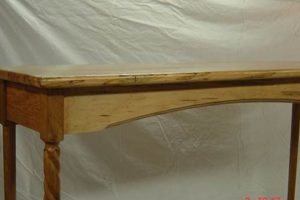
The creation of bespoke wooden objects tailored to individual specifications, often involving intricate designs and artisanal techniques, is a specialized field. These projects can range from handcrafted furniture to architectural millwork, reflecting specific client needs and aesthetic preferences. An example includes a carefully designed dining table built to match a client’s existing dcor, utilizing locally sourced hardwood and a hand-rubbed finish.
The importance of such work lies in its ability to provide unique, high-quality items that mass production cannot replicate. Benefits extend to enhanced durability, personalized design, and the preservation of traditional crafts. Historically, this kind of craftsmanship was central to society, with skilled artisans forming the backbone of local economies and contributing significantly to architectural heritage.
The following sections will delve into specific aspects of this discipline, examining material selection, construction techniques, design considerations, and the process of commissioning and executing custom woodworking projects.
Essential Guidance for Custom Woodworking Projects
The following provides crucial guidance for successful execution of individualized woodworking projects. Proper planning and execution are paramount to achieving desired outcomes.
Tip 1: Detailed Project Planning: Comprehensive planning is critical. This includes precise measurements, thorough design sketches, and detailed material lists. For example, a cabinet project requires consideration of door hinge types, shelving configurations, and overall dimensions before construction begins.
Tip 2: Material Selection Based on Project Needs: Wood selection is determined by the project’s intended use and desired aesthetic. Hardwoods like oak and maple are suitable for durable furniture, while softwoods like pine are adequate for less demanding projects. Understand the properties of each wood to ensure longevity.
Tip 3: Invest in Quality Tools and Equipment: Precise cuts and secure joinery demand high-quality tools. A sharp saw blade, a reliable drill, and accurate measuring devices are essential for achieving professional results. Avoid compromising on tool quality to save costs.
Tip 4: Prioritize Accurate Joinery Techniques: Strong and durable joints are fundamental. Familiarize yourself with various joinery methods, such as dovetails, mortise and tenon, and rabbets. Select the appropriate joint for the project’s structural requirements. For example, a dovetail joint provides superior strength for drawer construction.
Tip 5: Employ Proper Finishing Techniques: A well-executed finish enhances the wood’s natural beauty and protects it from environmental damage. Sanding, staining, and applying a protective topcoat are crucial steps. Test the finish on a scrap piece of wood before applying it to the final project.
Tip 6: Maintain a Clean and Organized Workspace: A tidy workspace minimizes errors and promotes efficiency. Clear the work area regularly, store tools properly, and ensure adequate lighting. A safe and organized environment is essential for high-quality work.
Tip 7: Understand Wood Movement and Expansion: Wood expands and contracts with changes in humidity. Account for this movement in the design and construction phases to prevent warping or cracking. Allow for expansion gaps in larger projects.
These guidelines provide a solid foundation for successful custom woodworking. Adhering to these principles will result in well-crafted, durable, and aesthetically pleasing pieces.
The subsequent sections will explore case studies illustrating the application of these principles in real-world projects, showcasing the versatility and enduring appeal of custom woodworking.
1. Precision Material Selection

In the realm of bespoke woodworking, selecting appropriate materials transcends mere procurement; it is a foundational element directly influencing structural integrity, aesthetic appeal, and project longevity. Precision material selection aligns the inherent properties of wood with the specific demands of the intended design.
- Species-Specific Strength and Stability
Different wood species exhibit varying levels of strength, density, and resistance to moisture. For instance, oak, a hardwood, is often chosen for load-bearing furniture components due to its robust nature. Conversely, cedar, known for its aromatic properties and resistance to insects, may be selected for lining closets or chests. The selection process must consider the stress and environmental conditions the finished piece will endure.
- Grain Pattern and Aesthetic Consistency
The grain pattern of wood contributes significantly to the overall visual character of the finished product. Careful consideration must be given to matching grain patterns across different components of a single piece to ensure visual harmony. This is particularly crucial in projects where seamless transitions are desired, such as cabinet doors or tabletops. Variations in grain can either be embraced for rustic charm or meticulously controlled for a more formal appearance.
- Dimensional Stability and Environmental Adaptation
Wood is hygroscopic, meaning it absorbs and releases moisture from the environment, leading to expansion and contraction. Understanding how different species react to humidity changes is paramount in preventing warping, cracking, or joint failure. Kiln-dried lumber is often preferred as it has been stabilized to a specific moisture content, minimizing subsequent movement. Proper sealing and finishing techniques further mitigate the effects of environmental fluctuations.
- Sustainability and Ethical Sourcing
Increasingly, responsible sourcing practices are integral to material selection. Sustainable forestry initiatives ensure that timber is harvested in a manner that preserves biodiversity and ecological balance. Certifications, such as those from the Forest Stewardship Council (FSC), provide assurance that wood products originate from responsibly managed forests. Ethical considerations also extend to supporting local suppliers and reducing the carbon footprint associated with transportation.
These facets of precision material selection underscore its critical role in achieving the desired quality and longevity in custom woodworking projects. The interplay of strength, aesthetic consistency, dimensional stability, and ethical sourcing highlights the multifaceted nature of this decision-making process, ultimately contributing to the creation of heirloom-quality pieces that stand the test of time.
2. Bespoke Design Integration

Bespoke design integration forms the core principle of specialized woodworking, influencing every facet from initial concept to final execution. This symbiotic relationship dictates that the design process is not merely an aesthetic exercise, but an intrinsic component directly shaping the final product’s functionality, durability, and aesthetic value. Without thoughtful design integration, specialized woodworking risks producing aesthetically pleasing but structurally unsound or functionally inadequate pieces. For example, integrating ergonomic considerations into a custom-designed chair necessitates careful planning during the design phase, accounting for lumbar support, seat height, and overall posture to ensure both comfort and visual appeal.
The practical significance of bespoke design integration is further exemplified in architectural woodworking. Custom millwork projects, such as libraries or home offices, demand intricate integration with existing structural elements and spatial constraints. The design must precisely account for wall dimensions, ceiling heights, and the placement of electrical outlets or HVAC systems. Failing to adequately integrate these elements can result in costly rework, compromised functionality, or aesthetic inconsistencies. A successful integration process involves iterative communication between the client, designer, and craftsman, ensuring that all requirements and constraints are addressed proactively. The cause-and-effect relationship is evident: meticulous design translates to a seamless fit and enhanced user experience, while insufficient integration leads to practical and aesthetic shortfalls.
In conclusion, bespoke design integration is not merely a stylistic consideration within the broader context of individualized woodworking; it is a critical determinant of the project’s overall success. The challenges inherent in this process underscore the need for expertise in design principles, material properties, and construction techniques. By prioritizing seamless integration, craftsmen ensure that the final product is not only visually appealing but also functional, durable, and tailored precisely to the client’s needs, thereby embodying the true essence of the craft.
3. Expert Craftsmanship Skill

Expert craftsmanship skill is inextricably linked to successful bespoke woodworking. Its presence, or absence, directly dictates the quality, durability, and aesthetic merit of the final product. Custom woodworking, by its nature, deviates from standardized production methods, demanding a nuanced understanding of materials, techniques, and design principles that can only be cultivated through extensive experience and dedicated training. The consequences of inadequate craftsmanship range from structural instability to aesthetic imperfections, ultimately diminishing the value and longevity of the piece. For example, a poorly executed dovetail joint, resulting from a lack of skill, compromises the integrity of a drawer, leading to premature failure.
The practical significance of expert craftsmanship skill extends beyond mere technical proficiency. It encompasses problem-solving abilities, an acute attention to detail, and a commitment to achieving excellence. In custom woodworking, each project presents unique challenges, requiring craftsmen to adapt their techniques and approaches to suit the specific requirements of the design and materials. This adaptability is often demonstrated in complex projects involving intricate carvings or compound angles, where the craftsman must rely on their intuition and experience to overcome unforeseen obstacles. Furthermore, skilled craftsmen possess a deep understanding of wood movement and its impact on structural stability, enabling them to design and construct pieces that withstand the test of time.
Ultimately, expert craftsmanship skill serves as the cornerstone of bespoke woodworking, elevating it from a simple assembly of materials to an art form. While technology plays an increasingly important role in modern woodworking, it cannot replace the discerning eye and skilled hands of a master craftsman. The ability to transform raw materials into functional and aesthetically pleasing objects is a testament to the enduring value of human skill and ingenuity. The challenges of preserving and passing on these skills to future generations underscore the importance of apprenticeships and ongoing professional development within the woodworking industry.
4. Specialized Joinery Expertise

Specialized joinery expertise forms a crucial component within the discipline of woodsmith custom woodworking. It encompasses the advanced knowledge and skillful application of techniques that unite individual wooden components into structurally sound and aesthetically cohesive wholes. Without this proficiency, custom woodworking projects risk compromising durability and visual appeal, ultimately undermining the intended quality and longevity.
- Advanced Mortise and Tenon Techniques
Beyond basic mortise and tenon joints, specialized expertise includes variations like wedged, tusked, or drawbored mortise and tenons. These techniques provide enhanced strength and resistance to racking, particularly in furniture designed for heavy use or structural applications like timber framing. For example, a drawbored mortise and tenon in a dining table leg utilizes a peg that is intentionally offset to draw the joint tighter, increasing its resistance to shear forces. This requires precise execution and an understanding of wood behavior under stress.
- Complex Dovetail Variations
While dovetail joints are commonly used for drawer construction, specialized joinery expertise extends to complex variations such as sliding dovetails, secret dovetails, or angled dovetails. These techniques offer greater strength and aesthetic appeal, often employed in high-end furniture or architectural millwork. A secret dovetail, for instance, conceals the joint from one face of the wood, creating a seamless appearance while maintaining structural integrity. This demands meticulous craftsmanship and precise alignment.
- Curved and Sculpted Joinery
The ability to create seamless joints in curved or sculpted wooden components represents a hallmark of specialized joinery expertise. This often involves techniques like coopering, where individual staves are angled to form a curved surface, or meticulously carved joints that follow the contours of a complex shape. For example, constructing a curved table apron requires precise cuts and shaping to ensure a tight, gap-free joint. This necessitates advanced skills in woodcarving and shaping.
- Integration of Non-Traditional Materials
Specialized joinery expertise also encompasses the ability to integrate non-traditional materials, such as metal, glass, or stone, into wooden structures. This requires a thorough understanding of material compatibility and the development of innovative joining methods. For instance, incorporating a metal inlay into a wooden tabletop necessitates precise routing and fitting to ensure a flush and secure bond. This demands advanced skills in both woodworking and metalworking.
These facets of specialized joinery expertise collectively contribute to the creation of custom woodworking projects that are not only visually stunning but also structurally sound and durable. The mastery of these techniques enables woodsmiths to push the boundaries of design and create heirloom-quality pieces that embody both artistic expression and functional excellence. The value is in the details.
5. Durable Finishing Techniques

The application of durable finishing techniques represents a critical stage in the realization of high-quality woodworking projects. These techniques are not merely cosmetic enhancements; they are integral to protecting the wood substrate from environmental factors, enhancing longevity, and preserving aesthetic integrity. Within the context of personalized woodworking, the selection and application of finishing processes directly influence the piece’s ability to withstand daily use and resist degradation over time. The relationship is causal: appropriate finishing techniques extend the lifespan of the project, while inadequate finishing compromises its structural and visual integrity. A real-life example is the application of a marine-grade varnish to a custom-built outdoor bench, protecting it from moisture, UV radiation, and temperature fluctuations, thereby preventing warping, cracking, and fading.
Practical applications of durable finishing techniques extend to diverse woodworking projects, each requiring a tailored approach. For instance, furniture intended for high-traffic areas may necessitate the use of hard-wearing polyurethane coatings or conversion varnishes, which offer superior scratch and abrasion resistance. In contrast, heirloom-quality pieces may benefit from traditional oil-based finishes, providing a rich, lustrous patina that enhances the natural grain of the wood while allowing for easy repair and restoration. The practical significance lies in understanding the specific demands of each project and selecting finishing materials that align with those requirements. Effective application involves meticulous surface preparation, including sanding and filling, followed by multiple coats of the chosen finish, each applied with precision and attention to detail. The investment in time and expertise at this stage yields significant returns in terms of long-term performance and aesthetic preservation.
In summary, durable finishing techniques are essential to customized woodworking, functioning as a protective barrier and aesthetic enhancer. Challenges include selecting the appropriate finish for the intended application and mastering the techniques necessary for flawless application. By prioritizing durability and employing skilled finishing methods, woodworkers ensure that their creations not only meet but exceed expectations, providing lasting beauty and functionality. This understanding links directly to the broader theme of creating value through skilled craftsmanship and attention to detail, enhancing the value and reputation of the custom woodworking practice.
6. Client-Specific Needs

The fulfillment of client-specific needs constitutes the fundamental driving force behind specialized woodworking practices. The inherent nature of bespoke woodworking necessitates a detailed understanding and precise execution of requirements that deviate from mass-produced alternatives. These needs often extend beyond mere functional considerations, encompassing aesthetic preferences, dimensional constraints, and integration with existing architectural elements. The cause-and-effect relationship is direct: accurate interpretation and fulfillment of client specifications result in a product that meets or exceeds expectations, fostering satisfaction and reinforcing the value of customized craftsmanship. The absence of diligent attention to these needs invariably leads to dissatisfaction, rework, or a product that fails to meet its intended purpose. For example, a client requiring a custom desk to fit a specific alcove with integrated cable management necessitates precise measurements and a design that accommodates the location of outlets and equipment.
The practical significance of addressing client-specific needs manifests in various facets of the woodworking process. During the initial consultation, active listening and thorough questioning are paramount to elicit detailed information regarding the client’s vision, functional requirements, and budget. This information informs the design phase, where creative solutions are developed to meet the unique challenges presented by the project. Throughout the construction phase, ongoing communication with the client ensures that any deviations from the original plan are addressed promptly and collaboratively. The integration of accessibility features, such as adjustable-height work surfaces or ergonomic seating, exemplifies a client-specific need that demands careful consideration during both design and construction. Furthermore, the selection of materials and finishes must align with the client’s preferences and the intended use of the product, ensuring both aesthetic appeal and long-term durability.
In summary, attending to client-specific needs is the bedrock upon which customized woodworking is built. The challenges inherent in interpreting and translating these needs into tangible form underscore the importance of communication, collaboration, and technical expertise. By prioritizing the client’s unique requirements, woodworkers not only deliver exceptional products but also cultivate lasting relationships built on trust and mutual satisfaction, thereby reinforcing the value of specialized craftsmanship within a competitive market. The essence of “woodsmith custom woodworking” lies in its capacity to offer solutions tailored precisely to individual demands, a service that mass production simply cannot replicate.
7. Dimensional Accuracy Essential
Dimensional accuracy is paramount in specialized woodworking, directly influencing the success and longevity of each project. Within this field, deviations from precise measurements yield cascading effects, ranging from compromised structural integrity to aesthetic imperfections. Such accuracy is not merely a desirable attribute but a core requirement that dictates the functionality and visual harmony of the finished product. For instance, in constructing a custom-fitted kitchen cabinet, even minor inaccuracies can result in misaligned doors, drawers that do not close properly, or gaps that detract from the overall aesthetic. The pursuit of dimensional accuracy, therefore, is inextricably linked to the value and quality of specialized woodworking outcomes.
The practical significance of dimensional accuracy extends to every stage of the woodworking process. During the design phase, detailed drawings and precise specifications are essential for translating the client’s vision into a tangible plan. Material selection must account for potential variations in thickness and width, necessitating careful calibration and adjustment of cutting tools. Joinery techniques, such as mortise and tenon or dovetail joints, demand meticulous precision to ensure a secure and lasting bond. The assembly process requires constant verification of dimensions, preventing cumulative errors that can compromise the final product. In architectural millwork, dimensional accuracy is particularly critical, as components must seamlessly integrate with existing structures, adhering to strict tolerances to avoid costly rework and aesthetic inconsistencies. For example, a custom-built bookcase designed to fit within a specific alcove must be precisely dimensioned to ensure a snug and visually appealing fit.
Achieving dimensional accuracy in specialized woodworking presents ongoing challenges, requiring a combination of technical skill, meticulous attention to detail, and the use of precision measuring instruments. Variations in wood density, moisture content, and temperature can all contribute to dimensional instability, necessitating adjustments to cutting and joinery techniques. Despite these challenges, dimensional accuracy remains an indispensable element of specialized woodworking, ensuring the creation of functional, aesthetically pleasing, and enduring pieces. Its pursuit is integral to maintaining the standards of excellence associated with custom craftsmanship and upholding the reputation of “woodsmith custom woodworking.”
Frequently Asked Questions
The following addresses common inquiries regarding specialized woodworking services, focusing on aspects of design, construction, and material selection.
Question 1: What factors influence the cost of a custom woodworking project?
Project costs are determined by material selection, complexity of design, scope of labor, and finishing requirements. Exotic hardwoods, intricate joinery, and specialized finishes will increase overall expenditure.
Question 2: How long does a typical custom woodworking project take to complete?
Project duration varies depending on the complexity of the design, the availability of materials, and the current workload. Smaller projects may take weeks, while larger, more intricate projects can extend to months.
Question 3: What types of wood are best suited for custom furniture?
The selection of wood depends on the desired aesthetic, durability requirements, and intended use. Hardwoods like oak, maple, and cherry are commonly used for furniture due to their strength and visual appeal. Softwoods like pine and cedar are suitable for less demanding projects.
Question 4: Can custom woodworking projects be designed to match existing furniture or decor?
Yes, custom woodworking allows for precise replication of existing designs, styles, and finishes. Color matching and replication of joinery details are standard practice.
Question 5: What is the process for commissioning a custom woodworking project?
The process typically begins with an initial consultation to discuss design ideas, material preferences, and budgetary constraints. A detailed design proposal, including drawings and specifications, is then presented for approval. Upon approval, construction commences, followed by finishing and installation.
Question 6: Are custom woodworking projects environmentally sustainable?
Sustainable practices can be incorporated into custom woodworking through the use of responsibly sourced lumber, low-VOC finishes, and efficient construction methods. Clients can request materials certified by organizations such as the Forest Stewardship Council (FSC).
Understanding these elements is crucial for the successful commission and completion of projects.
The subsequent section delves into case studies illustrating how these principles are applied to real-world custom woodworking projects.
Conclusion
This exploration has elucidated the intricacies of specialized woodworking, underscoring the importance of material selection, design integration, craftsmanship skill, joinery expertise, finishing techniques, client-specific needs, and dimensional accuracy. Each element contributes to the creation of enduring, functional, and aesthetically pleasing pieces. The absence of any one component compromises the overall quality and value of the final product.
The continued relevance of “woodsmith custom woodworking” lies in its ability to provide personalized solutions that mass production cannot replicate. Its enduring appeal stems from a commitment to quality, craftsmanship, and the fulfillment of individual client needs. As such, its future depends on the preservation of traditional skills and the adaptation to evolving design trends and technological advancements.