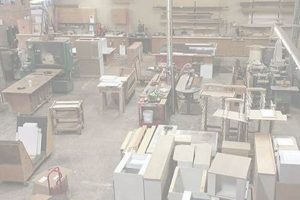
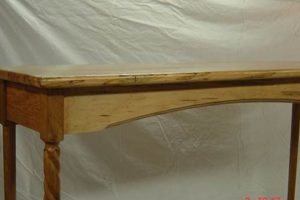
The specialized creation of wooden items tailored to individual specifications forms the core of this craft. Unlike mass-produced furniture or fixtures, these pieces are designed and constructed to meet precise needs and aesthetic preferences. Examples encompass bespoke cabinetry, uniquely shaped furniture, and intricately detailed architectural millwork.
This approach offers several distinct advantages. It allows for optimization of space, especially in areas with unconventional dimensions. Furthermore, it ensures a high degree of personalization, reflecting individual styles and tastes. Historically, this level of craftsmanship was the standard, before industrialization led to standardized production methods.
The subsequent sections will delve into the specific materials used, the range of projects undertaken, and the processes involved in achieving exceptional results within this field. The discussion will further explore design considerations and factors influencing overall project costs.
Essential Considerations for Commissioning Custom Woodwork
Achieving superior results in bespoke woodworking projects requires careful planning and informed decision-making. The following tips offer guidance for a successful commissioning process.
Tip 1: Define Project Scope Precisely: Clear articulation of needs is paramount. Provide detailed specifications regarding dimensions, materials, and intended function. Ambiguity at the outset can lead to misinterpretations and unsatisfactory outcomes.
Tip 2: Select Appropriate Wood Species: Different wood types possess varying characteristics in terms of durability, grain pattern, and workability. Matching the wood species to the intended use ensures longevity and aesthetic appeal. Consult with professionals to understand the suitability of various options.
Tip 3: Prioritize Accurate Measurements: Exact measurements are critical for seamless integration of the woodwork into its designated space. Professional measurement services are recommended, particularly for complex installations or architectural millwork.
Tip 4: Establish a Realistic Budget: Custom woodworking involves skilled labor and premium materials, which translates to a higher investment compared to mass-produced alternatives. Determine a budget range and communicate it transparently with the craftsman to explore viable options.
Tip 5: Inquire About Finishing Options: The finish applied to the wood significantly impacts its appearance and protection against moisture and wear. Research different finishing techniques, such as staining, varnishing, or lacquering, and select a finish that complements the wood species and intended use.
Tip 6: Review Shop Drawings Meticulously: Shop drawings provide a detailed visual representation of the project before construction begins. Thoroughly review these drawings to identify any discrepancies or areas of concern and address them proactively.
Tip 7: Maintain Open Communication: Regular communication with the craftsman throughout the project ensures alignment and allows for adjustments as needed. Establish clear channels for communication and proactively address any questions or concerns.
Adhering to these recommendations can significantly improve the likelihood of a successful custom woodworking project, resulting in functional, aesthetically pleasing, and long-lasting pieces.
The subsequent sections will explore advanced techniques and case studies, offering further insights into the complexities and rewards of bespoke woodworking.
1. Precision Measurements
Precision measurements constitute a foundational element in custom woodworking, ensuring the final product aligns seamlessly with design specifications and intended function. The accuracy achieved during the measurement phase directly impacts the overall quality, fit, and aesthetic appeal of the finished piece.
- Dimensional Accuracy and Fit
Accurate measurements are crucial for achieving a precise fit within a designated space. Inaccuracies, even seemingly minor ones, can result in gaps, misalignments, and functional impairments. For instance, custom cabinetry designed for a kitchen must precisely conform to the existing wall dimensions and appliance placements to ensure seamless integration and prevent unusable gaps. Failure to accurately measure can lead to costly rework and a compromised final product.
- Material Optimization and Cost Efficiency
Precise measurements facilitate optimal material utilization. By accurately determining the required dimensions for each component, waste can be minimized. This not only reduces material costs but also contributes to environmentally responsible practices. Conversely, inaccurate measurements can lead to overestimation of material needs, resulting in unnecessary waste and increased project expenses.
- Design Fidelity and Aesthetic Integrity
Maintaining design fidelity hinges on accurate measurements. Complex designs, incorporating intricate details and specific proportions, demand precise adherence to the original specifications. Deviations arising from measurement errors can compromise the intended aesthetic, resulting in a final product that deviates significantly from the envisioned design. Consider the creation of a custom-designed, intricately carved headboard; dimensional inaccuracies would distort the carved details and overall proportions, undermining the intended visual appeal.
- Structural Integrity and Functional Performance
Accurate measurements contribute directly to the structural integrity and functional performance of custom woodworking projects. Precise dimensions are essential for ensuring proper joinery and load-bearing capacity. For example, in the construction of a custom staircase, accurate measurements of rise, run, and tread depth are critical for ensuring safe and comfortable use. Inaccurate measurements can compromise the structural stability of the staircase, potentially leading to safety hazards.
In summary, the reliance on precision measurements in custom woodworking extends beyond mere dimensional accuracy. It is integral to material efficiency, aesthetic integrity, structural soundness, and overall project success. Accurate measurement practices, therefore, represent a non-negotiable aspect of producing high-quality, bespoke wooden items.
2. Material Selection

Material selection is intrinsically linked to the success of custom woodworking. The properties of chosen materials directly affect the durability, aesthetic, and functionality of the final product. Therefore, informed material selection is not merely a preliminary step, but a critical decision-making process that dictates the project’s lifespan and performance. For instance, selecting a rot-resistant species like cedar for outdoor furniture is paramount to its longevity, whereas choosing a softer wood like pine might be more appropriate for decorative items with intricate carvings.
The connection between material and craftsmanship becomes evident in the application of various woodworking techniques. The grain pattern, density, and hardness of the chosen wood influence the suitability of joinery methods, such as dovetail, mortise and tenon, or mitered joints. A robust hardwood, like oak or maple, readily accommodates intricate joinery, ensuring structural integrity, while softer woods may necessitate reinforcement or alternative techniques. Furthermore, the selected finish, whether a stain, varnish, or paint, must be compatible with the wood species to achieve the desired aesthetic outcome. For example, applying a dark stain to cherry wood enhances its natural grain, while a lighter finish might better complement the subtle tones of maple.
Ultimately, the integration of appropriate material selection and skilled craftsmanship characterizes quality custom woodworking. Understanding the inherent properties of different wood species, their suitability for specific applications, and their compatibility with various woodworking techniques ensures that the final product meets both functional requirements and aesthetic expectations. This careful consideration, from the initial selection of materials to the final finishing touches, exemplifies the core principles of custom woodworking.
3. Joinery Techniques

The integrity and longevity of custom woodworking projects are intrinsically linked to the selection and execution of appropriate joinery techniques. These methods are not merely assembly procedures but crucial determinants of a piece’s structural stability, aesthetic appeal, and overall durability.
- Mortise and Tenon Joints
The mortise and tenon joint, a time-honored method, involves fitting a projecting tenon (the tongue) into a corresponding mortise (the hole). This technique is particularly effective in load-bearing applications, such as table legs and chair frames. The strength of this joint stems from its resistance to racking forces, distributing stress evenly across the joined surfaces. In custom furniture, mortise and tenon joints often signify quality construction and long-term reliability.
- Dovetail Joints
Dovetail joints are characterized by interlocking, fan-shaped tenons (tails) that fit tightly into corresponding mortises (pins). Renowned for their exceptional strength and resistance to pulling forces, dovetails are commonly used in drawer construction and case joinery. The visual appeal of hand-cut dovetails is often considered a hallmark of fine craftsmanship in custom woodworking, adding both structural integrity and aesthetic value.
- Miter Joints
Miter joints involve joining two pieces of wood at an angle, typically 45 degrees, to form a corner. While aesthetically pleasing, miter joints are inherently weaker than other joinery methods. As such, they often require reinforcement through the use of fasteners or splines. In custom woodworking, miter joints are frequently employed in picture frames, moldings, and decorative elements where visual elegance outweighs structural demands.
- Lap Joints
Lap joints are created by overlapping two pieces of wood and fastening them together. This technique is relatively simple to execute and provides a strong, stable connection. Lap joints are commonly utilized in frame construction and panel assemblies where a flush surface is not critical. Their adaptability and ease of implementation make them a versatile option in a variety of custom woodworking applications.
The strategic application of these and other joinery techniques showcases the confluence of skill and knowledge inherent in custom woodworking. The choice of joint depends not only on structural considerations but also on the desired aesthetic and the specific requirements of the project. The mastery of these techniques ultimately defines the quality and enduring nature of custom woodworking creations.
4. Finishing Application

The finishing application constitutes a critical and often underestimated phase within the “rst custom woodworking” process. It directly influences both the aesthetic appeal and the protective qualities of the final piece. A flawed finish can detract from the inherent beauty of the wood and compromise its resistance to environmental factors, thereby shortening its lifespan. Conversely, a meticulously applied finish can enhance the wood’s natural grain, provide a durable barrier against moisture and UV radiation, and contribute significantly to the overall perceived value. For example, a custom-built cherry dining table, regardless of its intricate design and sturdy construction, will be negatively impacted by a poorly applied varnish that results in uneven gloss or premature cracking. Similarly, an exterior door, crafted with precision, will suffer degradation if the chosen finish fails to protect it from the elements.
The selection of the appropriate finish is dictated by several factors, including the wood species, the intended use of the item, and the desired aesthetic. Different wood species react differently to various finishes. Open-grained woods, such as oak, may require a grain filler prior to finishing to achieve a smooth surface, while close-grained woods, like maple, may not. The intended use of the item will determine the required level of durability and water resistance. A kitchen countertop, for example, necessitates a robust finish that can withstand frequent exposure to moisture and cleaning agents, whereas a decorative wall panel may only require a less durable finish primarily for aesthetic purposes. Furthermore, the desired aesthetic dictates the type of finish applied whether it be a matte oil finish for a rustic look, a high-gloss lacquer for a contemporary feel, or a traditional stain to accentuate the wood’s natural color.
In summary, the finishing application is not merely a superficial step but an integral component of “rst custom woodworking” that requires careful consideration and skilled execution. Selecting the appropriate finish, preparing the wood surface meticulously, and applying the finish with precision are essential for achieving a durable, aesthetically pleasing result that protects the wood and enhances its inherent qualities. Failure to prioritize the finishing application can undermine the entire woodworking process, resulting in a diminished product that falls short of its potential. The link between a high-quality finish and the value of custom woodworking is undeniable, solidifying its position as a core aspect of the craft.
5. Design Integration

Design integration, within the context of rst custom woodworking, represents the harmonious blending of functional requirements, aesthetic considerations, and structural necessities into a cohesive and unified whole. It is not merely the application of decorative elements but a fundamental process that dictates the form and utility of the final product. Effective design integration ensures that each component of the woodworking project, from the initial concept to the final finishing touches, contributes to a unified and purposeful design. For example, in the design and construction of a custom-built home office, design integration would involve considering the user’s ergonomic needs, storage requirements, and preferred aesthetic style, then translating these factors into a functional and visually appealing workspace. Failure to adequately integrate these elements could result in a space that is either aesthetically pleasing but functionally impractical or vice versa.
The importance of design integration becomes particularly apparent when considering the constraints imposed by available space, budget limitations, or specific material properties. A skilled woodworking artisan must be adept at balancing competing demands and finding innovative solutions that maximize both form and function. Consider a small apartment where space is at a premium. Integrating a custom-built storage unit that also serves as a room divider would exemplify effective design integration. Such a piece would not only provide essential storage but also enhance the spatial efficiency and aesthetic appeal of the room. The practical application of design integration also involves a thorough understanding of structural principles and material characteristics. A well-integrated design will not only be visually appealing but also structurally sound and capable of withstanding the rigors of daily use.
In conclusion, design integration is an indispensable element of rst custom woodworking. It is the process that transforms raw materials and creative ideas into functional and aesthetically pleasing objects. The challenges inherent in design integration lie in balancing competing demands and finding innovative solutions that meet both functional and aesthetic requirements. By prioritizing design integration, woodworking artisans can create pieces that are not only beautiful but also practical, durable, and perfectly tailored to the needs and preferences of their clients. The mastery of this integration is a distinguishing factor between ordinary woodworking and truly exceptional custom creations.
6. Structural Integrity
Structural integrity is paramount in rst custom woodworking, determining a piece’s longevity and safety. The selection of materials, joinery methods, and design considerations directly impact the structural soundness of the final product. Inferior materials or flawed construction can lead to premature failure, posing potential risks and compromising the investment. For example, a custom-built bookcase constructed with insufficiently strong wood or poorly executed joinery may collapse under the weight of its contents. This demonstrates a direct cause-and-effect relationship between structural integrity and the practical utility of the woodworking project.
The significance of structural integrity is further exemplified in architectural millwork. Custom staircases, for instance, must adhere to strict building codes and possess adequate load-bearing capacity to ensure user safety. The design and construction must account for factors such as live loads, dead loads, and potential impact forces. The failure to properly engineer these structures can result in catastrophic consequences. Similarly, custom cabinetry intended to support heavy countertops or appliances requires robust construction techniques to prevent sagging or collapse. Understanding these structural requirements and implementing appropriate solutions is crucial for achieving durable and reliable results in rst custom woodworking.
In conclusion, structural integrity is not merely a desirable attribute but an essential requirement of rst custom woodworking. It ensures that the finished product is not only aesthetically pleasing but also safe, durable, and capable of fulfilling its intended function. The understanding and application of sound engineering principles, coupled with meticulous craftsmanship, are critical for achieving lasting quality and maximizing the value of custom woodworking projects. Any compromise in structural integrity can have severe consequences, highlighting the importance of prioritizing this aspect throughout the entire design and construction process.
7. Client Specifications

Client specifications form the bedrock of rst custom woodworking, dictating the project’s direction and outcome. These detailed requirements, provided by the client, serve as a blueprint for the artisan, outlining the desired functionality, aesthetic preferences, and dimensional constraints. The influence of client specifications is all-encompassing; from the selection of wood species to the application of finishing techniques, every decision is ultimately guided by these directives. A deviation from the specified requirements inevitably leads to client dissatisfaction and a compromised end product. For instance, if a client specifies a particular shade of stain for a custom-built desk, adhering to that specification is paramount. A different stain, even if subjectively appealing, renders the finished product non-compliant and undermines the custom nature of the work.
The practical significance of understanding and meticulously adhering to client specifications is readily apparent in various scenarios. In the creation of custom cabinetry, precise measurements and layout requirements are critical for ensuring a seamless fit within the designated space. Furthermore, detailed specifications regarding drawer configurations, shelf heights, and hardware choices directly impact the functionality and user experience. Similarly, in the construction of custom furniture, client specifications regarding dimensions, upholstery fabrics, and style details are essential for creating pieces that align with the client’s aesthetic vision and functional needs. In this process of customisation every tiny bit is essential.
The challenges in interpreting client specifications often arise from ambiguous or incomplete information. Clear communication and proactive clarification are essential for mitigating these risks. Establishing a comprehensive understanding of the client’s expectations at the outset, through detailed consultations and the use of visual aids such as drawings or sketches, minimizes the potential for misinterpretations and ensures that the final product aligns with the client’s vision. Client specifications therefore are not an optional addendum, but the core foundation upon which rst custom woodworking is built.
Frequently Asked Questions About rst custom woodworking
This section addresses common inquiries concerning the nature, process, and expectations surrounding rst custom woodworking services. It is intended to provide clarity and inform potential clients.
Question 1: What distinguishes rst custom woodworking from mass-produced furniture?
Rst custom woodworking involves the creation of bespoke pieces tailored to specific client requirements. Unlike mass-produced furniture, it emphasizes unique design, precise dimensions, and material selection aligned with individual preferences.
Question 2: How does one initiate a rst custom woodworking project?
The process typically begins with a consultation to define the scope of the project, discuss design concepts, and establish budgetary parameters. Detailed specifications, including dimensions, materials, and desired finishes, are crucial for accurate project execution.
Question 3: What factors influence the cost of rst custom woodworking?
Project costs are affected by several factors, including the complexity of the design, the type and quantity of materials used, the intricacy of the joinery techniques, and the time required for completion. Labor costs associated with skilled craftsmanship also contribute significantly.
Question 4: What types of wood are commonly used in rst custom woodworking?
A wide variety of wood species are employed, depending on the desired aesthetic, structural requirements, and budget considerations. Popular choices include hardwoods such as oak, maple, cherry, and walnut, as well as softwoods like pine and cedar, each offering distinct characteristics.
Question 5: How long does a typical rst custom woodworking project take to complete?
Project timelines vary depending on the complexity and scale of the undertaking. Smaller projects may take several weeks, while larger, more intricate commissions can extend over several months. Accurate timelines are typically provided following the initial consultation and design phase.
Question 6: What warranty or guarantee is offered on rst custom woodworking pieces?
Warranty terms vary depending on the provider and the specific project. It is essential to inquire about warranty coverage, including its duration and scope, prior to commencing the project. This should encompass material defects and workmanship errors.
Understanding these fundamental aspects of rst custom woodworking is essential for potential clients seeking bespoke solutions. A clear understanding of the process, costs, and expectations contributes to a satisfactory outcome.
The subsequent section will examine case studies of successful rst custom woodworking projects, illustrating the application of these principles in real-world scenarios.
In Conclusion
This exploration has highlighted the essential elements of rst custom woodworking, from initial design considerations to the critical importance of material selection, joinery techniques, finishing application, and unwavering adherence to client specifications. The success of any project hinges on the meticulous integration of these factors, underpinned by a commitment to structural integrity. The precision inherent in rst custom woodworking distinguishes it from mass-produced alternatives, offering bespoke solutions tailored to individual needs and aesthetic preferences.
As demonstrated, rst custom woodworking represents a significant investment in quality, durability, and personalized design. Its value extends beyond mere functionality, embodying craftsmanship and attention to detail that mass production cannot replicate. Individuals and organizations seeking enduring solutions and distinctive expressions of their vision will continue to find merit in the bespoke creations offered by rst custom woodworking.