Working with Prunus persica yields a material characterized by its reddish-brown hue and generally straight grain. This hardwood, while not as commonly utilized as oak or maple, offers unique aesthetic qualities for projects. A craftsman might employ it in smaller pieces, such as boxes or decorative accents, where its coloration can be highlighted.
The use of this material brings a distinctive warmth to finished items, setting them apart from those constructed with more conventional lumber. Historically, it has been favored for its relative ease of carving and shaping. Its inherent density provides a degree of durability, contributing to the longevity of the crafted object. Its susceptibility to insect damage and decay necessitates careful treatment and sealing to ensure long-term preservation.
Subsequent sections will delve into suitable applications for this particular wood, comparing its properties to other hardwoods, and providing guidance on best practices for its preparation, cutting, and finishing.
Tips for Working with Peach Wood
Successful crafting with Prunus persica requires adherence to specific techniques to maximize the material’s inherent characteristics and minimize potential challenges.
Tip 1: Proper Drying is Essential: Ensure the lumber is thoroughly air-dried or kiln-dried before commencing any project. Inadequate drying leads to warping and cracking, compromising the final product’s structural integrity and aesthetic appeal.
Tip 2: Sharp Tools are Paramount: The density of Prunus persica necessitates the use of meticulously sharpened tools. Dull blades tear the wood fibers, resulting in a rough surface that requires extensive sanding.
Tip 3: Pre-Drilling for Fasteners is Crucial: Due to the hardness of the wood, pre-drilling pilot holes before inserting screws or nails prevents splitting and ensures a secure connection. The diameter of the pilot hole should be slightly smaller than the fastener’s shank.
Tip 4: Careful Sanding is Recommended: Employ a progressive sanding sequence, starting with coarser grits and gradually transitioning to finer ones. This approach yields a smooth, even surface, preparing the wood for finishing.
Tip 5: Select an Appropriate Finish: Consider the intended use of the finished item when choosing a sealant. Oil-based finishes enhance the wood’s natural color and grain, while polyurethane coatings provide superior protection against moisture and wear. Always test the finish on a sample piece first.
Tip 6: Avoid Over-Tightening Clamps: Excessive clamping pressure can leave indentations on the wood’s surface. Utilize cauls (protective blocks) between the clamps and the lumber to distribute the pressure evenly.
By following these guidelines, a craftsman can effectively leverage the unique qualities of this specific wood, creating durable and aesthetically pleasing pieces. The proper execution of each step ensures a final product that showcases the natural beauty and inherent strength of the material.
The following section will address common issues encountered during the process, providing troubleshooting techniques to mitigate potential problems.
1. Color and Grain

The inherent characteristics of color and grain are paramount considerations when employing Prunus persica in woodworking projects. These attributes dictate the aesthetic appeal and, to some extent, the structural capabilities of the finished piece. Careful assessment of these factors ensures the material is appropriately utilized and its unique qualities are fully realized.
- Hue Variation
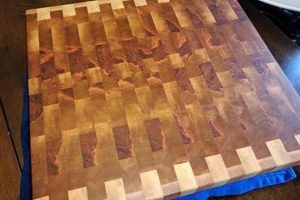
The heartwood of Prunus persica typically exhibits a reddish-brown hue, while the sapwood is lighter, often appearing yellowish or cream-colored. This contrast can be exploited to create visually interesting designs by selectively incorporating both heartwood and sapwood within a single project. However, inconsistent coloration within a single element can detract from the overall aesthetic; therefore, careful matching of pieces is crucial for uniformity.
- Grain Pattern
The grain of Prunus persica is generally straight, but it may exhibit occasional irregularities or knots. Straight grain facilitates easier planing and shaping, while knots can introduce visual interest but also pose challenges during the working process. The orientation of the grain significantly impacts the wood’s strength and resistance to splitting; therefore, consideration of grain direction is essential when constructing load-bearing components.
- Figure and Markings
Certain specimens of Prunus persica may exhibit figure, such as curl or fiddleback, enhancing the wood’s visual texture. Mineral streaks and other natural markings can also contribute to the wood’s character. These features are often sought after for decorative applications, adding uniqueness and individuality to the finished product. The presence and location of figure and markings should be carefully considered during the design phase to maximize their aesthetic impact.
- Influence on Finishing
The color and grain of Prunus persica significantly influence the selection of finishing techniques. Oil-based finishes typically enhance the wood’s natural color and grain patterns, while pigmented stains can be used to alter the hue or create a more uniform appearance. The open grain structure of this wood may require multiple coats of finish to achieve a smooth, even surface. The choice of finish should complement the wood’s inherent characteristics and the intended use of the finished item.
These considerations of color and grain are integral to the successful utilization of Prunus persica. The interplay of these characteristics dictates not only the aesthetic outcome but also influences the woodworking techniques employed and the ultimate longevity and integrity of the crafted object. Judicious selection and informed application of appropriate methods maximize the material’s potential, yielding distinctive and durable results.
2. Durability and Density

The physical properties of density and durability are critical when considering Prunus persica for woodworking. These attributes directly influence a crafted item’s longevity, structural integrity, and suitability for specific applications. Understanding their interplay is paramount for informed material selection and appropriate construction techniques.
- Impact Resistance
Prunus persica, while classified as a hardwood, possesses a moderate density relative to other commonly used species like oak or maple. This translates to a corresponding level of impact resistance. Objects crafted from this wood may be susceptible to denting or damage from significant impacts, necessitating careful consideration in applications where such forces are anticipated. For example, a table crafted from this material might be suitable for a domestic setting with light use but less appropriate for a commercial environment subject to heavier wear and tear.
- Resistance to Wear
The density of Prunus persica influences its resistance to abrasion and general wear. A higher density generally correlates with greater resistance to surface damage from friction. This characteristic is pertinent in applications such as furniture components or decorative items that experience regular contact. While surface treatments, such as varnishes or lacquers, can enhance wear resistance, the inherent density of the wood provides a foundational level of protection. A low resistance would require frequent refinishing.
- Dimensional Stability
Density affects dimensional stability, the wood’s ability to maintain its shape and size under varying humidity and temperature conditions. Denser woods tend to exhibit greater dimensional stability, minimizing warping or cracking. While Prunus persica is moderately stable, proper drying and sealing are crucial to mitigate dimensional changes. Failure to address this aspect can result in structural issues in finished projects, particularly in environments with fluctuating environmental conditions. Items created must be properly sealed.
- Fastener Retention
The wood’s density directly impacts its ability to securely hold screws, nails, and other fasteners. Denser woods offer greater resistance to pull-out forces, ensuring stronger and more durable joints. With Prunus persica, pre-drilling pilot holes is often recommended to prevent splitting and to facilitate secure fastener placement. Proper fastener selection and installation techniques are essential for maximizing the longevity and structural integrity of assembled components.
In conclusion, the durability and density of Prunus persica represent crucial factors to consider when evaluating its suitability for woodworking endeavors. While not as robust as some hardwoods, its moderate properties can be effectively leveraged in appropriate applications with careful attention to design, construction, and finishing techniques. Understanding these inherent characteristics enables craftsmen to create enduring and aesthetically pleasing items that capitalize on the wood’s unique qualities. The next section will cover drying techniques.
3. Drying Techniques

The successful utilization of Prunus persica in woodworking is inextricably linked to the implementation of appropriate drying techniques. The inherent moisture content of freshly harvested lumber significantly impacts its workability, stability, and long-term performance. Improper drying practices introduce stresses within the wood structure, leading to defects that compromise the integrity and aesthetic value of finished pieces. Conversely, well-executed drying protocols yield a stable and predictable material, facilitating efficient crafting processes and ensuring the durability of the final product. For example, if green Prunus persica is used to create a table without proper drying, the wood could warp or crack as it dries, potentially causing the table to become unstable or structurally unsound. Such issues are particularly pronounced in items that incorporate complex joinery or rely on precise dimensional tolerances.
Air-drying and kiln-drying represent the two primary approaches to reducing moisture content. Air-drying involves stacking lumber outdoors in a manner that promotes air circulation, allowing the wood to gradually lose moisture over an extended period. While cost-effective, air-drying is subject to environmental conditions and often results in uneven moisture distribution and a final moisture content that remains relatively high. Kiln-drying, on the other hand, employs controlled temperature and humidity within a specialized oven to accelerate the drying process and achieve a more uniform and lower final moisture content. Although kiln-drying involves higher initial costs, it offers greater control and predictability, reducing the risk of defects such as checking, warping, and case hardening. A cabinet maker might choose kiln-dried Prunus persica to ensure tight joints and minimize the risk of panel shrinkage or expansion, leading to a longer-lasting and higher-quality piece of furniture. The choice of drying method should be informed by the specific requirements of the project, considering factors such as time constraints, budget limitations, and desired quality standards.
In summary, effective drying techniques are indispensable for ensuring the viability of Prunus persica in woodworking. The careful selection and implementation of drying methods directly impacts the wood’s stability, workability, and ultimately, the longevity and aesthetic appeal of crafted objects. Challenges remain in balancing the costs and benefits of different drying approaches, requiring a thorough understanding of wood science and practical experience. The subsequent discussion will address tool selection, another crucial aspect of working with this distinct hardwood.
4. Tool Selection
The selection of appropriate tools is paramount when engaging in Prunus persica woodworking. The properties of the wood necessitate tools capable of maintaining sharpness and precision, preventing tearing or splintering of the fibers. Inadequate tools can lead to compromised joinery, surface imperfections, and reduced structural integrity. For example, using a dull saw blade on Prunus persica results in a ragged cut, requiring additional sanding and potentially affecting the fit of adjoining pieces. Conversely, employing a sharp, high-quality blade yields clean, accurate cuts, streamlining the construction process and enhancing the overall quality of the finished product. Tool choice has a direct causal effect on the final item.
Specifically, hand planes with finely adjustable blades are beneficial for achieving smooth, even surfaces on Prunus persica. Scrapers can be utilized to remove imperfections and refine curved surfaces without tearing the grain. When using power tools, variable speed settings allow for optimal control, minimizing the risk of burning or scorching the wood. Selection of drill bits with appropriate geometries for hardwood is essential for clean, precise holes that do not cause splitting. Mortise and tenon joints, frequently employed in furniture construction, demand precise chisels and mortising machines for creating tight, durable connections. The application of specific tools directly influences the effectiveness of these techniques.
Ultimately, the informed selection of tools is indispensable for successful Prunus persica woodworking. Understanding the wood’s unique characteristics and matching those properties with appropriate tools allows for efficient crafting and the creation of enduring, aesthetically pleasing items. Improper selection leads to frustration, wasted material, and diminished quality. Proficiency in tool selection is, therefore, an integral component of woodworking expertise and a critical factor in achieving optimal results. This emphasis on tool specificity reinforces the pursuit of a quality standard of woodworking and production.
5. Finishing Methods

Finishing methods exert a significant influence on the aesthetic appeal and longevity of woodworking projects involving Prunus persica. The selection and application of appropriate finishes directly impact the wood’s protection against environmental factors, enhancement of its natural color and grain, and overall durability. Improper finishing techniques can negate the inherent beauty of the wood and accelerate its degradation. For instance, failing to apply a sealant to Prunus persica used in outdoor furniture leaves it vulnerable to moisture absorption, leading to warping, cracking, and decay. Conversely, a well-chosen and properly applied finish can substantially extend the lifespan of the piece and highlight its unique characteristics. Therefore, understanding the interplay between finishing methods and the specific properties of Prunus persica is essential for successful woodworking.
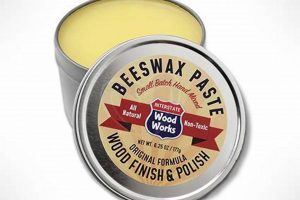
Considerations when selecting a finishing method include the intended use of the item, the desired level of protection, and the desired aesthetic effect. Oil-based finishes, such as linseed oil or tung oil, penetrate the wood, enhancing its natural color and grain patterns while providing a degree of moisture resistance. These finishes typically require multiple applications and offer less protection against scratches and abrasions. Polyurethane coatings, on the other hand, form a durable, protective layer on the surface, offering greater resistance to moisture, scratches, and chemicals. However, polyurethane finishes can obscure the wood’s natural grain and may appear less warm or natural than oil-based finishes. Wax finishes provide a low-luster sheen and enhance the wood’s tactile quality, but offer minimal protection against moisture and wear. The practical application of these various methods differs considerably and a case-by-case analysis is often required.
In conclusion, finishing methods constitute an indispensable component of Prunus persica woodworking. The proper application of an appropriate finish enhances the wood’s aesthetic qualities, protects it from environmental damage, and contributes to the overall longevity of the crafted item. Challenges remain in selecting the optimal finish for a given application, balancing aesthetic considerations with practical requirements. A lack of understanding in this area significantly diminishes the benefits of the craft.
6. Preservation

The preservation of Prunus persica in woodworking projects is critical to ensuring the longevity and sustained aesthetic quality of finished items. Given its susceptibility to certain environmental factors and biological threats, specific measures are essential to mitigate degradation and maintain structural integrity over time.
- Moisture Control
Excessive moisture content promotes fungal growth and decay in Prunus persica. Maintaining a controlled humidity environment is paramount for preventing these issues. Finishes that create a moisture barrier, such as polyurethane or epoxy coatings, can significantly reduce the wood’s absorption of atmospheric moisture. Regular inspection for signs of water damage, such as staining or swelling, is crucial for early detection and remediation of potential problems. Proper ventilation in storage and display areas further aids in moisture control.
- Insect Protection
Prunus persica is vulnerable to attack by certain wood-boring insects. Preventative measures, such as the application of borate-based treatments, can effectively deter insect infestations. Regular inspection for signs of insect activity, including exit holes or frass (insect excrement), is critical for early detection and treatment. In cases of active infestation, fumigation or the application of insecticides may be necessary. Maintaining a clean and debris-free environment around wooden items reduces potential insect habitats.
- UV Radiation Mitigation
Prolonged exposure to ultraviolet (UV) radiation can cause fading and discoloration of Prunus persica. Finishes containing UV inhibitors, such as spar varnish, can significantly reduce the damaging effects of sunlight. Positioning wooden items away from direct sunlight or using window coverings to filter UV radiation can further minimize exposure. Regular application of protective finishes helps to replenish UV inhibitors that degrade over time.
- Proper Storage Techniques
When not in use, Prunus persica woodworking projects should be stored in a controlled environment to minimize exposure to moisture, insects, and UV radiation. Wrapping items in breathable fabric or storing them in airtight containers can provide additional protection. Avoiding storage in damp basements or uninsulated attics is essential for preventing moisture-related damage. Regular inspection during storage allows for early detection and correction of any potential preservation issues.
These preservation strategies, when diligently implemented, contribute significantly to the long-term viability of Prunus persica in woodworking. The integration of proactive measures, such as protective finishes and environmental control, is crucial for safeguarding the material against degradation and ensuring the enduring beauty and functionality of crafted items. Neglecting preservation efforts inevitably leads to premature deterioration and a loss of the investment in both materials and craftsmanship.
Frequently Asked Questions About Peach Wood Woodworking
This section addresses common inquiries regarding the properties, uses, and challenges associated with crafting projects using Prunus persica. The information provided aims to offer clear and concise guidance based on established woodworking principles.
Question 1: Is the lumber suitable for outdoor applications?
While aesthetically appealing, this species is not naturally resistant to decay or insect infestation. Outdoor applications necessitate thorough treatment with preservatives and protective finishes to mitigate these vulnerabilities. Regular maintenance and inspection are critical for prolonging the lifespan of items exposed to the elements.
Question 2: How does it compare to other hardwoods in terms of hardness?
It falls into the middle range of hardwood hardness. The value is adequate for many woodworking projects. However, it is less durable than oak or maple, and one must consider the relative degree of its durability when selecting the lumber.
Question 3: What are the best finishes to use on this lumber?
Oil-based finishes effectively enhance the natural color and grain patterns. Polyurethane coatings provide a durable, protective layer suitable for high-wear applications. The selection depends on the desired aesthetic and functional requirements of the project.
Question 4: What are the common challenges when working with this wood?
Splintering during cutting and shaping is a common issue. This necessitates the use of sharp tools and careful technique. Proper drying is essential to prevent warping and cracking. Pre-drilling pilot holes is recommended to avoid splitting when driving fasteners.
Question 5: Does the lumber have any specific health or safety considerations?
The dust generated during sanding and machining can be an irritant to the respiratory system and skin. It is recommended to wear appropriate personal protective equipment, including a dust mask and gloves, and to work in a well-ventilated area. Some individuals may experience allergic reactions to the wood or its dust.
Question 6: How is this species graded?
Grading typically follows standard hardwood lumber grading rules established by organizations such as the National Hardwood Lumber Association (NHLA). Grades are based on the size and number of defects present in the board. Higher grades are generally clearer and more suitable for projects requiring consistent appearance.
These answers provide a foundational understanding of working with this particular hardwood. Additional research and experimentation may be necessary to achieve optimal results in specific applications.
The following section will explore case studies illustrating the successful application of these woodworking techniques.
Peach Wood Woodworking
This exploration of Prunus persica as a medium for woodworking has illuminated critical aspects, ranging from its inherent material properties to appropriate techniques for its utilization. The discussion has emphasized the significance of proper drying, meticulous tool selection, and thoughtful finishing methods in achieving durable and aesthetically pleasing outcomes. An understanding of the wood’s characteristics, including its moderate hardness and vulnerability to environmental factors, is essential for informed decision-making throughout the crafting process. Furthermore, recognizing the potential health and safety considerations associated with its dust is crucial for responsible practice.
The effective implementation of the principles outlined herein enables craftsmen to leverage the unique attributes of Prunus persica to create distinctive and enduring pieces. Continued exploration of advanced techniques and innovative applications will undoubtedly further expand the possibilities within this specialized field. The inherent beauty and workability of this material warrant continued attention and refinement of best practices to fully realize its potential within the broader woodworking landscape.