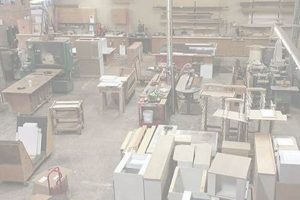
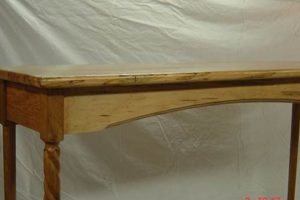
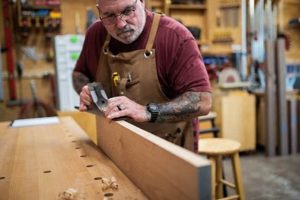
The crafting of bespoke wooden objects and structures, tailored to individual client specifications, represents a distinct sector within the broader woodworking industry. Examples encompass furniture designed to fit unique spaces, cabinetry built for specific storage needs, and architectural elements created to complement a particular design aesthetic. This specialized area contrasts with mass-produced items, prioritizing individual expression and exacting measurements.
This approach offers numerous advantages, including the ability to optimize space utilization, incorporate personalized design features, and ensure the use of high-quality materials. Historically, it reflects a tradition of craftsmanship where skilled artisans worked directly with clients to fulfill their needs and desires, creating lasting and meaningful pieces. This focus on quality and customization often results in increased durability and aesthetic appeal compared to standardized alternatives.
The subsequent sections will delve into specific considerations involved in commissioning such projects, the various types of wood employed, and the design principles that guide the creation of exceptional, personalized woodworking pieces.
Essential Guidance for Commissioning Bespoke Woodwork
The following guidelines offer a framework for navigating the process of commissioning personalized woodworking projects, ensuring optimal outcomes and client satisfaction.
Tip 1: Define Project Scope Precisely: Clearly articulate project objectives, including dimensions, functionality, and aesthetic preferences. Detailed specifications minimize ambiguity and prevent potential misunderstandings.
Tip 2: Material Selection Based on Application: Select wood species based on their inherent properties, considering factors such as durability, grain pattern, and resistance to moisture. The intended use of the finished piece dictates the most appropriate choice.
Tip 3: Prioritize Clear Communication: Maintain consistent and open communication with the woodworker throughout the design and construction phases. Promptly address any questions or concerns to ensure alignment with expectations.
Tip 4: Consider Environmental Factors: Acknowledge the impact of humidity and temperature fluctuations on wood stability. Implement appropriate finishing techniques to mitigate potential warping or cracking.
Tip 5: Establish a Realistic Budget: Bespoke woodwork demands skilled craftsmanship and premium materials; therefore, allocate a budget that reflects the inherent value and time investment involved.
Tip 6: Review Design Prototypes: Request and carefully scrutinize design prototypes or renderings to visualize the final product and identify any necessary modifications before fabrication commences.
Tip 7: Confirm Finishing Specifications: Clearly define the desired finish, including sheen level, color matching, and protective qualities. Ensure the finish aligns with the wood species and the intended use environment.
Adherence to these guidelines streamlines the commissioning process, promoting effective collaboration and resulting in woodworking pieces that meet exact requirements and exceed expectations.
The subsequent sections will explore the historical context and design principles that underpin exceptional, personalized woodworking.
1. Bespoke Design

Bespoke design constitutes a foundational element within “dwr custom woodworking.” It represents the process of tailoring a product or service to the explicit, individual requirements of a client. Within woodworking, this translates to creating furniture, cabinetry, or architectural elements that precisely align with specific dimensions, aesthetic preferences, and functional needs. The absence of bespoke design renders the offering generic and unsuited for clients seeking unique solutions. For example, a homeowner with an oddly shaped alcove requiring a bookshelf cannot utilize standard, mass-produced options; bespoke design is essential to create a piece that perfectly fits the space and serves its intended purpose.
The importance of bespoke design extends beyond mere dimensional accuracy. It encompasses the selection of materials, finishes, and hardware to complement the existing dcor and reflect the client’s personal style. A client might request the use of reclaimed wood to achieve a rustic aesthetic or specify a particular type of stain to match existing cabinetry. Furthermore, bespoke design allows for the incorporation of specialized features, such as hidden compartments, integrated lighting, or ergonomic considerations. A cabinetmaker specializing in bespoke designs can create an ideal setup, tailored to meet customer’s need.
In conclusion, bespoke design is not merely an add-on feature but an intrinsic aspect of “dwr custom woodworking.” It is the catalyst that transforms raw materials into personalized, functional works of art. Understanding the significance of bespoke design is crucial for both clients seeking custom solutions and woodworkers aiming to provide exceptional, individualized service. Challenges arise in effectively translating client visions into tangible designs and executing complex projects with precision. Overcoming these challenges demands strong communication, technical expertise, and a commitment to client satisfaction.
2. Quality Materials

The selection and utilization of superior-grade materials constitute a cornerstone of the bespoke woodworking craft. The relationship between quality materials and the ultimate outcome of custom woodworking projects is fundamentally causal: inferior materials invariably lead to diminished product lifespan, compromised structural integrity, and a reduced aesthetic appeal. The utilization of durable hardwoods like oak, maple, or cherry, coupled with high-quality hardware and finishes, directly translates to a product capable of withstanding years of use while maintaining its visual allure. Conversely, the employment of low-grade lumber or substandard components results in a finished piece prone to warping, cracking, and premature failure. The essence of the concept ensures client happiness by creating a quality project.
Consider, for example, a custom-built dining table. Constructed from kiln-dried, furniture-grade walnut and finished with a catalyzed conversion varnish, the table will resist moisture damage, scratches, and fading, ensuring its continued elegance through generations. Conversely, a similar table fabricated from inexpensive pine and coated with a low-quality lacquer would likely exhibit warping, staining, and chipping within a relatively short timeframe. The selection process demands careful consideration of the intended application, the expected environmental conditions, and the desired aesthetic. This informed decision-making ensures the final product fulfills its functional requirements and meets the client’s aesthetic expectations.
In conclusion, quality materials are not merely an optional enhancement but an indispensable component of bespoke woodworking. Their selection directly influences the longevity, functionality, and overall value of the finished piece. An understanding of this critical connection is paramount for both woodworkers and clients alike, ensuring the successful creation of enduring and aesthetically pleasing woodworking projects. Challenges exist in sourcing premium materials and balancing cost considerations with performance requirements, but the long-term benefits of investing in quality far outweigh the initial expense. The careful planning and execution of a project are paramount in ensuring it satisfies all needs and criteria.
3. Precise Craftsmanship

Precise craftsmanship constitutes an indispensable element in the domain of custom woodworking, determining the fidelity with which a design is translated into a tangible artifact. It encompasses a spectrum of skills and techniques applied with meticulous attention to detail, directly influencing the structural integrity, aesthetic appeal, and overall longevity of the finished product. Its absence undermines the very essence of bespoke creations, reducing them to mere approximations of the intended design.
- Accurate Measurement and Dimensioning
This facet encompasses the ability to precisely measure and cut materials to specified dimensions. Tolerances are minimized, ensuring components fit together seamlessly and the final product conforms to the design specifications. For example, in crafting a custom cabinet, each panel must be precisely measured and cut to ensure proper alignment and functionality of doors and drawers. Imperfect dimensioning compromises the overall structural stability and visual harmony.
- Meticulous Joinery Techniques
Effective joinery techniques, such as dovetails, mortise-and-tenon, or rabbets, are crucial for creating strong and durable connections between wooden components. The precision with which these joints are executed directly impacts the structural integrity and lifespan of the piece. A poorly executed dovetail joint, for instance, weakens the connection and increases the likelihood of failure under stress. Conversely, a meticulously crafted joint provides superior strength and aesthetic appeal.
- Careful Surface Preparation and Finishing
Surface preparation, including sanding, smoothing, and filling imperfections, lays the foundation for a flawless finish. Precise application of stains, paints, or varnishes enhances the wood’s natural beauty and protects it from environmental factors. Uneven sanding or sloppy finishing detracts from the overall aesthetic and reduces the product’s resistance to moisture and wear. A properly prepared and finished surface contributes significantly to the visual appeal and longevity of the woodworking project.
- Attention to Detail in Assembly and Hardware Installation
The final assembly and installation of hardware, such as hinges, knobs, and pulls, demand meticulous attention to detail. Components must be properly aligned and securely fastened to ensure smooth operation and prevent premature wear. Misaligned hardware or improperly tightened screws compromise the functionality and aesthetic appeal of the finished product. Precise hardware installation is essential for creating a functional and visually cohesive piece.
The foregoing facets collectively underscore the critical role of precise craftsmanship in achieving the desired outcomes in projects. The application of these skills, coupled with a commitment to excellence, transforms raw materials into enduring and aesthetically pleasing works of art. The resultant quality directly contributes to the perceived value and lasting enjoyment derived from each bespoke creation. These tenets define bespoke creations and separate this niche area from mass production.
4. Client Collaboration

Effective client collaboration forms an essential axis around which successful “dwr custom woodworking” projects revolve. The degree to which the woodworker and client engage in open communication and shared decision-making directly influences the project’s outcome, ensuring the finished piece aligns with the client’s vision and functional requirements. Without active client participation, the project risks becoming a mere execution of the woodworker’s interpretation, potentially failing to meet the client’s specific needs or aesthetic preferences. This collaborative process, from initial concept to final installation, defines the bespoke nature of the endeavor, differentiating it from standardized offerings.
Consider a homeowner commissioning custom kitchen cabinetry. Initial consultations involve detailed discussions about storage needs, desired style (e.g., modern, farmhouse, traditional), preferred wood species, finish options, and hardware choices. The client might provide sketches, photographs, or inspiration boards to convey their vision. The woodworker, in turn, offers expertise on design feasibility, material properties, and construction techniques. Throughout the design phase, iterative revisions based on client feedback are crucial. For instance, the client may request adjustments to drawer configurations, door styles, or trim details. Upon design approval, the woodworker proceeds with fabrication, maintaining communication with the client to address any unforeseen challenges or potential modifications. This interactive process ensures the final cabinetry reflects the client’s personality, complements the existing architecture, and fulfills its intended purpose.
In summation, client collaboration is not merely a courtesy but a fundamental prerequisite for successful “dwr custom woodworking.” It facilitates the translation of client aspirations into tangible realities, maximizing satisfaction and ensuring the creation of unique, functional, and aesthetically pleasing pieces. Challenges in this process may include managing client expectations, resolving conflicting design preferences, and adapting to changing requirements. Overcoming these challenges requires strong communication skills, patience, and a commitment to collaborative problem-solving, ultimately leading to woodworking projects that are both beautiful and deeply personal.
5. Lasting Value
The concept of lasting value is inextricably linked to custom woodworking. This extends beyond mere monetary appreciation to encompass durability, functionality, aesthetic appeal, and sentimental significance. The inherent purpose of bespoke woodworking is to create pieces that endure, both physically and emotionally, providing years of reliable service and aesthetic pleasure. Mass-produced alternatives often prioritize cost-effectiveness over longevity, resulting in products that require frequent replacement and lack the unique character associated with handcrafted items. This commitment to quality and enduring design is a defining characteristic of this practice.
For example, a custom-built dining table crafted from sustainably sourced hardwood and finished with a durable, non-toxic sealant represents an investment in enduring quality. Such a table is designed to withstand daily use for decades, becoming a focal point for family gatherings and social events. In contrast, a mass-produced table constructed from particleboard and finished with a thin veneer is likely to degrade over time, exhibiting scratches, water damage, and structural weaknesses. The bespoke table offers not only superior durability but also the opportunity to incorporate personalized design elements, such as custom inlays or carved details, further enhancing its aesthetic value and sentimental significance. Also, a custom item might satisfy very specific needs or tastes that have been developed over the long term. Thus, the inherent satisfaction it brings has value and longevity as well.
In conclusion, the pursuit of lasting value is a central tenet of custom woodworking. It necessitates a commitment to using high-quality materials, employing skilled craftsmanship, and collaborating closely with clients to create pieces that are both functional and aesthetically pleasing. While the initial investment may be higher than that of mass-produced alternatives, the long-term benefits of durability, functionality, aesthetic appeal, and sentimental significance justify the cost. Ultimately, custom woodworking offers the opportunity to create heirloom-quality pieces that provide lasting value for generations to come. There will be challenges during development to consider cost, but in the long run, quality is assured.
Frequently Asked Questions
The following represents a collection of frequently asked questions pertaining to the realm of custom woodworking projects. These questions and answers are intended to provide clarity and insight into the process, costs, and considerations involved.
Question 1: What factors influence the cost of custom woodworking projects?
The cost is affected by several key elements, including the type and quantity of materials used, the complexity of the design, the time required for fabrication, and any specialized finishing techniques employed. Intricate designs and exotic wood species typically command higher prices than simpler projects using readily available materials. Detailed quotes are provided to reflect the specific requirements of each project.
Question 2: What types of wood are suitable for custom woodworking?
A wide range of wood species can be utilized, each possessing unique characteristics in terms of grain pattern, hardness, and color. Common choices include hardwoods such as oak, maple, cherry, and walnut, as well as softwoods like pine and cedar. The selection depends on the intended application, aesthetic preferences, and budgetary constraints. Consultation is offered to determine the most appropriate wood for each project.
Question 3: How long does a custom woodworking project typically take?
The timeframe varies based on the complexity of the project, the availability of materials, and current workload. Simple projects might be completed within a few weeks, while more intricate designs could require several months. A detailed timeline is provided at the outset of each project, and updates are communicated regularly throughout the fabrication process.
Question 4: How is the design process managed for custom woodworking?
The design process typically begins with an initial consultation to discuss the client’s vision, functional requirements, and aesthetic preferences. Sketches, renderings, or 3D models may be created to visualize the proposed design. Revisions are made based on client feedback until a final design is approved. Clear communication is maintained throughout the design process to ensure client satisfaction.
Question 5: What types of finishes are available for custom woodworking projects?
A variety of finishes can be applied to protect the wood and enhance its aesthetic appeal. Options include stains, paints, varnishes, lacquers, and oils. The choice of finish depends on the desired look, level of durability, and environmental considerations. Samples are provided to demonstrate the appearance and performance of different finishes.
Question 6: What guarantees or warranties are offered on custom woodworking projects?
Workmanship and material defects are warrantied. The specific terms of the warranty vary depending on the project and are outlined in a written agreement. The goal is to ensure client satisfaction and address any concerns that may arise after project completion. The warranty provides reassurance regarding the quality and durability of the finished product.
These FAQs offer a general overview of key considerations related to custom woodworking. Specific details and terms are addressed on a project-by-project basis, ensuring transparency and client satisfaction.
The subsequent section will explore case studies of successful custom woodworking projects, highlighting the benefits and challenges involved.
dwr custom woodworking
This exposition has detailed the core tenets of personalized woodwork projects. These tenets encompass bespoke design, emphasizing tailored solutions; premium materials, ensuring durability and aesthetic quality; precise craftsmanship, essential for structural integrity and visual appeal; collaborative client engagement, aligning project outcomes with individual requirements; and the pursuit of lasting value, representing a sustained investment. The successful integration of these elements dictates the ultimate success of any undertaking within this specialized field.
The creation of bespoke wooden objects and structures represents a commitment to excellence and individualized expression. The discerning client recognizes the intrinsic value inherent in these endeavors, appreciating the fusion of artistry, functionality, and enduring quality. Should the creation of such a piece be desired, the principles outlined herein provide a foundational framework for navigating the design and fabrication process, ensuring a result that meets exacting standards and provides years of satisfaction.