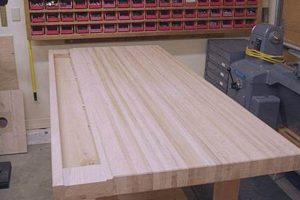
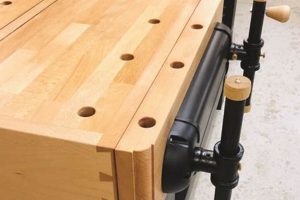
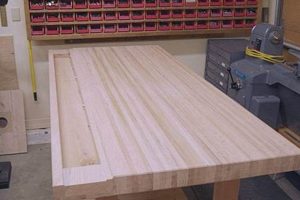
The process of constructing a sturdy, dedicated work surface for woodworking activities involves careful planning, material selection, and execution of joinery techniques. It is a foundational project for any woodworker, providing a stable platform for sawing, planing, and assembly. This undertaking typically begins with designing the bench to suit specific needs and available workspace, followed by cutting and preparing lumber for the various components, such as the legs, stretchers, and top.
A well-crafted example provides numerous advantages, including improved accuracy, efficiency, and safety in woodworking tasks. Historically, these structures have evolved from simple tables to complex, specialized workstations with built-in vises, storage, and other features. Its creation empowers individuals to pursue woodworking projects with greater confidence and precision, leading to higher quality results and increased enjoyment of the craft. Furthermore, mastering this build establishes core woodworking skills applicable to a wide range of other projects.
Subsequent sections will detail the critical steps involved in this process, from selecting the appropriate materials and tools to understanding essential joinery techniques. The guide will also cover design considerations, ensuring the final structure meets individual requirements for size, stability, and functionality, addressing the complete approach from initial concept to a finished, reliable surface.
Construction Recommendations
The successful fabrication of a robust and functional woodworking station hinges on meticulous attention to detail throughout the entire process. The following recommendations highlight crucial aspects of construction to ensure a satisfactory outcome.
Tip 1: Prioritize a Rigid Frame: The foundation of any quality example is a frame that resists racking and movement. Employ robust joinery techniques such as mortise-and-tenon or dovetail joints for maximum strength and stability. Proper frame construction minimizes vibration and ensures accurate workpiece support.
Tip 2: Select Dense, Stable Materials: Choose hardwoods like maple, beech, or ash for primary components, particularly the legs and top. These materials offer superior weight, rigidity, and resistance to wear and tear. Avoid using softwoods for critical structural elements, as they are prone to deformation under heavy loads.
Tip 3: Ensure a Flat and Level Work Surface: The bench top must be meticulously flattened and leveled. Use hand planes or a power planer to achieve a perfectly flat surface. A level top is essential for accurate woodworking operations and prevents workpieces from rocking or shifting during use.
Tip 4: Integrate a Reliable Vise System: A well-designed vise is an indispensable feature. Consider installing both a face vise and a tail vise to accommodate a wide range of workholding needs. Ensure the vises are robust and securely mounted to the bench frame.
Tip 5: Incorporate Adequate Mass: Weight contributes significantly to stability. A heavier bench absorbs vibration and resists movement during rigorous tasks like planing and chopping. Consider adding weight to the base of the bench to further enhance stability.
Tip 6: Plan for Effective Work Holding: Beyond vises, consider adding dog holes to the bench top for securing workpieces with bench dogs and clamps. Strategically placed dog holes offer versatile work holding options and enhance efficiency.
Tip 7: Apply a Durable Finish: Protect the structure from moisture and wear by applying a durable finish. Oil-based finishes or varnish are excellent choices for providing a protective barrier while maintaining the natural appearance of the wood.
Adherence to these recommendations significantly increases the likelihood of creating a sturdy, reliable, and functional woodworking platform. The result is a valuable asset that will enhance the quality and enjoyment of woodworking projects for years to come.
The subsequent section will address design variations and customization options.
1. Design and Planning

Design and planning form the critical foundation for any successful woodworking surface construction. The choices made during this initial phase directly impact the structure’s stability, functionality, and suitability for its intended purpose. A poorly conceived design can lead to a bench that is unstable, inadequately sized, or unsuitable for the specific woodworking tasks anticipated. Conversely, meticulous planning ensures efficient material usage, optimized ergonomics, and a final product that meets the woodworker’s unique needs. For example, if the bench is primarily intended for hand tool work, the design should incorporate features like a thick, heavy top for stability and a well-positioned vise for secure work-holding. If the bench is primarily for assembly, then size and ease of access are more important.
The design phase involves several key considerations. First, the overall dimensions must be determined based on available workspace and the types of projects typically undertaken. Second, the materials must be selected based on their strength, stability, and cost. Third, the joinery methods must be chosen to ensure a robust and long-lasting structure. Fourth, the work-holding system, including the placement and type of vises and dog holes, must be carefully planned to maximize versatility. Failure to adequately address these considerations can result in a flawed final product. The design should always consider the type of woodworking to be performed on the bench and any special equipment that needs to be supported by the bench.
In summary, thoughtful design and planning are indispensable components of woodworking bench construction. Addressing key factors like dimensions, materials, joinery, and work-holding systems during the initial stages ensures that the final structure is both functional and durable. While some woodworkers may view planning as time-consuming, the effort invested upfront yields significant benefits in terms of efficiency, accuracy, and the overall quality of the resulting bench. A well-designed bench, built with careful planning, will ultimately enhance the woodworking experience and serve as a reliable platform for years to come.
2. Material Selection

The choice of materials is a critical determinant in the functionality, longevity, and overall success of woodworking bench construction. Material selection is not merely a matter of aesthetics or cost; it directly influences the bench’s stability, work-holding capacity, and resistance to wear and tear. A carefully considered approach to this aspect is essential for creating a reliable and enduring work surface.
- Wood Species Selection
The type of wood selected dictates the bench’s rigidity and resistance to deformation. Hardwoods such as maple, beech, and oak are frequently chosen for their density and strength, providing a stable platform for demanding tasks like planing and joinery. Conversely, softwoods like pine are generally less suitable for primary structural components due to their lower density and susceptibility to denting and warping. The wood’s moisture content is also crucial; kiln-dried lumber is preferred to minimize movement after construction.
- Hardware Considerations
The selection of appropriate hardware, including screws, bolts, and fasteners, is vital for ensuring structural integrity. High-quality steel fasteners are preferred over cheaper alternatives, as they offer superior strength and resistance to corrosion. The size and type of fastener must be carefully matched to the wood species and the load-bearing requirements of the joint. For example, lag screws may be used to secure the legs to the bench top, while smaller wood screws may be used for less critical connections. The quality of the hardware directly impacts the long-term stability and reliability of the bench.
- Vise Selection
The choice of vises significantly affects the bench’s work-holding capabilities. Vises are available in a variety of styles, including face vises, tail vises, and leg vises, each designed for specific tasks. The material and construction of the vise jaws and hardware are critical factors to consider. Cast iron vises are known for their durability and clamping power, while wooden vises offer a more traditional aesthetic and can be customized to fit specific needs. The vise’s ability to securely grip workpieces without damaging them is essential for precision woodworking.
- Finish Selection
The finish applied to the bench serves to protect the wood from moisture, dirt, and wear, extending its lifespan. Durable finishes like oil-based varnishes, polyurethane, and epoxy resins provide a protective barrier against environmental factors. The choice of finish depends on the desired level of protection and the aesthetic preferences of the woodworker. Some finishes may require multiple coats and careful application to achieve optimal results. A well-applied finish not only enhances the bench’s appearance but also contributes to its long-term durability.
In conclusion, material selection is an indispensable aspect of woodworking bench construction, influencing not only the bench’s structural integrity but also its overall usability and longevity. The careful consideration of wood species, hardware, vises, and finish ensures that the final product meets the demands of rigorous woodworking tasks and provides a reliable and enduring workspace. A judicious approach to material selection is an investment in the bench’s future performance and the woodworker’s satisfaction.
3. Joinery Techniques

The application of appropriate joinery techniques is fundamental to the successful construction of any woodworking bench. The structural integrity and long-term stability of the bench are directly determined by the strength and precision of the joinery employed. For instance, a bench with poorly executed joints is susceptible to racking, movement, and eventual failure under load. Conversely, a bench constructed with robust, well-fitted joints will provide a stable and reliable work surface for years to come. The choice of joinery should be dictated by the specific requirements of each connection, considering factors such as the type of load, the direction of stress, and the aesthetic preferences of the builder. The effectiveness of the joinery directly impacts the bench’s capacity to withstand the forces generated during woodworking tasks like planing, sawing, and hammering.
Examples of commonly used joinery techniques in woodworking bench construction include mortise-and-tenon joints, dovetail joints, and lap joints. Mortise-and-tenon joints are frequently used to connect the legs to the bench top and the stretchers to the legs, providing exceptional strength and resistance to racking. Dovetail joints are employed for drawers or other components that require a strong, interlocking connection. Lap joints are suitable for situations where less strength is required, such as connecting aprons to the bench frame. The precise execution of these joints requires skill, patience, and a thorough understanding of woodworking principles. The use of jigs and fixtures can aid in achieving accurate and consistent results, particularly for complex joints like dovetails. The selection and execution of appropriate joinery are crucial for ensuring the structural integrity and longevity of the woodworking bench.
In summary, joinery techniques represent an indispensable component of the bench building process. The strength and precision of the chosen joints directly influence the bench’s stability, durability, and overall functionality. Challenges associated with joinery include achieving tight-fitting connections, maintaining accurate alignment, and preventing joint failure under stress. Overcoming these challenges requires careful planning, meticulous execution, and a solid understanding of woodworking principles. Mastering these techniques is essential for any woodworker seeking to construct a high-quality, enduring woodworking bench. A solid understanding of the impact of these decisions ensures a stable and reliable surface for years to come, enhancing the overall quality and enjoyment of woodworking projects.
4. Surface Preparation

Surface preparation is an indispensable stage in the woodworking bench construction process, exerting a direct influence on the bench’s ultimate performance and lifespan. Improper surface treatment can compromise the structural integrity and stability of the overall structure. For instance, neglecting to flatten the bench top can result in an uneven work surface, hindering accurate cutting and assembly operations. Similarly, failing to properly sand and finish the wood can leave it vulnerable to moisture absorption, warping, and damage from everyday use. Effective surface preparation is, therefore, not merely an aesthetic concern but a functional imperative, ensuring the bench performs reliably under rigorous conditions.
The procedures involved in achieving a suitable surface begin with ensuring that the individual wooden components are properly milled and dimensioned. The flatness of the bench top is critical; this can be achieved through hand planing, power planing, or the use of a jointer. The surface must be meticulously checked with a straightedge to ensure accuracy. Following this, sanding is essential to remove imperfections and create a smooth, even surface for the application of a finish. Various grits of sandpaper are employed, progressing from coarser to finer grits, to achieve the desired level of smoothness. Grain filling may be necessary for open-pored woods to create a uniformly smooth surface. Finally, the application of a protective finish, such as varnish, oil, or polyurethane, seals the wood and shields it from environmental factors. Each of these steps contributes to the bench’s durability and its ability to function effectively as a woodworking platform.
In conclusion, surface preparation is a non-negotiable element in the successful construction of a woodworking bench. Its impact extends beyond mere aesthetics, directly affecting the bench’s stability, functionality, and longevity. By meticulously flattening, sanding, and finishing the wood, a woodworker ensures that the bench will provide a reliable and durable work surface for years to come. Overlooking this stage compromises the overall quality and performance of the bench, potentially leading to frustration and diminished accuracy in woodworking tasks. The time and effort invested in proper surface preparation are, therefore, an investment in the bench’s long-term utility and value.
5. Work-Holding System

The integration of an effective work-holding system is paramount in woodworking bench construction. This system facilitates secure and stable positioning of workpieces, enabling accurate and efficient execution of various woodworking tasks. The design and implementation of this system are critical determinants of the bench’s overall functionality.
- Vises
Vises are foundational elements of work-holding. Face vises, typically mounted on the front of the bench, and tail vises, integrated into the end of the bench, provide clamping pressure to secure workpieces. The type of vise, its size, and its construction material influence the bench’s capacity to handle diverse projects. For instance, a cast-iron vise with a rapid-action mechanism is suitable for heavy-duty clamping, while a wooden vise may be preferred for delicate work.
- Bench Dogs and Dog Holes
Bench dogs, typically cylindrical or rectangular pieces of metal or wood, are used in conjunction with dog holes drilled into the bench top. These components allow for the secure clamping of workpieces between the dogs and a vise, or between two dogs. Strategically placed dog holes increase the versatility of the bench, accommodating various workpiece shapes and sizes. For example, a series of dog holes arranged in a grid pattern permits the clamping of large panels or boards.
- Clamping Accessories
Various clamping accessories, such as holdfasts and bench cookies, enhance the work-holding capabilities of the bench. Holdfasts are friction-based clamps that insert into dog holes, providing downward pressure to secure workpieces. Bench cookies are non-slip pads that prevent workpieces from sliding during sanding or routing operations. These accessories supplement the primary work-holding elements, offering additional flexibility and control.
- Jigs and Fixtures
Custom-built jigs and fixtures can be integrated into the work-holding system to facilitate specific woodworking tasks. For example, a dovetail jig can be used to create precise dovetail joints, while a tenoning jig can be used to cut accurate tenons. These specialized tools enhance efficiency and accuracy, particularly for repetitive operations. Their integration into the bench system streamlines the workflow and improves the quality of the finished product.
The careful selection and integration of these components define the overall effectiveness of the bench’s work-holding system. The bench’s capacity to securely hold workpieces of various sizes and shapes dictates the woodworker’s ability to execute tasks with precision and safety. A well-designed and implemented work-holding system is thus an essential element of any functional woodworking bench.
Frequently Asked Questions
This section addresses common inquiries regarding the design, materials, and construction of a woodworking bench. The responses provided are intended to offer clarity and guidance for individuals undertaking this project.
Question 1: What is the minimum recommended size for a functional woodworking bench?
The dimensions are project-dependent; however, a surface measuring 60 inches in length, 24 inches in width, and 34 inches in height is often considered a reasonable starting point for general woodworking activities. These dimensions accommodate a variety of tasks while remaining manageable in a typical workshop setting.
Question 2: Which wood species is most suitable for the bench top to ensure both durability and flatness?
Hardwoods such as maple, beech, and birch are excellent choices. These species offer a combination of density, stability, and resistance to wear, contributing to a flat and long-lasting work surface. Careful selection of kiln-dried lumber further minimizes the risk of warping or cupping.
Question 3: What type of joinery is most effective for connecting the legs to the bench top for maximum stability?
Mortise-and-tenon joints are generally recommended for this critical connection. These joints provide a high degree of strength and resistance to racking forces, ensuring a stable and secure base for the bench. Careful fitting of the mortise and tenon is essential for optimal performance.
Question 4: How can one ensure that the bench top remains flat over time, despite changes in humidity?
Selecting kiln-dried lumber with a consistent moisture content is crucial. Additionally, applying a durable finish to all surfaces of the bench, including the underside, helps to minimize moisture absorption and maintain dimensional stability. Proper ventilation in the workshop environment is also beneficial.
Question 5: What type of vise is best suited for a general-purpose woodworking bench?
A face vise with a quick-release mechanism is often considered a versatile option. This type of vise provides ample clamping force and allows for rapid adjustments, accommodating a wide range of workpiece sizes and shapes. Integrating a tail vise further enhances work-holding capabilities.
Question 6: Is it necessary to add weight to the base of the bench to enhance stability?
Adding weight to the base can significantly improve stability, particularly for tasks involving heavy hand tools or large workpieces. This can be achieved by incorporating concrete blocks, sandbags, or other dense materials into the bench’s lower structure. The added mass reduces vibration and minimizes the risk of the bench shifting during use.
The answers provided offer guidance in addressing crucial aspects of this woodworking project. While they provide a solid foundation, it is important to consider specific needs when developing an effective bench.
The succeeding article section will tackle the integration of accessories and customization options.
Conclusion
The preceding examination of “how to build a woodworking bench” has traversed critical aspects from initial design considerations and material selection to the implementation of robust joinery techniques and the integration of effective work-holding systems. The analysis underscores the importance of each stage in ensuring the creation of a stable, durable, and functional woodworking platform. Attention to detail throughout the process, from the flatness of the work surface to the selection of appropriate hardware, directly impacts the bench’s long-term performance and its utility as a central element in any woodworking endeavor.
Mastery of the principles outlined herein facilitates the construction of a tool that empowers precision and efficiency in woodworking pursuits. As such, dedication to sound design and careful execution translates into a valuable asset that enhances the quality and enjoyment of the craft for years to come. Further exploration and adaptation of these techniques will undoubtedly lead to individualized solutions that meet the unique requirements of each woodworker.
![Build A Roman Woodworking Bench [DIY Guide] | Step-by-Step Guides, Tools & Inspiration to Build Beautiful Wooden Decor on a Budget](https://woodfromhome.com/wp-content/uploads/2026/05/th-207-300x200.jpg "Build A Roman Woodworking Bench [DIY Guide] Step-by-Step Guides, Tools & Inspiration to Build Beautiful Wooden Decor on a Budget")