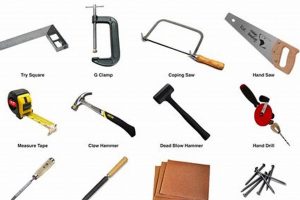
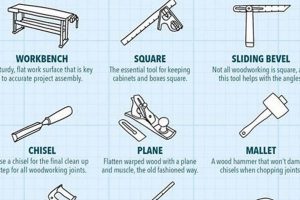
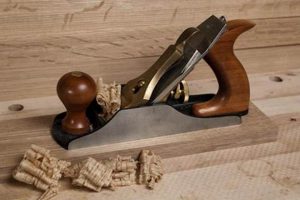
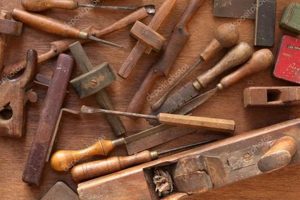
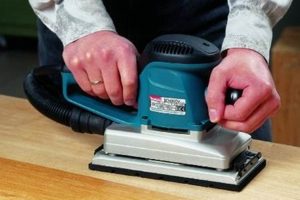
These implements, manipulated solely by human force, are essential components of the craft. They encompass a wide array of devices designed to shape, join, and finish timber. A representative sample includes saws for cutting, planes for smoothing, chisels for carving, and measuring tools for ensuring precision.
The use of such instruments offers significant advantages, including enhanced control over the material, the ability to execute intricate details, and a reduced reliance on powered machinery. Historically, these tools represent the foundational technologies upon which woodworking traditions were built, and they continue to provide a valuable connection to the craft’s heritage.
The following sections will delve into specific categories of instruments. Emphasis will be placed on their function, application, and the distinct qualities that define their suitability for particular tasks. This exploration will cover cutting, shaping, joining, and measuring instruments used in the woodworking process.
Guidance on Selection and Maintenance
Optimal woodworking results hinge on the proper selection and diligent maintenance of implements used. The following advice offers a framework for ensuring accuracy, efficiency, and longevity in these crucial aspects of woodworking.
Tip 1: Prioritize Quality Seek out tools constructed from high-carbon steel or other durable materials. Superior materials hold an edge longer, resist corrosion, and contribute to overall accuracy. Vintage tools, if properly maintained, can often offer comparable or superior performance to modern, lower-quality alternatives.
Tip 2: Sharpness is Paramount A dull implement is both inefficient and dangerous. Invest in sharpening equipment and develop proficiency in its use. Regular honing, using a sharpening stone or strop, is essential for maintaining a keen edge and reducing the effort required for each cut.
Tip 3: Handle and Balance Matter Consider the ergonomics of each implement before purchase. A tool that fits comfortably in the hand and possesses good balance will reduce fatigue and improve control. Different hand sizes and grip styles may necessitate variations in handle design.
Tip 4: Understand the Application Different tasks require specific tool designs. A dovetail saw, for example, is specifically designed for cutting fine joinery, while a rip saw is optimized for cutting with the grain. Selecting the appropriate tool for the task is critical for efficiency and accuracy.
Tip 5: Proper Storage Prevents Damage Store implements in a dry environment, away from moisture and direct sunlight. A dedicated tool cabinet or rack will help prevent damage and ensure easy access. Individual sheaths or wraps can protect cutting edges from impact and corrosion.
Tip 6: Regular Cleaning Enhances Longevity Clean implements after each use to remove dust, resin, and other debris. A light coating of oil can prevent rust and corrosion, particularly on unpainted metal surfaces. This routine maintenance preserves the functionality and extends the life of each implement.
Implementing these guidelines will enhance the woodworking experience and yield superior results. A commitment to quality, sharpness, proper selection, storage and cleaning ensures safety, efficiency, and enduring enjoyment in the pursuit of the woodworking craft.
The subsequent sections will explore the specific applications of various categories to further facilitate understanding.
1. Cutting
The act of severing or dividing wood fibers, known as cutting, forms the foundational process in woodworking and is inextricably linked to an expansive category of implements. Saws, in their diverse forms, exemplify this category, with each design serving a specific cutting purpose. For instance, a rip saw, characterized by its larger teeth and aggressive cutting angle, is optimized for cutting along the grain of the wood. Conversely, a crosscut saw features smaller, more closely spaced teeth, designed to efficiently sever fibers perpendicular to the grain. The selection of a saw appropriate for the task directly influences the speed, ease, and quality of the resulting cut. Inadequate selection may lead to splintering, tear-out, or excessive effort.
Beyond saws, other cutting tools, such as axes and hatchets, play a crucial role in initial stock preparation. These larger, heavier implements are used to split logs or roughly shape timber before more refined tools are employed. The sharpness and weight distribution of these tools are critical factors in their effectiveness and the safety of the user. A dull axe requires significantly more force, increasing the risk of misdirected blows and injury. Therefore, diligent maintenance and proper handling are essential. Furthermore, specialized knives and carving tools fall under the category of cutting implements, used for intricate detailing and shaping in projects such as wood carving and sculptural work. These tools demand a high degree of precision and control, often requiring years of practice to master.
In summary, cutting constitutes a primary operation in woodworking, enabled by a diverse range of implements each designed for specific tasks. The careful selection, proper maintenance, and skillful application of these cutting tools are fundamental to achieving accurate, efficient, and aesthetically pleasing results. Understanding the nuanced relationship between cutting and its associated implements is indispensable for any woodworker seeking to master the craft. Challenges exist in maintaining sharpness and selecting the appropriate tool, highlighting the ongoing need for skill development and informed decision-making within the field.
2. Shaping

Shaping, as a woodworking operation, encompasses the refinement of a workpiece’s form beyond simple cutting. It involves the precise removal of material to achieve a desired contour, surface finish, or dimensional accuracy. Implements utilized in shaping include planes, chisels, rasps, and spokeshaves, each designed for specific shaping tasks. The plane, for instance, is employed to create flat, smooth surfaces, while the chisel is used for detailed carving and joinery work. The selection of a suitable shaping implement directly affects the quality and efficiency of the shaping process. An inappropriately chosen or poorly maintained implement can lead to defects such as tear-out, uneven surfaces, or inaccuracies in dimension.
The historical context further illuminates the practical significance of shaping. In the absence of power tools, shaping instruments enabled craftspeople to produce intricate designs, complex joinery, and refined surfaces on furniture, architectural elements, and utilitarian objects. Examples include the creation of curved chair legs with spokeshaves, the precise fitting of dovetail joints using chisels, and the smoothing of tabletops with hand planes. These traditional methods, though labor-intensive, yielded objects of enduring quality and aesthetic value. Modern woodworking, even with the prevalence of powered machinery, often incorporates hand-shaping techniques for fine detailing, customization, and restoration work. The understanding of shaping techniques using implements provides superior control and allows for subtle adjustments that are difficult to replicate with machines.
In summary, shaping represents a critical component of woodworking. The skilled application of shaping tools enables the creation of precise forms, refined surfaces, and intricate details, resulting in objects of high quality and aesthetic appeal. The inherent challenges involve mastering the techniques required for specific implements, maintaining the sharpness of cutting edges, and developing a keen eye for form and detail. Skill in shaping is a hallmark of fine woodworking and remains a valued asset in both traditional and contemporary contexts.
3. Measuring

Accurate measurement forms the bedrock of woodworking, ensuring precision and consistency across all phases of a project. Measuring implements are indispensable for establishing dimensions, verifying angles, and marking cut lines. Inaccurate measurements invariably lead to misaligned joinery, structural instability, and aesthetically displeasing results. The following outlines crucial aspects of measurement in the context of these implements.
- Linear Measurement
Rulers, tape measures, and measuring sticks are fundamental for determining length, width, and height. The accuracy of these instruments is paramount, and calibration should be checked periodically. For instance, a discrepancy of even 1/16 inch can accumulate over multiple measurements, resulting in significant errors in larger projects. The consistent use of a single measuring device throughout a project helps to minimize cumulative errors.
- Angular Measurement
Squares, protractors, and bevel gauges enable the precise determination and replication of angles. Right angles are critical for ensuring squareness in frames and casework, while accurate angle measurements are essential for joinery such as miters and bevels. The use of a combination square allows for both right-angle and 45-degree measurements, increasing versatility. Digital angle finders offer enhanced precision for complex angles.
- Marking and Layout
Marking gauges, knives, and pencils facilitate the precise transfer of measurements onto the workpiece. A marking gauge creates a fine, consistent line parallel to an edge, invaluable for marking mortise and tenon joints. A sharp knife leaves a cleaner, more precise line than a pencil, particularly when working with hardwoods. Accurate marking is essential for minimizing material waste and ensuring tight-fitting joints.
- Thickness and Depth Measurement
Calipers, both dial and digital, allow for the precise measurement of thickness and depth. These tools are particularly useful for ensuring uniform material thickness and for accurately determining the depth of mortises or grooves. A digital caliper provides a clear, easily readable measurement to a high degree of precision, reducing the risk of errors associated with interpreting analog scales.
These measurement categories are intrinsic to woodworking and depend heavily on these instruments for efficacy. An understanding of the specific applications and limitations of each device is crucial for producing high-quality woodworking projects. Consistent, accurate measurement serves as the foundation for all subsequent operations, underscoring its importance in the overall woodworking process.
4. Joining

Joining, in woodworking, refers to the process of uniting two or more pieces of wood to create a cohesive whole. This process relies heavily on a specific subset of implements engineered to facilitate strong, accurate, and often aesthetically pleasing connections. The selection and application of appropriate instruments are paramount to the structural integrity and visual appeal of the final product. Specific implements facilitate different methods, influencing the choice based on factors like joint strength, aesthetic requirements, and the type of wood being used. A mortise and tenon joint, for example, necessitates chisels and saws for precise cutting, while a dovetail joint demands specialized saws and marking tools for its interlocking components. Each joining method requires a nuanced understanding of both the material properties and the capabilities of the implements employed. Incorrect tool selection will inevitably lead to weak or misaligned joints.
Consider the construction of a traditional timber frame structure as a practical example. The entire framework relies on mortise and tenon joints secured with wooden pegs. Creating these joints demands precise chiseling and drilling, requiring a specific skillset and high-quality chisels and augers. The accuracy of the joints directly impacts the building’s structural stability and longevity. Furthermore, the use of hand-cut dovetails in furniture demonstrates a commitment to both craftsmanship and durability. These joints are not only structurally sound but also visually appealing, showcasing the skill of the woodworker. The process involves precise sawing and chiseling, demanding sharp implements and meticulous attention to detail. These examples illustrate the intrinsic link between the joining method, the implements used, and the resulting quality of the woodworking.
In summary, joining constitutes a fundamental aspect of woodworking, contingent upon the proper application of specific implements. The quality of the implements, combined with the woodworker’s expertise, determines the strength, accuracy, and aesthetic value of the connections. Challenges include mastering the techniques required for complex joints, maintaining the sharpness of cutting edges, and selecting the appropriate implements for the task at hand. Skillful joining represents a cornerstone of proficient woodworking, ensuring structural integrity and contributing significantly to the overall quality of the finished piece.
5. Finishing
The concluding phase of woodworking, termed “finishing,” is intrinsically linked to the preceding stages and relies on a distinct set of instruments to enhance the aesthetic and protective qualities of the timber. While cutting, shaping, and joining establish the form and structure, finishing determines the final appearance and resilience of the piece. The implements used in this phase serve to smooth surfaces, apply protective coatings, and impart desired colors or textures. Consequently, the choice and skillful application of these instruments are critical determinants of the final product’s quality and longevity.
A primary finishing operation involves surface preparation, often accomplished with hand planes, scrapers, and sandpaper. Planes and scrapers remove imperfections and create a uniformly smooth surface. Sandpaper, available in varying grits, progressively refines the surface, preparing it to receive stains or coatings. The success of subsequent finishing steps depends heavily on the quality of this initial surface preparation. A poorly prepared surface will exhibit blemishes and inconsistencies, detracting from the overall aesthetic. Application implements, such as brushes, rags, and spray guns, facilitate the distribution of finishes. The type of finish, whether varnish, lacquer, oil, or wax, dictates the appropriate application method. Brushes are suitable for applying paints and varnishes, while rags are often used for applying oils and waxes. Spray guns provide a uniform application for lacquers and other specialized coatings. Consider the restoration of antique furniture as an example. Stripping old finishes, sanding imperfections, and applying new coats of varnish with meticulous brushwork can revive the piece, enhancing its beauty and protecting it for future generations.
In summary, finishing constitutes a crucial stage in woodworking, directly influencing the aesthetic appeal and protective qualities of the final product. The careful selection and skillful application of appropriate instruments, ranging from planes and scrapers to brushes and spray guns, are essential for achieving a high-quality finish. This phase necessitates patience, attention to detail, and a thorough understanding of the properties of various finishing materials. The challenges involve achieving a uniform finish, minimizing imperfections, and selecting finishes that complement the wood species and intended use of the piece. Ultimately, proficient finishing elevates woodworking from a mere construction process to an art form, adding value and longevity to the completed creation.
Frequently Asked Questions About Woodworking Implements
The following addresses common inquiries concerning woodworking and the appropriate selection, use, and maintenance of these instruments.
Question 1: What constitutes a “necessary” complement for a beginner woodworker?
A fundamental set typically comprises a crosscut saw, a rip saw, a smoothing plane, a chisel set (various sizes), a combination square, a marking gauge, and sharpening equipment. These allow for basic cutting, shaping, measuring, and joining operations.
Question 2: How frequently should cutting edges be sharpened?
Sharpening frequency depends on usage and the type of wood being worked. As a general rule, cutting edges should be honed before each use and fully sharpened when they no longer produce clean cuts with reasonable effort. The absence of frequent sharpening leads to unsafe and inefficient performance.
Question 3: Can vintage tools be a viable alternative to modern tools?
Vintage instruments, particularly those from reputable manufacturers, often offer comparable or superior quality to modern counterparts. However, they typically require restoration and careful maintenance. It is critical to assess the condition of vintage tools before purchase, including the presence of rust, cracks, or other damage.
Question 4: What are the primary safety considerations when using woodworking implements?
Safety protocols include wearing eye protection, using appropriate clamping devices to secure workpieces, maintaining sharp cutting edges, and understanding the proper techniques for each implement. A well-organized workspace and a focus on each task reduce the risk of accidents.
Question 5: What is the difference between a honing steel and a sharpening stone?
A honing steel realigns the cutting edge of a blade that has become slightly bent or deformed during use. A sharpening stone, conversely, removes material from the blade to create a new, sharp edge. Honing steels are used more frequently to maintain an edge, while sharpening stones are used less frequently to restore a dull edge.
Question 6: How does wood species affect instrument selection?
Harder wood species, such as maple or oak, require sharper and more robust implements than softer woods, such as pine or cedar. Fine-toothed saws and planes with higher cutting angles are often preferred for hardwoods to minimize tear-out. Instrument quality can effect performance due to harder wood material.
Proper selection, maintenance, and safe operation are paramount for successful woodworking. Adherence to established guidelines enhances efficiency, accuracy, and the longevity of the implements themselves.
The subsequent section will offer guidance on further resources and advanced techniques.
Conclusion
This article has explored the diverse range of implements essential to the woodworking craft. From cutting and shaping to measuring, joining, and finishing, each category necessitates specific instruments and techniques. Proficiency in their selection, maintenance, and application is foundational to achieving high-quality results.
Continued learning and practical experience are crucial for mastering these implements. The pursuit of knowledge, coupled with a commitment to precision and safety, will contribute to both the preservation of traditional skills and the advancement of contemporary woodworking practices. Further exploration of specialized texts and mentorship from experienced craftspeople are encouraged.