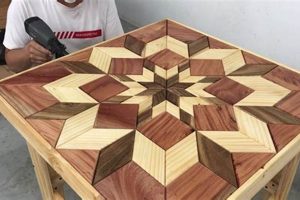
The creation of miniature, handcrafted presents from wood constitutes a popular and accessible segment within the woodworking hobby. These items typically range from personalized keychains and decorative ornaments to small boxes and functional desk accessories. Examples include finely crafted wooden pens, miniature birdhouses, and custom-engraved cutting boards.
Producing such items offers multiple advantages. It allows woodworkers to utilize scrap materials effectively, minimizing waste and promoting sustainable practices. The relatively short completion time compared to larger projects provides immediate gratification and opportunities for experimentation with different techniques and finishes. Furthermore, these handcrafted items often hold sentimental value, making them thoughtful and unique presents suitable for various occasions.
The subsequent sections will explore specific categories of easily achievable projects, detailing the necessary tools, materials, and techniques for crafting these miniature wooden treasures. Focus will be given to designs that are both aesthetically pleasing and functionally useful, allowing both novice and experienced woodworkers to create memorable and cherished gifts.
Crafting Miniature Wooden Presents
Achieving success in creating miniature wooden presents requires careful planning and execution. The following tips are provided to guide woodworkers in producing high-quality, aesthetically pleasing, and functional items.
Tip 1: Material Selection is Crucial: Opt for hardwoods with tight grains, such as cherry, walnut, or maple, for enhanced durability and visual appeal. Softer woods, like pine, are suitable for simpler projects where intricate detailing is not a primary concern.
Tip 2: Precise Measurements are Paramount: Given the small scale, accuracy in cutting and shaping is essential. Employ precision measuring tools, such as digital calipers and marking gauges, to ensure proper fit and alignment.
Tip 3: Emphasize Smooth Surface Preparation: Meticulous sanding is necessary to achieve a flawless finish. Progress through progressively finer grits of sandpaper, starting with 120-grit and ending with 220-grit or higher, depending on the desired smoothness.
Tip 4: Utilize Appropriate Joinery Techniques: For increased structural integrity, consider employing basic joinery methods, such as mortise-and-tenon, dovetail, or rabbet joints, even on a small scale. Glue alone may not provide sufficient strength for long-term use.
Tip 5: Exercise Caution with Power Tools: When using power tools like saws and routers, prioritize safety. Secure the workpiece firmly and utilize appropriate safety gear, including eye protection and dust masks. Slow, controlled movements are recommended to minimize the risk of errors.
Tip 6: Explore Decorative Enhancements: Enhance visual appeal through techniques such as wood burning, carving, staining, or painting. Consider applying multiple coats of a protective finish, such as varnish or lacquer, to ensure longevity and resistance to wear.
Tip 7: Prioritize Sharp Tools: Sharp tools are safer and provide cleaner cuts and smoother surfaces. Regularly hone and sharpen chisels, planes, and knives to maintain optimal performance and reduce the effort required for shaping wood.
Mastering these techniques enables the creation of exceptional miniature wooden presents, demonstrating both craftsmanship and attention to detail. These considerations elevate the final product from a simple item to a treasured keepsake.
The subsequent sections will provide practical examples and step-by-step instructions for various miniature wooden present projects, building upon the fundamental principles outlined above.
1. Simplicity of Design

Within the realm of small woodworking gift creation, design simplicity serves as a foundational principle. It directly impacts project feasibility, resource expenditure, and the overall success in producing a tangible and aesthetically pleasing outcome.
- Reduced Complexity, Increased Feasibility
Simplifying the design inherently reduces the number of steps, intricate cuts, and complex joinery required. This makes projects more accessible to woodworkers of varying skill levels, particularly beginners. A simple design ensures a higher likelihood of completion and a reduced risk of errors during the construction process. Consider a basic wooden picture frame versus a multi-layered shadow box. The frames straightforward construction is more readily achievable for a novice, while the shadow box demands greater precision and skill.
- Efficient Resource Utilization
Less complex designs typically require fewer materials, contributing to cost-effectiveness. The use of simpler shapes and standardized dimensions minimizes waste and allows for efficient utilization of lumber. This is particularly relevant when using expensive hardwoods, where minimizing material consumption is crucial. A simple cutting board, for example, uses a single piece of wood, while a more elaborate charcuterie board with multiple compartments necessitates additional material and potentially more waste.
- Accelerated Production Time
Simplification directly translates to faster completion times. Fewer intricate details and reduced complexity in construction processes allow for quicker project turnaround. This is advantageous when crafting gifts for multiple recipients or adhering to strict deadlines. Constructing several simple wooden coasters will be substantially faster than creating a single, complex wooden puzzle, maximizing productivity within a given timeframe.
- Enhanced Visual Appeal Through Elegance
Simplicity in design does not equate to a lack of aesthetic value. On the contrary, a well-executed simple design can often be more visually appealing due to its clean lines and understated elegance. Focusing on high-quality materials and impeccable finishing enhances the visual impact of even the simplest designs. A smoothly sanded and oiled wooden spoon, devoid of intricate carvings, can possess a timeless beauty through its form and finish.
The incorporation of simplicity within designs dedicated to miniature wooden presents demonstrates a strategic approach balancing achievable goals with aesthetic merit. This combination allows creation with limited time and resources without sacrificing quality. Examples include wooden keychains, basic jewelry boxes, and small planters.
2. Material Cost-Effectiveness

Material cost-effectiveness assumes a position of paramount importance in the creation of small woodworking gifts. Prudent material selection directly influences the economic viability and accessibility of crafting such items, especially for hobbyists or those operating on a constrained budget. Employing cost-effective strategies ensures that these handcrafted presents remain attainable and enjoyable to produce.
- Scrap Wood Utilization
The strategic repurposing of scrap wood constitutes a highly effective method of minimizing material expenses. Remnants from larger woodworking projects, often discarded, can be transformed into aesthetically pleasing and functional gifts. Examples include using small pieces of hardwood to create personalized keychains, coasters, or small decorative items. This approach not only reduces material costs but also promotes sustainability through waste reduction.
- Softwood Alternatives
While hardwoods like walnut or cherry offer superior aesthetics and durability, they are often more expensive than softwoods such as pine or fir. For projects where appearance is not paramount, or where a rustic aesthetic is desired, employing these less expensive softwoods can significantly reduce material costs. Pine, for example, can be effectively used to construct small boxes, birdhouses, or simple frames, and can be stained or painted to achieve a desired finish.
- Reclaimed Lumber Sourcing
Sourcing reclaimed lumber from demolition sites, salvage yards, or online marketplaces offers a cost-effective and environmentally conscious alternative to purchasing new lumber. Reclaimed wood often possesses unique character and patina, adding visual interest to handcrafted items. It can be used for a wide range of projects, from small shelves and picture frames to rustic-style boxes and organizers. However, careful inspection and preparation are required to ensure the wood is free from nails, screws, and other contaminants.
- Bulk Material Procurement
Purchasing commonly used materials in bulk quantities, such as sandpaper, screws, glue, and finishes, can result in significant cost savings over time. This approach is particularly beneficial for individuals who regularly engage in small woodworking projects. By taking advantage of bulk discounts, the overall cost per project is reduced, making it more economically feasible to create a larger number of handcrafted gifts.
The outlined facets directly support material cost-effectiveness. The combined effect of these strategies empowers craftspeople to produce unique wooden gifts without excessive financial burden. Implementing these considerations ensures that this endeavor remains economically sustainable, promoting both creativity and resourcefulness. Additional examples include small wooden toys and kitchen items made from sustainably harvested wood.
3. Time Investment Minimization

The relationship between time investment and the creation of small woodworking gifts is a critical determinant of project feasibility and overall success. The constraint of time, a finite resource, necessitates efficient strategies that minimize the hours required for project completion, thereby increasing the practical accessibility of such endeavors. Small woodworking gifts, by their very nature, lend themselves to reduced time commitments when compared to larger, more complex projects.
Effective time investment minimization involves several interconnected factors. Design simplicity, as previously discussed, plays a central role, as simplified designs inherently require fewer steps and less intricate work. Material selection is also a factor; readily available and easily workable materials contribute to a swifter construction process. For example, creating a small wooden box using pre-cut lumber and basic butt joints will take significantly less time than constructing a similar box using hand-cut dovetail joints and exotic hardwoods. Furthermore, the utilization of power tools, where appropriate, can drastically reduce the time spent on tasks such as cutting, shaping, and sanding. Consider the time difference between hand-sanding a wooden surface and using an orbital sander the latter offers a marked reduction in time investment. Streamlined finishing techniques, such as applying a single-coat oil finish instead of multiple coats of varnish, also contribute to time savings.
Understanding the practical significance of time investment minimization is crucial for maintaining interest and motivation in woodworking. Individuals with limited free time are more likely to engage in projects that offer a quick return on their investment. Furthermore, the ability to complete projects in a reasonable timeframe allows for greater flexibility in scheduling and reduces the likelihood of unfinished work. The successful creation of small woodworking gifts within a manageable timeframe fosters a sense of accomplishment and encourages further exploration of woodworking skills. By consciously prioritizing time investment minimization, woodworkers can maximize their productivity and derive greater satisfaction from the craft.
4. Functionality and Utility

The inherent value of miniature, handcrafted wooden presents is significantly augmented by their demonstrable functionality and practical utility. An object created solely for aesthetic purposes may elicit appreciation, however, an item possessing both visual appeal and a tangible function tends to be perceived as more thoughtful and valuable. The integration of practical utility into small woodworking gifts elevates them from mere trinkets to cherished possessions that serve a purpose within the recipient’s daily life.
Consider, for instance, a meticulously crafted wooden box. While its visual design may be appealing, the box’s utility as a storage container for jewelry, small mementos, or office supplies dramatically increases its practical value. Similarly, a handcrafted wooden cutting board, beyond its aesthetic qualities, provides a functional surface for food preparation. A wooden phone stand, a key holder, or even a simple wooden bookmark, all exemplify how functional design principles can be applied to miniature woodworking projects. The addition of these qualities ensures consistent use, making the gifts remain visible, reinforcing the bond and thoughtfulness associated with the gift.
In conclusion, the incorporation of functionality and utility within these projects constitutes a critical factor in determining their ultimate perceived worth. By prioritizing the creation of items that serve a tangible purpose, woodworkers can transform simple materials into gifts that are not only aesthetically pleasing but also genuinely appreciated for their practical contribution to the recipient’s life. This confluence of form and function is central to the enduring appeal of small, handcrafted wooden presents, turning novelty into something of daily importance.
5. Personalization Options
The capacity to imbue handcrafted wooden items with individualized elements stands as a pivotal component in transforming ordinary objects into meaningful keepsakes. Personalization, in the context of small woodworking gifts, extends beyond mere decoration; it represents a deliberate act of tailoring a creation to resonate specifically with the recipient’s identity, interests, or shared experiences.
- Engraving and Inscription
The application of engraved text or imagery allows for the direct conveyance of messages, dates, names, or significant symbols onto the wooden surface. This technique adds a layer of intimate connection, transforming a simple object into a personalized memento. Examples include engraving a child’s name and birthdate onto a wooden toy or inscribing a heartfelt message onto a picture frame. The precision of laser engraving or the rustic charm of hand-carved inscriptions provide distinct aesthetic options.
- Material Selection Tailoring
Choosing specific wood species based on the recipient’s preferences or associations represents another avenue for personalization. Selecting walnut for someone who appreciates dark, rich tones or cherry for a lover of classic aesthetics demonstrates thoughtful consideration. Furthermore, incorporating reclaimed wood with a known history or provenance can add an element of unique narrative and personal significance to the gift. This allows for a deliberate and thoughtful creation, tailoring both function and appearance.
- Custom Design Modification
Altering the fundamental design of a woodworking project to reflect the recipient’s individual tastes or needs enables a high degree of personalization. Adjusting the dimensions of a box to accommodate specific items, incorporating a particular geometric pattern, or modifying the shape of a wooden toy to resemble a beloved animal illustrates this approach. Such bespoke alterations signify a commitment to crafting a truly unique and tailored gift that directly addresses the recipient’s specific preferences.
- Finishing and Embellishment Choices
The selection of stains, paints, or decorative embellishments provides opportunities to personalize the visual aesthetic of the wooden item. Choosing colors that align with the recipient’s favorite palette, applying a specific type of finish (e.g., matte, gloss, or textured), or incorporating hand-painted details allows for the creation of a visually distinctive and personalized gift. The addition of small, handcrafted details, such as wooden inlays or carvings, can further enhance the item’s unique character.
These personalization techniques collectively enhance the sentimental value and significance of these present options. Integrating personalized elements into small woodworking gifts not only demonstrates thoughtfulness and care but also transforms a crafted object into a lasting expression of connection and appreciation. Personalization of the gift with wood burning tools gives memorable impression.
Frequently Asked Questions
The following section addresses common inquiries regarding the creation and selection of handcrafted wooden gifts. The intent is to provide concise and informative answers to frequently raised points of consideration.
Question 1: What types of wood are best suited for crafting small gifts?
Hardwoods with tight grains, such as cherry, maple, and walnut, are generally preferred for their durability, aesthetic appeal, and ability to hold fine detail. Softer woods like pine can be suitable for simpler projects, particularly when a rustic or painted finish is desired.
Question 2: What essential tools are required for small woodworking projects?
A basic set of tools typically includes a saw (hand saw or power saw), chisels, a measuring device (ruler or tape measure), a marking gauge, sandpaper, and a clamping system. Additional tools, such as a router or lathe, may be required for more complex projects.
Question 3: How can one minimize waste when working with wood?
Effective strategies for waste reduction include carefully planning cuts to maximize material usage, utilizing scrap wood for smaller projects, and storing wood properly to prevent warping or damage. Efficient use of materials contributes to cost savings and environmental sustainability.
Question 4: What are some simple joinery techniques for small wooden gifts?
Basic joinery methods suitable for small projects include butt joints, lap joints, and rabbet joints. These joints can be strengthened with glue and fasteners (screws or nails). For more advanced projects, consider mortise-and-tenon or dovetail joints.
Question 5: How does one achieve a smooth and professional finish on small wooden items?
Achieving a smooth finish requires meticulous sanding, starting with coarser grits and progressing to finer grits. Apply a finish appropriate for the wood type and intended use (e.g., oil, varnish, lacquer). Multiple thin coats are generally preferable to a single thick coat.
Question 6: What are some considerations for ensuring the safety of small woodworking projects?
Safety precautions include wearing appropriate eye and ear protection, using sharp tools, securing workpieces firmly, and being mindful of the potential hazards associated with power tools. A well-ventilated workspace is also essential.
These FAQs provide a foundational understanding of common concerns related to creating small woodworking gifts. Careful consideration of these points will aid in producing high-quality, functional, and aesthetically pleasing items.
The subsequent section will delve into specific project ideas, providing step-by-step guidance for creating a range of handcrafted wooden presents.
Conclusion
The foregoing analysis has explored the multifaceted aspects of small woodworking gift ideas, emphasizing design considerations, material cost-effectiveness, time investment, functionality, and personalization options. Effective implementation of these principles enables the creation of valuable and cherished presents, demonstrating both craftsmanship and thoughtful consideration.
The enduring appeal of handcrafted wooden items lies in their unique ability to blend aesthetic beauty with practical utility. Continued exploration and refinement of woodworking techniques will undoubtedly lead to innovative and meaningful expressions of creativity. Individuals are encouraged to engage with this craft to cultivate both personal skill and artistic expression.