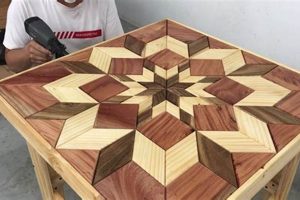
Creating lasting tributes through crafted wooden objects represents a tangible way to honor memories. These tributes can range from simple personalized boxes to intricately designed furniture pieces, serving as physical embodiments of remembrance. An example includes a handcrafted wooden urn or a memorial bench placed in a significant location.
The value of these personalized items lies in their ability to provide comfort and a focal point for remembrance. Historically, crafted wooden objects have served as enduring symbols of commemoration across various cultures. The practice offers a personalized alternative to more conventional memorial options, allowing for unique expression of individual character and legacy.
The following sections will explore various concepts and approaches to designing and constructing bespoke memorial items. Specific examples will be provided, covering different skill levels and aesthetic preferences, along with considerations for wood selection and preservation techniques.
Essential Guidance for Crafting Lasting Wooden Tributes
The creation of wooden memorials necessitates careful planning and execution to ensure durability and lasting significance. The following guidelines are presented to assist in the successful realization of meaningful tributes.
Tip 1: Wood Selection is Paramount: Choose wood species based on durability, workability, and symbolic association. Hardwoods like oak or maple offer longevity, while cedar possesses natural resistance to decay, suitable for outdoor applications. Consider the grain pattern as an aesthetic element.
Tip 2: Design with Longevity in Mind: Implement joinery techniques known for their strength and stability, such as mortise and tenon or dovetail joints. Avoid relying solely on fasteners like screws or nails, which may degrade over time.
Tip 3: Incorporate Personalization Thoughtfully: Integrate meaningful elements like engravings, inlays, or embedded items that reflect the individual being honored. Ensure these additions are securely integrated into the design and protected from the elements, if applicable.
Tip 4: Surface Treatment for Preservation: Apply appropriate finishes to protect the wood from moisture, UV radiation, and insect damage. Exterior finishes such as marine-grade varnish or penetrating oil finishes are suitable for outdoor memorials, while interior memorials can benefit from lacquer or polyurethane coatings.
Tip 5: Consider the Environment: When creating outdoor memorials, consider the environmental conditions of the intended location. Select wood species and finishes that are resistant to the specific climate and potential hazards.
Tip 6: Documentation is Crucial: Maintain detailed records of the design, materials, and construction process. This documentation can be invaluable for future repairs or replication, ensuring the memorial’s legacy endures.
Tip 7: Legal Considerations: Research and adhere to any relevant regulations or restrictions regarding the placement or design of memorials, particularly in public spaces or cemeteries.
Adhering to these principles enhances the likelihood that the crafted wooden memorial will serve as a lasting and respectful tribute, capable of withstanding the test of time and the elements.
The subsequent section will provide inspiration by examining diverse examples of completed memorial projects, demonstrating the application of these principles in practice.
1. Personalization details

Personalization constitutes a core element in the creation of meaningful woodworking memorials. The selection and implementation of specific details directly impact the memorial’s ability to resonate with those who grieve and to accurately reflect the life and character of the deceased. The absence of personalized features risks rendering the memorial impersonal and failing to provide adequate comfort or remembrance. For example, a simple wooden cross may become a deeply personal tribute through the addition of an engraved name, date of birth, and a favorite quote. Similarly, a memorial bench can be personalized by incorporating a carved depiction of a meaningful scene or object from the deceased’s life.
The practical application of personalization extends beyond mere decoration. It encompasses a thoughtful integration of elements that tell a story. Consider a wooden urn crafted from a tree grown in the deceased’s garden or a keepsake box designed to hold cherished mementos. The choice of wood itself can contribute to personalization; for instance, using a specific type of wood that held significance for the individual. Furthermore, incorporating handcrafted hardware, such as custom-designed hinges or handles, adds another layer of unique expression. These considerations require a deep understanding of the individual’s life, values, and passions.
The effective incorporation of personalization details presents a challenge requiring sensitivity and skillful execution. A poorly conceived or executed personalization can detract from the memorial’s intended purpose. However, when thoughtfully implemented, these details transform a simple wooden object into a powerful symbol of remembrance, celebrating a life and providing solace to those left behind. The result is a tangible and lasting connection to the past, reinforcing the significance of the individual’s legacy.
2. Wood species selection

Wood species selection functions as a foundational element in the successful execution of woodworking memorials. The material choice directly influences structural integrity, longevity, aesthetic appeal, and suitability for intended use. The selection process requires careful consideration of factors such as resistance to decay, dimensional stability, workability, and symbolic meaning. For instance, using a non-durable wood species for an outdoor memorial bench inevitably leads to premature degradation, necessitating costly repairs or replacement. Conversely, selecting a decay-resistant species like cedar or redwood ensures the memorial can withstand environmental exposure for an extended period. The inherent grain patterns and coloration of different woods also contribute significantly to the memorial’s visual impact, thereby affecting its emotional resonance.
The practical implications of informed wood selection are multifaceted. Consider the construction of a memorial urn. A hardwood like walnut, known for its density and rich color, offers a dignified and enduring container for cremated remains. In contrast, a softwood such as pine, while more readily available and economical, lacks the necessary durability and aesthetic refinement for such a purpose. Similarly, crafting a memorial birdhouse from cypress, a naturally water-resistant wood, provides a lasting haven for wildlife while also symbolizing a connection to nature cherished by the deceased. In each case, the wood species directly determines the memorial’s ability to fulfill its intended function and maintain its aesthetic qualities over time.
In summation, appropriate wood selection is paramount in woodworking memorial projects. Overlooking this aspect compromises the memorial’s longevity and diminishes its symbolic potential. By carefully evaluating the physical properties and aesthetic characteristics of different wood species, one can create lasting and meaningful tributes that honor the deceased and provide comfort to those who grieve. The integration of this understanding ensures that the memorial serves as a testament to remembrance rather than a source of future maintenance concerns.
3. Engraving artistry

Engraving artistry serves as a critical component in the realization of meaningful woodworking memorial ideas. The application of precise carving or etching transforms a simple wooden object into a personalized tribute. This process allows for the incorporation of names, dates, significant quotes, or symbolic imagery, directly linking the memorial to the individual being honored. The absence of skilled engraving diminishes the potential for emotional resonance, resulting in a generic rather than a specifically commemorative piece. For example, a memorial bench may lack significance without an inscription detailing the deceased’s name or a cherished memory. Similarly, a wooden urn remains a mere container unless personalized with engraved details. The artistry involved ensures clarity, permanence, and aesthetic integration of the inscription with the underlying wood.
The practical application of engraving artistry within woodworking memorials extends beyond surface decoration. It encompasses the skillful manipulation of depth, line weight, and letterform to achieve legibility and visual harmony. Techniques such as chip carving, laser engraving, or hand-tooling offer different aesthetic outcomes and levels of precision. The choice of technique depends on factors such as wood type, desired level of detail, and the craftsman’s skill. Consider, for instance, the engraving of a complex family crest onto a wooden plaque. This requires advanced engraving skills and specialized tools to accurately reproduce intricate details. Laser engraving provides precision for replicating digital designs, while hand-tooling offers a more traditional, tactile result. Furthermore, the proper selection of engraving tools and techniques minimizes the risk of damaging the wood or creating unsightly imperfections.
In conclusion, engraving artistry significantly elevates woodworking memorials from functional objects to enduring tributes. Its skilled application transforms wood into a personalized canvas for remembrance. Challenges include mastering engraving techniques, selecting appropriate tools, and achieving aesthetic integration. The understanding of this connection ensures that woodworking memorials effectively serve their intended purpose: to honor the deceased and provide solace to the bereaved.
4. Outdoor durability

Outdoor durability represents a critical factor in the successful creation of woodworking memorials intended for external placement. The environmental elements, including precipitation, temperature fluctuations, ultraviolet radiation, and biological organisms, directly impact the longevity and structural integrity of wood. Failure to adequately address these factors through material selection, design considerations, and protective finishes results in accelerated deterioration, compromising the memorial’s intended purpose. For instance, a memorial bench constructed from untreated pine and positioned in a humid environment will exhibit rot and structural failure within a relatively short timeframe. Conversely, utilizing naturally durable wood species like cedar or redwood, combined with appropriate preservatives, extends the memorial’s lifespan significantly.
Practical application of outdoor durability principles necessitates a multifaceted approach. Surface coatings, such as marine-grade varnishes or penetrating oil finishes, provide a protective barrier against moisture and UV radiation. Design elements that promote water runoff and minimize standing water further reduce the risk of decay. Implementing robust joinery techniques, such as mortise and tenon or dovetail joints, contributes to structural stability by distributing stress and preventing water penetration. Consider, for example, a memorial birdhouse constructed with overhanging eaves and a sloped roof. These design features protect the interior from rain, thereby safeguarding the nesting birds and the memorial itself. Additionally, selecting rot-resistant fasteners, such as stainless steel screws, prevents corrosion and maintains the structural integrity of the assembly. Attention to these details ensures the memorial endures as a lasting tribute.
In conclusion, outdoor durability is indispensable for woodworking memorials designed for external environments. Neglecting this aspect leads to premature failure, undermining the memorial’s intended function and emotional significance. Challenges encompass selecting appropriate materials, implementing effective protective measures, and designing for environmental resilience. Adherence to these principles guarantees that woodworking memorials withstand the elements, serving as lasting tributes to the individuals they commemorate.
5. Functional integration

Functional integration, when applied to woodworking memorial ideas, addresses the practical application of the memorial within its intended environment or context. The principle dictates that a memorial should not solely exist as a symbolic object but should also offer a utilitarian purpose or seamlessly blend into its surroundings. The cause-and-effect relationship is evident: thoughtful functional integration enhances the memorial’s value and relevance, while its absence can lead to underutilization or even neglect. A key aspect of successful memorial woodworking involves identifying opportunities for functional convergence, resulting in an object that serves both commemorative and practical needs. A memorial bench, for instance, provides a seating area for reflection and remembrance. Similarly, a bird feeder crafted as a memorial provides sustenance for wildlife while simultaneously honoring the deceased’s love for nature.
Practical application of functional integration requires careful consideration of the memorial’s intended location and the needs of those who interact with it. If a memorial is situated in a garden, integrating a planter box into the design allows for the cultivation of flowers or herbs in remembrance. A memorial bookshelf can provide storage for cherished books while serving as a display for photographs and mementos. Memorial plaques may incorporate QR codes, linking to online biographies or digital collections of memories. Additionally, integrating lighting into a memorial structure enhances its visibility and safety during nighttime hours. Consideration should be given to durability, weather resistance, and ease of maintenance to ensure continued functionality over time. Failure to address these aspects can result in a memorial that is visually appealing but impractical, limiting its long-term utility.
In summary, functional integration is a fundamental component of successful woodworking memorial ideas. It elevates memorials from passive symbols to active contributors within their environment. Challenges include identifying opportunities for functional convergence, addressing practical design considerations, and ensuring long-term durability. The effective implementation of functional integration creates memorials that are not only meaningful but also enduring, enhancing their value and relevance for future generations.
Frequently Asked Questions About Woodworking Memorial Ideas
The following questions address common inquiries regarding the design, construction, and application of woodworking memorials. The answers aim to provide clarity and guidance for those considering this form of remembrance.
Question 1: What wood species are most suitable for outdoor memorial benches?
Wood species with natural resistance to decay and insect infestation are preferable. Cedar, redwood, teak, and white oak exhibit superior durability in outdoor environments. Pressure-treated lumber also provides enhanced protection, though aesthetic considerations may influence the selection process.
Question 2: How can engraving artistry enhance the impact of a woodworking memorial?
Engraving artistry personalizes the memorial by incorporating names, dates, quotes, or symbols that reflect the individual being honored. Skilled engraving enhances legibility, durability, and aesthetic integration. The technique should be chosen based on wood type, desired detail level, and craftsman expertise.
Question 3: What considerations are essential for ensuring the long-term outdoor durability of a wooden memorial?
Surface coatings, such as marine-grade varnishes or penetrating oil finishes, protect against moisture and UV radiation. Design elements that promote water runoff, coupled with robust joinery techniques, enhance structural stability. Rot-resistant fasteners, like stainless steel screws, prevent corrosion.
Question 4: How can functional integration improve the value of woodworking memorials?
Functional integration enhances the memorial’s utility and relevance. A memorial bench provides seating, while a bird feeder offers sustenance for wildlife. Integrating planter boxes or bookshelves expands the memorial’s practical application.
Question 5: Are there specific regulations or restrictions regarding the placement of woodworking memorials in public spaces?
Regulations vary significantly depending on location. Cemeteries, parks, and other public areas often have specific rules regarding memorial size, design, and placement. Consultation with relevant authorities is essential to ensure compliance.
Question 6: What are some alternative wood finishing options for memorial projects, outside of varnishes and oils?
Alternative wood finishing options include: milk paint (provides a matte, durable finish), shellac (suitable for interior projects), and epoxy resin (creates a protective, glossy layer). Each option has a unique set of pros and cons to consider before using on a memorial project.
The principles outlined above provide a framework for creating lasting and meaningful woodworking memorials. Adherence to these guidelines enhances the likelihood of constructing a tribute that honors the deceased and provides solace to those who grieve.
The following section provides further insights into specific construction techniques and material sourcing for woodworking memorials.
Conclusion
The preceding examination of woodworking memorial ideas underscores the importance of thoughtful planning, material selection, and skillful execution. From personalization through engraving artistry to ensuring outdoor durability and functional integration, each aspect contributes to the creation of a lasting and meaningful tribute. The information presented serves to equip individuals with the knowledge necessary to develop bespoke memorials that effectively honor the deceased and provide solace to those left behind.
The enduring nature of crafted wooden memorials serves as a testament to the power of remembrance. It remains incumbent upon those undertaking such projects to approach the task with sensitivity, diligence, and a commitment to quality, ensuring that the resulting tribute stands as a fitting legacy for generations to come. Consider carefully the guidelines presented when embarking on the construction of a woodworking memorial.