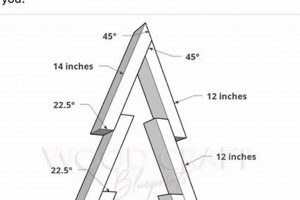
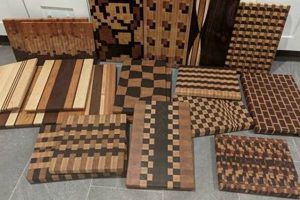
Simple constructions crafted primarily from wood, undertaken by individuals with limited prior experience, form a significant entry point into the realm of woodworking. These endeavors typically involve fundamental techniques such as cutting, joining, and finishing wood to create functional or decorative items. A birdhouse constructed from pre-cut lumber, or a small side table assembled using basic joinery methods, serves as examples.
Engagement with these initial undertakings offers numerous advantages, fostering skill development, creative expression, and a sense of accomplishment. Historically, the ability to fashion useful objects from wood was a vital life skill. Today, pursuing such activities offers a tangible connection to traditional crafts and provides a welcome counterpoint to increasingly digital and abstract pursuits. Furthermore, successful completion of introductory projects often sparks a deeper interest in more complex woodworking techniques and designs.
The following sections will delve into selecting appropriate materials, mastering essential woodworking tools, and executing several introductory project ideas. Emphasis will be placed on safety protocols and clear, step-by-step instructions to ensure a positive and rewarding learning experience.
Guidance for Elementary Woodworking Endeavors
The following recommendations aim to enhance the probability of successful completion and promote a safe and rewarding introduction to working with wood.
Tip 1: Prioritize Safety. Always wear appropriate safety glasses to protect against flying debris. Ear protection is advised when operating power tools. Ensure adequate ventilation, especially when working with paints, stains, or adhesives.
Tip 2: Select Quality Materials. Opt for lumber free from excessive knots, warping, or splitting. Softer woods, such as pine or poplar, are generally easier to work with for beginners. Consider the project’s intended use when choosing the appropriate wood type.
Tip 3: Master Basic Measurements. Accurate measurements are crucial for successful project execution. Employ a reliable measuring tape and ensure precise marking techniques. Double-check all measurements before cutting.
Tip 4: Practice Essential Cuts. Develop proficiency in making straight and accurate cuts using both hand saws and power saws. Practice on scrap lumber before committing to project materials. A miter saw or circular saw equipped with a sharp blade is highly recommended.
Tip 5: Securely Join Wood. Learn fundamental joinery techniques such as using screws, nails, or wood glue. Pre-drilling pilot holes prevents wood splitting when using screws. Clamps are essential for maintaining proper alignment during glue-up.
Tip 6: Sand for a Smooth Finish. Proper sanding is essential for achieving a professional-looking finish. Begin with a coarser grit sandpaper to remove imperfections and gradually progress to finer grits. Sand with the grain of the wood.
Tip 7: Apply Finishes Carefully. Select a finish appropriate for the wood type and intended use. Follow the manufacturer’s instructions regarding application and drying times. Consider using multiple thin coats for a more durable finish.
Adherence to these recommendations can significantly increase the likelihood of a positive and productive experience, yielding satisfying results. Consistent practice and attention to detail will contribute to continued improvement.
The subsequent sections will explore specific project examples, providing detailed instructions and highlighting the application of these essential techniques.
1. Safety Precautions

The successful execution of elementary woodworking projects necessitates a comprehensive understanding and rigorous implementation of safety measures. The inherent nature of woodworking involves the manipulation of sharp tools and power equipment, thereby presenting potential risks of injury. A failure to adhere to established safety protocols can result in lacerations, abrasions, eye injuries, or more severe accidents. For instance, inadequate eye protection while operating a power saw can lead to permanent vision damage from flying debris. Similarly, neglecting to secure workpieces properly can cause the material to shift during cutting, leading to tool slippage and potential injury. Consequently, safety precautions are not merely an ancillary consideration but rather a fundamental and inextricable component of any woodworking endeavor, irrespective of its scale or complexity.
A thorough grounding in safety principles also promotes a more confident and effective approach to woodworking. When individuals are well-versed in the safe operation of tools and equipment, they are less likely to experience apprehension or hesitation, leading to improved precision and efficiency. Proper instruction on the use of push sticks when operating table saws, for example, can significantly reduce the risk of hand injuries. Similarly, awareness of the potential hazards associated with wood dust and the consistent use of dust masks can prevent respiratory problems. By proactively mitigating risks, woodworkers can create a safer and more productive environment, fostering a greater appreciation for the craft and enabling more intricate and ambitious projects over time.
In summary, the relationship between safety protocols and introductory woodworking activities is one of direct causality and indispensable integration. Comprehensive adherence to safety guidelines minimizes the risk of injury, enhances the overall woodworking experience, and provides a foundation for future skill development. Prioritizing safety from the outset allows woodworkers to approach each project with confidence, knowing they have taken the necessary steps to protect themselves and others. This foundation not only safeguards well-being but also cultivates a responsible and sustainable approach to woodworking practices.
2. Proper Tools

The successful completion of fundamental woodworking projects hinges significantly on the selection and effective utilization of appropriate tools. The proper tools facilitate precision, efficiency, and safety, contributing directly to the quality of the finished product. The absence of suitable tools can lead to frustration, inaccurate results, and increased risk of injury.
- Hand Saw Selection
The hand saw represents a fundamental instrument for creating accurate cuts in wood. Different types of hand saws, such as crosscut saws and rip saws, are designed for specific cutting orientations relative to the wood grain. The selection of the appropriate hand saw is paramount for achieving clean and efficient cuts. For instance, attempting to rip a board along the grain with a crosscut saw will result in a slow, inefficient cut with a rough edge. Mastering the proper use of various hand saws provides a foundation for more complex woodworking techniques.
- Measuring and Marking Instruments
Precise measurement and accurate marking are essential for achieving desired project dimensions. Instruments such as measuring tapes, rulers, squares, and marking gauges facilitate accurate layouts. A square ensures right angles, while a marking gauge provides parallel lines for consistent cuts. Inaccurate measurements or markings can lead to dimensional discrepancies, affecting the structural integrity and aesthetic appeal of the finished piece. Utilizing these instruments with care and precision is crucial for ensuring accurate and professional-looking results.
- Fastening Tools
Securely joining wood components is critical for creating durable and stable woodworking projects. Fastening tools, including hammers, screwdrivers, and drills, facilitate the attachment of wood pieces using nails, screws, or other fasteners. The selection of the appropriate fastening tool depends on the type of fastener and the density of the wood. For example, pre-drilling pilot holes before inserting screws into hardwood prevents splitting. Using the correct fastening tool and technique ensures a strong and lasting bond between wood components.
- Smoothing and Finishing Tools
Achieving a smooth and aesthetically pleasing surface finish requires the use of appropriate smoothing and finishing tools. Sandpaper, hand planes, and finishing tools, such as brushes and applicators, are essential for preparing the wood surface and applying finishes. Sandpaper of varying grits is used to remove imperfections and create a smooth surface. Hand planes are employed to refine surfaces and create precise edges. The proper application of finishes, such as varnish or paint, protects the wood and enhances its visual appeal. Proficiency in using these tools results in a professional and refined final product.
The selection and skillful application of the proper tools are integral to the successful execution of fundamental woodworking endeavors. These tools, spanning from measuring instruments to fastening mechanisms and finishing implements, facilitate efficiency and safety in the woodworking procedure. Ultimately, selecting the right tools, mastering their usage, and adhering to safety protocols are the main ingredients for success in woodworking projects.
3. Material Selection

The selection of appropriate materials is a critical determinant in the success and longevity of elementary woodworking projects. The properties of the chosen wood, hardware, and adhesives directly influence the structural integrity, aesthetic appeal, and ease of construction. Careful consideration of material characteristics is thus essential for achieving satisfactory results.
- Wood Type and Workability
The type of wood dictates its workability, impacting the ease with which it can be cut, shaped, and finished. Softwoods, such as pine and fir, are generally easier to work with due to their lower density. Hardwoods, like oak and maple, offer greater durability but require more effort to manipulate. The selection of wood should align with the project’s complexity and the skill level of the woodworker. A simple box might be effectively constructed from pine, while a more intricate table might benefit from the stability of a hardwood. Choosing a wood that is too difficult to work with can lead to frustration and inaccurate results.
- Hardware Suitability
The selection of appropriate hardware, including screws, nails, hinges, and handles, is essential for structural integrity and functionality. The size, type, and material of the hardware must be compatible with the wood being used and the intended application. Using undersized screws in a load-bearing joint can compromise its strength, while using improperly sized hinges on a cabinet door can affect its operation. The selection of corrosion-resistant hardware is also crucial for projects intended for outdoor use or exposure to moisture.
- Adhesive Properties
Wood adhesives play a vital role in creating strong and durable joints. Different types of adhesives, such as wood glue, epoxy, and construction adhesive, offer varying levels of strength, water resistance, and drying time. The selection of the appropriate adhesive depends on the type of joint, the species of wood being joined, and the environmental conditions to which the project will be exposed. Using an adhesive with insufficient strength can lead to joint failure, while using an adhesive incompatible with the wood can result in poor adhesion.
- Dimensional Stability and Moisture Content
Wood is a hygroscopic material, meaning it absorbs and releases moisture from the surrounding environment. Changes in moisture content can cause wood to shrink, swell, or warp, affecting the dimensional stability of the project. Selecting wood that has been properly dried and acclimated to the working environment is essential for minimizing these effects. Using wood with excessive moisture content can lead to warping and cracking as it dries, while using wood that is too dry can cause joints to loosen. Understanding the principles of wood movement is crucial for ensuring the long-term stability and performance of the project.
The careful selection of appropriate wood, hardware, and adhesives, considering factors such as workability, suitability, and dimensional stability, is crucial for the success and longevity of fundamental woodworking projects. The informed selection of materials directly influences the structural integrity, aesthetic appeal, and ease of construction, contributing to satisfactory and durable outcomes. A well-considered material selection process not only facilitates the construction process but also enhances the overall quality and lifespan of the finished product.
4. Accurate Measurement

In elementary woodworking, accurate measurement stands as a foundational skill. The dimensional precision of each component directly impacts the assembly process and the final product’s functionality and aesthetic appeal. A lack of precision in measurement can lead to misaligned joints, structural instability, and an overall unprofessional appearance.
- The Role of Precision in Joint Fit
Accurate measurement is paramount for ensuring tight and secure joints. Whether using mortise and tenon, dovetail, or simple butt joints, precise dimensions are required for proper fit. For instance, if a tenon is even slightly oversized, it may be impossible to assemble the joint without damaging the surrounding wood. Conversely, an undersized tenon will result in a weak and unstable connection. This directly influences the structural integrity of projects like tables, chairs, and cabinets.
- Impact on Overall Dimensions and Symmetry
Dimensional accuracy extends beyond individual joint fit, influencing the overall dimensions and symmetry of the finished piece. In projects such as picture frames or boxes, even a small error in measurement can lead to noticeable asymmetry or an inability to properly close or align the sides. Such inaccuracies detract from the visual appeal and potentially compromise the functionality of the item.
- Material Waste Reduction
Accurate measurement plays a significant role in minimizing material waste. By precisely calculating the required dimensions before cutting, it is possible to optimize material usage and avoid unnecessary scrap. This not only reduces costs but also promotes a more sustainable approach to woodworking. Inefficient measurement practices can lead to overcutting or recutting components, resulting in significant material waste.
- Consistent Replication and Scalability
Accurate measurement facilitates the replication and scaling of woodworking projects. Once a design has been established, precise dimensions allow for the creation of multiple identical pieces or the adjustment of the design to different sizes. This is particularly important for projects involving multiple components or for individuals seeking to produce woodworking items for sale. Inconsistent measurements hinder replication and scalability, limiting productivity and potentially affecting profitability.
The facets described highlight the centrality of accurate measurement in woodworking projects. Mastering precise measuring techniques will ensure quality outcomes in beginner woodworking endeavors.
5. Solid Joinery

Solid joinery forms the structural backbone of any successful woodworking project, and its importance is magnified in elementary constructions. Inferior joint construction leads directly to instability, reduced lifespan, and compromised aesthetics in what might otherwise be functional items. For entry-level projects, the emphasis on proper jointing techniques serves not only to create durable objects, but also to establish good habits from the outset. A poorly constructed frame for a beginner’s picture showcases misalignment due to a weak butt joint and lack of reinforcement; repeated stress causes the glue to fail. Proper construction, however, ensures longevity and demonstrates the tangible results of skillful craftsmanship.
Certain joinery methods are particularly suitable for beginners due to their relative simplicity and the strength they provide. The butt joint, reinforced with screws or dowels, offers an accessible starting point. Lap joints, where two pieces of wood overlap, provide increased surface area for gluing and enhanced strength. Miter joints, often used for picture frames, require precise cuts and careful alignment to ensure a seamless appearance. Each type of joint presents its own set of challenges and opportunities for skill development. Understanding the strengths and weaknesses of different joinery techniques allows woodworkers to make informed decisions about their construction methods.
Mastering fundamental jointing techniques provides a foundation for more advanced woodworking endeavors. As skills progress, woodworkers can explore more complex joinery methods, such as dovetails, mortise and tenons, and rabbet joints. The principles of sound construction learned through basic projects translate directly to more intricate designs, fostering a sense of confidence and enabling the creation of increasingly sophisticated pieces. Ultimately, a commitment to solid joinery ensures that woodworking projects, regardless of their complexity, stand the test of time and exemplify the enduring appeal of well-crafted objects.
6. Surface Finishing
Surface finishing represents a critical stage in elementary woodworking, transforming a structurally sound but visually unrefined piece into a polished and durable product. The application of appropriate finishes not only enhances the aesthetic appeal of the wood but also protects it from environmental factors, extending its lifespan.
- Enhancement of Aesthetic Qualities
Surface finishing dramatically alters the visual characteristics of wood. Staining can accentuate the grain, bringing out the natural beauty of the material. Varnishes and lacquers provide a protective layer while adding sheen, ranging from matte to high gloss. Paints offer an opportunity to introduce color and create a distinct visual style. For instance, a basic pine box, after sanding, can be transformed into a decorative item through the application of a cherry stain and a clear varnish.
- Protection Against Environmental Elements
Finishes act as a barrier against moisture, ultraviolet radiation, and physical abrasion. Moisture can cause wood to warp, rot, or swell, compromising its structural integrity. UV radiation can fade or discolor the wood over time. A properly applied finish, such as an exterior-grade varnish on a basic wooden bench, protects against these elements, extending the item’s usable life.
- Highlighting or Concealing Wood Characteristics
The choice of finish can either highlight or conceal the natural characteristics of the wood. Transparent finishes, such as clear varnish or oil, showcase the wood’s grain and color. Opaque finishes, such as paint, obscure the underlying wood, allowing for a more uniform and controlled aesthetic. The selection of finish therefore enables the woodworker to tailor the appearance of the project to specific design preferences. A simple toy constructed from various wood types can be unified aesthetically through the application of paint, creating a cohesive look.
- Impact on Tactile Experience
Surface finishing affects the tactile quality of the wood, influencing how it feels to the touch. A well-sanded and finished surface is smooth and pleasant to handle, while a poorly finished surface may be rough or uneven. The choice of finish, such as a hand-rubbed oil finish, can enhance the tactile experience, creating a more intimate connection with the object. A basic wooden spoon, properly sanded and finished with food-safe oil, provides a comfortable and hygienic utensil for cooking.
These facets illustrate the significant contribution of surface finishing to the overall quality and appeal of basic woodworking projects. The thoughtful selection and application of finishes elevates both the aesthetic value and functional longevity of these objects, demonstrating the importance of this final step in the woodworking process.
Frequently Asked Questions about Basic Woodworking Projects
The following questions address common concerns and misconceptions related to introductory woodworking endeavors. Answers aim to provide clarity and promote informed decision-making.
Question 1: What constitutes a “basic” woodworking project?
A basic woodworking project typically involves straightforward designs, simple joinery techniques, and readily available materials. Success relies on accurate measurement, clean cuts, and secure assembly. Examples include picture frames, small boxes, and simple shelves.
Question 2: Is specialized equipment necessary to begin with these activities?
While power tools can enhance efficiency, many elementary projects can be completed with hand tools. A hand saw, measuring tape, square, sandpaper, and basic fastening tools are often sufficient for initial exploration.
Question 3: Which types of wood are most suitable for beginners?
Softwoods such as pine, fir, and poplar are generally recommended due to their relative softness and ease of workability. These woods are also typically more affordable than hardwoods, making them a practical choice for learning.
Question 4: What safety precautions should be prioritized?
Eye protection is paramount when cutting, sanding, or using power tools. Adequate ventilation is necessary when working with finishes or adhesives. Proper workpiece clamping prevents movement and reduces the risk of injury.
Question 5: How does one ensure accurate measurements?
Utilizing a reliable measuring tape and consistently double-checking dimensions is crucial. A square ensures accurate right angles. Marking gauges assist in creating parallel lines. Precision in measurement directly impacts the final product’s quality.
Question 6: What are common mistakes to avoid?
Neglecting safety precautions, failing to properly prepare wood surfaces, and rushing the finishing process are frequent errors. Patience, attention to detail, and adherence to instructions are vital for successful outcomes.
Adherence to these points promotes a safer, more efficient, and more rewarding entry into the world of woodworking.
The subsequent section will delve into specific project ideas, providing step-by-step guidance.
In Conclusion
The exploration of “basic woodworking projects” reveals a multifaceted field accessible to novices yet demanding in its emphasis on precision and safety. Successful engagement hinges on mastery of fundamental skills, encompassing material selection, accurate measurement, secure joinery, and appropriate finishing techniques. These projects serve as building blocks, laying the groundwork for more complex woodworking endeavors.
Continued dedication to skill development and adherence to best practices will unlock the potential for creating functional and aesthetically pleasing objects. “Basic woodworking projects” offer an opportunity to develop valuable skills, cultivate creative expression, and foster a deeper appreciation for the craft. The enduring appeal of handcrafted items underscores the significance of mastering these foundational elements.