Projects crafted from Quercus rubra wood, a hardwood species, represent a significant area within woodworking. These encompass a diverse range of creations, from furniture pieces like tables and chairs, to smaller items such as cutting boards and decorative boxes. The defining characteristic is the utilization of red oak lumber as the primary material.
The appeal of employing this particular wood stems from its inherent strength, relative abundance, and distinctive grain pattern. These attributes contribute to the durability and aesthetic value of finished items. Historically, its workability made it a preferred option for both amateur and professional woodworkers. The resulting items often exhibit a robustness capable of withstanding considerable use and a visual texture valued in many design styles.
Understanding the properties of this wood is essential for successful project execution. The following sections will detail the specific considerations for working with this material, including appropriate techniques for cutting, joining, and finishing to achieve optimal results in diverse applications.
Essential Considerations for Working With Red Oak
The following details offer guidelines for achieving quality results when constructing projects with red oak. Adherence to these will assist in minimizing potential issues and maximizing the longevity and aesthetic appeal of the finished piece.
Tip 1: Moisture Content Management: Red oak exhibits a tendency to shrink and swell with changes in humidity. Ensure the lumber is properly kiln-dried to a moisture content appropriate for the intended environment to minimize warping and cracking post-construction. Using a moisture meter provides accurate assessment.
Tip 2: Grain Filling Prior to Finishing: The open grain structure of red oak necessitates grain filling for a smooth, professional finish, particularly when using glossy or satin topcoats. Apply a paste wood filler after sanding and prior to staining or sealing.
Tip 3: Pre-Drilling Screw Holes: Due to its density, red oak is prone to splitting when screws are driven directly into the wood. Always pre-drill pilot holes slightly smaller than the screw’s core diameter to prevent this issue.
Tip 4: Selecting Appropriate Adhesives: Choose a high-quality wood glue designed for hardwoods. Epoxy resins offer superior strength for demanding joints. Ensure proper clamping during glue-up to achieve optimal adhesion.
Tip 5: Careful Sanding Practices: Employ a progressive sanding sequence, starting with a coarser grit (e.g., 120) and gradually moving to finer grits (e.g., 220) to achieve a smooth surface. Sand with the grain to avoid scratching.
Tip 6: Stain Application Techniques: Red oak absorbs stain unevenly. Use a pre-stain wood conditioner to promote uniform stain penetration and prevent blotching. Apply stain in thin, even coats, wiping off excess promptly.
Tip 7: Finishing Selection: Consider the intended use of the project when selecting a finish. Polyurethane provides excellent durability and water resistance for tabletops and other surfaces subject to wear. Lacquer offers a fast-drying, clear finish suitable for less-demanding applications.
Effective implementation of these recommendations will contribute significantly to the successful creation of durable and visually appealing items. Mastering these techniques empowers craftspeople to leverage the inherent benefits of this wood for a variety of applications.
Moving forward, the following will cover the application of these principles in specific types of construction involving red oak.
1. Durability

Durability constitutes a critical factor in the selection of red oak for woodworking projects. The inherent capacity of the wood to withstand wear, stress, and environmental factors directly influences the service life and overall value of the finished item. This section explores several facets of durability as it relates to applications employing red oak.
- Resistance to Impact and Abrasion
Red oak exhibits a high degree of resistance to impact and abrasion, making it suitable for projects subject to heavy use or potential physical damage. For example, a red oak dining table is less likely to show dents or scratches compared to a similar table constructed from a softer wood. This attribute is particularly advantageous in high-traffic areas or for items used frequently.
- Resistance to Decay and Insect Infestation
While red oak is not inherently rot-resistant, proper treatment and finishing can significantly enhance its ability to withstand decay and insect infestation. Applications involving outdoor furniture or components exposed to moisture require pressure treatment with preservatives to prevent degradation. Regular application of sealant or varnish provides an additional barrier against environmental factors.
- Dimensional Stability
Dimensional stability, or the ability of the wood to maintain its shape and size over time, is crucial for long-lasting woodworking projects. Red oak, when properly seasoned and acclimated to its environment, demonstrates reasonable dimensional stability. However, significant fluctuations in humidity can still cause movement. Appropriate joinery techniques and finishing processes can mitigate this effect.
- Load-Bearing Capacity
The high density and structural integrity of red oak contribute to its substantial load-bearing capacity. This characteristic makes it a viable material for furniture, shelving, and structural components that must support significant weight. Engineered designs that distribute weight evenly can further maximize the load-bearing potential of red oak in such applications.
The facets outlined above collectively illustrate the importance of durability when incorporating red oak into woodworking projects. Selection of this wood, coupled with appropriate treatment and construction methods, results in robust and enduring creations suitable for diverse applications, from residential furnishings to commercial installations.
2. Grain Pattern

The grain pattern of red oak significantly influences both the aesthetic value and the practical considerations within woodworking projects. Red oak exhibits a prominent, open grain characterized by distinctive growth rings and medullary rays. This inherent visual texture becomes a defining feature in many finished items, contributing to a rustic or traditional aesthetic. The prominence of the grain necessitates specific techniques in finishing to achieve desired smoothness and clarity. Unfilled grain results in a tactile surface, whereas filling allows for a smoother, more reflective finish. Therefore, project design choices are often predicated on leveraging or minimizing the natural grain of the wood. For instance, a craftsman might choose to expose the grain in a farmhouse-style table to enhance its rustic appeal, while a modern design might incorporate grain filling and a high-gloss finish to create a sleeker appearance.
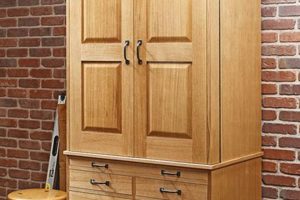
The open-pore structure of the wood also affects its behavior during staining and finishing. Red oak readily absorbs stains, but the depth of penetration can vary across the grain, potentially leading to uneven coloration or blotching. Pre-stain conditioners are often employed to mitigate this issue, ensuring a more uniform color distribution. Furthermore, the grain pattern dictates the directionality of sanding and finishing. Sanding against the grain can create visible scratches that detract from the final appearance. Proper alignment with the grain is crucial for achieving a smooth, flawless surface. Example: A red oak cabinet door’s beauty rely on stain application after sanded properly and carefully.
In summary, the grain pattern constitutes a central element in woodworking with red oak. A thorough understanding of its characteristics, including its visual impact and its influence on finishing processes, is paramount for successful project execution. The selection of appropriate finishing techniques, and stain application, directly correlates with the ability to maximize the aesthetic potential of this material, while ensuring long-term durability and performance. However, the work may cause challenges, such as the need for proper filling and leveling. Successful red oak projects reflect an intentional decision for grain, resulting in visual beauty.
3. Workability

The workability of red oak exerts a significant influence on the feasibility and quality of woodworking projects. This characteristic encompasses the wood’s response to various machining operations, including sawing, planing, routing, and sanding. Red oak, classified as a hardwood, presents a moderate level of workability. Its density and interlocked grain structure require sharp tools and careful technique to achieve clean cuts and smooth surfaces. Improper technique can lead to tear-out, particularly when working against the grain. Consequently, understanding the wood’s properties and adapting machining methods accordingly is crucial for efficient and effective construction. For example, using a low-angle block plane minimizes tear-out when smoothing end grain, a common challenge in projects like red oak cutting boards or small boxes.
The ease with which red oak accepts fasteners, such as screws and nails, also contributes to its workability. Pre-drilling pilot holes is often necessary to prevent splitting, given the wood’s density. Glue-up operations benefit from the use of high-quality wood adhesives specifically formulated for hardwoods. Clamping pressure should be applied evenly to ensure a strong and durable bond. Projects like red oak chairs or tables, which demand robust joinery, necessitate careful attention to these details. Similarly, the wood’s responsiveness to steam bending, while limited compared to some other species, allows for the creation of curved components in furniture or decorative elements, expanding the design possibilities within woodworking. This is observed in the creation of curved components in rocking chairs.
In conclusion, the workability of red oak presents both opportunities and challenges for woodworkers. While its density and grain structure demand precision and skill, the wood’s strength and aesthetic appeal make it a desirable material for a wide range of projects. Mastery of appropriate machining techniques, coupled with careful attention to joinery and finishing, enables craftspeople to leverage the full potential of red oak, resulting in durable, functional, and visually pleasing creations. The understanding of those aspects is vital for any project, from the smallest item to the biggest one.
4. Finishing

The process of finishing represents a critical stage in the creation of successful items. Red oak, with its open grain structure, necessitates careful consideration of finishing techniques to achieve desired aesthetic and protective qualities. Unsuitable finishing can result in an uneven surface, highlighting the grain’s porosity in an undesirable manner. Conversely, appropriate finishing enhances the wood’s natural beauty while providing a barrier against moisture, scratches, and ultraviolet radiation. A common example illustrates this point: An improperly finished red oak tabletop may exhibit blotchy staining and be susceptible to water damage from spills, whereas a properly finished one resists staining and maintains its integrity over extended use.
The selection of finishing materials directly impacts the appearance and longevity of red oak projects. Oil-based finishes, such as varnish, penetrate the wood, emphasizing the grain and providing a warm, amber tone. Water-based finishes offer greater clarity and lower volatile organic compound (VOC) emissions. Application methods also play a crucial role. Spraying can achieve a smooth, even coat, while brushing requires careful technique to avoid brush marks. Grain filling, a process of applying a paste-like substance to fill the open pores, is often necessary to create a smooth surface for subsequent finishing coats. In cabinetry, for example, a filled grain and multiple coats of lacquer can yield a high-end, furniture-grade finish.
Effective finishing of red oak demands a thorough understanding of the wood’s properties and the characteristics of various finishing materials. Careful preparation, including sanding and grain filling, is essential for achieving optimal results. The choice of finish should align with the project’s intended use and aesthetic goals. Proper execution of the finishing process not only enhances the visual appeal but also protects the wood from environmental factors, ensuring the longevity and value of the finished project. Consequently, the finishing stage is not merely cosmetic; it is integral to the overall success of red oak woodworking.
5. Moisture Content

The moisture content of Quercus rubra significantly influences the dimensional stability and structural integrity of all projects utilizing the wood. Wood, being hygroscopic, constantly exchanges moisture with its surrounding environment until equilibrium is achieved. This exchange results in expansion when moisture increases and contraction when moisture decreases. A red oak table constructed with wood that has not reached equilibrium moisture content for its intended environment is prone to warping, cracking, and joint failure as it acclimates. For instance, red oak lumber kiln-dried to 6% moisture content in a region with average humidity levels resulting in an equilibrium moisture content of 12% will expand, potentially compromising joints and surface finishes. Conversely, wood with excessive moisture content at the time of construction will shrink, similarly impacting structural soundness.
Proper management of moisture content involves careful selection of lumber that has been appropriately kiln-dried or air-dried to a moisture level consistent with the expected service environment. This is often achieved through the use of a moisture meter to assess the wood’s moisture content prior to construction. Moreover, allowing the wood to acclimate to the shop environment for a period of time before working it further minimizes subsequent dimensional changes. The acclimation period allows the wood to reach equilibrium moisture content before it is incorporated into the finished piece. A craftsman constructing a red oak dresser in a climate-controlled workshop would, therefore, ensure that the lumber has stabilized at a moisture content reflective of typical household conditions before commencing assembly.
In conclusion, diligent monitoring and control of moisture content are paramount to the long-term stability and aesthetic appeal of items. The impact of moisture fluctuations is a primary concern for red oak woodworking, and the application of appropriate methods for acclimation and construction minimizes the risk of structural defects, thereby maximizing the lifespan and performance of the resulting product. Ignoring the interaction between the project and the moisture content results in failure in future.
6. Joint Strength
Joint strength is a critical determinant of the durability and longevity of all items. The capacity of joints to withstand stress, load, and environmental factors directly influences the structural integrity and performance of the finished piece. This section explores several facets of joint strength as it relates to construction employing red oak.
- Wood Properties and Joint Design
Red oak’s density and grain structure demand careful joint design. Simple butt joints are inadequate, as they lack sufficient surface area for strong adhesion. Joinery techniques such as mortise and tenon, dovetails, and rabbets are preferred. These methods increase the glue surface area and create mechanical interlocks, significantly enhancing joint strength. An example: a red oak table built with mortise and tenon joints is significantly more stable and durable than one assembled with butt joints and screws. The design accommodates the wood’s tendency to expand and contract with changes in humidity.
- Adhesive Selection and Application
The choice of adhesive directly impacts joint strength. High-quality wood glues formulated for hardwoods are essential. Epoxy resins provide exceptional strength for demanding applications. Proper surface preparation, including cleaning and sanding, ensures optimal adhesion. Clamping pressure during glue-up is crucial for maintaining consistent contact between mating surfaces. Inadequate clamping leads to weak joints prone to failure. An illustration of proper execution would be an accurate clamp setup on red oak furniture pieces for glue application.
- Fastener Usage and Placement
Fasteners, such as screws, nails, and dowels, can augment joint strength, particularly in situations where glue alone is insufficient. However, improper fastener usage can weaken joints. Pre-drilling pilot holes prevents splitting, and selecting fasteners of appropriate length and diameter ensures secure holding power. Over-driving screws strips the wood, compromising joint integrity. Correct fastener placement complements, rather than undermines, the strength of glued joints. Using brass screws to hold the chair together to support its stability.
- Environmental Considerations
Environmental factors, such as humidity and temperature fluctuations, exert stress on joints. Red oak’s tendency to expand and contract with changes in moisture content can weaken joints over time. Joinery techniques that accommodate wood movement, such as floating tenons, mitigate this effect. Proper finishing protects the wood from moisture absorption, further enhancing joint durability. An outdoor red oak bench, left unfinished, may experience joint failure due to repeated swelling and shrinking caused by weather changes.
The facets outlined above underscore the importance of joint strength in the context of endeavors. Careful attention to joint design, adhesive selection, fastener usage, and environmental considerations is essential for creating items that are both durable and aesthetically pleasing. This focus on structural integrity ensures the long-term value and functionality of items.
7. Cost-Effectiveness

Cost-effectiveness represents a crucial consideration in all endeavors. The balance between material expenses, labor costs, and the resultant product’s value dictates the financial viability of any project. When integrating red oak into woodworking projects, several factors affect the overall cost-effectiveness, requiring careful planning and execution to achieve optimal results.
- Material Procurement and Pricing
The price of red oak lumber fluctuates based on grade, availability, and geographical location. Lower grades may present cost savings but necessitate greater effort in defect removal, increasing labor hours and material waste. Strategic sourcing from local suppliers or purchasing in bulk can reduce raw material expenses. For example, a cabinet shop contracting directly with a sawmill for a large quantity of red oak realizes lower per-board-foot costs compared to retail purchases.
- Waste Minimization and Yield Optimization
Efficient cutting layouts and optimized milling practices minimize material waste, directly impacting cost-effectiveness. Employing computer-aided design (CAD) software to plan cuts maximizes yield from each board. Utilizing smaller offcuts for secondary components reduces material requirements. A furniture maker designing a series of red oak chairs might arrange patterns to minimize scrap and repurpose leftover pieces for smaller decorative elements.
- Labor Efficiency and Skill Level
Labor costs constitute a significant portion of overall project expenses. Skilled craftsmanship and efficient work practices reduce the time required for construction. Simplified designs that minimize intricate joinery can lower labor hours. A seasoned woodworker assembling a straightforward red oak bookcase completes the project more quickly and with fewer errors than an inexperienced novice, impacting the project’s financial outcome.
- Finishing Costs and Maintenance Requirements
Finishing materials, such as stains, sealers, and topcoats, contribute to overall project expenses. Durable finishes that require infrequent maintenance reduce long-term ownership costs. Selecting cost-effective yet protective finishing systems balances upfront investment with long-term value. For example, applying a polyurethane finish to a red oak floor provides long-lasting protection against wear and moisture, minimizing the need for frequent refinishing.
In conclusion, achieving cost-effectiveness in endeavors necessitates a holistic approach encompassing material procurement, waste minimization, labor efficiency, and finishing practices. Strategic decision-making across each of these areas ensures that red oak is utilized in a manner that maximizes value while minimizing expenses, resulting in financially sustainable and aesthetically pleasing outcomes. By carefully analyzing and controlling expenses, woodworking project aims to deliver a high-quality product that matches budgetary limits.
Frequently Asked Questions
The following section addresses common inquiries regarding the selection, processing, and application of Quercus rubra in woodworking. The aim is to provide concise, fact-based answers to enhance understanding and inform decision-making.
Question 1: Is red oak suitable for outdoor projects?
Red oak exhibits limited resistance to decay and insect infestation, rendering it generally unsuitable for unprotected outdoor applications. Pressure treatment with preservatives is necessary to mitigate these vulnerabilities.
Question 2: What are the best joinery techniques for red oak?
Joinery techniques that maximize glue surface area and provide mechanical interlocking, such as mortise and tenon joints, dovetails, and rabbets, are recommended. These methods enhance joint strength and accommodate wood movement.
Question 3: Does red oak require grain filling prior to finishing?
The open grain structure of red oak necessitates grain filling for smooth, uniform finishes. Failing to fill the grain results in a textured surface and can lead to uneven stain absorption.
Question 4: How should red oak be prepared for staining?
Sanding the wood through progressively finer grits is essential. A pre-stain wood conditioner is recommended to promote even stain penetration and prevent blotching.
Question 5: What is the ideal moisture content for red oak before construction?
The ideal moisture content should align with the equilibrium moisture content of the wood’s intended environment. A moisture meter should be employed to verify moisture levels before commencing construction.
Question 6: Is red oak difficult to work with hand tools?
Red oak’s density and hardness require sharp tools and careful technique when using hand tools. Tear-out can be a concern when planing against the grain.
In summary, successful integration into woodworking relies on addressing concerns about moisture content, joinery, finishing, and species’ properties. Strategic planning is essential for the implementation of high-quality and long-lasting projects.
The subsequent will elaborate on the use cases of the specified wood in construction projects.
Conclusion
The preceding discussion has explored the multifaceted considerations inherent in Quercus rubra applications. From understanding the species’ durability and workability to addressing the nuances of finishing and moisture management, the success of these endeavors hinges on informed decision-making and meticulous execution. The utilization of appropriate joinery techniques and a thorough understanding of wood properties are also vital for delivering high-quality items. The integration of best practices directly determines the aesthetic and structural integrity of the finished product.
The ongoing refinement of woodworking practices, coupled with a deeper appreciation for the inherent characteristics of this material, ensures its continued relevance in both traditional and contemporary contexts. The pursuit of excellence in crafting continues, resulting in enduring and valuable contributions to the built environment. Further research and continued development of innovative techniques is welcome, in order to ensure the best application of these practices.