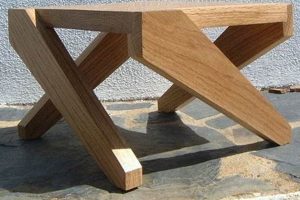
Beginning-level carpentry endeavors focus on simplified designs and techniques suitable for individuals with limited or no prior experience. These initiatives often involve the use of basic hand tools and power tools, emphasizing safety and fundamental skill development. A common example includes constructing a small wooden box, a birdhouse, or a simple picture frame. The primary objective is to introduce novices to the craft while building confidence and foundational knowledge.
Participating in such beginner projects offers several advantages. It fosters an understanding of wood properties, tool usage, and joinery methods. Moreover, it provides a tangible sense of accomplishment, encouraging further exploration of woodworking. Historically, learning such essential construction methods was crucial for building homes and furniture; today, it serves as a valuable hobby, a potential source of income, and a means of enhancing practical skills.
The subsequent sections will detail specific project ideas, essential tools and materials, safety guidelines, and step-by-step instructions to facilitate a successful entry into the world of woodworking. The focus is on providing clear guidance and resources to enable the reader to progress from novice to competent hobbyist.
Guidance for Novice Carpentry Endeavors
The following suggestions aim to optimize the initial experience and promote skill development. Adherence to these recommendations increases project success and minimizes potential challenges.
Tip 1: Project Selection: Begin with projects possessing straightforward designs and limited components. Overly ambitious undertakings can lead to frustration and abandonment. A small cutting board or a basic shelf constitutes a suitable starting point.
Tip 2: Material Acquisition: Opt for softwood lumber such as pine or fir for initial projects. These materials are generally more affordable and easier to manipulate than hardwoods. Ensure lumber is straight and free from significant knots or defects.
Tip 3: Tool Familiarization: Prioritize understanding the function and safe operation of each tool before project commencement. Practice using tools on scrap wood to develop proficiency. Sharpening planes and chisels is paramount to efficient and safe woodworking.
Tip 4: Accurate Measurement and Marking: Employ precise measuring tools and marking techniques to ensure accurate cuts and joinery. Inaccurate dimensions can compromise the structural integrity and aesthetic appeal of the finished piece. Consider using a marking gauge to scribe consistent lines.
Tip 5: Secure Workholding: Utilize appropriate clamping devices to securely hold workpieces during cutting, shaping, and assembly. A stable work surface and properly secured materials enhance safety and precision.
Tip 6: Gradual Progression: Embrace a step-by-step approach, meticulously following project plans and instructions. Rushing through stages increases the likelihood of errors and diminished quality. Double-check measurements and alignments before committing to permanent joinery.
Tip 7: Safety Precautions: Wear appropriate personal protective equipment, including safety glasses and ear protection. Maintain a clean and organized workspace to prevent accidents. Never operate power tools while fatigued or under the influence of any substance.
These guidelines, if consistently applied, will foster a positive learning experience and enhance the likelihood of successful project completion. Continued practice and a commitment to skill development are essential for progressing in woodworking.
The subsequent sections will provide more in-depth exploration of specific tools and techniques.
1. Simplified Design
The role of simplified design in beginner-level woodworking activities is paramount. It serves as a foundational element, directly impacting project feasibility, skill acquisition, and overall success. Restricting the design complexity minimizes the learning curve and fosters a positive initial experience, thereby encouraging continued engagement with the craft.
- Reduced Complexity of Joinery
Simplified designs inherently limit the number and intricacy of joinery techniques required. Instead of complex dovetail or mortise-and-tenon joints, projects typically rely on butt joints, lap joints, or basic screw-and-glue construction. This allows the beginner to master fundamental joinery principles without being overwhelmed by advanced methods. For example, a simple box can be constructed with butt joints reinforced by screws, providing structural integrity while requiring minimal skill.
- Minimized Tool Requirements
Less intricate designs typically require fewer specialized tools. A beginning project might only necessitate a saw, drill, measuring tools, and fasteners. This reduces the initial financial investment and eliminates the need for extensive tool acquisition, enabling beginners to focus on mastering the use of a limited set of essential instruments. A simple shelf, for instance, can be constructed using only a saw, drill, and level.
- Lower Material Waste
Straightforward designs generally involve fewer cuts and less intricate shaping, resulting in reduced material waste. This is particularly beneficial for beginners who are likely to make errors in their initial projects. Using simple rectangular shapes, common in beginner projects, minimizes waste compared to complex curves or angled cuts. This provides a more cost-effective and environmentally conscious approach to learning woodworking.
- Faster Project Completion
Simplified designs contribute to faster project completion times. The reduced complexity in both design and execution allows beginners to see tangible results relatively quickly. This provides a sense of accomplishment and reinforces the learning process, encouraging them to undertake further projects. A small picture frame, with its basic cuts and assembly, can be completed in a short period, providing immediate gratification and bolstering confidence.
In conclusion, integrating simplified designs into introductory projects ensures accessibility, promotes skill development, and minimizes potential frustration for novice woodworkers. The focused approach allows beginners to build a solid foundation in fundamental woodworking principles before progressing to more complex and demanding designs. Examples include basic shelves, cutting boards, and birdhouses which all serve as suitable beginning projects for new woodworking enthusiasts.
2. Basic Hand Tools

The successful execution of introductory woodworking projects is intrinsically linked to the appropriate selection and skillful utilization of basic hand tools. These tools serve as fundamental instruments for shaping, assembling, and refining wood, providing a foundation for developing essential woodworking skills.
- The Hand Saw: Precision Cutting
The hand saw enables controlled and precise cuts, crucial for achieving accurate dimensions in woodworking projects. Different types of hand saws, such as the crosscut saw and rip saw, are designed for cutting wood perpendicular to and parallel with the grain, respectively. For example, a beginner constructing a simple box would employ a hand saw to accurately cut the sides, top, and bottom pieces to the specified dimensions, ensuring a snug fit during assembly. The precision achieved with a hand saw directly impacts the overall quality and structural integrity of the project.
- The Chisel: Shaping and Refining
The chisel functions as a shaping and refining tool, used for creating joints, removing excess material, and adding decorative elements to woodworking projects. A sharp chisel allows for precise removal of wood, enabling the creation of clean and accurate joinery, such as creating the recess for a hinge in a wooden box. Beginners learn to control the chisel through hand pressure and mallet strikes, gradually developing proficiency in shaping wood and achieving desired aesthetic details. Furthermore, its also used for cleaning joinery such as mortise and tenon to achieve a flush finish.
- The Smoothing Plane: Surface Preparation
The smoothing plane is instrumental in preparing wood surfaces for finishing, removing imperfections, and achieving a smooth and consistent texture. By carefully planing a wooden surface, a woodworker can eliminate planer marks, scratches, and other blemishes, resulting in a surface that accepts finishes evenly and enhances the overall appearance of the project. For instance, a beginner crafting a small table would use a smoothing plane to refine the tabletop surface, ensuring a professional-looking finish.
- Measuring and Marking Tools: Accuracy and Precision
Accurate measurement and marking are critical for achieving precise dimensions and ensuring proper alignment in woodworking projects. Measuring tapes, rulers, squares, and marking gauges are essential hand tools for transferring measurements from project plans to the wood. These tools help ensure that cuts are made at the correct angles and lengths, and that joints are aligned properly, resulting in a structurally sound and aesthetically pleasing finished product. For beginner projects that have to follow specific dimension based on a template, measuring and marking is crucial for the success.
These fundamental hand tools represent the cornerstone of introductory woodworking, providing the means to shape, join, and finish wood with precision and control. Mastering the use of these tools equips the beginner with essential skills applicable to a wide range of woodworking projects, laying the foundation for continued growth and proficiency in the craft. Moreover, proficiency in these instruments enhances the capacity to undertake more advanced woodworking tasks, underscoring their fundamental significance.
3. Softwood Lumber

Softwood lumber plays a pivotal role in beginner woodworking, primarily due to its workability and cost-effectiveness. The relative softness of these woods, sourced from coniferous trees, simplifies cutting, shaping, and joining processes, which is beneficial for individuals with limited woodworking experience. The lower density and less intricate grain patterns compared to hardwoods reduce resistance during cutting and shaping, facilitating the use of hand tools and entry-level power tools. For example, projects involving simple butt joints, such as constructing a small box or a basic shelf, are more easily executed with softwood lumber like pine or fir.
The financial aspect further reinforces the connection between softwood lumber and introductory woodworking projects. Typically, softwoods are more affordable than hardwoods, enabling beginners to acquire materials without incurring substantial expenses. This economic advantage encourages experimentation and reduces the financial risk associated with inevitable mistakes during the learning process. Consider the construction of a birdhouse: using cedar, a naturally weather-resistant softwood, allows for an outdoor project without demanding the expertise required to work with more expensive and difficult-to-manipulate hardwoods. The ease of obtaining and working with softwood lumber allows beginners to concentrate on skill development rather than being hindered by challenging material properties.
In summary, the combination of workability and affordability establishes softwood lumber as a primary material choice for introductory woodworking projects. Its ease of manipulation reduces the learning curve, while its lower cost mitigates financial concerns, promoting a positive and accessible entry point into the craft. The selection of appropriate softwood species, such as pine, fir, or cedar, allows for a wide range of beginner-friendly projects while fostering a solid foundation in woodworking principles and techniques. Without the accessibility and workability of these types of wood, it is likely that introductory woodworking would not be nearly as appealing or accessible.
4. Safe Practices

The integration of safe practices into introductory woodworking projects is not merely an ancillary consideration, but a foundational element necessary for preventing injury and fostering a sustainable learning environment. A direct cause-and-effect relationship exists: inadequate adherence to safety protocols directly increases the risk of accidents, ranging from minor cuts and abrasions to severe injuries involving power tools. Therefore, safety education serves as a critical component of every woodworking project, regardless of its complexity. Consider the seemingly simple task of using a hand saw. Failure to properly secure the workpiece or maintain correct posture can lead to the saw slipping, resulting in lacerations. This example underscores the significance of safety training from the outset.
Implementing safe practices extends beyond the immediate avoidance of injury. It also cultivates a culture of responsibility and conscientiousness, essential for long-term engagement with woodworking. Novices trained to prioritize safety are more likely to develop sound habits that minimize risks throughout their woodworking careers. For instance, consistently wearing safety glasses, even when performing tasks that seem low-risk, becomes second nature, protecting against unforeseen projectiles or dust exposure. This proactive approach enhances not only personal safety but also the overall quality of work, as distractions caused by safety concerns are minimized. Moreover, a safe workspace fosters a positive learning environment, encouraging exploration and experimentation without undue apprehension.
In conclusion, safe practices are inextricably linked to introductory woodworking projects, functioning as a prerequisite for participation and a catalyst for skill development. The consequences of neglecting safety are significant, underscoring the importance of comprehensive safety training and consistent adherence to established protocols. By prioritizing safety from the outset, beginners can minimize risks, cultivate responsible work habits, and create a foundation for a safe and fulfilling woodworking journey. The long-term benefits of this approach extend beyond personal well-being, fostering a positive and productive woodworking community.
5. Accurate Measurement
Accurate measurement serves as the bedrock upon which successful introductory woodworking projects are built. It is not merely a procedural step but an essential element that influences the structural integrity, aesthetic quality, and overall functionality of any woodworking creation, particularly for novices.
- Ensuring Structural Integrity
Precise measurements are crucial for creating joints that are strong and stable. A discrepancy, even a minor one, can compromise the fit between two pieces of wood, leading to weak joints that are prone to failure. In a basic project like a simple box, if the sides are not measured and cut accurately, the resulting structure may be unstable and unable to hold its intended contents securely. Therefore, mastering accurate measurement is critical for beginners to ensure the longevity and reliability of their projects.
- Facilitating Proper Alignment
Accurate measurements are essential for maintaining proper alignment in woodworking projects. When pieces are not measured correctly, they may not line up as intended, resulting in misaligned edges, uneven surfaces, and an overall unprofessional appearance. For example, in constructing a small shelf, inaccurate measurements can lead to a shelf that is not level, compromising its functionality and aesthetic appeal. Consistent and precise measurement techniques are essential for achieving visually appealing and structurally sound results.
- Minimizing Material Waste
Employing accurate measurement practices helps minimize material waste in woodworking projects. By cutting wood to the precise dimensions required, beginners can avoid costly mistakes and reduce the amount of scrap material generated. For instance, if a novice woodworker is building a picture frame and mismeasures the length of the sides, they may need to discard the incorrectly cut pieces and start anew, wasting valuable material. Accurate measurement, therefore, promotes efficiency and reduces the environmental impact of woodworking.
- Promoting Efficient Assembly
Accurate measurements streamline the assembly process, ensuring that all components fit together smoothly and seamlessly. When pieces are measured correctly, they can be joined with minimal effort, reducing the need for adjustments and modifications during assembly. In a basic project such as assembling a birdhouse, accurate measurements will ensure that the roof panels fit snugly against the walls, creating a weather-resistant structure. Precision in measurement thus contributes to a more efficient and enjoyable woodworking experience.
The multifaceted impact of accurate measurement on introductory woodworking projects highlights its importance as a foundational skill for beginners. Beyond its immediate benefits in terms of structural integrity and aesthetic appeal, accurate measurement fosters efficiency, minimizes waste, and promotes a positive learning experience. Consistent application of precise measurement techniques empowers novices to create woodworking projects that are both functional and visually pleasing, laying the groundwork for continued growth and proficiency in the craft.
6. Secure Workholding

Secure workholding is paramount in introductory woodworking. The ability to firmly position and stabilize a workpiece directly influences project safety, precision, and overall quality. Inadequate workholding can lead to material slippage, tool chatter, and potential injury, underscoring its critical role in beginner projects.
- Enhancing Safety
Stable workpieces minimize the risk of sudden movements during cutting, shaping, or fastening. Such stability reduces the likelihood of tool slippage, thereby protecting the user from potential harm. For instance, when using a hand saw to cut a board, secure clamping prevents the board from shifting, allowing for controlled and safe sawing. Proper workholding practices directly contribute to a safer woodworking environment, particularly for novices who are still developing their skills.
- Improving Accuracy
Secure workholding facilitates precise execution of woodworking tasks. A stable workpiece allows for accurate marking, cutting, and joining. Without adequate support, materials may flex or vibrate, leading to inaccurate cuts and misaligned joints. When constructing a simple box, for example, secure clamping ensures that the sides are cut to the exact dimensions specified, resulting in a well-proportioned and structurally sound finished product. Consistent accuracy is essential for achieving professional-looking results.
- Facilitating Efficient Material Removal
Firmly held workpieces enable efficient and controlled material removal during processes such as planing or chiseling. Secure clamping prevents the workpiece from shifting under the pressure of the tool, allowing for smooth and even removal of wood. When using a chisel to create a mortise, for example, secure workholding ensures that the chisel can be accurately positioned and driven into the wood without the workpiece moving. Efficient material removal contributes to faster project completion and improved surface quality.
- Supporting Jointing and Assembly
Secure workholding is essential for accurate jointing and assembly of woodworking projects. Clamps and vises hold components firmly in place while glue dries or fasteners are applied, ensuring proper alignment and strong bonds. During the assembly of a basic frame, for example, clamps hold the pieces together while the glue sets, preventing movement and ensuring a tight, durable joint. Proper workholding during assembly is crucial for creating robust and long-lasting woodworking projects.
These facets demonstrate the integral connection between secure workholding and successful introductory woodworking. By emphasizing the importance of stable workpieces, beginners can improve safety, enhance accuracy, facilitate efficient material removal, and support effective jointing and assembly. Consistent application of secure workholding practices lays the foundation for skilled and confident woodworking.
7. Patient Execution

Patient execution is an indispensable characteristic in the realm of introductory woodworking projects. It dictates the overall quality of the final product and the educational experience gained by the novice woodworker. A deliberate and measured approach allows for greater precision, reduces errors, and fosters a deeper understanding of woodworking principles. A rush to complete a project, conversely, often leads to mistakes that necessitate rework or result in a substandard outcome. The construction of a simple birdhouse, for example, requires careful cutting and assembly of multiple components. If each step is not executed with patience, the resulting structure may be unstable, aesthetically unappealing, and ultimately, uninhabitable for birds.
The importance of patient execution extends beyond the immediate task at hand. It promotes the development of fundamental skills, such as accurate measurement, precise cutting, and careful joinery. These skills form the basis for more advanced woodworking techniques. For instance, attempting to assemble a dovetail joint without sufficient patience and attention to detail will likely result in a poorly fitted joint that lacks structural integrity. In contrast, approaching the process with a deliberate and focused mindset allows the beginner to develop a feel for the materials and tools, leading to improved craftsmanship and a greater sense of accomplishment. Furthermore, patient execution encourages a problem-solving mindset. When faced with unexpected challenges, a woodworker who is accustomed to taking a measured approach is more likely to identify the root cause of the issue and devise an effective solution, rather than rushing to a quick fix that may exacerbate the problem.
In summary, patient execution is not merely a desirable trait but a necessary condition for success in introductory woodworking projects. It directly influences the quality of the finished product, the development of fundamental skills, and the cultivation of a problem-solving mindset. While the allure of rapid progress may be tempting, taking a deliberate and measured approach ultimately yields superior results and a more rewarding learning experience. The cultivation of patience during these early stages in woodworking can greatly enhance the journey.
Frequently Asked Questions
The following questions address common concerns and misconceptions related to embarking on beginner-level carpentry endeavors. These answers aim to provide clarity and guidance for those new to the craft.
Question 1: What is the minimum age recommended for participating in introductory woodworking projects?
While no strict minimum age exists, projects require a certain level of dexterity, focus, and understanding of safety protocols. Generally, individuals aged 10 and older, under proper supervision, can begin to engage in simplified projects using hand tools. The maturity level and physical coordination of the individual are more critical factors than chronological age.
Question 2: What is the average cost associated with starting introductory woodworking projects?
The cost varies depending on the selection of tools and materials. A basic set of hand tools, including a saw, chisel, measuring tools, and fasteners, can be acquired for approximately $50 to $150. Material costs depend on the project and the type of wood selected, but softwood lumber for small projects generally ranges from $10 to $30. Power tools increase the startup cost significantly.
Question 3: Are power tools necessary for completing introductory woodworking projects?
Power tools are not essential for initial projects. Many fundamental skills can be developed using hand tools alone. While power tools can expedite certain tasks, they also introduce a higher risk of injury and require additional safety precautions. Starting with hand tools allows beginners to develop a better understanding of woodworking principles before transitioning to power tools.
Question 4: What are the most common mistakes made by beginners in woodworking?
Common errors include inaccurate measurement, improper tool usage, neglecting safety precautions, and selecting projects that are too complex. Failing to follow project plans closely and rushing through steps also contribute to errors. Meticulous planning and a patient approach can mitigate these issues.
Question 5: How much time should one dedicate to an introductory woodworking project?
The time commitment varies depending on the project’s complexity and the individual’s skill level. A simple project, such as a small wooden box, may take 2 to 4 hours to complete. More involved projects can require several days or weeks. It is advisable to allocate sufficient time to each stage of the project to ensure quality and accuracy.
Question 6: What resources are available for learning more about woodworking techniques and safety practices?
Numerous resources exist for expanding woodworking knowledge. Books, online tutorials, and woodworking courses offer comprehensive instruction on various techniques and safety protocols. Local woodworking clubs and community centers often provide workshops and mentorship opportunities for beginners.
In summary, approaching introductory woodworking projects with patience, attention to detail, and a commitment to safety will increase the likelihood of a positive and rewarding experience. Accessing available resources and seeking guidance from experienced woodworkers can further enhance skill development.
The subsequent sections will delve into the specific tools and techniques.
Conclusion
This exploration of introductory woodworking projects has highlighted key elements essential for successful engagement. Simplified design, judicious use of basic hand tools, the selection of appropriate softwood lumber, adherence to safe practices, accurate measurement, secure workholding, and patient execution are all critical factors. These foundational aspects collectively contribute to skill development and the creation of functional and aesthetically pleasing items. Understanding and implementing these principles minimizes frustration and fosters a positive learning experience.
The information presented serves as a starting point for those entering the craft. Continued practice, exploration of diverse techniques, and a commitment to safety will facilitate ongoing progress. Mastering these fundamental skills not only enables the construction of practical objects but also cultivates creativity and problem-solving abilities. The journey through introductory woodworking projects, though challenging at times, offers a rewarding path towards craftsmanship and self-sufficiency.