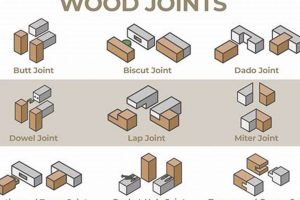
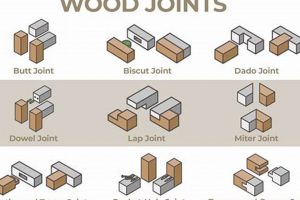
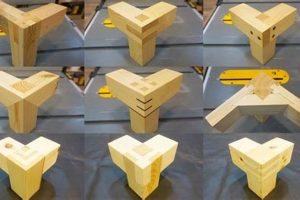
Devices employed to create strong, precise connections between pieces of lumber are essential for constructing durable and aesthetically pleasing wooden structures. These devices facilitate the creation of mortise and tenon, dovetail, miter, and lap joints, among others. A hand plane, for instance, is used to achieve perfectly flat surfaces for strong glue adhesion in a butt joint, while a dovetail saw allows for the precise cutting of interlocking tails and pins in a dovetail joint.
The utility of these implements extends beyond mere assembly; they ensure structural integrity, longevity, and visual appeal. Historically, proficiency in utilizing these tools was a hallmark of skilled craftspeople, leading to the creation of enduring furniture and architectural elements. The strength of a joint dictates the overall stability of the final product, and the precision with which the joint is executed impacts its visual integration within the design.
The subsequent sections will delve into specific types of devices and their applications, examining both traditional hand tools and modern power tools used in joinery. A discussion of material selection and techniques for achieving optimal results will also be included.
Essential Techniques for Effective Wood Joinery
Achieving strong and aesthetically pleasing wooden joints requires careful attention to detail and the application of proven techniques. The following tips provide guidance on optimizing the use of devices employed for creating these connections.
Tip 1: Sharpness is Paramount: Maintain all blades and cutting edges in optimal condition. A dull blade can tear wood fibers, resulting in weak and imprecise joints. Regular sharpening and honing are essential for clean cuts and tight fits.
Tip 2: Precise Measurement and Marking: Accurate measurements and clear markings are fundamental to achieving well-fitted joints. Utilize precision measuring instruments and marking gauges to ensure consistent dimensions and alignment. Double-check all measurements before commencing any cutting operation.
Tip 3: Grain Direction Considerations: Understanding wood grain direction is crucial for joint strength and stability. Align grain patterns strategically to maximize glue surface area and minimize the risk of wood movement or splitting.
Tip 4: Proper Glue Selection: Choose an appropriate adhesive for the specific wood species and joint type. Consider factors such as open time, clamping pressure, and moisture resistance. Thoroughly clean all surfaces before applying glue to ensure optimal adhesion.
Tip 5: Clamping Technique: Employ adequate clamping pressure to create tight, uniform glue lines. Use cauls or clamping blocks to distribute pressure evenly and prevent damage to the wood surface. Allow sufficient drying time before removing clamps.
Tip 6: Test Joints Before Gluing: Perform a dry fit of the joint before applying glue to identify any potential issues with fit or alignment. Make any necessary adjustments to ensure a perfect fit before committing to the final assembly.
Tip 7: Master the Fundamentals: Before attempting complex joinery techniques, practice and perfect basic joints such as butt joints, lap joints, and dadoes. A strong foundation in these fundamental skills will translate to improved results in more advanced projects.
Consistently applying these techniques will lead to the creation of robust and visually appealing wooden structures. Mastering the use of devices used to create connections between pieces of lumber is essential for the success of any woodworking project.
The next section will address common challenges encountered in joinery and provide solutions for overcoming them.
1. Precision

Precision is an indispensable attribute of any implement used in woodworking joinery. The accuracy afforded by these tools directly determines the fit and strength of the resultant joint. Inaccurate joinery leads to weakened structures, aesthetic flaws, and potential long-term instability. Dovetail joints, for example, demand precise cuts to ensure tight interlocking of the tails and pins. An imprecisely made dovetail saw, or the unskilled use of a precise one, results in gaps, glue starvation, and a joint that is structurally unsound. Therefore, the quality and accuracy of the device directly impact the integrity of the assembled object.
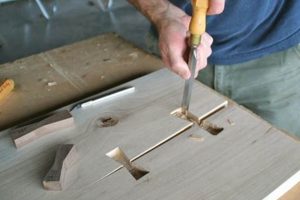
The relationship between precision and tools extends to various joint types and corresponding woodworking operations. Mortise and tenon joints, crucial in furniture construction, require chisels and mortisers capable of creating precisely sized and aligned mortises. Similarly, the accuracy of a miter saw determines the seamlessness of mitered corners in frames and moldings. Without precision, achieving tight, nearly invisible seams becomes impossible. This principle extends to seemingly simple joints like rabbets and dadoes; inaccuracy here affects the alignment and stability of shelves and panels.
In conclusion, precision is not merely a desirable quality but a foundational requirement for woodworking joint tools. The accuracy with which these tools operate directly translates to the strength, durability, and visual appeal of the finished product. Choosing tools that are inherently precise and mastering the techniques necessary to utilize them effectively are crucial steps in ensuring successful woodworking projects.
2. Sharpness

Sharpness is a critical attribute of implements employed in creating woodworking joints, directly influencing the quality and integrity of the resulting connection. A dull edge induces tearing of wood fibers rather than a clean severance, creating a rough surface unsuitable for effective glue adhesion. This compromised surface undermines the joint’s overall strength. Consider a chisel used to form the mortise of a mortise and tenon joint; a dull chisel crushes the wood, leading to an ill-fitting tenon and a weakened joint. Similarly, a hand plane with a dull blade leaves a rippled surface on a joint face, preventing proper contact and compromising the bond.
The effect of dullness is not merely limited to strength but extends to precision and efficiency. A sharp saw blade, for example, allows for accurate cuts along a marked line, enabling the creation of tight-fitting joints such as dovetails. Conversely, a dull saw requires greater force to operate, increasing the likelihood of blade wander and inaccurate cuts. This imprecision necessitates additional correction work, increasing time investment and potentially compromising the intended design. Furthermore, using dull devices is more hazardous, demanding increased force and elevating the probability of slippage and injury. The increased exertion required also leads to fatigue, further compounding the risk of errors.
In summary, sharpness is integral to the optimal functionality of any woodworking joint tool. Maintaining sharp edges ensures clean cuts, precise fitting, and structurally sound joints, reducing the risk of injury and enhancing efficiency. Therefore, investing in quality sharpening equipment and adopting a consistent maintenance schedule is crucial for realizing the full potential of woodworking devices and achieving superior joinery results.
3. Material Compatibility

The term “Material Compatibility”, when considered in the context of implements used to create woodworking joints, refers to the suitability of a particular device for use with specific types of wood. The hardness, density, grain structure, and resin content of wood species vary considerably, directly influencing the effectiveness and longevity of the device. The incorrect application of a particular tool to an incompatible material can result in damaged tools, substandard joinery, and potential safety hazards. For example, attempting to use a fine-toothed saw, designed for hardwoods, on a softwood containing excessive resin can cause the blade to bind, overheat, and become damaged. Similarly, using a power tool with excessive force on a delicate wood can lead to splintering and inaccurate cuts.
The selection of a device must, therefore, be guided by the properties of the wood being worked. Hardwoods like oak and maple necessitate tools with hardened steel blades capable of maintaining a sharp edge under significant resistance. Softwoods, such as pine and cedar, require tools designed to minimize tear-out and produce clean cuts without excessive splintering. Furthermore, the presence of knots, grain irregularities, or internal stresses within the wood can dictate the choice of tool and the technique employed. A hand plane, for instance, requires careful adjustment and technique when used on wood with reversing grain to prevent tear-out. Ignoring these considerations leads to inefficient work, compromised joint strength, and an increased risk of tool failure.
In conclusion, material compatibility is a crucial factor in woodworking joinery. Proper understanding of wood properties and the selection of appropriate tools ensure efficient work, superior joint quality, and prolonged tool lifespan. The choice of implement must be based on the specific characteristics of the wood species being used, accounting for hardness, density, grain structure, and resin content. Failure to consider these factors can lead to damaged tools, substandard joinery, and potentially dangerous situations.
4. Joint Specificity

The term “Joint Specificity” in the realm of woodworking refers to the concept that certain implements are optimally designed and intended for the creation of particular joint types. The geometry, mechanics, and intended stress distribution of different joint configurationssuch as dovetails, mortise and tenons, rabbets, or miters necessitate distinct tool characteristics for efficient and precise execution. The tools used for these various applications are then defined as specialized, each optimized for its intended purpose, leading to improved accuracy and quality.
Failure to adhere to joint specificity can result in structurally unsound or aesthetically displeasing results. Attempting to cut a dovetail joint with a general-purpose saw, rather than a specialized dovetail saw with its fine teeth and thin blade, will likely lead to inaccuracies and a poorly fitting joint. Similarly, employing a router without the appropriate jig for cutting mortises will yield less precise and more time-consuming results compared to using a dedicated mortising machine or mortise chisel. The selection of an implement that is not appropriately matched to the joint type significantly increases the risk of errors, wasted material, and compromised structural integrity.
In conclusion, joint specificity is a fundamental consideration in woodworking. Understanding the unique requirements of each joint type and selecting tools specifically designed for those tasks is essential for achieving strong, accurate, and visually appealing results. This understanding minimizes errors, maximizes efficiency, and ultimately contributes to the creation of durable and well-crafted wooden structures.
5. Ergonomics

Ergonomics, the science of designing and arranging items used in the workspace to optimize human well-being and overall system performance, has a profound impact on woodworking joint tool use. Proper ergonomic design in this context minimizes physical strain, reduces the risk of injury, and enhances precision and efficiency during the joint-making process.
- Grip Design and Hand Strain
The design of a handle significantly affects hand and wrist fatigue. Tools with poorly designed grips force users to exert excessive force, leading to conditions such as carpal tunnel syndrome or tendonitis. Woodworking chisels and hand saws with ergonomically shaped handles that distribute pressure evenly across the hand reduce strain and allow for longer periods of use without discomfort.
- Tool Weight and User Fatigue
The weight of a tool influences the amount of energy required to operate it. Overly heavy tools cause fatigue and reduce control, increasing the likelihood of errors and injuries. For example, a heavy power router can be difficult to maneuver precisely, especially when cutting intricate joints. Lighter tools, balanced for optimal handling, minimize fatigue and enhance accuracy.
- Posture and Accessibility
Ergonomics extends beyond the tool itself to include the workspace. The height of the workbench, the arrangement of tools, and the positioning of the workpiece all contribute to the user’s posture. Maintaining a neutral spine and avoiding excessive reaching or bending reduces back strain. Workbenches should be adjustable to accommodate users of different heights, and frequently used tools should be readily accessible to minimize unnecessary movement.
- Vibration and Nerve Damage
Power tools, such as routers and sanders, generate vibration that can lead to nerve damage and circulatory problems in the hands and arms. Ergonomically designed tools incorporate vibration-dampening features to minimize these effects. Anti-vibration gloves can further reduce exposure to harmful vibrations, protecting the user’s long-term health.
These ergonomic considerations are paramount in ensuring that woodworking joint tool use is not only efficient and precise but also safe and sustainable for the woodworker. A focus on ergonomic design promotes user well-being and enhances the quality of craftsmanship.
6. Maintenance

Sustained functionality and precision of implements used in woodworking are contingent upon consistent and appropriate maintenance practices. Neglecting these procedures precipitates diminished performance, compromised joint quality, accelerated wear, and increased risk of operational hazards. Proper upkeep is not merely an ancillary task; it is an integral component of responsible tool management and skillful woodworking practice.
- Edge Preservation and Sharpening
Cutting edges of hand planes, chisels, and saws demand periodic sharpening to maintain optimal cutting performance. Dull edges tear wood fibers rather than cleanly severing them, leading to rough surfaces and imprecise joinery. Sharpening protocols involve honing, grinding, or filing to restore the correct bevel angle and create a keen edge. Regular assessment and prompt rectification of dullness ensure efficient operation and superior results. Without maintenance, jointing is compromised and safety is at risk.
- Lubrication and Friction Reduction
Moving parts in devices like hand drills, vices, and marking gauges require lubrication to minimize friction and prevent premature wear. Application of appropriate lubricants, such as light machine oil or specialized dry lubricants, reduces binding, facilitates smooth operation, and protects against corrosion. Neglecting lubrication can lead to increased resistance, diminished accuracy, and eventual component failure. The consequence is that the intended results are at risk, as well as safety.
- Cleaning and Corrosion Prevention
Accumulation of sawdust, resin, and moisture promotes corrosion and impedes functionality. Routine cleaning with appropriate solvents or brushes removes debris and prevents the formation of rust on metallic surfaces. Application of protective coatings, such as wax or rust inhibitors, further safeguards against environmental degradation. Failure to maintain cleanliness can compromise precision, accelerate wear, and diminish the overall lifespan of the tool. Joints will then be compromised and structural integrity will be threatened.
- Alignment and Calibration Verification
Precision instruments like squares, levels, and measuring devices require periodic calibration to ensure accuracy. Minor impacts or prolonged use can alter alignment, leading to inaccurate measurements and compromised joint integrity. Verification against known standards and subsequent adjustment of calibration settings are essential for maintaining consistent and reliable performance. Without periodic checking and rectification, these devices lose their utility and jeopardize the quality of woodworking operations.
The facets detailed above illustrate the crucial role maintenance plays in preserving the performance and extending the life of devices used to create connections between pieces of lumber. Proper maintenance not only enhances the quality of woodworking but also contributes to safety and operational efficiency. Adherence to a structured maintenance schedule is a hallmark of responsible tool ownership and skilled craftsmanship.
Frequently Asked Questions
This section addresses common inquiries and clarifies prevalent misconceptions surrounding the selection, application, and maintenance of devices employed in woodworking joinery.
Question 1: What constitutes a “woodworking joint tool”?
A “woodworking joint tool” is any implement utilized to create a mechanical connection between two or more pieces of wood. This encompasses a diverse range of devices, from hand-operated saws and chisels to power-driven routers and jointers. The specific tool employed is determined by the type of joint desired and the properties of the wood being worked.
Question 2: Why is proper selection of a tool for a specific joint important?
The selection of an appropriate device for a specific joint directly influences the strength, accuracy, and aesthetic quality of the finished product. Using an unsuitable tool can lead to compromised structural integrity, inaccurate dimensions, and a visually displeasing result. Dovetail saws, for instance, are specifically designed for the intricate cuts required in dovetail joints, while general-purpose saws lack the precision necessary for this application.
Question 3: How does the sharpness of an implement impact the quality of a joint?
A sharp cutting edge is paramount for achieving clean, precise cuts and optimal glue adhesion. Dull devices tear wood fibers rather than severing them cleanly, resulting in a rough surface that weakens the joint. Regular sharpening and honing are essential for maintaining the performance of woodworking joint tools.
Question 4: What role does material compatibility play in tool selection?
The properties of the wood being worked, such as hardness, density, and grain structure, must be considered when selecting a device. Hardwoods require tools with hardened steel blades to maintain sharpness, while softwoods necessitate tools designed to minimize tear-out. Using an incompatible tool can damage both the wood and the implement.
Question 5: How does ergonomics influence the use of woodworking joint tools?
Ergonomics addresses the design of tools to minimize physical strain and enhance user comfort. Ergonomically designed handles, balanced weight distribution, and vibration-dampening features can reduce fatigue and the risk of injury. Proper ergonomics contributes to improved precision and efficiency.
Question 6: What are the key aspects of woodworking joint tool maintenance?
Maintenance practices include regular sharpening of cutting edges, lubrication of moving parts, cleaning to remove debris, and verification of alignment and calibration. These procedures prolong the lifespan of the device, maintain its performance, and ensure consistent accuracy. Neglecting maintenance can lead to diminished functionality and increased risk of operational hazards.
In summary, understanding the principles of tool selection, maintenance, and application is crucial for achieving success in woodworking joinery. Adherence to these guidelines contributes to the creation of strong, durable, and aesthetically pleasing wooden structures.
The following section will examine advanced joinery techniques and explore the integration of modern technology in woodworking joint construction.
Conclusion
The foregoing examination has elucidated the multifaceted nature of woodworking joint tools. These implements, ranging from simple hand tools to sophisticated power equipment, are critical for establishing secure and aesthetically pleasing connections within wooden structures. Sharpness, precision, material compatibility, joint specificity, ergonomics, and consistent maintenance have been identified as paramount considerations for ensuring optimal tool performance and superior joinery outcomes.
A thorough understanding and proper application of these principles are essential for anyone engaged in woodworking. The strength and longevity of a wooden object are inextricably linked to the quality of its joinery; therefore, diligent attention to the selection, use, and maintenance of woodworking joint tools is not merely advisable but fundamentally necessary for achieving professional and structurally sound results. Continued exploration and refinement of these techniques will undoubtedly advance the craft and ensure the enduring quality of wooden constructions.