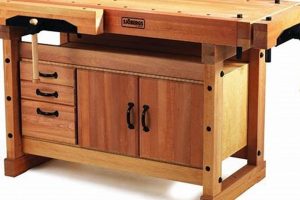
A traditional workbench layout presents detailed instructions for constructing a sturdy platform essential for woodworking activities. These layouts typically include specifications for dimensions, materials, and assembly processes, often emphasizing time-tested joinery techniques for optimal stability and longevity.
The value of these established designs lies in their proven ergonomics and workholding capabilities. Historically, workbenches built from such specifications have provided woodworkers with a reliable and efficient surface for a wide range of tasks, from intricate carving to heavy-duty construction. The designs frequently incorporate features like integrated vises, dog holes, and tool storage, maximizing functionality within a limited workspace.
Understanding fundamental elements is key to selecting and implementing a suitable workbench arrangement. Subsequent discussion will delve into specific types, material considerations, construction methods, and the advantages of adapting classic approaches to contemporary woodworking practices.
Essential Considerations for Workbench Construction
The following tips offer guidance on key aspects of designing and building a robust woodworking platform based on established methods. Careful consideration of these points contributes to the creation of a functional and durable workspace.
Tip 1: Material Selection: Employ hardwoods, such as maple or beech, for the bench top and legs. These materials offer superior strength and stability, resisting warping and wear under heavy use. Softwoods, such as pine, may be suitable for less critical components like stretchers or tool trays.
Tip 2: Joinery Methods: Prioritize mortise-and-tenon joinery for connecting legs to the bench top and stretchers. This method provides exceptional strength and rigidity, ensuring the bench remains stable over time. Dovetail joints can be incorporated for drawers or other storage compartments for added durability and visual appeal.
Tip 3: Bench Height Determination: Calculate the optimal bench height based on individual ergonomics. A common guideline is to position the bench top at approximately knuckle height when standing. Adjust the height to suit specific woodworking tasks, considering factors such as planing and carving.
Tip 4: Vise Selection and Installation: Integrate at least one vise, preferably two, into the workbench design. A face vise and a tail vise offer versatile workholding capabilities. Securely mount the vises to the bench top, ensuring they are flush and operate smoothly.
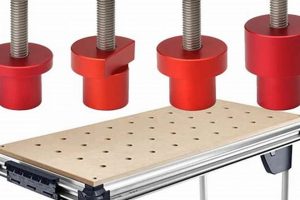
Tip 5: Dog Hole Placement: Drill a grid of dog holes across the bench top to accommodate bench dogs and other workholding accessories. Ensure the dog holes are precisely aligned and of a consistent diameter for optimal functionality. Consider different dog hole patterns based on common project needs.
Tip 6: Flattening the Bench Top: After assembly, meticulously flatten the bench top using hand planes or power tools. A flat and level surface is crucial for accurate woodworking and reliable workholding.
Tip 7: Incorporating Tool Storage: Integrate tool storage solutions, such as drawers, shelves, or tool wells, into the workbench design. Efficient tool organization improves workflow and reduces clutter.
Adherence to these suggestions facilitates the construction of a woodworking platform that is both functional and enduring, significantly enhancing the efficiency and enjoyment of woodworking projects.
The following section will elaborate on modifying traditional designs to accommodate specific user requirements and available resources.
1. Benchtop Material

The selection of benchtop material forms a foundational element in the execution of time-honored woodworking bench layouts. Material properties directly influence the workbench’s stability, durability, and suitability for various woodworking tasks. Choices should reflect both the intended applications and the available resources.
- Hardwood Density and Stability
Dense hardwoods, such as maple, beech, and birch, are frequently favored. These materials offer high resistance to wear, indentation, and warping. A stable benchtop ensures consistent workholding and accurate machining operations. For example, a maple benchtop provides a solid surface for hand planing without excessive vibration.
- Softwood Alternatives and Cost Considerations
While hardwoods are optimal, softwoods like Douglas fir or Southern yellow pine may be employed to reduce material costs. However, softwoods are more susceptible to damage and require careful selection to minimize knots and defects. Softwood benchtops may be suitable for lighter-duty applications or as a temporary solution, understanding its limitations in traditional designs.
- Lamination Techniques and Dimensional Stability
Laminating multiple layers of wood together can enhance dimensional stability and reduce the risk of warping. Lamination allows for the use of smaller pieces of lumber and can create a visually appealing surface. A laminated benchtop, properly constructed, can rival the stability of a single slab of hardwood.
- Surface Treatment and Maintenance
The chosen material dictates the appropriate surface treatment. Hardwood benchtops often benefit from a simple oil finish, which protects against moisture and enhances the natural grain. Softwood benchtops may require a more robust finish to prevent damage and wear. Regular maintenance, including flattening and re-finishing, is essential to preserve the benchtop’s integrity.
The correlation between material selection and the functionality of a traditional woodworking bench is undeniable. Careful assessment of material properties, coupled with appropriate construction techniques, is paramount to building a durable and reliable platform that will endure years of service. While hardwoods offer superior performance, alternative materials can be considered with careful planning and an awareness of their limitations.
2. Joinery Strength

Joinery strength constitutes a critical determinant of the structural integrity and longevity of any woodworking bench constructed using traditional designs. The capacity of joints to withstand sustained loads and resist deformation directly impacts the workbench’s ability to serve as a reliable platform for a variety of woodworking operations.
- Mortise and Tenon Joint Performance
The mortise and tenon joint represents a cornerstone of traditional workbench construction. Its effectiveness stems from the interlocking nature of the tenon (a projection on one piece of wood) inserted into the mortise (a corresponding recess in another piece). A properly executed mortise and tenon joint resists racking forces and tensile stress, maintaining the bench’s overall stability. The size and fit of the tenon, as well as the adhesive used, directly affect the joint’s load-bearing capacity.
- Dovetail Joint Applications and Limitations
Dovetail joints, characterized by their interlocking, fan-shaped projections, offer exceptional resistance to pulling forces. While primarily employed for drawers and other storage components within a workbench, dovetails can also reinforce critical structural connections. However, the complexity of cutting dovetails accurately necessitates skilled craftsmanship. Furthermore, dovetails are typically more resistant to tensile forces than to compressive loads, rendering them less suitable for primary structural connections subjected to significant downward pressure.
- Tusk Tenon and Wedge Joinery
The tusk tenon joint, often secured with a wedge, presents a robust method for connecting the legs to the benchtop or stretchers. The wedge, driven through a slot in the tenon, expands the tenon within the mortise, creating a mechanical lock that resists disassembly. This type of joint allows for adjustments and potential disassembly, an advantage in certain applications. Its effectiveness relies on the precise fit of the tenon and the compressive strength of the wedge material.
- Glue Selection and Bond Integrity
Irrespective of the joinery method employed, the selection of appropriate adhesive plays a crucial role in joint strength. Traditional wood glues, such as hide glue, offer excellent bonding properties and reversibility. Modern synthetic adhesives, such as polyvinyl acetate (PVA) and epoxy, provide superior strength and water resistance. The chosen adhesive must be compatible with the wood species and the intended application. Proper clamping pressure and curing time are essential for achieving optimal bond strength.
The successful integration of joinery principles is central to the creation of traditional woodworking benches. The selection of appropriate joint types, meticulous execution, and informed adhesive choices are indispensable for guaranteeing the workbench’s structural soundness and its ability to withstand the demands of rigorous woodworking activities. The long-term performance of a traditionally constructed workbench hinges directly on the quality and resilience of its joinery.
3. Vise Integration

Effective vise integration is a defining characteristic of traditional woodworking platforms. The strategic placement and selection of vises directly influence a bench’s functionality and its capacity to securely hold workpieces for a diverse range of woodworking tasks.
- Face Vise Functionality and Placement
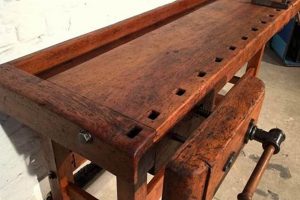
The face vise, typically mounted on the front of the workbench, provides clamping pressure parallel to the benchtop surface. Its primary function is to secure boards for edge jointing, planing, and other operations where the long grain is oriented vertically. Traditional designs often incorporate wooden jaws lined with leather to protect delicate workpieces. The vise’s placement should allow for comfortable reach and ample clamping capacity, often extending several inches beyond the bench’s edge.
- Tail Vise Operation and Compatibility
The tail vise, situated at the end of the workbench, employs a sliding jaw and a series of dog holes to apply clamping pressure perpendicular to the benchtop. It is particularly useful for securing long boards for edge planing or for holding multiple workpieces simultaneously. Compatibility with bench dogs is crucial; the vise jaw and dog holes must be precisely aligned to ensure even clamping pressure across the entire workpiece.
- Leg Vise Design and Applications
The leg vise, a simpler design often found on older workbenches, utilizes a long wooden chop that pivots against the bench leg to provide clamping force. Its advantages include ease of construction and minimal hardware requirements. The leg vise is well-suited for holding large or irregularly shaped objects that may not fit comfortably in a face or tail vise. However, it typically offers less precise clamping control compared to more modern designs.
- Vise Material and Construction Considerations
The materials used in vise construction significantly impact their durability and performance. Traditional vises often feature cast iron bodies and wooden jaws. Cast iron provides exceptional strength and rigidity, while wooden jaws offer a protective surface for workpieces. Modern vises may incorporate steel components for increased clamping force or aluminum for reduced weight. The vise mechanism should operate smoothly and reliably, with minimal backlash or play.
The integration of appropriate vises is essential for realizing the full potential of woodworking platforms designed according to traditional principles. Careful consideration of vise placement, design, and material selection is paramount to creating a workbench that is both functional and capable of withstanding the demands of rigorous woodworking tasks. The vise system forms an integral part of the overall bench architecture, directly influencing the efficiency and precision of woodworking operations.
4. Dog Hole System
The incorporation of a dog hole system represents a hallmark of thoughtfully executed woodworking platforms originating from established bench layouts. This system significantly expands the workholding capabilities of the bench, allowing for versatile and secure fixturing of workpieces during various operations.
- Dog Hole Placement and Grid Patterns
The arrangement of dog holes, typically cylindrical apertures bored into the benchtop, follows specific grid patterns dictated by the overall dimensions and intended use of the bench. Traditional layouts often specify a regular grid spacing, typically ranging from 4 to 6 inches, to accommodate a wide range of workpiece sizes and shapes. Precision in hole placement is paramount to ensure consistent and reliable workholding. Irregular or inaccurately spaced holes compromise the system’s effectiveness. For example, a bench designed for cabinetmaking may feature a denser dog hole pattern near the vise to facilitate the clamping of smaller components.
- Bench Dog Design and Functionality
Bench dogs, often cylindrical or rectangular pegs crafted from wood or metal, serve as the primary interface between the dog hole system and the workpiece. Their design must ensure a snug fit within the dog holes, preventing slippage during clamping operations. Variations in dog design include spring-loaded dogs, which maintain constant pressure against the workpiece, and adjustable dogs, which allow for precise positioning. The material selection for bench dogs influences their durability and resistance to wear. Hardwoods, such as maple or beech, offer excellent wear resistance, while metal dogs provide superior strength and rigidity.
- Combination with Vises and Other Workholding Devices
The effectiveness of the dog hole system is amplified when used in conjunction with vises and other workholding accessories. Bench dogs can be strategically positioned to supplement the clamping force of a face vise or tail vise, securing long or irregularly shaped workpieces that cannot be adequately held by the vise alone. Additional accessories, such as holdfasts and planing stops, can also be integrated into the dog hole system to provide further support and stability during specific operations. For instance, a long board can be secured between a bench dog in the tail vise and a series of dogs positioned along the length of the bench, ensuring a flat and stable surface for planing.
- Material Compatibility and System Maintenance
The selection of materials for both the benchtop and the bench dogs must be carefully considered to ensure compatibility and prevent damage to either component. Softwood bench dogs used in hardwood benchtops are prone to wear and may require frequent replacement. Conversely, excessively hard bench dogs can damage softwood benchtops. Regular maintenance, including cleaning and lubrication, is essential to preserve the functionality of the dog hole system. Accumulated debris and friction can impede the smooth operation of bench dogs and compromise their clamping effectiveness. Periodic inspection and replacement of worn or damaged components are also necessary to maintain the system’s integrity.
The described characteristics illustrate the integral role of the dog hole system in enhancing the functionality of established workbench designs. Precise placement, thoughtful dog design, integration with vises, and appropriate material selection are crucial factors that contribute to a versatile and reliable workholding solution. Consequently, a well-executed dog hole system is an investment that significantly improves the efficiency and precision of various woodworking endeavors.
5. Optimal Height

Appropriate workbench height is crucial to a traditional woodworking layout’s efficacy, affecting posture, efficiency, and long-term physical well-being. The connection between optimal height and a traditional bench design involves considering historical practices, task-specific needs, and individual ergonomics to create a workspace that promotes comfort and precision.
- Knuckle Height and Historical Precedent
Traditionally, workbench height is often cited as being around knuckle height when standing. This rule of thumb is based on historical practices where the bench was primarily used for hand tool operations such as planing and sawing. A bench at knuckle height allows for efficient transfer of force while minimizing strain on the back and shoulders. Historical benches adhering to these dimensions reflect an understanding of human biomechanics gained through generations of woodworking experience.
- Task-Specific Height Adjustments
While knuckle height serves as a general guideline, specific tasks may necessitate adjustments. For instance, detailed carving or assembly work may benefit from a slightly higher bench to bring the workpiece closer to eye level, reducing eye strain and improving precision. Conversely, heavy planing or chopping operations might be better performed on a lower bench, enabling greater leverage and control. A traditional design might incorporate adjustable feet or shims to fine-tune the bench height for different tasks.
- Ergonomic Considerations and Individual Variation
Optimal workbench height is ultimately subjective, influenced by individual factors such as height, arm length, and posture. Ergonomic principles emphasize the importance of maintaining a neutral spine and avoiding excessive reaching or bending. A workbench that is too low can lead to back pain, while a bench that is too high can cause shoulder and neck strain. Trial and error, along with careful attention to body mechanics, is essential for determining the ideal height for each woodworker. Some traditional designs incorporate features like a recessed well or a removable platform to accommodate individuals of varying statures.
- Impact on Workholding and Stability
The height of the workbench has a direct impact on the effectiveness of workholding methods. A bench that is too low may make it difficult to apply adequate clamping pressure with vises or bench dogs, while a bench that is too high may compromise stability. The height must be harmonized with the workholding system to ensure that the workpiece is securely supported and accessible. Some traditional benches feature a lower shelf or cabinet to add weight and enhance stability, which can be particularly important when working on large or heavy pieces.
The interplay between optimal height and conventional woodworking bench layouts is rooted in a pragmatic understanding of human mechanics and the demands of woodworking processes. Whether adhering strictly to knuckle-height guidelines or making task-specific ergonomic adjustments, tailoring the bench height is indispensable for comfort, efficiency, and the long-term physical well-being of the craftsman. The integration of adjustable elements and consideration of workholding needs is essential for realizing the full potential of a thoughtfully designed traditional woodworking bench.
6. Tool Storage
The integration of tool storage within designs reflects a deep understanding of workflow optimization. Storage components facilitate immediate access to necessary implements, minimizing interruptions and maximizing time spent directly engaged in woodworking. Examples include drawers beneath the benchtop for frequently used hand tools, open shelves for larger items like planes, and specialized racks for saws. The physical arrangement of tool storage is a fundamental aspect of the bench’s design, directly affecting efficiency and the overall woodworking experience.
Practical examples from historically accurate bench representations reveal a variety of approaches to tool management. Some benches feature built-in tool wells to house chisels and mallets, while others incorporate sliding trays for holding small parts or fasteners. The selection of storage solutions is often dictated by the type of woodworking being performed, with carvers’ benches emphasizing specialized tool holders and jointers’ benches prioritizing space for large planes and measuring devices. The absence of adequate tool storage can lead to clutter and disorganization, negatively impacting both safety and precision. The specific storage methods are a key aspect of any workbench architecture.
The correlation between tool storage capacity and the effective design of a workbench is demonstrably strong. The thoughtful integration of tool storage facilitates an organized workspace, leading to enhanced productivity and improved safety. As a result, an appreciation for effective tool storage is essential for any woodworker aiming to replicate or adapt methods.
7. Overall Stability
A traditional woodworking benchs primary function is to provide a stable platform for executing precise woodworking tasks. Plans for these benches therefore place significant emphasis on overall stability. Stability, in this context, refers to the bench’s resistance to movement, vibration, or deformation under load. The direct cause of instability in a workbench can often be traced to poor design, inadequate materials, or improper construction techniques. Conversely, plans meticulously engineered for stability incorporate robust joinery, sufficient mass, and strategically placed structural elements. For example, benches employing thick hardwood tops joined to substantial legs with mortise-and-tenon joints exhibit superior stability compared to those constructed from lightweight materials with less robust joinery. A stable bench reduces the likelihood of errors caused by tool vibration or workpiece movement, directly contributing to higher quality finished products.
The practical significance of a stable workbench extends to safety and efficiency. A wobbling or easily displaced bench poses a safety hazard, increasing the risk of accidents involving sharp tools. Furthermore, instability undermines the efficiency of woodworking operations. For instance, planing a board on an unstable surface requires constant readjustment and increased effort, diminishing both speed and accuracy. Traditional bench designs often incorporate features such as stretchers connecting the legs near the base and heavy aprons beneath the tabletop to enhance rigidity and prevent racking. A well-constructed bench, designed for stability, is more than a mere work surface; it becomes an integral tool that enhances the woodworker’s skills.
In conclusion, overall stability is not merely a desirable attribute but an essential characteristic of well-crafted benches based on traditional layouts. It directly impacts the quality of woodworking, enhances safety, and improves efficiency. The success of methods is inherently linked to the stability of the working platform, making it a critical consideration in design and construction.
Frequently Asked Questions
This section addresses commonly encountered queries regarding blueprints derived from established woodworking bench designs, emphasizing practical considerations and technical aspects.
Question 1: What defines a plan as “traditional” in the context of woodworking benches?
Traditional plans are defined by their adherence to time-tested design principles and construction techniques, often reflecting historical precedents and the use of hand tools. These plans typically emphasize robust joinery, substantial material thicknesses, and functional features like vises and dog holes.
Question 2: Are specialized skills required to execute a building plan based on traditional methods?
While not all skills are mandatory, proficiency in fundamental woodworking techniques such as mortise-and-tenon joinery, hand planing, and accurate measurement is highly recommended. Familiarity with traditional hand tools is also beneficial.
Question 3: What are the primary advantages of constructing a bench based on these methods?
The principal advantages include exceptional stability, durability, and versatility. Traditional bench layouts are engineered to withstand heavy use and provide a reliable platform for a wide range of woodworking operations. The incorporation of features like vises and dog holes expands workholding capabilities.
Question 4: Can traditional plans be adapted to accommodate modern tools and materials?
Adaptation is possible, but should be approached cautiously. Substituting materials may require adjustments to dimensions or joinery methods to maintain structural integrity. Incorporating power tools may necessitate modifications to the construction sequence or the addition of safety features.
Question 5: What are common mistakes to avoid when using time-honored woodworking bench blueprints?
Common errors include inaccurate measurements, improperly fitted joints, inadequate clamping during glue-up, and neglecting to flatten the benchtop after assembly. Careful attention to detail and adherence to the plan specifications are essential.
Question 6: How does the selection of wood species affect the outcome of a traditional build?
Wood species significantly impacts the bench’s overall performance. Dense hardwoods, such as maple or beech, offer superior strength and stability, while softer woods may be more susceptible to wear and deformation. The choice of wood should reflect the intended use of the bench and the available budget.
The foregoing answers offer clarification on essential facets of blueprints derived from long-standing workbench principles, enabling informed decision-making and successful project execution.
The following section will provide guidance on choosing the optimal blueprint for specific requirements and resources.
Traditional Woodworking Bench Plans
Examination of layouts reveals a reliance on established principles of design and construction. Elements such as robust joinery, strategically placed workholding devices, and careful material selection collectively determine the efficacy and longevity of the finished product. Their enduring relevance stems from their proven ability to provide a stable and adaptable platform for diverse woodworking activities.
Continued adherence to, and informed adaptation of, benchmark examples serves as a cornerstone for the future of woodworking. The insights gained from studying these arrangements are invaluable for those seeking to create workspaces that promote precision, efficiency, and enduring craftsmanship. A firm understanding ensures the legacy of superior woodworking practices remains strong.