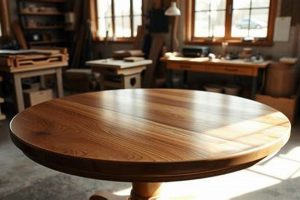
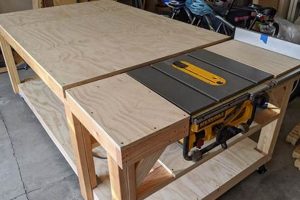
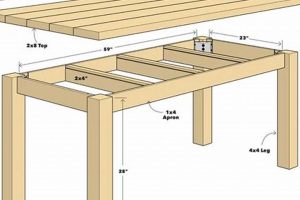
A sturdy, flat surface designed specifically for performing tasks related to shaping and assembling wood is essential for any woodworking endeavor. These surfaces provide a stable platform upon which to execute precise cuts, join pieces, and apply finishes. They often incorporate features such as vises, dog holes, and storage solutions to enhance workflow and precision.
This dedicated area offers considerable advantages in terms of accuracy, safety, and efficiency. Its presence fosters a more controlled and organized environment, reducing the likelihood of errors and injuries. Historically, such stations have evolved from simple benches to sophisticated systems equipped with advanced features, reflecting advancements in woodworking techniques and technologies. Their use promotes better posture and reduces strain on the body, enabling woodworkers to focus on the craft.
Subsequent sections will delve into various types, examining their unique functionalities, ideal applications, and construction considerations. A deeper understanding of the attributes and options available empowers informed selection and optimal utilization in diverse woodworking projects.
Optimizing Woodworking Task Area Performance
The following recommendations offer practical guidance to enhance the effectiveness and lifespan of a woodworking-specific surface.
Tip 1: Material Selection: Opt for hardwoods such as maple or beech for superior durability and resistance to wear. Softwoods may be suitable for lighter-duty tasks but are more susceptible to damage.
Tip 2: Surface Treatment: Apply a protective finish, such as varnish or polyurethane, to seal the surface and prevent moisture absorption. Regular waxing further enhances protection and reduces friction.
Tip 3: Vise Installation: Securely mount a high-quality vise to provide reliable clamping force. Ensure the vise is flush with the surface to avoid interference during material manipulation.
Tip 4: Dog Hole Placement: Strategically position dog holes to accommodate various clamping configurations. Uniform spacing facilitates versatile work holding.
Tip 5: Leveling Adjustment: Incorporate adjustable feet to compensate for uneven floors. A level surface is crucial for accurate cuts and assemblies.
Tip 6: Regular Cleaning: Routinely remove sawdust and debris to maintain a clean and safe workspace. Avoid using harsh chemicals that could damage the surface finish.
Tip 7: Load Distribution: Distribute heavy loads evenly across the surface to prevent warping or sagging. Consider adding support legs for exceptionally heavy projects.
Implementing these techniques promotes longevity, precision, and safety in the woodworking environment.
The subsequent section will provide an overview of maintenance procedures.
1. Stability

Stability, in the context of woodworking, refers to a table’s resistance to movement or vibration during woodworking operations. An unstable surface compromises the precision of cuts, joinery, and assembly. Vibration can lead to inaccurate measurements, misaligned components, and potentially dangerous tool operation. A stable area ensures that the woodworkers intended actions translate directly into the workpiece without unintended shifts or deviations. For example, attempting to cut a precise dovetail joint on an unstable platform will likely result in loose or ill-fitting joints, regardless of the woodworker’s skill.
The source of instability may stem from several factors, including inadequate weight, poor leg design, uneven floor surfaces, or loose joinery within the frame of the dedicated area itself. Mitigation strategies include using heavy, dense materials for construction, incorporating robust leg bracing, adjusting leveling feet to compensate for floor irregularities, and ensuring all joints are securely fastened with appropriate adhesives and hardware. Furthermore, securing the station to the floor or wall can provide an additional measure of stability for heavy-duty tasks. Ignoring stability leads to a cascade of problems, ultimately affecting the quality and safety of the woodworking process.
In summary, stability is a fundamental requirement for a functional space designed for this craft. Its presence directly influences the accuracy, safety, and overall quality of woodworking projects. Addressing stability concerns through careful design, material selection, and construction techniques is crucial for achieving professional results and minimizing the risk of accidents. It is not merely a desirable attribute but a necessary foundation for successful woodworking.
2. Surface Flatness
Surface flatness represents a critical attribute in the context of a dedicated woodworking station. Deviation from a perfectly level plane directly impacts the accuracy of cuts, the consistency of joinery, and the overall quality of finished pieces. An uneven surface introduces inaccuracies that accumulate throughout the woodworking process, leading to compounding errors that may be difficult or impossible to correct later. The effects of poor flatness are particularly pronounced when working with larger components or when assembling complex structures requiring precise alignment. For example, attempting to assemble a large tabletop on an uneven surface will likely result in gaps, warps, or distortions, compromising the structural integrity and aesthetic appeal of the piece.
The flatness of a woodworking area serves as a reference plane for all operations performed upon it. Tools such as hand planes, jointers, and assembly clamps rely on a consistent, level surface to function correctly. When this reference plane is compromised, the tools cannot perform their intended function with accuracy. Furthermore, inadequate flatness increases the risk of workpiece slippage and instability, posing a safety hazard to the woodworker. The maintenance of a flat plane requires careful construction using stable, dimensionally accurate materials. Regular inspection and correction of any deviations are essential to ensure consistent results. The use of precision measuring instruments, such as straightedges and winding sticks, aids in identifying and addressing surface irregularities.
In conclusion, surface flatness is not merely a desirable characteristic but a fundamental requirement for precision woodworking. Its impact on accuracy, safety, and overall quality is substantial. By prioritizing and maintaining a level plane, woodworkers can minimize errors, improve efficiency, and achieve superior results in their projects. The investment in a flat surface is an investment in the overall quality and reliability of the woodworking process, contributing directly to the success of the craft.
3. Material Durability

Material durability constitutes a fundamental attribute determining the longevity and performance of a dedicated woodworking surface. The capacity of the materials to withstand repeated impact, abrasion, and exposure to woodworking tools and substances directly influences the lifespan, maintenance requirements, and overall utility of the structure.
- Resistance to Impact and Abrasion
The ability to withstand impact from tools, workpieces, and accidental drops is crucial. Soft materials dent or scratch easily, compromising the surface’s flatness and potentially interfering with precision tasks. Hardwoods like maple and beech offer superior resistance, maintaining a smooth, consistent surface over extended use. The selection of appropriate materials mitigates the need for frequent repairs or replacements.
- Resistance to Moisture and Chemicals
Woodworking often involves exposure to moisture from glues, finishes, and cleaning agents. Materials susceptible to water damage may warp, swell, or rot, undermining the structure’s integrity. Resistance to solvents and other chemicals prevents staining, discoloration, and degradation of the surface. Properly sealed and finished surfaces offer enhanced protection against these elements, extending the area’s usability.
- Dimensional Stability Under Stress
The dedicated woodworking space is subject to significant stress from clamping forces, heavy workpieces, and the application of tools. Materials prone to warping or sagging under load compromise the flatness and stability of the work area, affecting the accuracy of cuts and assemblies. Sturdy frames, proper support structures, and the use of dimensionally stable materials, like kiln-dried hardwoods, maintain the structural integrity of the surface.
- Long-Term Structural Integrity
The materials used in construction influence the longevity. Elements resistant to decay, insect infestation, and other forms of degradation ensure the station remains functional for an extended duration. Selecting appropriate materials contributes to the long-term value and minimizes the need for costly repairs or replacements. A focus on enduring build quality reduces the environmental impact associated with frequent replacements.
The interplay between these facets determines the overall performance of the woodworking station. Prioritizing durable materials translates to a robust, reliable, and long-lasting surface capable of withstanding the rigors of woodworking, ultimately enhancing productivity and minimizing lifecycle costs.
4. Integrated Clamping
The concept of integrated clamping within woodworking surfaces signifies a deliberate incorporation of work-holding mechanisms directly into the design. This approach provides secure and versatile means of fastening workpieces, optimizing workflow and accuracy.
- Dog Holes and Bench Dogs
Dog holes, typically arranged in a grid pattern across the surface, accommodate bench dogs pegs or stops used to secure material. This system provides a simple yet effective method for holding workpieces of various shapes and sizes, particularly when combined with other clamping methods. For example, a long board can be secured between two bench dogs, preventing movement during planing or sanding operations. Their strategic placement enhances versatility.
- Built-In Vises
Integrated vises, often mounted flush with the tabletop, offer robust clamping force for more demanding tasks. These vises can be face vises, leg vises, or shoulder vises, each designed for specific applications. A face vise, for instance, is ideal for edge-jointing boards, providing consistent pressure along the length of the joint. The integration of vises minimizes obstruction and maximizes usable work area.
- T-Tracks and Clamping Accessories
T-tracks embedded within the surface provide a versatile system for attaching clamping accessories. These tracks allow for the quick and easy positioning of hold-down clamps, feather boards, and other specialized fixtures. For instance, a T-track can secure a feather board to guide a workpiece through a router bit, ensuring a clean and consistent cut. The adjustability offered by T-tracks enhances the adaptability of the area.
- Quick-Release Mechanisms
Quick-release mechanisms incorporated into clamping systems enable rapid adjustments and workpiece changes. These mechanisms, often found in modern vises and hold-down clamps, streamline the workflow and reduce downtime. For example, a quick-release vise allows for effortless insertion and removal of workpieces, increasing efficiency during repetitive tasks. This enhanced efficiency directly contributes to greater productivity.
The implementation of integrated clamping solutions within dedicated woodworking surfaces significantly enhances both the precision and efficiency of woodworking operations. By providing secure and readily accessible work-holding capabilities, these features contribute to a more controlled and productive environment, minimizing errors and maximizing the quality of finished work.
5. Accessible Storage
In the realm of woodworking, readily available storage integrated into the workspace is not merely a convenience, but a critical factor that influences efficiency, organization, and overall productivity. The proximity and arrangement of tools and materials directly affect workflow, minimizing interruptions and maximizing the time spent actively engaged in the craft.
- Tool Proximity and Retrieval Efficiency
Accessible storage minimizes the time spent searching for tools, ensuring they are readily at hand when needed. Drawers, shelves, and racks strategically positioned within arm’s reach reduce unnecessary movement and interruptions. For example, a drawer dedicated to chisels and sharpening stones, located directly beneath the work surface, allows for immediate access during carving or shaping tasks, eliminating the need to search through a toolbox located elsewhere in the shop. This proximity drastically improves efficiency.
- Material Organization and Inventory Management
Well-organized storage facilitates efficient inventory management, allowing woodworkers to quickly assess available materials and avoid unnecessary purchases. Designated compartments for lumber, hardware, and finishing supplies promote a clear understanding of resources. Consider a series of shelves organized by wood species and dimensions, enabling immediate selection of the appropriate material for a given project. This organized approach prevents waste and streamlines project planning.
- Safety and Ergonomics
Proper storage minimizes the risk of accidents and promotes ergonomic work practices. Sharp tools stored in dedicated holders prevent accidental cuts, while heavy materials stored at appropriate heights reduce strain and fatigue. For instance, a magnetic strip mounted on the wall to hold saws and planes keeps cutting edges safely out of reach, while a lumber rack positioned at waist height simplifies lifting and maneuvering heavy boards. These considerations contribute to a safer and more comfortable work environment.
- Space Optimization and Workflow Enhancement
Effective storage maximizes the use of available space, preventing clutter and promoting a streamlined workflow. Integrated storage solutions, such as cabinets built into the base of the dedicated area, utilize otherwise wasted space. Consider a work station incorporating drawers for hand tools, shelves for power tools, and a cabinet for finishing supplies, creating a self-contained and highly efficient workspace. This optimized layout minimizes distractions and maximizes productivity.
By integrating accessible storage into the design, woodworkers create an environment that fosters efficiency, organization, safety, and productivity. The strategic placement and arrangement of tools and materials within the workspace minimizes interruptions, promotes ergonomic practices, and maximizes the use of available space, ultimately enhancing the overall woodworking experience.
6. Ergonomic Height

The vertical dimension of a woodworking station significantly impacts the physical well-being and efficiency of the woodworker. Proper consideration of the ergonomic height minimizes strain, promotes correct posture, and enhances overall productivity.
- Minimizing Back Strain
An inappropriately low surface forces individuals to hunch over, leading to lower back pain and muscle fatigue. Conversely, an excessively high surface causes elevated shoulders and upper back tension. Determining an optimal height ensures a neutral spine posture, minimizing the risk of musculoskeletal disorders. For example, planing a large surface at an inadequate height can induce significant and cumulative strain over time. The appropriate height should allow the woodworker to engage in activities without excessive bending or reaching.
- Optimizing Arm and Shoulder Position
The height of the dedicated area affects the angle and reach of the arms during various tasks. An ergonomically sound surface permits elbows to remain at a comfortable angle, preventing shoulder impingement and reducing the risk of repetitive strain injuries. Tasks such as hand-tool use or detailed assembly require a height that allows for precise control without undue stress on the upper extremities. The ideal height supports a natural arm position, promoting comfort and accuracy.
- Enhancing Power and Control
Appropriate height improves leverage and control during operations requiring significant force, such as sawing or chiseling. When the height is properly adjusted, woodworkers can effectively utilize their body weight and muscle power, minimizing strain and improving efficiency. A lower surface might be preferred for tasks demanding substantial force, while a higher surface may be more suitable for detailed work requiring precision. This optimization of height can enhance performance and reduce the likelihood of injury.
- Adjustability and Customization
Considering the varying heights and preferences of individual woodworkers, adjustable solutions offer a considerable advantage. Adjustable legs or integrated lifting mechanisms allow for fine-tuning the height to suit specific tasks and body types. This adaptability ensures optimal ergonomics for each individual, regardless of their stature or the nature of the project. The ability to customize the height promotes long-term comfort and prevents the development of musculoskeletal issues.
Proper ergonomic height, therefore, is not simply a matter of comfort, but a critical element in promoting the long-term health and productivity of the woodworker. Careful attention to this aspect of the design, whether through fixed dimensions or adjustable mechanisms, contributes significantly to a safer, more efficient, and more enjoyable woodworking experience.
Frequently Asked Questions Regarding Woodworking Work Tables
The following questions address common inquiries and misconceptions surrounding woodworking-specific surfaces, providing clarity on their selection, use, and maintenance.
Question 1: What distinguishes a dedicated woodworking surface from a standard utility table?
A woodworking surface possesses specific design features tailored for woodworking tasks, including enhanced stability, a robust clamping system, and often integrated storage. Standard utility tables typically lack these features, rendering them less suitable for precision woodworking.
Question 2: What materials are best suited for constructing a robust woodworking station?
Hardwoods such as maple, beech, and birch are generally preferred for their durability, resistance to wear, and stability. Softwoods may be acceptable for lighter-duty applications, but their susceptibility to damage limits their suitability for demanding tasks.
Question 3: How does surface flatness impact the quality of woodworking projects?
Surface flatness is crucial for ensuring accurate cuts, consistent joinery, and overall dimensional precision. An uneven surface introduces cumulative errors, compromising the integrity and aesthetic appeal of finished pieces.
Question 4: What is the optimal height for a woodworking area, and how is it determined?
The optimal height is determined by the individual’s height and the nature of the tasks performed. A height that allows for a neutral spine posture and comfortable arm position is essential to minimize strain and prevent musculoskeletal disorders. Adjustable height is optimal.
Question 5: What is the significance of integrated clamping systems in a woodworking structure?
Integrated clamping systems, such as dog holes and built-in vises, provide secure and versatile means of holding workpieces, optimizing workflow and accuracy. These systems minimize slippage and ensure consistent clamping pressure.
Question 6: What maintenance procedures are recommended to prolong the lifespan of a woodworking dedicated area?
Regular cleaning, protective surface treatments, and periodic inspections are essential to maintain the area’s condition and functionality. Promptly addressing any damage or wear prevents further deterioration and ensures continued usability.
The preceding answers provide a foundational understanding of essential aspects related to dedicated woodworking surfaces. Proper implementation of these considerations enhances the overall woodworking experience and promotes project success.
Subsequent sections will explore advanced techniques and specialized applications.
Woodworking Work Table
This exploration of the woodworking work table has underscored its central role in successful woodworking endeavors. From material selection and surface flatness to integrated clamping and ergonomic design, each element contributes significantly to precision, safety, and efficiency. The appropriate selection and maintenance of this dedicated area directly influence the quality of finished work and the long-term well-being of the craftsperson.
As woodworking techniques evolve and projects become increasingly complex, the importance of a well-designed and properly maintained woodworking work table remains paramount. Its continued relevance serves as a foundation for both novice and experienced woodworkers, enabling the realization of creative visions and the preservation of this time-honored craft. Invest in a proper platform, and the returns will be accuracy, safety, and pride in the process.