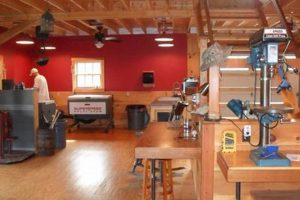
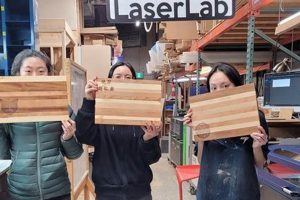
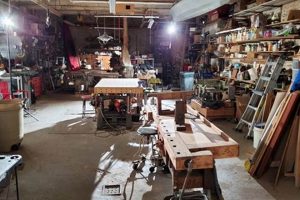
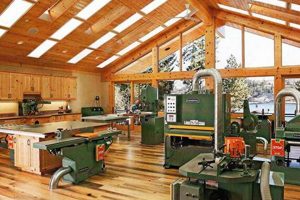
This type of establishment offers a workspace, often shared, equipped with tools and machinery for crafting items from wood. These tools typically include saws, lathes, planers, and jointers. Individuals, hobbyists, or small businesses may utilize this shared resource to create furniture, decorative objects, or other wood-based projects. An example is a maker space that provides access to woodworking equipment on a membership basis.
Such facilities provide several benefits, including access to expensive equipment that individuals might not be able to afford independently. They foster a community of woodworkers, promoting collaboration and knowledge sharing. Historically, these types of spaces evolved from traditional carpentry workshops, adapting to modern needs for accessibility and resource optimization. The existence of shared resources reduces the environmental impact associated with individual ownership of machinery.
The following discussion will examine key considerations for operating and maintaining a safe and productive wood crafting area, including equipment safety protocols, dust collection systems, and workshop layout optimization. Furthermore, material selection, finishing techniques, and business considerations relevant to utilizing such a space will be explored.
Essential Guidelines for Efficient Wood Crafting Areas
The following recommendations aim to enhance productivity, safety, and overall effectiveness within a shared woodworking environment. These guidelines address critical aspects of operation, maintenance, and workflow.
Tip 1: Implement a Rigorous Tool Maintenance Schedule: Regular inspection, cleaning, and lubrication of machinery are paramount. Adherence to manufacturer-specified maintenance protocols extends the lifespan of equipment and ensures optimal performance. A logbook documenting maintenance activities is advisable.
Tip 2: Prioritize Dust Collection System Efficiency: Effective dust extraction is essential for maintaining air quality and minimizing health risks. Ensure the dust collection system is appropriately sized for the shop’s equipment and usage. Regularly inspect and empty dust collection bags or containers.
Tip 3: Establish Clear Safety Protocols and Training: Comprehensive safety training for all users is non-negotiable. Protocols should cover machine operation, personal protective equipment (PPE) usage, and emergency procedures. Posted safety guidelines serve as constant reminders.
Tip 4: Optimize Workshop Layout for Workflow: Arrange equipment strategically to minimize movement and potential bottlenecks. Designate specific areas for different tasks, such as cutting, sanding, and assembly. Clear pathways improve efficiency and reduce accidents.
Tip 5: Enforce Strict Material Storage and Handling Procedures: Proper storage of lumber and other materials prevents damage and potential hazards. Implement a system for organizing materials and ensuring they are readily accessible while minimizing clutter.
Tip 6: Maintain a Clean and Organized Workspace: Regular cleaning is essential for preventing accidents and maintaining a professional environment. Establish a routine for sweeping floors, wiping down surfaces, and organizing tools and materials.
Tip 7: Standardize Material Consumption Monitoring: Keep stock of frequently used material and regularly check to make sure you have enough supplies for the woodworking product.
Adhering to these guidelines enhances the woodworking experience, promoting safety, efficiency, and a collaborative environment. Consistent application of these principles contributes to a more productive and sustainable woodworking community.
The subsequent section will delve into best practices for equipment selection and financial considerations when establishing or operating a shared woodworking resource.
Effective shared resource management is fundamentally intertwined with the successful operation of such a woodworking facility. The efficient allocation and maintenance of tools, equipment, and workspace directly impact productivity, safety, and user satisfaction. Inadequate resource management leads to conflicts over equipment availability, delays in project completion, and increased risk of accidents due to poorly maintained machinery. For instance, a shop without a clear system for scheduling lathe usage might experience significant downtime and frustration among its members. Conversely, a well-managed system that incorporates online booking, preventative maintenance logs, and enforced usage time limits ensures that the lathe is consistently available, properly maintained, and safely operated.
The importance of shared resource management extends beyond mere logistical considerations. It directly influences the sense of community and collaborative spirit within the facility. When resources are fairly distributed and meticulously maintained, users are more likely to respect the shared space and contribute to its upkeep. An example of this positive feedback loop can be seen in a space where members are required to participate in regular tool cleaning and maintenance sessions. This shared responsibility fosters a sense of ownership and encourages users to take pride in the collective resource. Conversely, a poorly managed woodworking area where equipment is frequently broken or missing can create a sense of apathy and discourage active participation.
In summary, shared resource management forms the backbone of a thriving woodworking establishment. By prioritizing equitable access, preventative maintenance, and community involvement, operators can create a safe, productive, and collaborative environment. Addressing the challenges associated with resource allocation requires a proactive and transparent approach, fostering a sense of shared ownership and responsibility among all users. The practical significance of effective shared resource management cannot be overstated; it is essential for sustaining a vibrant and successful woodworking community.
2. Equipment Maintenance Protocols
The establishment and adherence to robust equipment maintenance protocols are critical to the safe and efficient operation of any shared woodworking facility. These protocols ensure the longevity of machinery, minimize the risk of accidents, and maintain the quality of work produced within the space. Their absence directly undermines the viability and reputation of the shared woodworking environment.
- Scheduled Inspections and Preventative Maintenance
Regular inspections, conducted according to manufacturer specifications, identify potential issues before they escalate into significant problems. Preventative maintenance, such as lubrication, blade sharpening, and filter replacement, extends the lifespan of equipment and ensures optimal performance. For example, neglecting to sharpen a bandsaw blade can lead to increased strain on the motor, resulting in premature failure and posing a safety hazard to the user.
- User Training and Responsibility
Comprehensive training on equipment operation and basic maintenance is essential for all users. This training should cover proper usage techniques, safety procedures, and simple maintenance tasks such as cleaning and lubricating moving parts. Assigning responsibility for daily or weekly maintenance to specific users fosters a sense of ownership and accountability. A user neglecting to clean the bed of a jointer after use can compromise the quality of subsequent cuts and contribute to premature wear of the machine.
- Documentation and Record Keeping
Maintaining detailed records of all maintenance activities, including inspections, repairs, and part replacements, is crucial for tracking equipment performance and identifying recurring issues. This documentation serves as a valuable resource for troubleshooting problems and planning future maintenance. A logbook detailing the replacement of bearings in a spindle sander, for example, provides essential information for assessing the long-term reliability of that machine.
- Emergency Repair Procedures and Availability of Spare Parts
Establishing clear procedures for reporting and addressing equipment malfunctions is vital for minimizing downtime. Maintaining an inventory of commonly used spare parts, such as belts, blades, and switches, enables prompt repairs and reduces the impact of breakdowns on shop operations. A well-stocked spare parts cabinet ensures that a broken belt on a table saw does not disrupt workflow for an extended period.
The implementation of these equipment maintenance protocols within a shared woodworking environment is not merely a matter of convenience; it is a fundamental prerequisite for safety, productivity, and the sustainability of the operation. Consistent adherence to these protocols fosters a culture of responsibility and ensures that the shared woodworking resource remains a valuable asset for all users. In contrast, neglecting maintenance leads to equipment degradation, increased safety risks, and ultimately, the failure of the entire woodworking enterprise.
3. Safety Regulation Enforcement

Safety regulation enforcement is an indispensable component of any woodworking environment. Its presence directly mitigates risks associated with operating dangerous machinery and handling potentially hazardous materials. The absence of rigorous enforcement within a shared space heightens the probability of accidents, injuries, and potential legal liabilities. Consider, for example, a situation where users neglect to wear appropriate personal protective equipment (PPE), such as safety glasses or hearing protection. Without consistent enforcement of PPE requirements, the likelihood of eye injuries from flying debris or hearing damage from prolonged exposure to loud machinery increases substantially. Therefore, consistent application of safety regulations is not merely a procedural formality but rather a critical necessity for protecting the well-being of all individuals utilizing the woodworking facility.
Effective enforcement extends beyond simply posting safety guidelines. It necessitates proactive monitoring of user behavior, regular safety training sessions, and consistent application of disciplinary measures for non-compliance. For instance, a facility that mandates a safety briefing for all new users, conducts periodic inspections to ensure adherence to regulations, and imposes penalties for violations (such as temporary suspension of shop privileges) demonstrates a commitment to safety regulation enforcement. Conversely, a woodworking area that fails to actively enforce safety protocols, despite having written guidelines, creates a permissive environment where users may become complacent and disregard safety precautions. This laxity can lead to a cascade of negative consequences, including increased accidents, higher insurance premiums, and damage to the facility’s reputation.
In summary, the stringent enforcement of safety regulations is a cornerstone of a responsible and sustainable woodworking operation. By prioritizing user safety through proactive monitoring, comprehensive training, and consistent disciplinary measures, the shared space can create a secure and productive environment for all its members. The practical significance of this understanding lies in recognizing that safety is not simply a matter of individual responsibility but a collective obligation that requires active enforcement to ensure the well-being of everyone involved. Ignoring this principle undermines the very foundation of the shared woodworking resource, jeopardizing both the safety of its users and the long-term viability of the facility.
4. Collaborative Project Dynamics

The efficacy of a shared woodworking environment hinges significantly on its collaborative project dynamics. These dynamics encompass the interactions, knowledge sharing, and cooperative efforts undertaken by individuals utilizing the facility. A strong collaborative environment fosters innovation, accelerates skill development, and promotes a sense of community, thereby enhancing the overall value proposition of the shared woodworking space. Conversely, a lack of collaboration can lead to isolation, duplication of effort, and underutilization of the collective expertise present within the facility. For example, in a situation where users independently grapple with similar design challenges, a collaborative approach could involve group brainstorming sessions or peer-to-peer consultations, resulting in more efficient problem-solving and a wider range of creative solutions.
The implementation of structured collaborative initiatives can further amplify the benefits derived from these dynamics. Organized workshops, group builds, and mentorship programs provide avenues for users to learn from one another, share best practices, and collectively tackle complex projects. A woodworking facility that hosts regular workshops on specific techniques, such as joinery or finishing, enables users to acquire new skills and refine existing ones through hands-on experience and expert guidance. Furthermore, collaborative projects, such as building a custom workbench or designing a community art installation, provide opportunities for users to apply their skills in a meaningful way while fostering a sense of shared accomplishment. These initiatives not only enhance the technical capabilities of individual users but also strengthen the social fabric of the woodworking community.
In summary, collaborative project dynamics are integral to maximizing the potential of a shared woodworking facility. By fostering open communication, knowledge sharing, and cooperative endeavors, the space can cultivate a vibrant community of woodworkers who learn from one another, support one another, and collectively create high-quality work. Recognizing the importance of these dynamics and actively implementing strategies to promote collaboration is essential for ensuring the long-term success and sustainability of the woodworking environment. Addressing challenges such as personality conflicts or unequal skill levels requires proactive mediation and the establishment of clear guidelines for collaborative engagement. The positive impact of robust collaborative project dynamics extends beyond the immediate woodworking projects, contributing to a more enriching and fulfilling experience for all users involved.
5. Skill Development Opportunities
A shared woodworking environment fosters numerous skill development opportunities, directly impacting users’ capabilities and the quality of their work. The availability of diverse equipment, ranging from basic hand tools to advanced machinery, allows individuals to explore various woodworking techniques and expand their skill sets. The collaborative nature of the space also facilitates knowledge transfer, as experienced woodworkers can mentor novices, sharing their expertise and guidance. The practical effect of these opportunities is an enhanced capacity among users to design, fabricate, and finish a wider array of projects. For example, a beginner joining such a space may initially focus on simple projects like cutting boards, but through workshops, mentorship, and access to specialized tools, they can progressively acquire skills in joinery, carving, and finishing, enabling them to undertake more complex furniture construction projects.
The structured organization of skill development initiatives further strengthens the connection between the shared woodworking environment and individual growth. Regularly scheduled workshops, demonstrations, and training sessions provide users with access to formal instruction on specific techniques and equipment operation. These programs not only impart technical knowledge but also emphasize safety protocols and best practices, contributing to a safer and more efficient working environment. Moreover, the shared resource structure enables access to tools and machinery that individuals might not otherwise be able to afford, allowing them to experiment with new techniques and materials without significant financial investment. A real-world demonstration might be a local woodworker group that sponsors monthly sessions on topics such as wood turning, CNC routing, or spray finishing, conducted by experts in the field. This enables users to enhance their knowledge.
In conclusion, skill development opportunities are an intrinsic benefit of shared woodworking environments, significantly enhancing the value and appeal of these spaces. By providing access to equipment, expertise, and structured training, these resources empower users to expand their capabilities, increase their creativity, and produce higher-quality work. Recognizing the importance of fostering skill development initiatives is essential for operators of woodworking resources seeking to cultivate a vibrant, engaged, and productive community. The challenge lies in ensuring equitable access to these opportunities, tailoring programs to meet the diverse needs and skill levels of users, and continuously adapting to evolving industry trends and technological advancements. The sustained success of a shared woodworking resource is linked to its ability to serve as a catalyst for continuous learning and skill enhancement within its community.
Frequently Asked Questions
The following represents a series of frequently encountered inquiries regarding the operation and utilization of a shared woodworking area. These questions address common concerns and misconceptions.
Question 1: What types of equipment are typically available?
A standard facility usually offers a range of machinery, including table saws, bandsaws, jointers, planers, lathes, drill presses, and sanders. Hand tools such as chisels, planes, and measuring devices are also typically provided.
Question 2: What are the safety requirements for using the machinery?
All users are generally required to undergo safety training prior to operating any equipment. This training covers proper usage techniques, hazard identification, and emergency procedures. Personal protective equipment (PPE), such as safety glasses and hearing protection, is mandatory.
Question 3: How is equipment maintenance handled?
A designated maintenance schedule is typically implemented, with regular inspections and servicing performed by qualified personnel. Users are responsible for reporting any equipment malfunctions or damage promptly.
Question 4: What are the rules regarding material storage and disposal?
Designated storage areas are usually available for lumber and project materials. Users are responsible for properly labeling and organizing their materials. Disposal of waste materials must adhere to established guidelines, with separate bins for wood scraps, sawdust, and other debris.
Question 5: How is access to the shop managed?
Access is typically granted through a membership system, with varying levels of access based on training and experience. A scheduling system may be in place to manage equipment usage and prevent overcrowding.
Question 6: What support or training is available to new users?
Introductory workshops, mentorship programs, and online resources are commonly offered to assist new users in learning basic woodworking techniques and equipment operation. Experienced members are often available to provide guidance and support.
Adherence to established safety protocols, proper equipment maintenance, and respect for the shared resource are essential for ensuring a positive and productive experience for all users.
The subsequent section will delve into the economic advantages of utilizing this form of space.
Conclusion
This exploration of the shared resource has illuminated its multifaceted nature, emphasizing its role as a hub for skill development, collaborative projects, and efficient resource utilization. The presented guidelines for operation, maintenance, and safety serve as a practical framework for maximizing the benefits derived from such a facility. The long-term success hinges on the commitment to community engagement, continuous improvement, and adherence to established protocols.
As the demand for accessible woodworking facilities continues to grow, the principles discussed herein provide a valuable foundation for establishing and sustaining thriving hubs for craftsmanship and innovation. The future of woodworking depends on shared spaces that foster the education of future users and emphasize safety, efficiency, and resource sustainability.