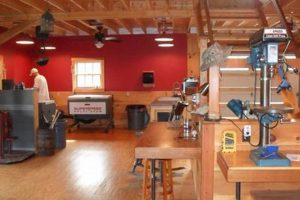
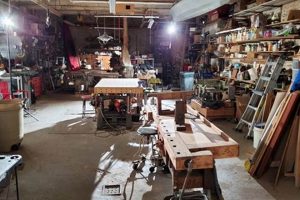
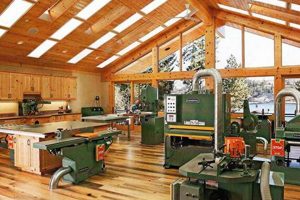
Effective organization of a workspace dedicated to crafting with wood is crucial for efficiency and safety. Thoughtful arrangement ensures tools are readily accessible, materials are easily managed, and projects can progress smoothly. For example, a poorly planned shop might lead to wasted time searching for equipment or maneuvering around obstacles, negatively impacting productivity.
A well-designed space enhances workflow, minimizes the risk of accidents, and contributes to a more enjoyable and productive crafting experience. Historically, the evolution of workshop designs reflects advancements in tools and a greater understanding of ergonomic principles. Optimal placement of machinery and work surfaces reduces strain and improves overall comfort.
Considerations such as workflow optimization, space allocation, safety protocols, dust collection, power distribution, and lighting are paramount in developing an organized and functional environment. These factors directly influence the user’s ability to safely and efficiently engage in woodworking projects.
Layout Optimization Strategies
The following guidelines outline effective strategies for maximizing the efficiency and safety of a woodworking environment.
Tip 1: Establish Workflow Zones: Delineate specific areas for distinct operations, such as rough cutting, assembly, and finishing. This separation minimizes cross-contamination and streamlines the production process. For example, a dedicated sanding zone with appropriate dust collection prevents fine particles from interfering with the finishing area.
Tip 2: Optimize Tool Storage: Implement a system for storing tools that prioritizes accessibility and organization. Consider a French cleat system for wall-mounted tools or a dedicated tool chest with custom dividers. This reduces search time and minimizes the risk of injury from misplaced tools.
Tip 3: Maximize Natural Light: Position workbenches and machinery to take advantage of natural light sources. Supplement with artificial lighting as needed to ensure adequate visibility in all areas of the shop. Proper lighting reduces eye strain and improves accuracy.
Tip 4: Implement Dust Collection: Invest in a comprehensive dust collection system to minimize airborne particles. Connect machinery to a central dust collector or utilize portable units for smaller tools. A clean environment promotes respiratory health and reduces the risk of fire hazards.
Tip 5: Ensure Adequate Power Distribution: Plan electrical outlets strategically throughout the shop to accommodate the power requirements of various tools and equipment. Consider installing a dedicated circuit for high-amperage machinery. Proper power distribution prevents overloads and ensures safe operation.
Tip 6: Prioritize Safety Measures: Incorporate safety features such as a first-aid kit, fire extinguisher, and eye protection equipment within easy reach. Clearly mark hazardous areas and enforce the use of personal protective equipment. A safety-conscious environment minimizes the risk of accidents.
Tip 7: Consider Material Storage: Allocate space for storing lumber, sheet goods, and hardware. Implement a system for organizing materials by type and size. This prevents damage, facilitates inventory management, and minimizes clutter.
Adherence to these recommendations can significantly improve the functionality, safety, and overall productivity of a woodworking facility.
The subsequent section will address advanced optimization techniques and strategies for adapting to specific project requirements.
1. Workflow Optimization

Effective workflow optimization represents a cornerstone of sound woodworking shop design. A well-organized layout minimizes wasted motion, reduces bottlenecks, and enhances overall productivity. The spatial arrangement of equipment and work surfaces directly impacts the efficiency with which materials and projects move through the various stages of fabrication. A linear flow, from raw material storage to cutting, assembly, and finishing, prevents cross-contamination between processes and minimizes the risk of accidents. For example, situating the lumber rack near the initial cutting station streamlines material handling, reducing the need to transport heavy boards across the shop. Conversely, a poorly planned layout can lead to time-consuming backtracking and increased physical strain on the woodworker.
Practical applications of workflow optimization principles extend to the strategic placement of frequently used tools and supplies. Implementing a shadow board or French cleat system for hand tools ensures immediate accessibility, eliminating the need to search through drawers or cluttered surfaces. Positioning assembly tables adjacent to clamping stations facilitates seamless transitions between these tasks. Furthermore, the integration of mobile workbenches allows for flexible reconfiguration of the shop layout based on the specific requirements of individual projects. A cabinet shop might rearrange its space to accommodate multiple carcass builds, while a furniture maker might optimize the layout for intricate inlay work.
In conclusion, workflow optimization is not merely an aesthetic consideration but a fundamental component of effective woodworking shop arrangement. A carefully considered layout enhances efficiency, reduces fatigue, and contributes to a safer and more enjoyable working environment. The principles of workflow optimization should inform all aspects of shop design, from the initial floor plan to the placement of individual tools and materials. Continuous evaluation and refinement of the layout based on practical experience are essential for maintaining optimal workflow efficiency.
2. Tool Accessibility

Tool accessibility, within the context of woodworking shop layout, directly impacts efficiency and safety. A carefully designed layout considers the frequency of tool use, proximity to work areas, and storage methods to ensure that necessary implements are readily available when needed. Poor accessibility, conversely, leads to wasted time searching for tools, increased risk of accidents while reaching for improperly stored items, and a disruption of the intended workflow. For example, frequently used hand tools, such as chisels and measuring devices, should be stored within arm’s reach of the primary workbench. Infrequently used specialty tools can be stored in less accessible locations. This organized approach improves workflow and mitigates potential safety hazards.
The practical implications of prioritizing tool accessibility manifest in several ways. A French cleat system, for example, allows for the vertical storage of tools, making them easily visible and retrievable. Similarly, dedicated tool chests with custom drawer dividers ensure that tools are stored in an organized manner, preventing damage and facilitating quick identification. The arrangement of power tools also requires careful consideration. Tools used in sequence, such as a jointer and planer, should be positioned near one another to minimize material handling. Proper placement of blade storage and sharpening stations contributes further to overall efficiency. The absence of such considerations translates to lost productivity and potential safety risks, impacting the quality and timeliness of completed projects.
In summary, tool accessibility is not merely a matter of convenience but a critical component of effective woodworking shop layout. Optimizing tool storage and placement promotes efficiency, enhances safety, and contributes to a more productive and enjoyable woodworking experience. Addressing this element early in the shop planning phase can yield significant long-term benefits, minimizing wasted time and promoting the creation of quality woodworking projects. Challenges associated with tool accessibility often stem from limited space; overcoming these challenges may necessitate creative storage solutions, multi-purpose tools, or the adoption of modular shop layouts.
3. Space Allocation

Space allocation is a central determinant of efficiency and safety within a woodworking environment and, consequently, a critical element of effective woodworking shop layout tips. The manner in which available square footage is distributed among various work zones, storage areas, and passageways directly impacts workflow, material handling, and the overall user experience. Insufficient allocation to any of these areas creates bottlenecks, increases the risk of accidents, and reduces productivity. A poorly designed shop, characterized by cramped workspaces and obstructed pathways, hinders movement and makes it challenging to manage materials effectively. For example, inadequate space around a table saw increases the risk of kickback-related injuries and makes it difficult to maneuver large workpieces. Conversely, a well-planned layout, with clearly defined zones and ample clearance around machinery, promotes a safer and more productive working environment.
Practical applications of space allocation strategies include designating distinct areas for specific tasks, such as rough cutting, assembly, and finishing. Each zone requires adequate space for the machinery, tools, and materials necessary to complete the relevant operations. Additionally, sufficient aisle width must be maintained to allow for the safe transport of lumber and projects. Storage areas for lumber, hardware, and finishing supplies should be strategically located to minimize travel distances and prevent clutter from encroaching on work zones. A woodworker constructing large furniture pieces, for instance, requires a spacious assembly area to accommodate the components and allow for comfortable movement around the project. Failure to consider these spatial requirements leads to inefficiencies and potential safety hazards.
In conclusion, strategic space allocation is not merely a matter of convenience but a fundamental component of effective shop design. The thoughtful distribution of available square footage optimizes workflow, enhances safety, and contributes to a more productive and enjoyable woodworking experience. The principles of space allocation should guide all aspects of shop layout, from the initial floor plan to the placement of individual tools and materials. Acknowledging space allocation as a core woodworking shop layout tip provides an understanding on its effect on overall efficiency and safety.
4. Safety Measures

Safety measures are intrinsically linked to effective workshop arrangement. The physical layout directly influences the potential for accidents and the ease with which safety protocols can be implemented and followed. A poorly designed shop can exacerbate existing risks, while a thoughtfully planned space minimizes hazards and promotes a safer working environment. For example, insufficient clearance around machinery, inadequate lighting, and obstructed pathways all contribute to an increased risk of injury. Consequently, planning must consider safety as a primary objective, rather than an afterthought.
The integration of safety measures into shop layout involves several key considerations. Dedicated dust collection systems should be strategically placed to minimize airborne particulates. Fire extinguishers and first-aid kits must be readily accessible. Machine guarding and emergency shut-off switches should be properly positioned. Clear delineation of work zones and traffic patterns reduces the risk of collisions. Furthermore, attention to ergonomic principles minimizes strain and fatigue, reducing the likelihood of errors and accidents. A well-ventilated space reduces the risk of inhaling harmful fumes from finishes and adhesives. Real-world examples of effective safety integration include designated assembly areas away from high-traffic zones, clearly marked emergency exits, and the use of non-slip flooring.
In summary, safety measures represent a non-negotiable component of effective layout planning. Prioritizing safety during the design phase yields tangible benefits, including reduced risk of injury, improved productivity, and a more enjoyable work experience. Challenges in integrating safety often stem from space constraints or budget limitations. However, creative solutions, such as multi-purpose tools and modular storage systems, can help overcome these obstacles. The understanding of the relationship between safety and shop arrangement is paramount for any woodworker seeking to create a functional and secure workspace.
5. Dust Management
Effective dust management is inextricably linked to woodworking shop layout, influencing both worker health and the longevity of equipment. The layout should facilitate efficient dust collection, minimizing airborne particles and surface accumulation. The proximity of dust-producing machinery to collection points, such as central vacuum systems or portable dust collectors, is paramount. Poorly considered placement results in inadequate dust capture, leading to respiratory issues and the need for frequent cleaning. For example, placing a sander far from a dust collection port renders the system less effective, allowing fine particles to disperse throughout the shop. Conversely, a well-planned layout with strategically positioned collection points significantly reduces dust levels, fostering a healthier and more efficient work environment.
Consideration should also be given to the types of materials being worked and the volume of dust generated. Shops handling large quantities of MDF, known for its fine dust, require more robust collection systems and strategic placement of air filtration units. Floor plans that isolate dust-generating processes from other activities, such as finishing, minimize the risk of contamination. The design should account for the physical dimensions of dust collection equipment, ensuring adequate space for maneuverability and maintenance. Furthermore, the selection of appropriate ductwork and fittings is crucial for optimizing airflow and minimizing pressure loss. Practical application includes installing blast gates to focus suction on actively used machinery and incorporating down-draft tables for sanding operations.
In summary, dust management is an essential component of effective woodworking shop layout, impacting worker health, equipment performance, and overall shop cleanliness. Prioritizing dust collection during the design phase yields long-term benefits, including a safer and more productive work environment. Challenges associated with dust management often involve balancing cost considerations with performance requirements. However, investing in a well-planned and effective dust collection system is a worthwhile investment that contributes significantly to the success and sustainability of any woodworking operation. By considering the relationship between tools placement, ductwork, and airflow, dust production is mitigated at its source.
6. Lighting Quality

Lighting quality is a critical but often underestimated aspect of woodworking shop layout. The effective distribution and characteristics of light directly impact safety, precision, and overall productivity within the workspace. Inadequate illumination increases the risk of accidents, impairs the ability to discern fine details, and contributes to eye strain and fatigue. Conversely, a well-lit shop enhances visibility, promotes accuracy, and creates a more comfortable and efficient work environment. Therefore, lighting considerations must be integral to the initial layout design, not an afterthought. The selection and placement of light sources should align with the specific tasks performed in different areas of the shop.
Practical applications of optimizing lighting quality include strategic placement of task lighting over workbenches, machinery, and assembly areas. General ambient lighting should provide a consistent and even level of illumination throughout the shop, minimizing shadows and dark spots. The color temperature of the light sources is also important; natural daylight-balanced bulbs (around 5000K) are generally preferred for accurate color rendering, which is crucial for finishing operations. Diffused lighting, achieved through the use of light fixtures with diffusers or by bouncing light off of ceilings and walls, reduces glare and minimizes eye strain. For example, installing adjustable task lighting over a lathe allows the operator to precisely control the direction and intensity of the light, improving visibility during intricate turning operations. Moreover, a shop with high ceilings may benefit from suspended lighting fixtures to provide adequate illumination at working level. The lack of appropriate lighting compromises safety and reduces the quality of work.
In summary, lighting quality is not merely a matter of aesthetics but a fundamental element of effective woodworking shop layout. Optimizing lighting levels, color temperature, and distribution enhances safety, improves precision, and promotes a more comfortable and productive working environment. The challenges associated with lighting design often involve balancing cost considerations with performance requirements. However, investing in high-quality lighting systems is a worthwhile investment that contributes significantly to the success and sustainability of any woodworking operation. Addressing lighting in tandem with other layout considerations ensures a workspace that is functional, safe, and conducive to high-quality craftsmanship. A holistic approach to the design ensures optimal productivity and minimizes the risk of errors and accidents.
Frequently Asked Questions
This section addresses common inquiries regarding effective workshop design. The information presented aims to provide clarity on the essential elements of shop layout, enabling informed decision-making.
Question 1: What is the primary benefit of a well-planned shop layout?
A strategically designed workshop optimizes workflow, enhances safety, and maximizes space utilization, ultimately increasing productivity and reducing the risk of accidents.
Question 2: How does workflow optimization contribute to shop efficiency?
Workflow optimization minimizes unnecessary movement, reduces bottlenecks, and streamlines the production process, enabling a more efficient and productive work environment.
Question 3: Why is tool accessibility a crucial consideration in shop layout?
Easy access to tools reduces search time, minimizes the risk of accidents while reaching for tools, and promotes a more fluid and efficient workflow.
Question 4: What role does space allocation play in a functional woodworking shop?
Strategic space allocation ensures adequate room for machinery, materials, and movement, minimizing congestion and promoting safety and efficiency.
Question 5: How does dust management impact the overall shop environment?
Effective dust collection systems minimize airborne particles, improving air quality, protecting respiratory health, and preventing dust accumulation on surfaces and equipment.
Question 6: Why is adequate lighting essential for a woodworking shop?
Proper lighting enhances visibility, improves precision, reduces eye strain, and contributes to a safer and more comfortable working environment, thereby enhancing the quality of finished pieces.
Implementing these insights can transform a disorganized area into a highly functional workspace. The integration of these concepts enhances the shop’s potential, promoting safety and efficiency.
The following section will explore advanced woodworking techniques that build upon the foundations of proper workspace organization.
Conclusion
Effective application of woodworking shop layout tips directly influences safety, efficiency, and project quality. Strategic organization, encompassing workflow optimization, tool accessibility, space allocation, safety measures, dust management, and lighting quality, creates a foundation for success. Prioritizing these elements during the planning phase establishes a workspace conducive to both productivity and safety.
The implementation of sound organizational principles represents a commitment to craftsmanship and a safe working environment. Continuous evaluation and refinement of the workspace ensure optimal performance and adaptability to evolving project requirements. The sustained application of woodworking shop layout tips provides an environment that fosters efficiency, precision, and enduring value.