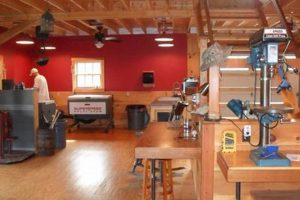
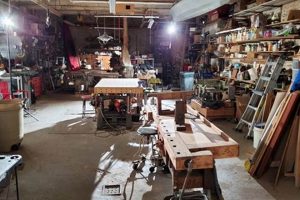
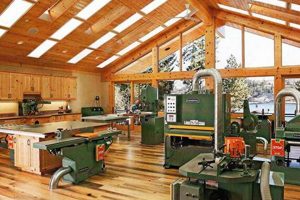
The organization and arrangement of a dedicated space for crafting items from wood encompasses the selection and placement of tools, machinery, work surfaces, and storage solutions. A well-considered workshop configuration enhances efficiency and promotes safety while undertaking projects ranging from basic repairs to intricate joinery.
Establishing a functional workspace is crucial for realizing successful woodworking endeavors. A properly designed layout minimizes wasted motion, improves workflow, and reduces the risk of accidents. Historically, workshops evolved organically, but modern approaches emphasize ergonomic principles and space optimization to maximize productivity and user well-being.
The subsequent discussion will delve into essential considerations for equipping and arranging such a space, addressing topics like space allocation, tool selection, safety protocols, and dust control measures, all critical aspects of a productive and safe environment.
Essential Considerations for Effective Woodworking Shop Configuration
Optimizing a dedicated woodworking area requires meticulous planning. The subsequent guidelines address fundamental aspects for achieving a functional and secure workspace.
Tip 1: Space Assessment and Allocation: Determine available square footage and assign specific zones for machining, assembly, finishing, and storage. This approach prevents congestion and enhances workflow.
Tip 2: Power Supply Evaluation: Woodworking equipment demands significant electrical capacity. Ensure sufficient outlets and amperage to accommodate all tools simultaneously, preventing circuit overloads.
Tip 3: Dust Collection System Implementation: Fine particulate matter generated during woodworking poses a health hazard. Invest in a dedicated dust collection system with appropriate filtration to maintain air quality.
Tip 4: Strategic Tool Placement: Position frequently used tools within easy reach to minimize unnecessary movement. Organize tools logically based on workflow to streamline project execution.
Tip 5: Adequate Lighting Installation: Sufficient and well-placed illumination is crucial for precision work and safety. Supplement overhead lighting with task-specific lamps as needed.
Tip 6: Work Surface Optimization: Invest in sturdy and appropriately sized workbenches capable of supporting heavy materials and resisting vibration. Consider incorporating vises and clamping systems for secure workpiece holding.
Tip 7: Safety Equipment Prioritization: Ensure readily available personal protective equipment (PPE) such as eye protection, hearing protection, and respiratory masks. Establish clear safety protocols and enforce adherence.
A well-configured workspace contributes significantly to both the quality of the finished product and the safety of the operator. Adherence to these fundamental principles establishes a foundation for efficient and enjoyable woodworking endeavors.
The succeeding sections will explore advanced strategies for maximizing efficiency and minimizing waste within the woodworking environment.
1. Space Optimization
Effective utilization of available area is paramount for establishing a functional woodworking environment. Inadequate planning can lead to inefficiencies, safety hazards, and limitations on project scope. Maximizing space through strategic layout and storage solutions directly impacts productivity and workflow.
- Vertical Storage Solutions
Utilizing vertical space, through shelving, cabinets, and wall-mounted racks, is a critical aspect of space optimization. Examples include storing lumber on vertical racks, utilizing wall-mounted cabinets for hand tools, and employing shelving units for hardware and consumables. These solutions reduce clutter on work surfaces and improve accessibility.
- Machine Placement and Workflow
The placement of stationary machinery should facilitate a logical workflow. Machines used sequentially in a process should be positioned in a manner that minimizes material handling and reduces the distance traveled between operations. An example is placing a jointer adjacent to a planer, allowing for a streamlined surfacing process. This organization minimizes unnecessary movement and improves efficiency.
- Multi-Purpose Workstations
Designing workstations with multiple functionalities can significantly conserve space. A workbench incorporating a built-in router table or a folding outfeed table for a table saw exemplifies this approach. Such designs allow for the same area to serve diverse purposes, adapting to varying project demands.
- Mobile Tool Bases
Mounting stationary tools on mobile bases allows for flexible arrangement and reconfiguration of the workshop. Tools can be moved to accommodate larger projects or stored away when not in use, freeing up valuable floor space. This adaptability is particularly beneficial in smaller workshops.
These space optimization strategies, when implemented thoughtfully, contribute significantly to a safer, more efficient, and more enjoyable woodworking environment. Strategic planning and resourcefulness in utilizing available space directly correlate with the overall productivity and success of woodworking endeavors.
2. Tool Accessibility

Tool accessibility is a crucial component of an effective woodworking shop configuration. The ease with which a woodworker can retrieve and utilize tools directly impacts workflow efficiency, project completion time, and overall safety. A disorganized or poorly planned tool storage system results in wasted time searching for implements, increased risk of accidents, and reduced productivity. The placement of tools should be dictated by frequency of use and relationship to specific tasks. For instance, frequently used hand tools, such as chisels, saws, and measuring devices, should be located within immediate reach of the primary workbench. Power tools required for specific operations should be positioned strategically near the corresponding work area. Failure to prioritize tool accessibility leads to inefficiencies that compound over time, hindering progress and increasing frustration.
Practical applications of tool accessibility principles include implementing shadow boards for hand tools, utilizing magnetic tool holders for small metal implements, and employing rolling tool carts for frequently used power tools. Shadow boards allow for quick visual identification of missing tools, promoting organization and preventing loss. Magnetic tool holders keep metal tools readily accessible and prevent them from being misplaced. Rolling tool carts provide a mobile workstation for specific tasks, allowing the woodworker to bring the necessary tools directly to the workpiece. These strategies minimize the time spent searching for tools and streamline the work process. The investment in appropriate tool storage solutions yields significant returns in terms of increased efficiency and reduced downtime. Furthermore, a well-organized tool storage system promotes a safer work environment by reducing the risk of tripping hazards and preventing tools from being damaged or misplaced.
In conclusion, tool accessibility is not merely a matter of convenience but a fundamental element of a productive and safe woodworking environment. Strategic placement, appropriate storage solutions, and a commitment to organization are essential for maximizing efficiency and minimizing risks. Neglecting this aspect of shop arrangement undermines the overall effectiveness of the workshop, leading to decreased productivity and potential safety hazards. The principles of tool accessibility should be a guiding factor in the design and ongoing maintenance of any woodworking space.
3. Dust Management

Woodworking activities generate substantial quantities of particulate matter, commonly referred to as sawdust. This byproduct poses significant health risks, including respiratory illnesses and skin irritation, thereby necessitating effective dust management as a crucial component of any woodworking shop configuration. The cause-and-effect relationship is clear: woodworking processes inevitably produce dust, and prolonged exposure to this dust without mitigation measures leads to adverse health outcomes. Therefore, integrating dust collection systems into the workshop’s design is not merely an optional addition but a fundamental requirement for ensuring a safe and healthy working environment. For instance, a small workshop lacking a dust collection system will accumulate airborne particles rapidly, increasing the risk of respiratory problems for the operator. In contrast, a well-equipped shop will feature a combination of localized dust extraction at each machine and an ambient air filtration system to capture fugitive dust particles.
Practical applications of dust management strategies within the woodworking environment include the installation of dust collectors connected to stationary power tools such as table saws, jointers, and planers. These systems utilize hoses and hoods to capture dust at the source, preventing it from becoming airborne. Additionally, portable dust extractors can be used for hand tools and smaller operations. Air filtration systems, typically suspended from the ceiling, circulate and filter the air within the shop, removing fine dust particles that may escape localized collection. Proper maintenance of these systems, including regular filter cleaning and replacement, is essential for optimal performance. Furthermore, the physical layout of the shop can influence dust management effectiveness. Arranging machines to minimize dust dispersal and ensuring adequate ventilation contribute to a cleaner and healthier workspace. Examples of this include locating machines along walls to facilitate dust collection ductwork and using fans to direct airflow away from the operator.
In summary, effective dust management is intrinsically linked to a well-designed woodworking shop configuration. The implementation of appropriate dust collection systems and adherence to best practices are paramount for mitigating health risks and maintaining a safe working environment. Overlooking dust management not only jeopardizes the health of the woodworker but also reduces overall productivity and increases the risk of accidents caused by poor visibility and slippery surfaces. Therefore, integrating comprehensive dust management strategies into the woodworking shop setup is a critical investment in the long-term health, safety, and efficiency of the woodworking operation.
4. Power Infrastructure

The electrical system within a woodworking shop is a critical infrastructural element, directly impacting the functionality, safety, and operational capacity of the entire setup. Adequate power distribution and appropriate wiring are fundamental requirements for supporting the demands of woodworking machinery and ancillary equipment.
- Amperage Capacity and Circuit Planning
The total amperage available in the shop directly dictates the number and type of tools that can be operated simultaneously. Proper circuit planning involves calculating the amperage requirements of each tool and distributing them across dedicated circuits to prevent overloads. For example, a table saw might require a dedicated 20-amp circuit, while smaller tools can share a circuit. Insufficient amperage leads to tripped breakers and operational disruptions.
- Outlet Placement and Accessibility
Strategic placement of electrical outlets is essential for minimizing extension cord usage and ensuring convenient access to power throughout the shop. Outlets should be positioned near each workstation and machine, considering the typical range of movement. An inadequate number of outlets creates a reliance on extension cords, increasing trip hazards and potentially damaging equipment due to voltage drop.
- Wiring Gauge and Conductor Type
The gauge (thickness) of the wiring must be appropriate for the amperage load it will carry. Undersized wiring can overheat, posing a fire hazard. Furthermore, the type of conductor (e.g., copper) influences its conductivity and safety. Local electrical codes mandate specific wiring standards to ensure safety and prevent electrical failures. Failure to adhere to these codes can result in hazardous conditions and void insurance coverage.
- Dedicated Circuits for High-Demand Equipment
High-demand equipment, such as dust collectors, air compressors, and large stationary machinery, requires dedicated circuits to prevent voltage fluctuations and ensure reliable operation. Sharing circuits with other tools can lead to power sags and potential damage to sensitive electronic components. Dedicated circuits provide a stable and consistent power supply, optimizing performance and extending the lifespan of the equipment.
A meticulously planned and executed electrical infrastructure is not merely a convenience but a necessity for a safe and efficient woodworking environment. Adequate power capacity, strategic outlet placement, appropriate wiring, and dedicated circuits collectively contribute to reliable operation, reduced safety risks, and enhanced productivity within the woodworking shop setup.
5. Safety Protocols

The implementation of comprehensive safety protocols is an indispensable element of any responsible woodworking shop setup. These protocols, encompassing a range of practices and regulations, are designed to mitigate the inherent risks associated with woodworking machinery and processes, ensuring the well-being of the operator and preventing accidents.
- Personal Protective Equipment (PPE) Enforcement
Mandatory use of PPE, including eye protection, hearing protection, and respiratory protection, is a cornerstone of woodworking safety. Eye protection safeguards against flying debris and wood splinters, while hearing protection mitigates the damaging effects of prolonged exposure to loud machinery. Respiratory protection prevents the inhalation of harmful dust particles. Failure to enforce PPE usage exposes individuals to preventable injuries and long-term health risks. Example: Requiring safety glasses at all times when operating power tools or performing tasks that generate airborne particles.
- Machine Guarding and Maintenance
Proper machine guarding, including the presence and functionality of safety shields, blade guards, and anti-kickback devices, is critical for preventing accidental contact with moving parts. Regular maintenance and inspection of machinery ensures optimal performance and reduces the risk of malfunctions that could lead to injuries. Example: Ensuring the blade guard is in place and functioning correctly on a table saw before operation and conducting routine maintenance checks on all power tools.
- Emergency Procedures and First Aid
Establishing clear emergency procedures, including protocols for power outages, fire suppression, and medical emergencies, is essential for responding effectively to unforeseen events. Readily accessible first-aid supplies and knowledge of basic first-aid techniques are crucial for providing immediate care in the event of an injury. Example: Posting emergency contact numbers and evacuation routes prominently within the shop and maintaining a well-stocked first-aid kit in an easily accessible location.
- Safe Material Handling Practices
Implementing safe material handling practices, including proper lifting techniques and secure storage of lumber and materials, prevents injuries caused by strains, sprains, and falling objects. Using mechanical aids, such as forklifts or hand trucks, for moving heavy loads reduces the risk of manual handling injuries. Example: Training personnel on proper lifting techniques and providing appropriate storage racks for lumber and sheet goods.
These facets of safety protocols, when integrated thoughtfully into the woodworking shop setup, establish a culture of safety and minimize the risk of accidents. The consistent application of these principles, coupled with ongoing training and vigilance, is essential for ensuring a safe and productive working environment.
6. Workflow Efficiency

Workflow efficiency, representing the streamlined movement of materials and tools through the various stages of a woodworking project, is critically dependent upon the effective organization of a woodworking shop. A poorly designed layout can impede progress, increase production time, and elevate the risk of errors, while a well-configured space facilitates a smooth and predictable process from raw material to finished product.
- Optimized Machine Placement
The strategic placement of stationary machinery directly influences the flow of materials through the workshop. Arranging equipment in a logical sequence, reflecting the typical progression of operations, minimizes unnecessary material handling and reduces the distance traveled between steps. For example, positioning a jointer adjacent to a planer and then a table saw streamlines the initial stages of lumber preparation. This organization minimizes redundant movement and enhances the overall efficiency of the workflow.
- Dedicated Assembly Areas
Designating specific areas for assembly operations promotes organization and prevents interference with other tasks. A dedicated assembly space provides a clean, uncluttered environment where components can be accurately joined and secured. This separation from machining areas reduces the risk of sawdust contamination and provides ample space for maneuvering larger assemblies. Consequently, dedicated assembly zones contribute to improved accuracy and reduced assembly time.
- Accessible Material Storage
The accessibility of raw materials and work-in-progress components is crucial for minimizing downtime. Well-organized storage systems, strategically located within the shop, allow for quick retrieval of necessary materials without interrupting the workflow. Implementing vertical storage racks for lumber, designated shelves for hardware, and labeled containers for project components significantly enhances efficiency by reducing search time and preventing material shortages.
- Efficient Finishing Processes
The finishing process, often the final stage in a woodworking project, requires a dedicated space to ensure a clean and controlled environment. A designated finishing area, equipped with adequate ventilation and appropriate lighting, minimizes dust contamination and allows for precise application of finishes. Separating finishing activities from machining operations prevents sawdust and debris from interfering with the drying process, resulting in a higher quality finish and a more efficient overall workflow.
These facets of workflow efficiency underscore the intrinsic link between shop configuration and productivity. By optimizing machine placement, establishing dedicated assembly areas, ensuring accessible material storage, and streamlining finishing processes, a woodworking shop can significantly enhance its workflow, resulting in reduced production time, improved product quality, and increased overall efficiency. The organization and layout of the workspace, therefore, represent a critical investment in the success of any woodworking endeavor.
Frequently Asked Questions
The following addresses common inquiries concerning the establishment and optimization of a dedicated woodworking workspace.
Question 1: What constitutes the minimum space requirement for a functional woodworking shop?
The minimum space requirement is contingent upon the scale and scope of projects undertaken. However, a space of at least 200 square feet (approximately 14ft x 14ft) is generally considered necessary to accommodate essential machinery, work surfaces, and storage. Smaller spaces may necessitate compromises in equipment selection and workflow.
Question 2: What power tools are deemed essential for a basic woodworking shop setup?
A foundational set of power tools typically includes a table saw, a jointer, a planer, a drill press, and a band saw. These tools provide the capabilities necessary for performing fundamental woodworking operations, such as cutting, shaping, and smoothing lumber.
Question 3: How critical is dust collection in a woodworking environment?
Dust collection is of paramount importance due to the health hazards associated with prolonged exposure to airborne wood dust. Implementing a dedicated dust collection system is essential for mitigating respiratory risks and maintaining a safe working environment.
Question 4: What factors should guide the layout of a woodworking shop?
The layout should prioritize workflow efficiency, tool accessibility, and safety. Machines should be positioned in a logical sequence, reflecting the typical progression of operations. Adequate space should be allocated for material storage and assembly.
Question 5: What safety equipment is indispensable for woodworking operations?
Essential safety equipment includes eye protection (safety glasses or face shield), hearing protection (earplugs or earmuffs), and respiratory protection (dust mask or respirator). The specific type of protection required depends on the nature of the task being performed.
Question 6: How frequently should woodworking machinery undergo maintenance?
Woodworking machinery should undergo regular maintenance, including lubrication, cleaning, and inspection, to ensure optimal performance and safety. The frequency of maintenance depends on the intensity of usage, but a general schedule of monthly inspections is advisable.
Proper planning and execution of the setup are vital for efficient and safe operation.
The ensuing discussion will explore advanced strategies for optimizing workflow and maximizing productivity within the woodworking environment.
Woodworking Shop Setup
This exploration has underscored that the configuration of a woodworking workspace transcends mere arrangement; it is a foundational element directly impacting efficiency, safety, and the quality of the craft. Strategic considerations regarding space optimization, tool accessibility, dust management, power infrastructure, and safety protocols are not ancillary concerns but integral components of a successful woodworking endeavor.
Diligent planning and informed execution of the woodworking shop setup are, therefore, paramount. The commitment to establishing a well-organized and safe environment represents a tangible investment in both the long-term viability of the craft and the well-being of the artisan. Continuous evaluation and adaptation of the setup, based on evolving needs and emerging technologies, are essential for sustained productivity and enduring excellence.