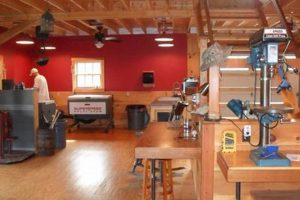
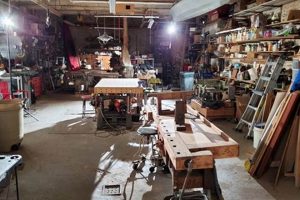
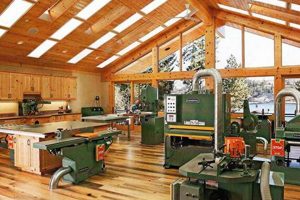
Establishing a functional and efficient workspace for woodworking within a residential garage involves careful planning and execution. This process encompasses considerations of space allocation, tool organization, safety protocols, and environmental controls. A well-configured garage workshop allows for the pursuit of woodworking projects, ranging from simple crafts to complex constructions, within a contained and accessible environment.
The advantages of converting a garage into a woodworking shop are numerous. It offers a dedicated space for creative endeavors, separating woodworking activities from the main living areas. This separation minimizes noise and dust pollution within the home. Furthermore, a garage workshop provides a secure location for storing valuable tools and materials, reducing the risk of theft or damage. Historically, home workshops have fostered creativity and skill development, contributing to both personal enrichment and potential entrepreneurial opportunities.
The subsequent sections will delve into the key aspects of organizing the workspace, selecting essential equipment, implementing safety measures, and managing dust and noise effectively. These considerations are crucial for creating a productive and safe environment that supports successful woodworking endeavors.
Essential Considerations for Garage Woodworking Setup
Optimizing a garage for woodworking necessitates a strategic approach, balancing functionality with safety and space utilization. The following tips provide guidance for achieving a well-organized and productive woodworking environment.
Tip 1: Assess and Plan the Space: Begin by thoroughly evaluating the garage’s dimensions and existing features, such as electrical outlets and lighting. Create a detailed floor plan, designating zones for specific activities like cutting, assembly, and finishing. This plan should maximize available space while ensuring efficient workflow.
Tip 2: Prioritize Dust Collection: Woodworking generates substantial amounts of dust, posing health risks and hindering visibility. Invest in a dedicated dust collection system, including a dust collector and appropriate ductwork. Supplement this with localized dust extraction attachments for individual power tools.
Tip 3: Optimize Lighting: Adequate illumination is crucial for precision and safety. Install a combination of overhead and task lighting to eliminate shadows and ensure clear visibility of the work surface. Consider LED fixtures for energy efficiency and long lifespan.
Tip 4: Implement Effective Tool Storage: Clutter can significantly impede productivity and increase the risk of accidents. Utilize a variety of storage solutions, such as wall-mounted cabinets, rolling tool chests, and pegboards, to keep tools organized and readily accessible.
Tip 5: Ensure Adequate Ventilation: Many woodworking finishes and adhesives release volatile organic compounds (VOCs), which can be harmful if inhaled. Install an exhaust fan or ensure adequate natural ventilation to maintain air quality within the garage.
Tip 6: Establish a Dedicated Assembly Area: Designate a specific area for assembling projects, providing ample space for maneuvering and clamping components. A sturdy workbench with a flat, level surface is essential for this purpose.
Tip 7: Implement Safety Measures: Safety should be a paramount concern in any woodworking shop. Equip the garage with essential safety equipment, including eye protection, hearing protection, a dust mask or respirator, and a first-aid kit. Ensure all tools are properly guarded and operated according to manufacturer’s instructions.
Following these guidelines promotes a woodworking environment that is both conducive to creative expression and mindful of safety considerations. Careful planning and implementation are essential for maximizing the potential of a garage workshop.
The subsequent section will address the selection of fundamental tools for a functional garage-based woodworking setup.
1. Space Allocation

Space allocation is a foundational element in setting up a functional woodworking shop within a garage. The available square footage dictates the scope of projects that can be undertaken, the size and quantity of equipment that can be accommodated, and the overall workflow efficiency of the workspace. Improper allocation leads to constrained movement, difficulty in handling materials, and increased risk of accidents. For example, a garage with insufficient clear space around a table saw hinders the safe and effective manipulation of large workpieces, potentially compromising cut quality and operator safety.
Effective space allocation considers the operational footprint of each piece of equipment, including clearance for material handling. A bandsaw requires space not only for the machine itself but also for feeding long stock through the blade. Similarly, a finishing area needs adequate ventilation and room to maneuver around items being sprayed or coated. A well-considered layout incorporates these spatial requirements, organizing equipment in a logical sequence that mirrors the typical woodworking process. This may involve establishing distinct zones for cutting, assembly, sanding, and finishing, each optimized for its specific function.
Ultimately, successful space allocation transforms a garage into a productive woodworking environment. A carefully planned layout minimizes wasted space, maximizes workflow efficiency, and promotes a safer and more enjoyable woodworking experience. Overlooking this initial step can result in a cramped, disorganized, and potentially hazardous workspace, hindering the ability to complete projects effectively and safely. Prioritization of space allocation is, therefore, a key determinant of the success and practicality of any garage-based woodworking shop.
2. Tool Selection

Tool selection is intrinsically linked to the successful establishment of a woodworking shop in a garage. The specific tools chosen directly determine the range of projects that can be undertaken, the efficiency with which those projects can be completed, and the overall quality of the finished product. A haphazard approach to tool acquisition results in a shop ill-equipped for its intended purpose, leading to frustration, wasted resources, and potentially unsafe working conditions. For instance, failing to invest in a quality table saw limits the ability to accurately and safely dimension lumber, a foundational task in most woodworking endeavors. Similarly, neglecting dust collection equipment leads to a hazardous work environment and compromises respiratory health.
The process of tool selection must consider the available space within the garage. Large stationary tools, such as jointers and planers, require significant floor space and may necessitate modifications to the garage structure or layout. Conversely, opting for smaller, more portable tools can maximize space utilization, although this may come at the expense of power and precision. Furthermore, tool selection should align with the intended woodworking activities. A shop primarily focused on furniture making requires different tools than one dedicated to carving or turning. Investing in specialized tools without first establishing a core set of essential equipment is a common mistake that can hinder progress.
In conclusion, thoughtful and deliberate tool selection is a critical determinant of the success of any garage-based woodworking shop. A well-equipped shop, tailored to the available space and intended projects, promotes efficiency, safety, and the production of high-quality woodworking. Ignoring this aspect can lead to a dysfunctional and frustrating work environment, ultimately limiting the potential for creative expression and skilled craftsmanship. The alignment of tools with space and purpose is key to a productive workspace.
3. Dust Management

Dust management represents a fundamental aspect of establishing a woodworking shop within a garage. The effective control and removal of airborne particulate matter generated during woodworking activities is crucial for maintaining a safe, healthy, and productive workspace. Neglecting dust management can lead to a range of adverse consequences, impacting both the well-being of the woodworker and the functionality of the shop.
- Health Implications of Wood Dust Exposure
Prolonged exposure to wood dust poses significant health risks, including respiratory irritation, allergic reactions, and an increased risk of developing certain types of cancer. Inhaled wood dust can exacerbate existing respiratory conditions, such as asthma and bronchitis. Certain wood species contain allergenic compounds that trigger dermatitis and other skin irritations. Effective dust management strategies minimize these health hazards, protecting the woodworker from the adverse effects of prolonged dust exposure.
- Impact on Tool Performance and Longevity
The accumulation of wood dust on power tools can impede their performance and reduce their lifespan. Dust buildup can clog moving parts, overheat motors, and interfere with sensor operation. For example, dust accumulation on a table saw’s blade and fence can compromise the accuracy and smoothness of cuts. Regular dust removal and the implementation of dust collection systems help maintain the optimal functionality and longevity of woodworking tools.
- Maintaining a Clean and Organized Workspace
Uncontrolled dust accumulation creates a messy and disorganized workspace, hindering productivity and increasing the risk of accidents. A layer of dust on surfaces obscures markings, makes it difficult to locate tools, and creates slippery conditions. Implementing effective dust management practices promotes a cleaner and more organized environment, fostering efficiency and reducing the likelihood of slips, trips, and falls.
- Dust Collection Systems and Strategies
Effective dust management requires the implementation of appropriate dust collection systems and strategies. This includes the use of a central dust collector, portable dust extractors, and local exhaust ventilation. A central dust collector provides high-volume dust removal from stationary tools, while portable extractors capture dust at the source during sanding and other handheld operations. Supplemental strategies, such as wearing a respirator and regularly sweeping or vacuuming the shop, further minimize dust exposure.
These facets highlight the critical importance of integrating comprehensive dust management strategies into the setup of a woodworking shop in a garage. Prioritizing dust control not only safeguards the health and well-being of the woodworker but also enhances tool performance, promotes a cleaner workspace, and contributes to a more efficient and enjoyable woodworking experience. A failure to address this aspect undermines both the productivity and sustainability of the workshop environment.
4. Safety Protocols

The establishment of comprehensive safety protocols constitutes an indispensable component of setting up a woodworking shop within a garage. The inherent risks associated with woodworking machinery and materials necessitate a proactive approach to hazard mitigation. Failure to implement adequate safety measures directly correlates with an increased probability of accidents, injuries, and potential long-term health consequences. A woodworking shop, by its nature, contains equipment capable of inflicting severe physical harm if operated improperly or without proper safeguards. For example, the absence of eye protection during the operation of a lathe can result in projectiles entering the eye, leading to potential vision impairment or loss. Similarly, neglecting to utilize a push stick when operating a table saw increases the risk of hand injuries.
Safety protocols encompass a wide range of considerations, including the correct use of personal protective equipment (PPE), the implementation of safe work practices, and the establishment of emergency procedures. PPE, such as safety glasses, hearing protection, and respirators, serves as the first line of defense against potential hazards. Safe work practices involve adhering to manufacturer’s instructions for machinery operation, maintaining a clean and organized workspace, and avoiding distractions while working. Emergency procedures include having a readily accessible first-aid kit, knowing the location of emergency shut-off switches, and establishing a clear evacuation plan in case of fire or other emergencies. A real-world example of the practical significance is the implementation of a “buddy system”, where a second person oversees specific activities; thus, reducing possibilities of being harmed during the process.
In conclusion, integrating rigorous safety protocols into the setup of a woodworking shop in a garage is not merely a desirable add-on but a fundamental requirement for ensuring the well-being of the woodworker and the long-term viability of the shop itself. Adherence to these protocols minimizes the risk of accidents, promotes a safer working environment, and ultimately enhances the overall woodworking experience. A well-established safety culture, fostered through training, awareness, and consistent enforcement, is the cornerstone of a successful and sustainable garage-based woodworking operation.
5. Electrical Capacity
Electrical capacity represents a critical infrastructure component when establishing a woodworking shop within a garage. Sufficient electrical power is essential for the safe and efficient operation of woodworking machinery, lighting, and dust collection systems. Inadequate electrical capacity can lead to overloaded circuits, tripped breakers, potential fire hazards, and compromised equipment performance, significantly hindering the functionality of the shop.
- Assessing Existing Electrical Service
The first step in determining electrical capacity is a thorough assessment of the garage’s existing electrical service. This involves identifying the amperage rating of the main circuit breaker panel and the capacity of individual branch circuits. Most residential garages are equipped with a limited number of circuits, often insufficient for the demands of power tools. For example, a standard 15-amp circuit may only support one or two small power tools, while a larger tool like a table saw or jointer may require a dedicated 20-amp circuit. Overloading circuits can result in overheating, breaker tripping, and potential electrical fires. It’s also important to note if the garage service is on the same circuit or sub-panel of the house and understand how its allocation will impact the power available for woodworking.
- Calculating Power Requirements
Accurately calculating the power requirements of all woodworking equipment is essential for ensuring adequate electrical capacity. Each power tool has a wattage or amperage rating listed on its nameplate. Summing the wattage of all tools that may be operated simultaneously provides an estimate of the total power demand. However, it is crucial to account for the starting amperage of motors, which can be significantly higher than the running amperage. For instance, a motor rated at 10 amps running may require 30 amps or more upon startup. If multiple tools with high starting amperage are connected to the same circuit, they can easily overload the circuit breaker.
- Upgrading Electrical Service
In many cases, the existing electrical service to the garage will be insufficient to support a woodworking shop. Upgrading the service may involve installing a subpanel with dedicated circuits for specific tools or increasing the amperage rating of the main circuit breaker panel. Installing a subpanel allows for the segregation of power tool circuits from lighting and other electrical loads. Increasing the main panel amperage requires coordination with the local utility company and may necessitate the replacement of the electrical service entrance cable. All electrical work should be performed by a qualified electrician to ensure compliance with local codes and safety regulations.
- Dedicated Circuits and Wiring Considerations
Dedicated circuits are essential for high-power tools and equipment. A dedicated circuit provides a direct path from the circuit breaker panel to the tool, minimizing the risk of voltage drops and power fluctuations. The wire gauge of the circuit must be appropriately sized to handle the amperage load. Undersized wiring can overheat and create a fire hazard. Furthermore, grounding all electrical equipment is critical for preventing electrical shock. Ground fault circuit interrupters (GFCIs) should be installed on all outlets in the garage to provide additional protection against electrical hazards, especially in damp locations.
The careful assessment, calculation, and potential upgrading of electrical capacity are paramount for the safe and efficient operation of a garage-based woodworking shop. Ignoring this crucial aspect can lead to hazardous conditions, equipment damage, and significant limitations on woodworking capabilities. Engaging qualified electrical professionals ensures adherence to safety standards and the establishment of a reliable electrical infrastructure that supports the demands of woodworking activities. Proper electrical planning allows a reliable, safe, and productive woodworking shop to be a reality.
6. Workbench Design

Workbench design exerts a significant influence on the functionality and efficiency of any woodworking shop, particularly within the confines of a garage. The workbench serves as the primary surface for numerous woodworking tasks, ranging from material preparation and assembly to finishing and repair. The design of this crucial element directly impacts workflow, precision, and physical comfort during extended work periods. A poorly designed workbench can lead to physical strain, inaccurate cuts, and overall reduced productivity. Conversely, a well-designed workbench enhances work quality and efficiency and mitigates potential safety hazards. For example, a workbench lacking a solid clamping system hinders the secure positioning of workpieces, increasing the risk of movement during cutting or assembly. A workbench that is too low can cause back strain, while one that is too high compromises control and accuracy. The physical layout of the garage often dictates the dimensions and configuration of the workbench, therefore highlighting the interplay between these two elements.
Practical applications of effective workbench design principles are numerous. A robust workbench constructed from dense hardwood provides a stable and vibration-dampening platform for precision work. Integrated vises, strategically positioned along the workbench’s edge, facilitate secure clamping for a variety of tasks. A built-in tool storage system, such as drawers or shelves beneath the workbench, keeps essential tools readily accessible and promotes a tidy workspace. Furthermore, incorporating adjustable height mechanisms allows for customization to individual user preferences, minimizing fatigue and maximizing comfort. A design might also address mobility, allowing the bench to be repositioned to maximize available space within the garage as tasks change. It is also of great practical significance to ensure the workbench surface is adequately sealed and protected to prevent damage from spills and stains.
In summary, workbench design is a critical component of establishing a functional and efficient woodworking shop in a garage. The careful consideration of dimensions, materials, features, and ergonomics yields a workbench that serves as a reliable and versatile platform for a wide range of woodworking activities. While challenges may arise in adapting workbench designs to the constraints of limited garage space, the benefits of a well-designed workbench significantly outweigh the effort required. The workbench should integrate well with other components of the workshop such as tool storage, dust collection, and lighting solutions for optimal efficiency. The effective workspace fosters both efficiency and safety.
7. Lighting Solutions

Adequate illumination represents a fundamental aspect of establishing a safe and productive woodworking shop within a garage. Insufficient or poorly positioned lighting compromises visibility, increases the risk of accidents, and reduces the quality of workmanship. Therefore, a comprehensive lighting strategy is essential for any garage woodworking setup.
- Ambient Lighting Considerations
Ambient lighting provides overall illumination to the entire workspace. Garage environments often lack adequate natural light, necessitating reliance on artificial sources. Fluorescent or LED fixtures, strategically positioned overhead, can provide uniform ambient lighting. The color temperature of the light source is also a factor; a cooler color temperature (e.g., 5000K) promotes alertness and focus, suitable for detailed tasks. The number of fixtures and their positioning must minimize shadows and ensure even light distribution across the shop floor. An example is the use of multiple LED strip lights arranged parallel to the workbench, creating a consistent level of brightness.
- Task Lighting for Precision Work
Task lighting supplements ambient lighting by providing focused illumination to specific work areas. Workbench areas, machine workstations, and finishing zones benefit from adjustable task lighting. Articulated lamps with flexible arms and adjustable heads allow for precise positioning of light, eliminating shadows and enhancing visibility for intricate operations. Examples include gooseneck lamps clamped to the workbench and LED spotlights mounted above machinery. The intensity and color temperature of task lighting should be optimized for the specific task being performed. For instance, a lower intensity light may be preferable for finishing to avoid glare.
- Safety Implications of Lighting
Inadequate lighting directly increases the risk of accidents in a woodworking shop. Shadows obscure hazards, making it difficult to identify obstacles and properly position tools. Clear and consistent lighting illuminates potential hazards, reducing the likelihood of slips, trips, and cuts. Proper lighting also enhances the visibility of safety guards and machine controls, promoting safe operation. For example, clearly illuminating the blade of a table saw with overhead and task lighting allows for precise cuts and minimizes the risk of kickback. Ensuring adequate lighting near electrical panels and emergency shut-off switches is also crucial for safety.
- Energy Efficiency and Cost Considerations
Lighting solutions should also address energy efficiency and cost considerations. LED lighting offers significant advantages over traditional incandescent or fluorescent lighting, consuming less energy and providing longer lifespan. While the initial cost of LED fixtures may be higher, the long-term energy savings and reduced maintenance costs typically outweigh the investment. Motion sensors can be integrated into the lighting system to automatically turn off lights when the shop is unoccupied, further reducing energy consumption. A strategic approach to lighting selection balances illumination requirements with energy efficiency and cost-effectiveness.
These considerations highlight the critical connection between lighting solutions and setting up a functional woodworking shop within a garage. A well-designed lighting system enhances visibility, promotes safety, improves the quality of work, and contributes to a more productive and enjoyable woodworking experience. Overlooking this aspect can significantly hinder the functionality and safety of the shop. The integration of strategic lighting solutions transforms any garage into a professional and sustainable workspace.
Frequently Asked Questions
The following addresses common inquiries regarding the establishment of a woodworking shop within a residential garage environment. These questions aim to clarify key considerations and provide guidance for a successful setup.
Question 1: What is the minimum garage size suitable for a basic woodworking shop?
A standard one-car garage (approximately 12 feet by 20 feet) can accommodate a basic woodworking shop, although space limitations may restrict the size and quantity of tools. A two-car garage offers significantly more space, allowing for a more comprehensive setup and improved workflow.
Question 2: Is it necessary to insulate a garage used as a woodworking shop?
Insulating the garage is highly recommended, particularly in climates with extreme temperature fluctuations. Insulation helps maintain a more consistent temperature, improving comfort and reducing energy consumption for heating and cooling. Insulation also helps mitigate noise transmission.
Question 3: What is the recommended amperage for a garage woodworking shop’s electrical service?
A minimum of 60 amps is generally recommended for a garage woodworking shop, although higher amperage may be required depending on the power requirements of the tools being used. Consult a qualified electrician to assess the specific electrical needs and ensure compliance with local codes.
Question 4: How can dust collection be effectively managed in a small garage shop?
A combination of strategies is recommended, including a central dust collector for stationary tools, portable dust extractors for handheld tools, and a high-efficiency particulate air (HEPA) filter for ambient air filtration. Regular cleaning and the use of a respirator are also essential.
Question 5: What are the essential safety tools for a woodworking shop in the garage?
Essential safety tools include safety glasses, hearing protection, a dust mask or respirator, a first-aid kit, fire extinguisher, push sticks/pads for table saws and jointers, and appropriate guards for all power tools.
Question 6: How to mitigate noise during woodworking activities in the garage?
Noise mitigation strategies include insulating the garage walls and door, using sound-dampening materials on the floor, operating power tools during reasonable hours, and utilizing hearing protection. Consider the proximity to neighboring residences when planning activities.
The foregoing information provides a foundational understanding of key considerations. Consulting with experienced woodworkers and qualified professionals can further refine the planning and execution of a successful shop.
The subsequent section will provide a summary of best practices for maintenance.
Conclusion
The preceding exposition has detailed the essential considerations for “how to set up a woodworking shop in the garage”. Key points encompassed space allocation, tool selection, dust management, safety protocols, electrical capacity, workbench design, and lighting solutions. Each aspect contributes to the creation of a functional and safe workspace conducive to woodworking endeavors.
Diligent adherence to these guidelines is paramount. Prioritizing safety, efficiency, and organization ensures the realization of a productive and sustainable woodworking environment within the confines of a residential garage. Continued learning and refinement of these principles is critical for any woodworker seeking to maximize their craft and minimize potential hazards.