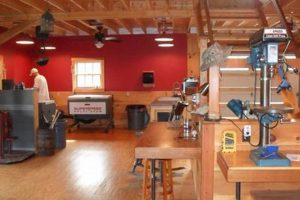
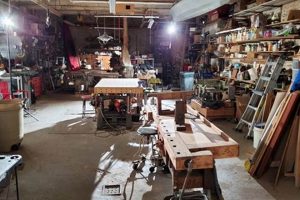
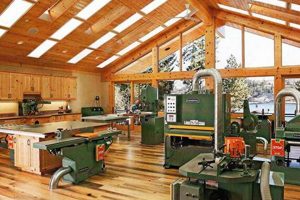
The process of establishing a dedicated workspace for woodworking activities involves careful planning and execution. This undertaking transforms a generic space into an environment tailored for crafting projects. Considerations range from the initial assessment of available space to the final organization of tools and materials.
The establishment of a well-equipped area significantly enhances efficiency and safety. A purpose-built environment contributes to project quality and minimizes potential hazards. Historically, such dedicated spaces have allowed artisans to refine their skills and produce lasting works, fostering a tradition of craftsmanship passed down through generations. The presence of designated areas ensures minimal disruptions and promotes focus, ultimately increasing output quality.
Subsequently, this document will delve into key aspects such as spatial design, equipment selection, power requirements, dust management strategies, and organization techniques. Each element plays a crucial role in creating an optimal environment for woodworking pursuits. Examining these components offers a detailed overview of the subject matter.
Essential Guidelines
The subsequent sections present crucial guidelines to ensure efficiency and safety during the establishment of a dedicated area for woodworking endeavors.
Tip 1: Space Assessment: Carefully evaluate the available area. Consider the dimensions of the largest projects anticipated, and ensure adequate clearance for machine operation and material handling. A cramped environment compromises safety and productivity.
Tip 2: Power Supply Planning: Adequately plan the electrical infrastructure. Woodworking machinery often demands high amperage circuits. Overloading circuits presents significant fire hazards and operational disruptions. Consult a qualified electrician for installation.
Tip 3: Dust Collection System Implementation: Integrate a comprehensive dust collection system from the outset. Wood dust is a health hazard and fire accelerant. Invest in a dedicated dust collector and implement proper ventilation to maintain air quality.
Tip 4: Workbench Selection and Placement: Choose a robust workbench suitable for the intended tasks. Secure it to the floor to prevent movement during operation. Proper workbench height minimizes fatigue and improves accuracy.
Tip 5: Tool Storage and Organization: Implement a structured tool storage system. Utilize wall-mounted racks, drawers, and cabinets to keep tools readily accessible and organized. Efficient organization minimizes search time and promotes a safe workspace.
Tip 6: Lighting Optimization: Ensure adequate and even lighting throughout the workspace. Shadows obscure detail and increase the risk of errors. Combine overhead and task lighting for optimal visibility.
Tip 7: Safety Equipment Provision: Equip the area with essential safety equipment, including eye protection, hearing protection, and a first-aid kit. Enforce mandatory use of safety gear during all woodworking activities.
Adherence to these guidelines ensures a safe, efficient, and productive environment. Neglecting these crucial steps can compromise worker well-being and the quality of finished projects.
The following section will address advanced considerations for those seeking to further optimize their woodworking capabilities.
1. Space Optimization

Space optimization is a foundational element in the successful establishment of a woodworking area. Inefficient allocation of space directly impedes workflow, compromises safety, and limits project size. A constricted environment restricts the maneuverability required for handling large stock, operating machinery, and assembling components. This lack of spatial freedom results in reduced productivity and an increased risk of accidents. For example, consider a shop where the jointer is positioned too close to a wall. This restricts the ability to effectively joint long boards, forcing the operator to make compromises or risk injury. Conversely, a well-planned space allows for seamless transitions between tasks, contributing to a more streamlined and productive process.
The integration of strategic storage solutions is vital for maximizing usable space. Vertical storage systems, such as wall-mounted racks and shelving units, provide efficient organization for lumber, hardware, and supplies. This frees up valuable floor space, preventing clutter and improving access to materials. Furthermore, modular workbenches with integrated storage compartments offer customizable solutions for specific project needs. Consider the difference between a shop with lumber haphazardly stacked in corners and one with a dedicated lumber rack the latter significantly improves organization, reduces waste, and facilitates easier material selection. In addition, thoughtful space allocation can involve machinery placement that permits efficient workflow, minimizing unnecessary movement between workstations. This might involve positioning frequently used tools within easy reach of the primary work area.
Effective space optimization is not merely about maximizing square footage; it’s about creating a functional ecosystem where tools, materials, and the craftsman coexist harmoniously. Neglecting this aspect can lead to a workshop that is both inefficient and potentially dangerous. Prioritizing spatial considerations during the planning stages of a woodworking area will have a lasting impact on productivity, safety, and the overall enjoyment of the craft.
2. Power Infrastructure

The establishment of a dedicated woodworking area necessitates a robust and carefully planned power infrastructure. Insufficient or improperly implemented electrical systems present significant safety hazards and operational limitations. Woodworking machinery, including table saws, jointers, planers, and dust collectors, frequently demands high amperage circuits operating at 220V or greater. Overloading circuits can lead to tripped breakers, damaged equipment, and, in extreme cases, electrical fires. Therefore, a thorough assessment of power requirements is essential prior to initiating any woodworking activities.
Proper planning involves consulting a qualified electrician to determine the appropriate circuit sizes, wiring gauge, and outlet configurations. Dedicated circuits should be installed for high-demand machinery to prevent overloading shared circuits. Furthermore, the installation of ground fault circuit interrupters (GFCIs) in wet or damp locations is imperative to mitigate the risk of electrical shock. Consider, for example, the scenario of a hobbyist who installs a table saw on an existing 15-amp circuit shared with lighting and other appliances. Under heavy load, the circuit frequently trips, disrupting work and potentially damaging the saw motor. A dedicated 20-amp circuit would alleviate this issue. Moreover, proper grounding is crucial for preventing electrical shocks and ensuring the safe operation of machinery. All metal-encased equipment should be properly grounded according to electrical codes.
In summary, a well-designed power infrastructure is not merely a convenience but a fundamental safety requirement for any woodworking area. It ensures the reliable operation of machinery, mitigates electrical hazards, and contributes to a safe and productive work environment. Failure to adequately address power requirements can result in costly repairs, project delays, and, more importantly, serious injury. Consequently, the electrical system should be considered a primary and essential element in any woodworking setup, demanding professional assessment and meticulous installation.
3. Dust Management

Effective dust management is a critical element in the establishment of a woodworking shop. The uncontrolled accumulation of wood dust poses significant health and safety risks, necessitating the implementation of comprehensive dust mitigation strategies.
- Health Implications of Wood Dust Exposure
Prolonged exposure to wood dust can result in respiratory ailments, including asthma, bronchitis, and allergic reactions. Certain wood species contain irritants and carcinogens that exacerbate these conditions. A woodworking environment without adequate dust control measures creates an ongoing exposure risk, potentially leading to chronic health problems for the craftsman. For example, consistent inhalation of dust from exotic hardwoods, such as Brazilian walnut, may trigger severe allergic responses. Therefore, prioritizing dust extraction is essential for safeguarding long-term health.
- Fire and Explosion Hazards
Accumulated wood dust is highly combustible and presents a significant fire and explosion hazard. A spark from machinery or a static discharge can ignite airborne dust particles, leading to a rapid and potentially catastrophic fire. Confined spaces, such as those found in many woodworking shops, exacerbate this risk. An incident involving a dust explosion in a woodworking facility serves as a stark reminder of the potential consequences of neglecting dust control protocols. Routine cleaning and the implementation of spark-arresting devices are vital preventative measures.
- Dust Collection System Selection and Integration
The selection of an appropriate dust collection system is paramount. Options range from portable dust collectors to centralized systems with ductwork running to each machine. Factors to consider include the size of the shop, the types of machinery used, and the volume of dust produced. A small shop might benefit from a portable dust collector with a high-efficiency particulate air (HEPA) filter, while a larger facility may require a more elaborate system with a cyclone separator to pre-filter larger particles. Proper system integration ensures efficient dust capture at the source, minimizing airborne dust levels.
- Air Filtration and Ventilation Strategies
In addition to source capture dust collection, air filtration and ventilation play a crucial role in maintaining air quality. Air filtration systems remove airborne dust particles that escape the primary dust collection system. Ventilation introduces fresh air into the shop, diluting the concentration of contaminants. A combination of these strategies creates a safer and healthier work environment. For example, installing an overhead air filtration unit can significantly reduce the overall dust levels in the shop, even after the primary dust collection system has been activated.
The facets outlined demonstrate the inextricable link between dust management and establishing a woodworking shop. A comprehensive approach to dust control not only protects the health and safety of the craftsman but also reduces the risk of fire and improves the overall quality of the work environment. Ignoring these considerations can lead to severe consequences, underscoring the importance of prioritizing dust management from the initial planning stages.
4. Ergonomic Layout
An ergonomic layout is a critical but often overlooked aspect of establishing a functional woodworking environment. A poorly designed workspace contributes to physical strain, reduces productivity, and increases the risk of injuries. The connection between ergonomic layout and successful shop construction lies in the direct influence of workspace design on the user’s physical well-being and work efficiency. An improperly configured shop forces the user to assume awkward postures, perform repetitive movements, and exert excessive force, leading to musculoskeletal disorders and fatigue. For example, a workbench that is too low forces the operator to bend over excessively, resulting in back pain. Similarly, poorly positioned machinery requires unnecessary reaching and twisting, increasing the likelihood of strains and sprains. The absence of an ergonomic plan negatively impacts not only individual well-being but also the overall quality and efficiency of woodworking projects.
Practical application of ergonomic principles within a woodworking setting involves careful consideration of several key factors. Work surface height must be adjusted to accommodate the user’s stature and the specific task being performed. Machinery placement should minimize unnecessary movement and allow for a natural workflow. Storage solutions should be designed to provide easy access to tools and materials without requiring excessive bending or stretching. Furthermore, adequate lighting is essential for reducing eye strain and improving visibility. For instance, a table saw should be positioned so that the operator can maintain a comfortable stance while feeding material through the blade. The outfeed support should be at the same height as the table saw surface to prevent the material from dropping and causing kickback. Tool storage systems should be organized in a manner that allows frequently used tools to be within easy reach. Implementation of these measures not only enhances comfort but also improves accuracy and reduces the likelihood of errors.
In conclusion, establishing an ergonomic layout during shop construction is not merely an optional refinement but a fundamental investment in the health, safety, and productivity of the craftsman. While challenges may arise in adapting ergonomic principles to existing space constraints or budgetary limitations, the long-term benefits outweigh the initial costs. Integrating ergonomic considerations into the planning stages of a woodworking area leads to a workspace that is both efficient and conducive to sustained, high-quality craftsmanship, linking directly to the overall success of the woodworking endeavors.
5. Tool Organization
Tool organization is an integral component of establishing a functional and efficient woodworking area. The manner in which tools are stored, arranged, and accessed directly impacts productivity, safety, and the overall quality of work produced. A well-organized space reduces search time, minimizes clutter, and promotes a safer working environment, factors crucial to the success of any woodworking endeavor.
- Categorization and Storage Systems
Effective tool organization begins with categorization. Tools should be grouped based on function (e.g., measuring tools, cutting tools, shaping tools) or frequency of use. Corresponding storage solutions should then be implemented to accommodate these categories. Examples include wall-mounted racks for hand tools, drawers for smaller items, and cabinets for power tools. A cabinet saw’s blades, for instance, might be organized in a dedicated rack near the machine, grouped by function (e.g., ripping, crosscutting). In contrast, a chaotic, unsorted collection of tools results in wasted time, frustration, and potential hazards.
- Accessibility and Ergonomics
Accessibility is paramount. Tools should be readily available when needed, minimizing unnecessary reaching, bending, or stretching. Ergonomic considerations should guide the placement of tool storage solutions. Frequently used tools should be positioned within easy reach, while less frequently used items can be stored in less accessible locations. A carpenter, for example, might position his most frequently used chisels on a magnetic rack directly above his workbench, ensuring immediate access. Conversely, storing tools in hard-to-reach locations can lead to fatigue and increased risk of accidents.
- Labeling and Identification
Clear labeling and identification are essential for maintaining order. Each storage location should be clearly labeled to indicate its contents. This facilitates quick and easy retrieval of tools, even by unfamiliar users. A well-labeled drawer containing various sizes of drill bits, for example, allows the user to quickly locate the desired bit without having to sort through the entire collection. In the absence of proper labeling, valuable time is wasted searching for the correct tool, increasing frustration and reducing efficiency.
- Maintenance and Inventory Control
Tool organization extends beyond mere storage; it also encompasses maintenance and inventory control. Regularly inspecting tools for damage, sharpening blades, and cleaning surfaces helps to prolong their lifespan and ensure optimal performance. Maintaining an inventory of tools and supplies facilitates timely replacement of worn or missing items. A periodic inventory check, for instance, can reveal missing screws or dull blades, allowing the user to address these issues before they impact a project. Neglecting maintenance and inventory control leads to inefficient operation and potential project delays.
Collectively, these facets emphasize that tool organization is not merely a matter of tidiness, but an essential factor in creating a safe, efficient, and productive woodworking environment. It involves a systematic approach to storage, accessibility, identification, and maintenance, all of which contribute to the overall success of woodworking projects. A well-organized tool system demonstrates the user’s commitment to quality craftsmanship and their concern for personal and workspace safety.
6. Safety Protocols

Safety protocols are intrinsic to the successful construction and ongoing operation of any woodworking shop. The inherent risks associated with woodworking machinery and materials necessitate a comprehensive safety plan. The absence of such protocols directly increases the probability of accidents, injuries, and equipment damage, negating the benefits of a well-equipped workspace. For example, failing to implement a lock-out/tag-out procedure during machine maintenance exposes personnel to potential hazards from accidental machine activation. The integration of safety protocols is, therefore, not an addendum but a fundamental component of a properly established woodworking environment.
The implementation of effective safety measures requires a multi-faceted approach. This includes the provision and mandatory use of personal protective equipment (PPE), such as safety glasses, hearing protection, and dust masks. Machine-specific safety training must be conducted to ensure operators are proficient in the safe operation and maintenance of each tool. Regular inspections of machinery and safety equipment are essential for identifying and correcting potential hazards. For instance, a damaged power cord on a table saw presents a significant electrical shock risk and must be replaced immediately. Clear and accessible emergency procedures should be established, including first-aid protocols and evacuation plans. These practices contribute to a safety culture within the workshop, reducing the likelihood of accidents and promoting a safe working environment.
Ultimately, the connection between safety protocols and the creation of a woodworking shop is causative. Neglecting safety measures during shop construction leads to an environment that is inherently dangerous and undermines productivity. Prioritizing safety protocols from the outset fosters a culture of safety, minimizes risks, and ensures the long-term well-being of those working within the space. The investment in safety is an investment in the success and sustainability of the woodworking endeavors undertaken within the shop.
Frequently Asked Questions
The following addresses common inquiries and misconceptions regarding the establishment of a functional and safe woodworking environment.
Question 1: What is the minimum space requirement for a functional woodworking shop?
The minimum space is contingent upon the type and size of projects anticipated. However, a space of at least 200 square feet is generally recommended to accommodate essential machinery, workbenches, and material storage. Confined spaces impede workflow and compromise safety.
Question 2: What are the essential power tools required for a basic woodworking shop?
A table saw, jointer, planer, miter saw, and drill press constitute a fundamental set of power tools. These tools provide the capabilities necessary for basic shaping, dimensioning, and joinery tasks. Specific project requirements may necessitate additional specialized tools.
Question 3: How can dust collection be effectively implemented in a small woodworking shop?
Portable dust collectors with HEPA filters are suitable for smaller spaces. These units can be moved to different machines as needed. Alternatively, a small centralized dust collection system with flexible ductwork can provide more comprehensive dust control.
Question 4: What safety precautions are paramount in a woodworking shop?
Mandatory use of personal protective equipment (PPE), including safety glasses, hearing protection, and dust masks, is essential. Machine guards should be in place and properly adjusted. Lock-out/tag-out procedures should be implemented during machine maintenance. Proper ventilation is also critical.
Question 5: How can tool organization be effectively maintained in a woodworking shop?
Categorize tools based on function or frequency of use. Utilize wall-mounted racks, drawers, and cabinets to store tools in an organized manner. Label storage locations clearly. Regularly inspect and maintain tools to ensure proper function.
Question 6: Is professional electrical work necessary for setting up a woodworking shop?
Professional electrical work is highly recommended, particularly when installing dedicated circuits for high-amperage machinery. Improper wiring can lead to electrical hazards and equipment damage. Consulting a qualified electrician is advisable to ensure compliance with electrical codes and safety standards.
The information provided above is intended to address common concerns. Comprehensive planning and adherence to safety guidelines are essential for the successful establishment of a woodworking environment.
The following section will delve into advanced topics related to woodworking setup.
In Conclusion
The foregoing examination of how to build a woodworking shop elucidates critical elements essential for creating a functional and safe environment. Considerations encompassing space optimization, power infrastructure, dust management, ergonomic layout, tool organization, and rigorous safety protocols have been addressed. These factors collectively influence the efficiency, safety, and overall productivity of woodworking endeavors.
The successful construction of a dedicated woodworking area necessitates careful planning, diligent execution, and an unwavering commitment to safety. By adhering to the principles outlined herein, practitioners can establish a workspace conducive to quality craftsmanship and sustained productivity. Further exploration and adaptation of these principles will undoubtedly lead to innovative solutions and advancements in the field of woodworking.