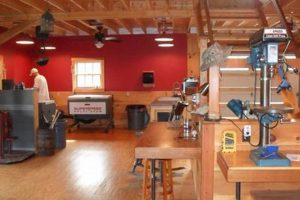
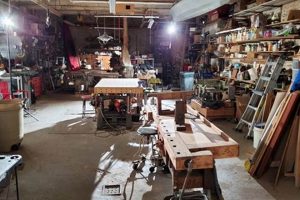
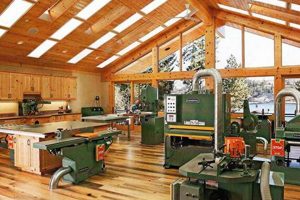
A dedicated space, typically located in the lowest level of a dwelling, designed and equipped for the practice of crafting items primarily from wood is the subject of this discussion. This localized area provides a contained environment for activities such as cutting, shaping, and assembling wooden components. A common example is a homeowner establishing a personal area for creating furniture or decorative items, utilizing equipment such as saws, planers, and sanders within the confines of their home’s substructure.
The establishment of such a workspace offers several advantages. It provides a convenient and accessible location for pursuing woodworking projects without encroaching upon other living areas. Historically, the practice has allowed artisans and hobbyists to engage in their craft regardless of external weather conditions. Furthermore, it enables the concentration of tools, materials, and partially completed projects in an organized manner, streamlining workflow and minimizing disruption to the household.
The following sections will delve into considerations for setting up and maintaining such a dedicated crafting location, focusing on aspects like spatial planning, ventilation, dust collection, noise reduction, and safety protocols. These key factors influence the practicality and effectiveness of the working environment and warrant careful attention to ensure a productive and safe experience.
Essential Considerations for a Subterranean Woodworking Environment
Optimizing a subterranean woodworking environment necessitates careful planning and execution. The following points address key aspects to ensure a safe and productive workspace.
Tip 1: Environmental Control is Paramount: Basements are often subject to humidity fluctuations. Install a dehumidifier to maintain consistent moisture levels to prevent warping of wood and rust on tools.
Tip 2: Dust Collection System Implementation: Wood dust poses significant health and safety risks. A robust dust collection system, including a collector connected to power tools and an ambient air filtration unit, is essential. Prioritize HEPA-rated filters.
Tip 3: Adequate Ventilation is Critical: Ensure proper airflow to remove airborne particles and fumes from finishes and adhesives. An exhaust fan vented to the exterior is recommended, supplementing natural ventilation when possible.
Tip 4: Lighting Strategies for Improved Visibility: Basements often lack natural light. Implement a layered lighting system with a combination of ambient, task, and accent lighting. High-lumen LED fixtures provide energy-efficient and bright illumination.
Tip 5: Noise Mitigation Measures: Woodworking activities generate significant noise. Employ soundproofing materials such as acoustic panels, insulated walls, and vibration-dampening mats to minimize noise transmission to upper floors.
Tip 6: Strategic Spatial Planning: Optimize the layout for efficient workflow. Designate specific zones for cutting, assembly, finishing, and storage. Ensure ample clearance around machinery for safe operation.
Tip 7: Safety Protocol Establishment: Develop and enforce strict safety procedures. This includes mandatory use of personal protective equipment (PPE) such as safety glasses, hearing protection, and dust masks. Maintain a well-stocked first-aid kit and a fire extinguisher.
Adhering to these guidelines contributes significantly to a safer, healthier, and more productive woodworking environment. Prioritizing these considerations ensures the long-term viability and enjoyment of the workspace.
The subsequent discussion addresses the legal and regulatory considerations associated with operating a woodworking facility within a residential basement setting.
1. Dust Collection

Within a subterranean woodworking environment, the management of particulate matter is of paramount importance. A direct correlation exists between the absence of effective dust collection and the potential for adverse health effects among individuals occupying or frequenting the area. Woodworking processes inherently generate substantial volumes of airborne dust, comprised of fine particles that can be readily inhaled. The consequences of prolonged exposure range from mild respiratory irritation to chronic lung diseases and, in some instances, an increased risk of certain cancers. Therefore, integrating a comprehensive dust collection system is not merely a desirable amenity but an indispensable component of a responsible setup. For instance, consider a scenario where a woodworker routinely operates a sander without employing any form of dust extraction. Over time, this individual is likely to experience persistent coughing, shortness of breath, and a heightened susceptibility to respiratory infections. The absence of dust control directly contributes to the degradation of their respiratory health.
Effective dust collection encompasses several interconnected elements. The primary element is source capture, which involves extracting dust directly at the point of generation. This is commonly achieved through the use of dust collectors connected to individual power tools via hoses and specialized fittings. Another important element is ambient air filtration. Even with source capture, some fine particles inevitably escape into the surrounding air. An ambient air filtration system recirculates the air within the workspace, removing these residual particles through filtration. Regular maintenance of dust collection equipment is equally critical. Filters must be cleaned or replaced periodically to maintain optimal airflow and filtration efficiency. A clogged filter reduces the system’s ability to capture dust, negating its intended benefits. Furthermore, the selection of appropriate filters is crucial. High-Efficiency Particulate Air (HEPA) filters are recommended for their ability to capture even the smallest dust particles, providing superior protection compared to standard filters.
In summary, the implementation of a robust dust collection system within a woodworking shop in a basement is essential for mitigating the inherent health risks associated with wood dust exposure. Neglecting this crucial aspect can lead to significant long-term health problems. The investment in appropriate equipment, coupled with diligent maintenance practices, represents a fundamental commitment to the well-being of individuals operating or residing near the workspace. The challenge lies not only in the initial installation but also in maintaining a consistent awareness of the system’s performance and promptly addressing any deficiencies to ensure continued effectiveness.
2. Noise Mitigation

Operating a woodworking shop within a basement environment presents inherent challenges related to noise transmission. The confined space and proximity to living areas necessitate proactive measures to mitigate sound pollution. Uncontrolled noise can disrupt household activities, negatively impact residents’ well-being, and potentially lead to conflicts with neighbors. Effective noise mitigation strategies are therefore crucial for the sustainable operation of such a workshop.
- Structural Isolation
Structural isolation aims to minimize the transmission of vibrations through building elements. This involves decoupling the shop floor from the main structure using resilient materials. Examples include installing rubber or cork underlayment beneath flooring and employing vibration-damping mounts for machinery. Failure to implement structural isolation results in the direct transmission of vibrations through the building’s frame, amplifying noise levels in adjacent spaces.
- Sound Absorption
Sound-absorbing materials reduce the reverberation time within the shop by absorbing sound energy rather than reflecting it. Common materials include acoustic panels, mineral wool insulation, and dense fabrics. Strategic placement of these materials on walls and ceilings minimizes the buildup of sound pressure levels. Conversely, hard, reflective surfaces such as concrete walls exacerbate noise problems by creating multiple sound reflections.
- Airborne Noise Reduction
Airborne noise reduction focuses on preventing sound from traveling through the air. This involves sealing gaps and cracks in walls, ceilings, and doors. Solid-core doors with tight seals offer significant improvements over hollow-core doors. Additionally, adding mass to walls and ceilings, such as by installing a layer of drywall with a damping compound, reduces sound transmission. Insufficient sealing and lightweight wall constructions permit airborne sound to easily propagate throughout the structure.
- Equipment Selection and Maintenance
The selection of quieter machinery and the implementation of regular maintenance practices contribute significantly to noise reduction. Opting for machines with noise reduction features, such as induction motors and vibration-damped components, minimizes the initial sound output. Regular lubrication and tightening of fasteners on machinery prevent rattling and vibrations that amplify noise. Neglecting maintenance results in increased noise levels and potential equipment damage.
These four facets, structural isolation, sound absorption, airborne noise reduction, and equipment selection/maintenance, collectively contribute to a comprehensive noise mitigation strategy for a woodworking shop in a basement. Successfully implementing these measures ensures a more comfortable and harmonious environment for both the woodworker and other occupants of the dwelling. The cost associated with these interventions is often less than the long-term repercussions of neglecting noise control.
3. Humidity Control

Maintaining stable humidity levels within a subterranean woodworking environment is critical for both the preservation of materials and the longevity of equipment. The inherent characteristics of basement spaces often lead to elevated humidity, creating an environment that can compromise the integrity of wood and accelerate the corrosion of metal tools and machinery. Active humidity control is therefore an essential component of a well-managed woodworking facility.
- Wood Stability and Dimensional Changes
Wood is a hygroscopic material, meaning it readily absorbs and releases moisture in response to changes in ambient humidity. Fluctuations in humidity cause wood to expand and contract, leading to warping, cracking, and joint failure in finished projects. For example, a woodworking project constructed during a period of high humidity may shrink and develop gaps when exposed to drier conditions during the winter months. Maintaining consistent humidity minimizes these dimensional changes, ensuring the long-term stability and aesthetic integrity of wooden creations.
- Corrosion Prevention and Tool Longevity
Elevated humidity accelerates the corrosion of metal tools and machinery. Rust formation compromises the sharpness of cutting edges, reduces the precision of measurements, and ultimately shortens the lifespan of valuable equipment. High-carbon steel tools, in particular, are susceptible to rust in humid environments. Regular application of rust inhibitors and the use of dehumidifiers help mitigate corrosion, preserving the functionality and extending the service life of woodworking tools.
- Mold and Mildew Growth
Basements are prone to mold and mildew growth due to their damp and often poorly ventilated nature. These organisms thrive in humid environments and can damage wood, fabrics, and other materials stored in the woodworking shop. Mold and mildew not only degrade materials but also pose potential health risks to individuals working in the space. Effective humidity control, combined with adequate ventilation, inhibits the growth of these organisms, promoting a healthier and more sustainable working environment.
- Adhesive Performance and Joint Integrity
The performance of wood adhesives is significantly affected by humidity levels. Excessive moisture can weaken adhesive bonds, compromising the integrity of joints in woodworking projects. Conversely, extremely dry conditions can cause adhesives to dry out too quickly, resulting in incomplete or brittle bonds. Maintaining optimal humidity levels ensures that adhesives cure properly, creating strong and durable joints that withstand the stresses of normal use.
In conclusion, the multifaceted impact of humidity underscores the importance of implementing effective humidity control measures within a basement woodworking environment. Neglecting this aspect can lead to a range of problems, from material degradation to equipment damage and potential health risks. Proactive humidity management is a crucial investment in the long-term viability and success of any subterranean woodworking endeavor.
4. Spatial Planning

The configuration of a woodworking shop within a basement necessitates meticulous spatial planning. The often-limited dimensions and inherent structural constraints of subterranean environments demand an optimized layout to facilitate workflow, ensure safety, and maximize usable area. Effective spatial planning, therefore, is not merely an aesthetic consideration but a fundamental component for the operational efficacy of the “woodworking shop in basement”. Insufficient planning can lead to restricted movement, compromised safety protocols, and diminished productivity. For instance, a scenario where a large table saw is positioned without adequate clearance for material handling would create a significant safety hazard and impede the natural progression of tasks.
The practical application of spatial planning involves several key elements. These include the strategic placement of machinery, the designation of specific work zones (e.g., cutting, assembly, finishing), and the provision of adequate storage solutions. The positioning of large tools should account for material feed paths, operator maneuverability, and proximity to electrical outlets. Work zones should be delineated to minimize cross-contamination and optimize workflow efficiency. For example, a finishing zone should be located away from dust-generating activities to prevent particulate matter from contaminating the finished surfaces. Storage solutions should be designed to accommodate both raw materials and completed projects, ensuring easy access and preventing damage. A well-executed plan also considers future expansion or modifications to the workshop, allowing for adaptability as needs evolve.
In summary, spatial planning is a critical determinant of the functionality and safety of a woodworking shop established within a basement. Overlooking this aspect can result in significant operational inefficiencies and increased risk of accidents. By prioritizing a well-conceived layout that optimizes workflow, ensures safety, and maximizes usable area, individuals can establish a productive and sustainable woodworking environment. The challenges inherent in adapting to the constraints of a basement space can be effectively addressed through careful consideration and strategic planning, ultimately leading to a more rewarding and efficient woodworking experience. This directly addresses the core issue of establishing an optimized “woodworking shop in basement”.
5. Adequate Lighting

The presence of adequate lighting directly impacts the safety, precision, and overall productivity within a woodworking shop established in a basement. Subterranean environments often lack natural illumination, necessitating reliance on artificial light sources. Insufficient lighting increases the risk of accidents involving power tools, compromises the accuracy of cuts and joinery, and contributes to eye strain and fatigue. A woodworking shop in a basement, therefore, requires a carefully considered lighting scheme to mitigate these potential hazards. For example, inadequate lighting when operating a jointer or planer could result in misjudging material thickness or irregularities, leading to inaccurate cuts and potential injury. This causal relationship underscores the importance of appropriate illumination as a critical component of any “woodworking shop in basement”.
A practical approach to achieving adequate lighting involves a layered system combining ambient, task, and accent lighting. Ambient lighting provides general illumination to the entire workspace, while task lighting focuses concentrated light on specific work areas, such as a workbench or machine station. Accent lighting can highlight specific features or provide visual interest. Utilizing high-lumen LED fixtures offers energy efficiency and reduces heat generation, which is particularly beneficial in enclosed basement spaces. Furthermore, the placement and adjustability of light fixtures are critical. Articulating lamps and adjustable spotlights allow for directing light precisely where it is needed, minimizing shadows and glare. Diffused light sources, such as fluorescent fixtures with diffusers, can reduce harsh shadows and provide more even illumination. This layered approach ensures that all areas of the shop are adequately lit for safe and accurate work.
In summary, adequate lighting is not merely a convenience but a fundamental safety requirement for a woodworking shop in a basement. The absence of sufficient light poses significant risks and hinders productivity. By implementing a well-designed lighting system that incorporates ambient, task, and accent lighting, and by prioritizing the placement and adjustability of fixtures, individuals can create a safe, efficient, and comfortable woodworking environment. While the initial investment in quality lighting may seem substantial, the long-term benefits in terms of safety, accuracy, and overall well-being far outweigh the cost. The challenge lies in creating a balanced and adaptable lighting scheme that meets the specific needs of the workspace and the individual woodworker.
6. Ventilation Systems

The integration of effective ventilation systems within a woodworking shop located in a basement environment is not merely a regulatory compliance issue but a fundamental necessity for ensuring the health and safety of occupants and the long-term viability of the workspace. Basements, by their inherent design, often suffer from limited natural airflow, creating conditions conducive to the accumulation of airborne contaminants generated by woodworking activities. Without adequate ventilation, these contaminants can pose significant health risks and compromise the overall air quality within the dwelling.
- Removal of Airborne Particulates
Woodworking processes, such as sanding, sawing, and routing, generate substantial amounts of airborne dust. These fine particles can be inhaled, leading to respiratory irritation, allergic reactions, and potentially more severe long-term health problems. A well-designed ventilation system effectively removes these particulates from the air, minimizing the risk of respiratory ailments. For example, a properly sized dust collector connected to power tools captures dust at the source, preventing it from becoming airborne and circulating within the shop. This directly reduces the concentration of respirable particles in the air, creating a healthier working environment. In a scenario without such a system, these dust particulates settle on surfaces and are constantly reintroduced into the air by movement or activity.
- Evacuation of Volatile Organic Compounds (VOCs)
Many woodworking finishes, adhesives, and solvents release VOCs, which are organic chemicals that can evaporate into the air. Prolonged exposure to VOCs can cause a range of health problems, including headaches, dizziness, nausea, and irritation of the eyes, nose, and throat. Inadequate ventilation allows VOCs to accumulate to hazardous levels, posing a significant risk to individuals working in the shop. An exhaust fan vented to the exterior effectively removes VOCs from the air, preventing their buildup and mitigating the associated health risks. Conversely, relying solely on open windows for ventilation is often insufficient to remove VOCs, especially during periods of inclement weather or when using particularly potent chemicals.
- Moisture Control and Prevention of Mold Growth
Basements are often prone to elevated humidity levels, which can promote the growth of mold and mildew. Mold and mildew not only damage wood and other materials but also release spores into the air, which can trigger allergic reactions and respiratory problems. A ventilation system that includes dehumidification capabilities helps to control moisture levels, preventing the growth of mold and mildew and maintaining a healthier indoor environment. For example, a dehumidifier integrated with an exhaust fan can effectively remove excess moisture from the air, inhibiting mold growth and reducing the risk of respiratory issues. Without such a system, high humidity can lead to persistent mold problems and compromise the air quality within the dwelling.
Effective ventilation not only removes contaminated air but also introduces a constant supply of fresh, clean air into the workspace. This ensures adequate oxygen levels and helps to dilute any remaining airborne contaminants. A supply of fresh air is essential for maintaining a comfortable and healthy working environment. For instance, a balanced ventilation system that combines exhaust fans with fresh air intakes provides a continuous exchange of air, preventing the buildup of stale or contaminated air. Relying solely on exhaust fans without a source of fresh air can create negative pressure within the basement, potentially drawing air from other parts of the house and compromising the overall indoor air quality.
The aforementioned elementsparticulate removal, VOC evacuation, moisture control, and fresh air intakeare fundamentally interconnected within the context of a woodworking shop established in a basement. A comprehensive ventilation strategy integrates these elements to create a safe, healthy, and productive environment. While the initial investment in a robust ventilation system may seem substantial, the long-term benefits in terms of health, safety, and material preservation far outweigh the costs. Neglecting this crucial aspect can lead to significant health problems, compromised air quality, and potential structural damage. The challenge lies in selecting and implementing a ventilation system that is appropriately sized and designed for the specific needs of the “woodworking shop in basement”, and actively maintaining its performance to ensure its continued effectiveness.
7. Safety Protocol

The establishment of a woodworking shop within a basement necessitates a stringent adherence to safety protocols, due to the inherent hazards associated with woodworking machinery and the confined nature of most basement spaces. The implementation of comprehensive safety measures is not merely a best practice, but a critical requirement for mitigating risks and ensuring the well-being of individuals operating within the workshop environment. Safety protocols encompass a wide range of practices designed to prevent accidents, minimize injuries, and promote a safe working environment.
- Personal Protective Equipment (PPE) Compliance
Mandatory use of appropriate PPE is paramount. This includes, but is not limited to, safety glasses, hearing protection, and dust masks or respirators. Safety glasses protect against flying debris, a common hazard in woodworking. Hearing protection mitigates the risk of noise-induced hearing loss from loud machinery. Dust masks or respirators prevent the inhalation of harmful wood dust particles. Non-compliance with PPE requirements significantly increases the risk of injuries and long-term health problems. For example, operating a table saw without safety glasses can result in severe eye damage from kickback. The consistent and correct utilization of PPE is a non-negotiable aspect of safety protocol within a woodworking shop.
- Machine Guarding and Operational Procedures
Proper machine guarding and adherence to established operational procedures are essential for preventing accidents involving power tools. All machinery should be equipped with functioning guards that prevent contact with moving parts. Operators must be thoroughly trained on the safe operation of each machine and strictly adhere to established procedures. Modifying or removing machine guards compromises safety and increases the risk of serious injuries. For instance, bypassing the safety interlock on a jointer could result in accidental contact with the cutterhead. Regular inspection and maintenance of machine guards and adherence to proper operating procedures are crucial for ensuring safe operation.
- Fire Safety and Emergency Preparedness
Woodworking shops inherently present a fire risk due to the presence of combustible materials, flammable finishes, and potential ignition sources. A comprehensive fire safety plan should include the installation of smoke detectors, fire extinguishers, and a readily accessible first-aid kit. Flammable materials and finishes must be stored in approved containers and in a well-ventilated area. Emergency procedures, including evacuation routes and contact information, should be clearly posted. For example, neglecting to properly store oily rags can lead to spontaneous combustion. Regular inspection of fire safety equipment and drills to practice emergency procedures ensure preparedness in the event of a fire or other emergency.
- Electrical Safety and Hazard Prevention
Basements often present electrical hazards due to damp conditions and potential for exposed wiring. All electrical circuits and equipment must be properly grounded and regularly inspected for damage. Extension cords should be used sparingly and never overloaded. Ground Fault Circuit Interrupters (GFCIs) should be installed in outlets serving the woodworking area to prevent electrical shock. For instance, using a damaged extension cord near a wet concrete floor creates a significant electrocution risk. Proper electrical safety practices and regular inspections mitigate the risk of electrical shocks, fires, and equipment damage.
The effective implementation and consistent enforcement of these safety protocol facets are indispensable for mitigating the inherent risks associated with a woodworking shop in a basement. Neglecting these measures can lead to preventable accidents, injuries, and long-term health consequences. Prioritizing safety and maintaining a culture of safety consciousness are essential for ensuring a safe and productive woodworking environment. The principles and practices outlined are not exhaustive, and the specific safety protocols should be tailored to the unique characteristics and hazards of each individual workshop.
Frequently Asked Questions
The following section addresses common inquiries and clarifies potential misconceptions regarding the establishment and operation of a woodworking facility within a residential basement environment. The information provided is intended to offer practical guidance and inform decision-making.
Question 1: What is the minimum recommended ceiling height for a woodworking shop in a basement?
A minimum ceiling height of eight feet is generally recommended to accommodate standing individuals, tall machinery, and overhead lighting. Lower ceilings can create a cramped and potentially hazardous working environment. Consider the height of the tallest equipment planned for the shop when assessing ceiling clearance.
Question 2: Is a separate electrical circuit required for a woodworking shop in a basement?
A dedicated electrical circuit is highly recommended to prevent overloading existing circuits and to ensure sufficient power for woodworking machinery. Consult a qualified electrician to determine the appropriate circuit size and wiring configuration based on the power requirements of the equipment.
Question 3: What type of flooring is best suited for a woodworking shop in a basement?
Durable and easily cleanable flooring options, such as concrete sealed with epoxy or interlocking rubber mats, are generally preferred. These materials provide a stable and slip-resistant surface while also offering some degree of impact resistance.
Question 4: How can condensation and moisture be effectively managed in a basement woodworking shop?
Implementing a dehumidification system and ensuring proper ventilation are crucial for managing condensation and moisture. Regularly monitor humidity levels and take corrective action as needed to prevent warping of wood and corrosion of tools.
Question 5: Are there specific building codes or regulations that apply to woodworking shops in residential basements?
Local building codes and regulations may impose restrictions on noise levels, dust emissions, and electrical wiring. Consult with local authorities to ensure compliance with all applicable requirements.
Question 6: What are the recommended steps for soundproofing a basement woodworking shop?
Soundproofing strategies include installing sound-absorbing materials on walls and ceilings, sealing air gaps, and using vibration-dampening mounts for machinery. A combination of these techniques is often necessary to achieve effective noise reduction.
These answers provide a foundational understanding of key considerations for establishing a woodworking shop in a basement. Addressing these concerns proactively contributes to a safer and more productive environment.
The subsequent article section will delve into the topic of insurance and liability considerations associated with operating a woodworking shop in a residential setting.
Woodworking Shop in Basement
This exploration of the “woodworking shop in basement” concept has highlighted numerous crucial factors. Spatial planning, ventilation, dust and noise control, adherence to safety protocols, and a comprehensive understanding of applicable regulations are not optional enhancements but essential prerequisites for a functional and secure operation. The success of establishing a woodworking environment below ground is directly correlated with the meticulous attention afforded to each of these elements.
In light of the inherent challenges and potential risks detailed, individuals contemplating a “woodworking shop in basement” are urged to thoroughly research, plan, and execute their vision with diligence. Prioritizing safety, compliance, and environmental responsibility will ultimately determine the long-term viability and personal satisfaction derived from this endeavor. Failure to adequately address these considerations can result in significant financial burdens, health consequences, and legal liabilities. Therefore, a judicious and informed approach is paramount.