



Establishing a dedicated space for woodworking involves careful planning and execution. The process includes selecting an appropriate area, equipping it with necessary tools and machinery, and ensuring a safe and functional environment. Success hinges on matching available resources with intended project scope.
A properly configured woodworking shop facilitates creative expression and efficient production. It allows for the transformation of raw materials into finished goods, potentially offering both personal satisfaction and economic opportunities. Historically, woodworking spaces have evolved from simple sheds to sophisticated, climate-controlled workshops, reflecting advancements in technology and craftsmanship.
Subsequent sections will detail key considerations for space selection, tool acquisition, safety protocols, and workshop organization, offering a comprehensive guide to creating an effective woodworking environment.
Essential Considerations for Workshop Establishment
Successful woodworking environments require careful consideration of several key factors. Prioritizing these aspects ensures both efficiency and safety within the workspace.
Tip 1: Space Assessment: Evaluate available square footage relative to planned projects and machinery. Cramped quarters hinder workflow and increase accident potential. A larger area permits safer operation and storage.
Tip 2: Power Supply Adequacy: Verify electrical infrastructure can support the power demands of all tools and equipment simultaneously. Insufficient amperage can lead to tripped breakers, damaged equipment, and fire hazards. Consider dedicated circuits.
Tip 3: Dust Collection Implementation: Integrate a comprehensive dust collection system from the outset. Wood dust poses significant respiratory health risks and reduces visibility. Options include central systems, portable collectors, and vacuum attachments.
Tip 4: Adequate Lighting Installation: Ensure sufficient and strategically positioned lighting throughout the workshop. Shadows obscure detail and increase the likelihood of errors. Combine ambient, task, and accent lighting for optimal visibility.
Tip 5: Workbench Selection and Placement: Choose a sturdy workbench appropriate for the type of woodworking undertaken. Locate it centrally within the shop to allow access from all sides and facilitate efficient workflow.
Tip 6: Tool Storage Optimization: Implement a well-organized tool storage system. Clearly labeled drawers, pegboards, and shelving contribute to efficiency and minimize search time. Prioritize accessibility of frequently used tools.
Tip 7: Safety Equipment Procurement: Acquire essential safety equipment, including eye protection, hearing protection, respirators, and first-aid supplies. Make them readily accessible and enforce their consistent use.
Tip 8: Climate Control Considerations: Depending on location and project requirements, consider climate control options to regulate temperature and humidity. These factors affect wood stability and glue adhesion.
By addressing these points proactively, the establishment of a functional and safe woodworking environment becomes attainable. This foundational planning is critical for long-term success and enjoyment of the craft.
The following sections will delve into more specific aspects of equipment selection and project execution, building upon this foundational framework.
1. Space optimization

Space optimization is a foundational element in the design and execution of a functional home woodworking shop. It directly impacts safety, workflow efficiency, and overall productivity. Effective utilization of available space requires careful planning and strategic implementation.
- Vertical Storage Solutions
Employing vertical storage maximizes floor space by utilizing wall areas for tool and material organization. Examples include shelving units for lumber storage, pegboards for hand tools, and French cleats for mounting jigs and fixtures. The judicious use of vertical space prevents clutter and facilitates easy access to essential items, thereby streamlining workflow.
- Multifunctional Furniture Design
Incorporating multifunctional furniture allows for adaptability and efficient space utilization. Workbenches with built-in storage, flip-top assembly tables, and mobile tool carts serve multiple purposes within a confined area. These solutions minimize the footprint of individual items while maximizing their utility, enabling diverse project execution in limited spaces.
- Strategic Layout Planning
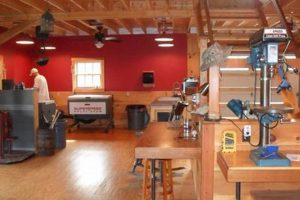
Developing a well-defined shop layout optimizes traffic flow and minimizes wasted space. Placement of stationary machinery, such as table saws and jointers, should account for material handling and operator movement. Clear pathways and designated work zones reduce the risk of accidents and enhance overall efficiency.
- Mobile Workstations and Tools
Utilizing mobile workstations and tools offers flexibility and adaptability within the shop. Rolling tool chests, portable workbenches, and compact dust collection systems allow for reconfiguration of the workspace based on project requirements. This modular approach enables efficient space management and supports a wide range of woodworking activities.
Space optimization, therefore, is not merely about fitting equipment into an area but about strategically managing the available volume to enhance functionality and safety. The integration of vertical storage, multifunctional furniture, strategic layouts, and mobile solutions transforms limited spaces into productive woodworking environments, enabling efficient project execution and maximizing the potential of the home woodworking shop.
2. Tool acquisition

Tool acquisition forms a critical nexus within the process of establishing a functional home woodworking shop. The selection and procurement of tools are not merely incidental; they fundamentally shape the capabilities and limitations of the workspace. A well-curated tool collection allows for diverse project execution, while a poorly chosen or incomplete set can severely hinder progress and compromise safety. The initial investment in quality tools represents a long-term commitment to the craft and directly influences the quality of finished projects.
The cause-and-effect relationship is evident: the presence of appropriate tools enables specific woodworking tasks, whereas their absence prevents them. For example, a hand plane allows for precise surface smoothing, and a quality saw facilitates accurate cuts. Conversely, attempting to perform these tasks without the correct tools often results in substandard outcomes or potential injury. Beginning with essential hand tools, such as chisels, saws, measuring instruments, and sharpening equipment, provides a foundation upon which to expand the collection as skill and project complexity increase. Power tools, such as a table saw, jointer, and planer, significantly enhance efficiency for larger projects, but require careful consideration of space constraints and safety requirements within the shop.
Effective tool acquisition necessitates a strategic approach, prioritizing versatility and quality over quantity. Investing in durable, reliable tools from reputable manufacturers minimizes long-term costs associated with replacements and repairs. This approach also demands a thorough understanding of intended project types and their corresponding tool requirements. The selection of tools, therefore, directly correlates with the scope and ambition of the woodworking endeavors. The relationship between tool acquisition and the overall success of establishing a home woodworking shop is symbiotic: one enhances the other, leading to a more efficient, safer, and ultimately more rewarding woodworking experience.
3. Safety protocols

Integration of robust safety protocols is paramount in any woodworking environment. A properly established home woodworking shop necessitates adherence to stringent safety measures to mitigate potential hazards and promote a secure workspace. This commitment safeguards individuals from injury and ensures the longevity of equipment.
- Personal Protective Equipment (PPE)
The consistent use of PPE is non-negotiable. Eye protection, hearing protection, and respiratory protection are essential for minimizing exposure to hazards such as flying debris, loud machinery, and harmful dust particles. For instance, safety glasses or face shields should be worn during any cutting, sanding, or shaping operation. Earplugs or earmuffs are critical when operating noisy equipment like routers or planers. Respirators or dust masks are vital for mitigating the inhalation of fine wood dust, a known respiratory irritant. Failure to utilize appropriate PPE can lead to immediate and long-term health consequences.
- Machine Guarding and Operation
All woodworking machinery must be equipped with functioning safety guards and operated in accordance with manufacturer specifications. Machine guards are designed to prevent accidental contact with moving parts, such as saw blades or rotating cutters. Proper machine operation includes understanding the machinery’s limitations, using appropriate feed rates, and avoiding overloads. Disabling or bypassing safety guards is a serious safety violation that significantly increases the risk of injury. Routine inspection and maintenance of machine guarding are also crucial to ensure their continued effectiveness.
- Workshop Environment Management
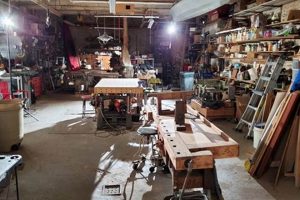
Maintaining a clean and organized workshop environment is critical for preventing accidents. Cluttered workspaces increase the risk of trips, falls, and contact with hazardous materials. Clear pathways, proper storage of tools and materials, and regular cleanup procedures are essential components of workshop environment management. Additionally, adequate lighting is crucial for ensuring visibility and preventing errors. Fire safety measures, such as fire extinguishers and smoke detectors, should be readily available and regularly inspected.
- Emergency Preparedness and Response
Comprehensive emergency preparedness and response protocols are essential for addressing unforeseen events. First-aid kits, readily accessible and adequately stocked, are necessary for treating minor injuries. Knowledge of basic first-aid procedures, including CPR, can be life-saving in more serious situations. Emergency contact information should be prominently displayed. Establishing a clear evacuation plan and conducting periodic drills can improve response times and minimize potential harm in the event of a fire or other emergency.
The integration of these multifaceted safety protocols is not merely a recommendation; it constitutes a fundamental requirement for establishing and maintaining a safe and productive home woodworking shop. Consistent adherence to PPE guidelines, responsible machine operation, proactive workshop environment management, and comprehensive emergency preparedness are indispensable elements in mitigating risks and safeguarding individuals from potential harm.
4. Dust management

Effective dust management is an indispensable aspect of configuring a home woodworking shop. The accumulation of wood dust poses significant health risks, reduces visibility, and can compromise the functionality of equipment. A comprehensive dust management system is therefore essential for maintaining a safe and efficient workspace.
- Source Capture Systems
Source capture systems aim to remove dust and debris at the point of origin. Examples include dust collection ports integrated into power tools, such as sanders and saws, connected to a shop vacuum or dust collector. Implementing source capture minimizes the dispersion of dust into the air and prevents accumulation on surfaces, thereby reducing the risk of respiratory irritation and improving visibility. This is a proactive measure in maintaining a cleaner and healthier shop environment.
- Ambient Air Filtration
Ambient air filtration systems are designed to remove airborne dust particles that escape source capture. These systems typically consist of a fan and a filter, circulating the air within the shop and removing particulate matter. Ambient air filtration is particularly useful for capturing fine dust that remains suspended in the air after woodworking operations. Regular filter maintenance is crucial for ensuring optimal performance and preventing the recirculation of contaminants. Installation of an ambient air filter complements source capture and provides an added layer of protection.
- Shop Vacuum Selection and Usage
A shop vacuum is a versatile tool for cleaning up dust and debris throughout the woodworking shop. Selecting a shop vacuum with sufficient suction power and a HEPA filter is essential for capturing fine dust particles effectively. Regular use of a shop vacuum for cleaning work surfaces, floors, and tools helps to prevent the accumulation of dust and maintain a cleaner workspace. Consider dedicated hoses and attachments for accessing hard-to-reach areas. Shop vacuums can also be integrated with power tools for source capture.
- Material Selection and Practices
The type of wood and woodworking practices employed can influence the amount of dust generated. Softer woods tend to produce more dust than hardwoods. Power sanding generates significantly more dust than hand sanding. Using sharp tools and avoiding excessive material removal can minimize dust production. Consider alternative materials that produce less dust, such as MDF with a pre-applied finish. Implementing best practices in material selection and woodworking techniques complements dust collection systems and contributes to a cleaner and healthier shop environment.
The integration of these strategies constitutes a holistic approach to dust management within the home woodworking shop. By prioritizing source capture, ambient air filtration, proper vacuum selection and usage, and informed material selection, woodworkers can significantly reduce their exposure to harmful dust and create a safer and more enjoyable workspace. This proactive approach is crucial for long-term health and well-being.
5. Workbench setup

Workbench setup is integral to the establishment of an efficient and productive home woodworking shop. It directly influences the precision, stability, and overall usability of the workspace. A well-configured workbench facilitates diverse woodworking tasks, while a poorly designed or inadequate setup can impede progress and compromise safety.
- Workbench Size and Construction
Workbench dimensions should align with the scale of anticipated projects. A larger workbench provides greater surface area for assembly and manipulation of larger workpieces. Robust construction, utilizing materials such as hardwood or laminated plywood, ensures stability and resistance to racking under load. The height of the workbench should be ergonomically appropriate, typically around waist height, to minimize strain and maximize comfort during prolonged use. Inadequate workbench size or flimsy construction can lead to inaccurate cuts, unstable assemblies, and increased fatigue.
- Workholding Mechanisms
Effective workholding is essential for securing workpieces during various woodworking operations. Vises, clamps, and bench dogs are common workholding mechanisms. A face vise, mounted on the front of the workbench, is used for clamping boards and other flat stock. A tail vise, located on the end of the workbench, works in conjunction with bench dogs to secure longer pieces. The type and placement of workholding mechanisms should be carefully considered based on the types of projects anticipated. Insufficient workholding can result in inaccurate cuts, dangerous slipping, and overall inefficiency.
- Tool Storage and Accessibility
Integrated tool storage optimizes workflow and minimizes clutter around the workbench. Drawers, shelves, and pegboards can be incorporated into the workbench design to provide convenient access to frequently used tools. The placement of tool storage should be strategic, ensuring that tools are readily available without obstructing work surfaces. Effective tool storage enhances efficiency, reduces search time, and promotes a safer workspace. Lack of organized tool storage can lead to wasted time, increased risk of accidents, and overall frustration.
- Surface Treatment and Maintenance
The workbench surface should be treated to protect the wood from moisture, glue spills, and other contaminants. A durable finish, such as boiled linseed oil or polyurethane, can enhance the longevity and usability of the workbench. Regular maintenance, including cleaning and re-application of finish as needed, is essential for preserving the workbench’s integrity. A well-maintained workbench surface provides a stable and consistent platform for woodworking operations. Neglecting surface treatment and maintenance can lead to damage, warping, and overall reduced performance.
Proper workbench setup, encompassing size, construction, workholding, tool storage, and surface treatment, significantly impacts the efficiency and safety of a home woodworking shop. A well-configured workbench serves as the central hub for a multitude of woodworking tasks, providing a stable and organized platform for project execution.
6. Electrical capacity
Adequate electrical capacity is a non-negotiable prerequisite for the establishment of a functional and safe home woodworking shop. The power demands of woodworking machinery necessitate careful assessment and potential upgrades to the existing electrical infrastructure.
- Circuit Load Calculation
Determining total amperage draw is critical. Each tool’s nameplate specifies its amperage requirement. Summing the amperage of all tools likely to operate simultaneously provides a minimum circuit load. Circuits should be rated for at least 20% above this calculated load to prevent overloads and nuisance tripping. Failure to accurately calculate load can result in tripped breakers, damaged equipment, and potential fire hazards.
- Dedicated Circuit Installation
Many woodworking machines, particularly those with large motors like table saws and planers, require dedicated circuits. A dedicated circuit provides a guaranteed amperage supply without sharing the load with other appliances or tools. This prevents voltage drops, which can damage motors and reduce tool performance. Improper wiring and circuit overloading can lead to overheating, insulation breakdown, and electrical fires.
- Outlet Placement and Wiring
Strategic outlet placement minimizes the need for extension cords, which can be a trip hazard and reduce voltage. Outlets should be grounded and conform to local electrical codes. Wiring must be of appropriate gauge for the amperage load, typically 12-gauge or 10-gauge for 20-amp circuits. Insufficient wiring can lead to overheating and fire hazards. Regular inspection of wiring and outlets is crucial for identifying potential problems.
- Ground Fault Circuit Interrupters (GFCIs)
GFCIs are essential safety devices in woodworking shops, particularly in damp or potentially wet environments. GFCIs detect ground faults, which can occur when electricity leaks from a tool or appliance to ground. They rapidly interrupt the circuit, preventing electrical shock. GFCIs should be installed on all circuits serving woodworking equipment. Regular testing of GFCIs is recommended to ensure proper functionality. Failure to install and maintain GFCIs can increase the risk of severe electrical shock.
Neglecting electrical capacity considerations during woodworking shop setup introduces significant safety risks and operational limitations. Proper assessment, dedicated circuits, strategic outlet placement, appropriate wiring, and GFCI installation are essential for establishing a safe and productive woodworking environment. Addressing these electrical aspects proactively is crucial for both the longevity of equipment and the safety of the operator.
7. Material storage

Effective material storage is an indispensable component of a well-organized home woodworking shop. The efficient management of lumber, sheet goods, hardware, and finishing supplies directly impacts workflow, space utilization, and overall safety within the workshop environment. A thoughtfully designed material storage system minimizes clutter, prevents damage to materials, and enhances the accessibility of essential resources.
- Lumber Rack Design and Implementation
Lumber racks facilitate the organized storage of various wood species and dimensions. These racks can be constructed from wood or metal and should be designed to support the weight of the stored lumber without sagging or collapsing. Proper lumber rack design incorporates adequate ventilation to prevent moisture buildup and warping. Horizontal stacking with stickers (thin strips of wood) between layers promotes air circulation. Improper lumber storage can lead to material degradation, making the wood unusable for projects.
- Sheet Good Organization and Accessibility
Sheet goods, such as plywood and MDF, require specialized storage solutions to prevent warping and damage. Vertical storage is often preferred, employing dividers to separate different sheet sizes and thicknesses. Alternatively, a horizontal storage system can be utilized with adequate support to prevent sagging. Implementing a system for easy retrieval of individual sheets without disturbing the entire stack is essential for efficient workflow. Mishandling and improper storage can result in damaged edges and compromised material integrity.
- Hardware and Fastener Management
Effective hardware and fastener management involves the systematic organization of screws, nails, bolts, and other small components. Storage solutions may include small drawers, bins, or compartmentalized containers. Clear labeling of each container facilitates quick identification and retrieval. Maintaining an inventory of frequently used hardware items ensures that essential supplies are readily available, minimizing project delays. Unorganized hardware can lead to lost items, wasted time searching for specific fasteners, and project inefficiencies.
- Finishing Supply Storage and Safety
Finishing supplies, such as paints, stains, varnishes, and solvents, require dedicated storage areas that are well-ventilated and protected from extreme temperatures. Flammable materials should be stored in approved safety cabinets to minimize the risk of fire. Proper disposal of rags and other materials used with finishing products is essential to prevent spontaneous combustion. A clearly labeled storage system helps to identify and access finishing supplies quickly and safely. Neglecting finishing supply storage can lead to hazardous conditions, product spoilage, and potential environmental contamination.
The integration of these material storage strategies significantly contributes to the overall functionality and safety of a home woodworking shop. By prioritizing organized lumber storage, accessible sheet good organization, efficient hardware management, and safe finishing supply storage, woodworkers can maximize their workspace, minimize material waste, and enhance their project outcomes. These considerations are paramount for transforming a simple space into a well-equipped and productive woodworking environment.
Frequently Asked Questions
The following section addresses common inquiries regarding the establishment of a functional home woodworking shop. The information provided aims to clarify key considerations and dispel potential misconceptions.
Question 1: What is the minimum space requirement for a basic woodworking shop?
The requisite space depends on project scope and equipment needs. A minimum of 100 square feet is recommended for essential tools and workspace; however, larger areas facilitate more complex projects and safer tool operation.
Question 2: Which tools are considered essential for a beginner woodworking shop?
Essential tools include a workbench, hand saw, chisels, measuring tools (tape measure, square), a drill, and safety equipment (eye protection, hearing protection). Power tools such as a circular saw and sander may be added as budget permits.
Question 3: How can dust collection be effectively managed in a small workshop?
Effective dust management strategies involve a combination of source capture (connecting a shop vacuum to power tools), ambient air filtration, and regular cleaning. Prioritize tools with integrated dust collection ports.
Question 4: What electrical considerations are paramount when setting up a shop?
Assess the total amperage requirements of all tools and ensure the existing electrical system can accommodate the load. Consider installing dedicated circuits for high-power tools. Ground Fault Circuit Interrupters (GFCIs) are crucial for safety.
Question 5: How important is workbench quality to overall shop functionality?
A sturdy, well-designed workbench is central to efficient woodworking. It provides a stable surface for cutting, assembling, and finishing projects. Invest in a workbench appropriate for intended project size and complexity.
Question 6: What are the key safety measures to implement in a home woodworking shop?
Consistent use of personal protective equipment (PPE), adherence to machine operating instructions, regular tool maintenance, and a clean and organized workspace are fundamental safety measures. Emergency preparedness, including a first-aid kit, is also essential.
In summary, establishing a home woodworking shop requires careful planning, strategic resource allocation, and a commitment to safety. Prioritizing space, equipment, electrical capacity, dust management, workbench quality, and safety protocols is essential for creating a functional and productive workspace.
The following sections will address advanced woodworking techniques and project ideas, building upon the foundational knowledge presented herein.
Conclusion
The process of configuring a dedicated woodworking space within a residential setting demands meticulous attention to detail and a comprehensive understanding of the inherent challenges and opportunities. Considerations ranging from spatial optimization and equipment acquisition to electrical capacity and safety protocols are paramount in establishing a functional and secure environment. The preceding analysis has underscored the multifaceted nature of the undertaking, emphasizing the critical role of informed decision-making in achieving optimal outcomes.
Successful implementation of the outlined principles empowers individuals to transform available space into a productive workshop, facilitating creative expression and the realization of woodworking projects. The commitment to safety, efficiency, and ongoing learning will ensure the long-term viability and enjoyment of this craft. Further exploration of advanced techniques and project design will continue to build upon this foundational knowledge.



![Shop-Perfect: Best Lights for Woodworking Shop [Guide] | Step-by-Step Guides, Tools & Inspiration to Build Beautiful Wooden Decor on a Budget](https://woodfromhome.com/wp-content/uploads/2026/03/th-239-300x200.jpg "Shop-Perfect: Best Lights for Woodworking Shop [Guide] Step-by-Step Guides, Tools & Inspiration to Build Beautiful Wooden Decor on a Budget")