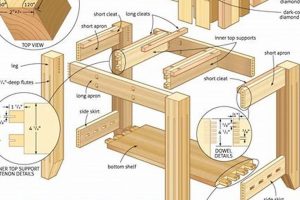
Activities that involve constructing items from wood are a common component of the Cub Scout program. These activities provide opportunities for young scouts to develop practical skills, learn about tools and materials, and foster creativity through hands-on construction. A simple example would be building a birdhouse from pre-cut pieces of wood, requiring only assembly and finishing.
Engaging in wood-based construction offers numerous benefits to young scouts. It cultivates fine motor skills, spatial reasoning, and problem-solving abilities. Historically, woodworking projects have been an integral part of scouting, promoting self-reliance, resourcefulness, and an appreciation for craftsmanship. These activities also contribute to a sense of accomplishment and pride upon completion of a tangible project.
The following sections will explore specific examples of age-appropriate projects, essential safety considerations for working with wood, and strategies for incorporating these activities effectively into Cub Scout meetings and events. This guide aims to provide leaders and parents with the resources necessary to facilitate safe and rewarding woodworking experiences for their scouts.
Guidance on Constructing Items from Wood in Cub Scouting
The following offers guidance designed to optimize the experience of creating wooden objects within the Cub Scout framework. These considerations aim to enhance safety, promote skill development, and maximize the educational value of these activities.
Tip 1: Prioritize Safety Instruction: Comprehensive instruction on tool safety is paramount. Prior to any construction, scouts must understand the proper handling of tools, potential hazards, and appropriate safety precautions, such as wearing safety glasses and using clamps.
Tip 2: Age-Appropriate Project Selection: Choose projects aligned with the developmental capabilities of the scouts. Simpler projects involving pre-cut materials and minimal tool use are suitable for younger scouts, while older scouts can tackle more complex designs.
Tip 3: Emphasize Proper Tool Usage: Supervise the use of tools closely, providing guidance and correction as needed. Demonstrations of correct techniques are essential, ensuring scouts understand how to use each tool safely and effectively.
Tip 4: Incorporate Pre-Planning and Design: Encourage scouts to plan their projects before construction. This can involve sketching designs, measuring materials, and creating a step-by-step plan. This process fosters critical thinking and problem-solving skills.
Tip 5: Utilize Jigs and Templates: Employ jigs and templates to ensure accuracy and consistency, particularly when repeating cuts or shapes. This can streamline the construction process and reduce the risk of errors.
Tip 6: Focus on Finishing Techniques: Incorporate finishing techniques, such as sanding, painting, or staining, to enhance the appearance and durability of the projects. This provides an opportunity to teach scouts about different materials and their properties.
Tip 7: Encourage Creativity and Personalization: Allow scouts to personalize their creations by adding their own unique touches. This fosters creativity and allows them to take ownership of their projects.
Adherence to these guidelines enhances safety, promotes skill development, and ensures meaningful learning experiences for young scouts. The careful implementation of construction activities can enrich the Cub Scout program, creating lasting memories and instilling valuable skills.
The subsequent sections will address project ideas suited for various age groups within Cub Scouts, further expanding the practical application of these principles.
1. Safety

The intersection of safety and woodworking activities is paramount within the Cub Scout program. Woodworking inherently involves the use of tools that, if mishandled, can cause injury. Therefore, comprehensive safety protocols are not merely recommended but essential for protecting scouts during these projects. Neglecting safety can lead to cuts, splinters, eye injuries, or more serious accidents. A real-life example includes a scout using a saw without proper instruction and supervision, resulting in a deep cut requiring medical attention. Thus, safety instruction is inextricably linked to woodworking and serves as a foundational component.
Effective safety protocols in woodworking activities include mandatory safety glasses, proper tool demonstrations, close supervision by trained adults, and clearly defined rules of conduct. The practical significance of these measures is evident in their ability to mitigate risks and prevent injuries. For instance, requiring safety glasses protects scouts’ eyes from flying debris during sawing or sanding. Detailed instruction on the correct use of each tool minimizes the likelihood of accidents. Regular checks to ensure that all tools are sharp and in good working order prevent tool malfunctions, which can also lead to injuries. Adherence to these guidelines promotes a safe and productive environment.
In summary, integrating rigorous safety measures into all woodworking projects is crucial. Challenges may arise in ensuring consistent adherence to safety rules, especially with younger or more enthusiastic scouts. However, the long-term benefits of cultivating a safety-conscious mindset far outweigh these challenges. Ultimately, prioritizing safety allows scouts to enjoy the learning process and develop woodworking skills without compromising their well-being, thereby reinforcing the positive values of the Cub Scout program and protecting their health.
2. Age-appropriateness
The concept of age-appropriateness is integral to successful and safe engagement with woodworking activities within the Cub Scout program. Project complexity must align with the cognitive and physical capabilities of scouts at different developmental stages to ensure a positive learning experience.
- Cognitive Development and Project Complexity
Cognitive skills significantly influence the capacity of scouts to understand project instructions, follow sequential steps, and solve problems that arise during construction. Younger scouts typically benefit from simple projects with minimal steps, such as assembling pre-cut birdhouses. Older scouts, possessing greater cognitive maturity, can manage more intricate designs that require precise measurements and complex assembly. A misalignment between cognitive demand and project complexity can lead to frustration and disengagement.
- Fine Motor Skills and Tool Handling
The development of fine motor skills directly affects a scout’s ability to safely and accurately handle woodworking tools. Younger scouts may lack the dexterity required for tasks like sawing or hammering accurately, increasing the risk of injury and compromising project quality. Age-appropriate tool selection, such as using smaller hammers and saws with safety features, mitigates these risks. Projects that primarily involve assembly and minimal cutting are better suited for younger age groups, allowing them to participate effectively.
- Attention Span and Project Duration
Attention spans vary considerably across different age groups within Cub Scouts. Younger scouts generally have shorter attention spans, necessitating projects that can be completed within a relatively brief timeframe. Longer projects may result in boredom and decreased focus, leading to errors or unsafe tool handling. Conversely, older scouts with longer attention spans can engage in more extended projects that require sustained effort and attention to detail. Adapting project duration to match the attention span of the target age group enhances engagement and project success.
- Risk Assessment and Safety Comprehension
The ability to assess risks and understand safety precautions improves with age. Younger scouts may not fully grasp the potential dangers associated with woodworking tools, even with instruction. Therefore, close supervision and simplified safety protocols are essential. Older scouts, with more developed risk assessment abilities, can understand and adhere to more complex safety guidelines. Age-appropriate safety instruction, tailored to the cognitive abilities of each age group, is crucial for minimizing the risk of accidents during woodworking activities.
These considerations highlight the critical importance of aligning woodworking projects with the developmental stages of Cub Scouts. Carefully selecting projects that match cognitive abilities, fine motor skills, attention spans, and risk assessment capabilities ensures a safe, engaging, and educational experience for all participants. The integration of age-appropriateness into project design not only prevents frustration and injury but also fosters a positive attitude toward woodworking and skill development, ensuring that these activities remain a valuable component of the Cub Scout program.
3. Skill Development

Woodworking activities within the Cub Scout program serve as a potent catalyst for skill development across multiple domains. The tangible nature of these projects necessitates the acquisition and refinement of skills related to measurement, design, construction, and problem-solving. These acquired competencies extend beyond the immediate activity and contribute to a scout’s overall development. A direct consequence of engaging in woodworking is the enhancement of fine motor skills through tasks like hammering, sawing, and sanding. For example, constructing a simple wooden car for the Pinewood Derby requires precise measurements and careful assembly, directly improving a scout’s manual dexterity and spatial reasoning.
The importance of skill development in woodworking extends beyond the physical domain. It also fosters cognitive abilities such as planning, sequencing, and critical thinking. Before commencing a project, scouts must conceptualize the final product, develop a step-by-step plan, and anticipate potential challenges. Real-world scenarios, such as adapting a design to accommodate material limitations or troubleshooting construction errors, necessitate creative problem-solving. These experiences cultivate adaptability and resilience, valuable attributes applicable in various aspects of life. Furthermore, the successful completion of a woodworking project instills a sense of accomplishment and self-efficacy, boosting confidence and encouraging further exploration of new skills.
In summary, woodworking projects offer a tangible pathway for Cub Scouts to acquire and refine essential skills. The connection between woodworking and skill development is direct and multifaceted, encompassing physical dexterity, cognitive abilities, and personal qualities. Challenges in skill development can arise from varying levels of prior experience and individual learning styles. However, structured guidance, age-appropriate projects, and a focus on incremental progress can mitigate these challenges, ensuring that woodworking remains a valuable and rewarding component of the Cub Scout program, contributing to the holistic development of its participants.
4. Tool management
Tool management is an indispensable component of woodworking activities within the Cub Scout program. Inadequate oversight and organization of tools directly correlate with increased risks of accidents and injuries. Sharp tools left unattended or tools not stored properly present immediate hazards. Consider a scenario where a scout stumbles upon a loose saw, resulting in a laceration. Such incidents underscore the critical link between effective tool management practices and the safety of program participants. Consequently, the understanding and implementation of proper tool management techniques are not merely procedural recommendations, but essential safety measures.
Effective tool management in the Cub Scout context involves several key practices. These include implementing a strict sign-out and sign-in system to track tool usage, designating a specific storage area for all tools, and regularly inspecting tools for damage or wear. Each tool should have its designated place, promoting organization and preventing loss. Additionally, age-appropriate training on tool maintenance and care is crucial. For instance, older scouts can learn to sharpen certain tools under close supervision. These practices collectively contribute to a safer and more efficient woodworking environment. Furthermore, the discipline instilled through tool management fosters responsibility and respect for equipment, transferable skills beneficial beyond the woodworking project itself.
In summary, effective tool management is inextricably linked to the success and safety of woodworking activities in Cub Scouts. Ignoring this aspect can lead to injuries and detract from the educational experience. Challenges in implementation may stem from limited resources or inadequate training for leaders. However, consistent application of established procedures and a proactive approach to tool maintenance are essential. Prioritizing tool management protects scouts from harm, reinforces safety consciousness, and cultivates responsible habits, aligning with the overall goals of the Cub Scout program.
5. Project planning

Project planning is a fundamental aspect of incorporating woodworking activities into the Cub Scout program. It is not merely a preparatory step, but an integral component that fosters critical thinking, problem-solving skills, and responsible decision-making among young scouts. Proper planning ensures projects are manageable, safe, and contribute meaningfully to the learning experience.
- Defining Project Scope and Objectives
Defining the scope entails establishing clear boundaries for the project, specifying what tasks are included and excluded. Objectives articulate the intended outcomes, such as learning specific woodworking techniques or constructing a particular item. In Cub Scout woodworking, a well-defined scope prevents projects from becoming overly complex or time-consuming, while clear objectives provide a measurable benchmark for success. For instance, if the objective is to learn basic sawing techniques, the project scope might be limited to cutting straight lines on soft wood.
- Resource Allocation and Material Management
Resource allocation involves identifying and securing the necessary materials, tools, and adult supervision required for the project. Material management includes procuring the appropriate quantity and type of wood, fasteners, and finishing supplies. In Cub Scout projects, efficient resource allocation ensures that scouts have access to the right tools and materials at the right time, minimizing delays and potential safety hazards. An example is pre-cutting lumber to specified dimensions to streamline the construction process and reduce the risk of errors.
- Scheduling and Time Management
Scheduling involves establishing a timeline for completing the project, breaking it down into manageable tasks with assigned deadlines. Time management involves allocating sufficient time for each task and monitoring progress to ensure the project stays on track. In Cub Scout woodworking, effective scheduling prevents projects from running overtime or overwhelming scouts. A structured timeline allows scouts to pace themselves, learn at a comfortable rate, and avoid rushing, which can lead to mistakes or accidents.
- Risk Assessment and Safety Planning
Risk assessment involves identifying potential hazards associated with the project, such as improper tool usage or material handling. Safety planning involves developing strategies to mitigate these risks, such as providing detailed safety instructions, ensuring adequate supervision, and requiring the use of personal protective equipment. In Cub Scout projects, thorough risk assessment and safety planning are paramount for preventing injuries and creating a safe learning environment. An example is conducting a pre-project safety briefing to review tool safety procedures and emergency protocols.
These elements of project planning are interwoven and interdependent, collectively contributing to the success of woodworking activities in Cub Scouts. Thoughtful project planning not only enhances the learning experience but also fosters responsibility, teamwork, and leadership skills among young participants. The principles of planning, organization, and safety learned through these activities extend beyond woodworking, equipping scouts with valuable skills applicable in various aspects of their lives. Careful consideration of these aspects enhances safety and ensures meaningful learning experiences.
6. Creativity

The integration of creativity into woodworking projects within the Cub Scout program elevates these activities beyond mere skill-building exercises. It fosters ingenuity, self-expression, and innovative problem-solving, enriching the learning experience and promoting individual growth.
- Design Personalization
Design personalization allows scouts to modify and adapt pre-existing project plans to reflect their individual preferences and interests. This may involve altering dimensions, adding decorative elements, or incorporating unique functional features. For example, a standard birdhouse design can be personalized with custom paint schemes, carved details, or the addition of a small perch. Design personalization encourages scouts to take ownership of their creations and express their individuality through tangible objects. The implications are a heightened sense of accomplishment and a deeper engagement with the woodworking process.
- Material Selection
While many woodworking projects rely on standard lumber, the opportunity to experiment with alternative materials can significantly enhance creativity. Scouts can explore using reclaimed wood, found objects, or unconventional materials like bamboo or cork to construct their projects. Material selection challenges scouts to think outside the box and consider the aesthetic and functional properties of various materials. For instance, using driftwood to create a rustic picture frame adds a unique, natural element to the finished product. This fosters resourcefulness and encourages an appreciation for sustainable practices.
- Functional Innovation
Functional innovation involves modifying or enhancing the intended purpose of a woodworking project to create a more useful or novel item. This may include adding storage compartments to a simple box, integrating electronic components into a wooden toy, or repurposing a discarded item into a functional tool. Functional innovation challenges scouts to think critically about the practical applications of their projects and develop creative solutions to real-world problems. For example, transforming an old wooden crate into a mobile charging station with built-in cable management demonstrates ingenuity and problem-solving skills.
- Decorative Embellishment
Decorative embellishment provides a platform for scouts to express their artistic talents and enhance the visual appeal of their woodworking projects. This may involve painting, staining, carving, wood burning, or applying decorative hardware. The use of color, texture, and intricate details allows scouts to transform simple wooden objects into personalized works of art. For example, carving intricate designs into a wooden plaque or using vibrant colors to paint a wooden toy enhances its aesthetic value and adds a personal touch. Decorative embellishment promotes artistic expression and allows scouts to showcase their unique creative talents.
These facets of creativity, when integrated into woodworking projects, transform these activities into dynamic and enriching learning experiences for Cub Scouts. By fostering imagination, problem-solving skills, and self-expression, woodworking becomes a powerful tool for developing well-rounded individuals who are confident in their abilities and capable of innovative thinking. The resulting projects become more than just functional objects; they become tangible expressions of individual creativity and ingenuity.
Frequently Asked Questions
The following addresses common inquiries regarding the implementation and safety considerations of construction activities within the Cub Scout program. These questions aim to clarify best practices and address potential concerns of leaders and parents.
Question 1: What are the minimum age requirements for scouts to participate in these activities?
Age appropriateness is a crucial factor. Younger scouts should engage in projects with pre-cut materials and minimal tool usage. Older scouts may undertake more complex designs. Refer to age-specific guidelines for detailed recommendations.
Question 2: What are the most essential safety precautions that leaders must enforce?
Mandatory safety glasses, detailed tool demonstrations, close adult supervision, and clearly defined rules of conduct are essential. Regular inspections of tools and equipment are also crucial.
Question 3: How can woodworking activities be incorporated into existing Cub Scout meeting schedules?
Project planning is key. Break down larger projects into smaller, manageable tasks that can be completed within the allotted meeting time. Utilize pre-cut materials and templates to streamline the construction process.
Question 4: What types of tools are recommended for Cub Scout woodworking projects?
Age-appropriate tools are paramount. Smaller hammers, hand saws with safety features, and hand drills are suitable for younger scouts. Older scouts may use more advanced tools under close supervision.
Question 5: How can potential safety hazards be effectively mitigated?
Comprehensive safety training, proper tool storage, and vigilant supervision are effective mitigation strategies. Address potential hazards proactively through risk assessments and safety briefings.
Question 6: What resources are available for leaders seeking project ideas and guidance?
Scouting publications, online resources, and experienced woodworking instructors can provide valuable project ideas and guidance. Consult local woodworking clubs for additional support and expertise.
In summary, careful planning, strict adherence to safety protocols, and age-appropriate project selection are crucial for successful activities. These guidelines ensure a safe, engaging, and educational experience for all participants.
The subsequent section will explore the long-term benefits of incorporating construction activities into the Cub Scout program and its alignment with core scouting values.
Conclusion
This exploration of woodworking activities in the Cub Scout program has underscored the importance of safety, age-appropriateness, skill development, tool management, project planning, and creativity. These activities offer opportunities to develop practical skills and foster self-reliance.
Serious consideration of the factors is essential to create enriching and safe experiences for scouts. Prioritizing these elements can enhance the value and impact of program, contributing to the development of well-rounded, capable, and confident individuals.