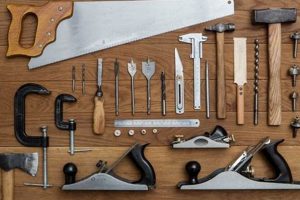
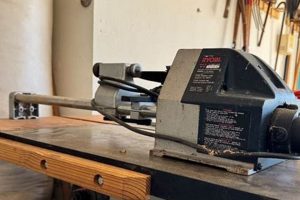
A core set of implements is fundamental to the practice of shaping wood for practical or aesthetic purposes. These items facilitate tasks ranging from initial stock preparation to final finishing, and their availability directly impacts the range and quality of achievable results. For example, a hand saw and chisel, when properly employed, allow for precise joinery, while a smoothing plane creates a surface ready for finish application.
Proficiency with this foundational equipment provides a solid base for more advanced woodworking techniques. Understanding the function and limitations of basic instruments fosters a deeper appreciation for the craft and allows for informed decisions when selecting specialized alternatives. Historically, reliance on these fundamental items underscored the ingenuity and resourcefulness of woodworkers across diverse cultures and eras.
The following sections detail specific implements considered indispensable for a well-equipped workshop, focusing on their applications, maintenance requirements, and considerations for selecting appropriate models.
Effective acquisition and utilization of fundamental woodworking equipment requires careful consideration. The following guidelines aim to assist in selecting, maintaining, and optimizing the use of these crucial items.
Tip 1: Prioritize Quality Over Quantity: Investing in durable, well-made versions of key tools proves more economical in the long term. Inferior alternatives often require frequent replacement and compromise precision. Examine materials, construction, and user reviews before purchase.
Tip 2: Master Sharpening Techniques: Sharp cutting edges are paramount for efficient and safe woodworking. Acquire appropriate sharpening stones, strops, and honing guides, and diligently practice sharpening techniques until consistently achieving optimal results. A dull tool is a dangerous tool.
Tip 3: Understand Material Properties: Different wood species exhibit varying densities, grain patterns, and workability characteristics. Familiarize yourself with the properties of commonly used lumber to select the most suitable tools and techniques for each project. For instance, dense hardwoods may require sharper cutting angles or specialized blades.
Tip 4: Maintain Proper Storage: Protect investments by storing instruments in a dry, organized environment. Exposure to moisture can lead to rust and corrosion. Utilize tool chests, racks, or pegboards to ensure easy access and prevent damage from accidental impacts.
Tip 5: Practice Safe Usage: Woodworking inherently involves potential hazards. Adhere strictly to safety guidelines, wear appropriate personal protective equipment (eye protection, hearing protection, dust mask), and maintain a clean, well-lit workspace. Never compromise safety for speed.
Tip 6: Learn Basic Tool Tuning: Understanding how to adjust and fine-tune planes, saws, and other instruments significantly improves their performance. Consult reputable resources and practice basic adjustments until proficient.
Effective use of these implements significantly enhances the precision, safety, and overall quality of woodworking endeavors. Consistent application of these principles allows for efficient project execution and long-term tool preservation.
The subsequent segment will explore specific applications and advanced techniques related to this core equipment set.
1. Accuracy

Precision is paramount in woodworking. The degree to which measurements are exact and cuts are true directly impacts the structural integrity and aesthetic quality of finished pieces. The selection and skilled application of foundational implements are intrinsically linked to achieving this necessary accuracy.
- Precise Measurement and Layout
Achieving accuracy begins with precise measurement and layout. Tools such as calibrated rulers, squares, and marking gauges enable the accurate transfer of dimensions onto the workpiece. Deviations in measurement, even fractions of an inch, can accumulate and result in misaligned joints or dimensional inaccuracies in the final product. For example, a slightly out-of-square marking on a mortise can lead to a weak or visually unappealing mortise-and-tenon joint. Precise layout minimizes material waste and ensures components fit together as intended.
- Cutting Tools and Edge Preparation
Accuracy extends beyond measurement to the actual cutting process. Sharp, well-maintained saws and chisels, when used with controlled technique, produce clean, precise cuts. Dull or improperly aligned tools lead to tear-out, wandering cuts, and imprecise joinery. For instance, a dull saw blade will struggle to follow a straight line, resulting in a crooked cut that compromises the accuracy of the project. Proper edge preparation, including ensuring tools are square and accurately sharpened, is crucial for achieving predictable and precise results.
- Joinery and Assembly
Accurate joinery is fundamental to creating strong and aesthetically pleasing structures. The ability to create tight-fitting joints with minimal gaps relies on accurate measurement, precise cutting, and careful assembly. For example, a dovetail joint that is not cut accurately will be loose and weak, compromising the structural integrity of the piece. Clamps and other assembly aids must also be used accurately to ensure components are aligned correctly and that joints are properly seated.
- Calibration and Maintenance
Maintaining accuracy requires periodic calibration and adjustment of essential instruments. Squares, levels, and marking gauges can drift out of calibration over time, leading to inaccuracies in subsequent work. Regular checks against known standards and necessary adjustments ensure that tools remain accurate and reliable. Neglecting calibration can result in systematic errors that are difficult to detect and correct later in the construction process.
The interdependence of measurement, cutting, joinery, and tool calibration highlights the critical role accuracy plays in woodworking. Foundational instruments, when skillfully employed and properly maintained, enable the consistent achievement of precise results, directly contributing to the quality and longevity of finished projects.
2. Versatility

The inherent value of core woodworking instruments lies not only in their ability to perform specific tasks but also in their adaptability to a range of functions. This versatility extends the utility of each implement, maximizing efficiency and minimizing the need for an expansive and often costly collection of specialized alternatives. The ability of a single tool to perform multiple operations is a hallmark of well-designed and expertly utilized foundational equipment.
- Multi-Functional Hand Planes
Traditional hand planes, beyond their primary function of smoothing surfaces, can be adapted for a variety of tasks. A block plane, for instance, is adept at chamfering edges, trimming end grain, and even shaping small details. A smoothing plane can be used for initial stock preparation in addition to its finishing role, providing a dual-purpose capability. This adaptability reduces the need for separate specialized planes, streamlining the tool collection and enhancing workspace efficiency.
- Chisels as Shaping and Joinery Instruments
Chisels are indispensable for joinery, enabling the precise removal of material to create mortises, tenons, and dovetails. However, their functionality extends beyond joinery. Chisels can also be employed for shaping curves, cleaning up corners, and even carving decorative elements. The size and shape of the chisel, combined with the user’s skill, dictates the range of possible applications, rendering it a highly adaptable tool.
- Saws for Ripping, Crosscutting, and Shaping
While specialized saws exist for specific cuts, many foundational saws offer considerable versatility. A hand saw, for example, can be used for both ripping (cutting along the grain) and crosscutting (cutting across the grain), albeit with varying degrees of efficiency depending on the tooth configuration. Additionally, saws can be used for rough shaping and creating curved profiles, especially when combined with techniques like coping.
- The Combination Square: A Multifaceted Layout Tool
The combination square serves as a measuring, marking, and layout tool. It can be used to establish squareness, measure distances, find angles (with the addition of a protractor head), and scribe lines parallel to an edge. Its adaptability makes it an essential tool for accurate layout and verification, minimizing the need for multiple single-purpose instruments.
The versatility inherent in these fundamental implements stems from their design, the user’s skill, and the adaptability of woodworking techniques. By mastering the diverse applications of core instruments, a woodworker can achieve a wide range of results with a relatively limited set of tools, maximizing efficiency and minimizing unnecessary expenditure.
3. Durability

Longevity under sustained use is a defining characteristic of a core set of woodworking instruments. The ability to withstand the rigors of repeated application, resist wear and tear, and maintain functionality over extended periods directly influences the value and utility of these essential tools.
- Material Selection and Component Integrity
The inherent durability of these instruments hinges on the quality of materials used in their construction. High-carbon steel for cutting edges, dense hardwoods for handles, and robust metals for bodies and frames contribute to the overall resilience. The integrity of component assembly, including secure fastenings and precise alignment, ensures the tool can withstand the stresses of repeated use without deformation or failure. For example, a poorly constructed hand plane with a weak sole may warp under pressure, compromising its functionality.
- Resistance to Environmental Factors
Essential implements are frequently exposed to varying environmental conditions, including moisture, temperature fluctuations, and dust. Durable tools exhibit resistance to these factors, minimizing the risk of corrosion, warping, or degradation. Protective coatings, proper storage practices, and regular maintenance contribute to mitigating environmental impact. Instruments lacking such resistance are prone to deterioration, reducing their lifespan and performance.
- Edge Retention and Sharpening Cycles
The ability to maintain a sharp cutting edge is a critical aspect of durability for tools such as chisels and planes. High-quality steel alloys retain their sharpness longer, requiring less frequent sharpening. Reduced sharpening cycles not only save time but also extend the overall lifespan of the tool by minimizing material removal during the sharpening process. Instruments with inferior steel require more frequent and aggressive sharpening, accelerating their eventual failure.
- Impact and Wear Resistance
Woodworking often involves impact and abrasive forces. Durable tools are designed to withstand these forces without cracking, bending, or losing their structural integrity. Hardened steel components, reinforced handles, and robust construction techniques contribute to impact and wear resistance. Tools lacking these features are susceptible to damage, rendering them unreliable and potentially unsafe for use. The ability to withstand the physical demands of the craft is paramount to the long-term utility of foundational equipment.
The durability of a core set of instruments directly translates to long-term cost savings, consistent performance, and enhanced safety. Investments in high-quality, durable tools are justified by their extended lifespan and reliable performance, making them an indispensable asset for any serious woodworker. The relationship between material quality, construction techniques, and resistance to environmental factors defines the long-term value of these implements.
4. Sharpness
The operational effectiveness of most essential woodworking tools is inextricably linked to the condition of their cutting edges. Sharpness, in this context, represents the acute angle and smooth surface of the blade or bit responsible for severing wood fibers. Without adequate sharpness, these tools become inefficient and potentially hazardous, demanding increased physical exertion and leading to imprecise or uncontrolled cuts. The direct consequence of dull edges is manifested in torn fibers, uneven surfaces, and difficulty in achieving accurate joinery. For instance, a dull chisel will crush wood fibers rather than cleanly severing them, resulting in a ragged mortise joint. This deficiency diminishes both the structural integrity and the aesthetic appeal of the finished product.
The relationship between instrument sharpness and woodworking outcome extends beyond initial cutting operations. Smoothing planes, designed to impart a refined surface to the wood, are entirely dependent on the keenness of their blades. A slight imperfection or dulling of the blade will result in chatter marks or uneven planing, negating the intended purpose. Similarly, hand saws with dulled teeth require significantly more force to operate and are prone to wandering off the intended cut line. Maintaining sharpness, therefore, is not merely a matter of convenience but a fundamental requirement for achieving professional-quality results. Regular sharpening, honing, and occasional lapping are critical maintenance procedures that preserve the performance and extend the lifespan of essential woodworking instruments.
In summary, sharpness is not merely a desirable attribute but an essential component of most essential woodworking tools, directly impacting their efficiency, safety, and the quality of the final product. The challenges associated with maintaining sharp edges require ongoing attention, skill, and the proper use of sharpening equipment. The understanding of this critical relationship underscores the importance of prioritizing sharpness as a core aspect of responsible woodworking practice, ensuring predictable and high-quality outcomes in all woodworking endeavors.
5. Safety

The prudent application of fundamental implements within woodworking necessitates a comprehensive understanding of safety protocols. Mishandling or improper maintenance of these instruments poses significant risks, potentially resulting in physical injury and compromised project outcomes. Prioritizing safety is not merely a precautionary measure but an integral aspect of responsible woodworking practice.
- Sharpness and Controlled Force
A paradox exists wherein sharp tools are often safer than dull ones. Sharp implements require less force to operate, reducing the likelihood of slips and uncontrolled movements. Dull instruments, conversely, demand increased exertion, leading to fatigue and a higher probability of losing control. Maintaining a keen edge on chisels, saws, and planes directly contributes to a safer working environment by minimizing the physical strain and potential for accidents.
- Proper Tool Selection and Application
Using the appropriate tool for a specific task is crucial for safety. Attempting to force an unsuitable implement can lead to breakage, kickback, or loss of control. For instance, utilizing a small coping saw for a thick piece of stock increases the risk of blade snapping and potential injury. Selecting the correct tool, designed for the intended application, enhances safety and improves the efficiency of the woodworking process.
- Personal Protective Equipment (PPE)
The use of appropriate personal protective equipment is non-negotiable in woodworking. Eye protection, such as safety glasses or a face shield, safeguards against flying debris and splinters. Hearing protection minimizes the risk of auditory damage from loud machinery. Dust masks or respirators protect against the inhalation of harmful wood dust. Gloves provide a barrier against splinters and abrasions. Consistent adherence to PPE protocols significantly reduces the risk of injury in the workshop.
- Secure Workholding and Stability
Ensuring the workpiece is securely held in place is essential for safe operation. Clamps, vises, and workbenches provide stability, preventing movement during cutting, shaping, or assembly. A wobbly or unstable workpiece increases the risk of tool slippage and potential injury. Proper workholding techniques minimize the chance of accidents and allow for greater control over the woodworking process.
The interplay of tool sharpness, appropriate selection, PPE utilization, and secure workholding defines the framework for safe woodworking practices. Mastery of these principles, combined with diligent attention to detail, minimizes the inherent risks associated with the craft, ensuring a secure and productive environment. Consistently applying safety measures is paramount for preserving physical well-being and maximizing the enjoyment derived from woodworking endeavors.
6. Ergonomics

The effectiveness of fundamental woodworking instruments is significantly influenced by ergonomic design principles. Ergonomics, in this context, pertains to the optimization of tool design to accommodate the physical requirements and limitations of the human body. Improperly designed instruments can induce strain, fatigue, and, over time, musculoskeletal disorders, thus hindering productivity and potentially causing long-term health issues. The connection between ergonomic design and tool functionality is, therefore, not merely a matter of comfort but a critical factor in ensuring sustained performance and well-being. For instance, a hand plane with an awkwardly shaped handle can force the user into unnatural wrist positions, leading to carpal tunnel syndrome with prolonged use. Consequently, the ergonomic attributes of a foundational tool directly impact its utility and the woodworker’s capacity to perform tasks efficiently and safely.
The practical application of ergonomic principles in woodworking tool design manifests in various forms. Handle shapes are often contoured to fit comfortably within the hand, minimizing grip force and reducing strain on the forearm muscles. The weight distribution of the tool is carefully considered to optimize balance and reduce the effort required to maintain control. Anti-vibration features, such as cushioned grips or dampened mechanisms, are incorporated into power tools to minimize the transmission of harmful vibrations to the user’s hands and arms. Moreover, adjustable features, such as blade angles and handle positions, allow users to customize the tool to their individual preferences and physical characteristics. These design considerations aim to minimize physical stress, enhance control, and promote a more natural and comfortable working posture.
In conclusion, the integration of ergonomic considerations into the design of core woodworking equipment is indispensable for promoting user comfort, preventing injuries, and maximizing productivity. While tool functionality and durability remain paramount, ergonomic attributes contribute significantly to the overall effectiveness and long-term value of these instruments. Addressing ergonomic challenges, such as optimizing handle design and minimizing vibration, is essential for ensuring the sustained well-being of woodworkers and fostering a more sustainable and enjoyable woodworking practice. The broader theme underscores the significance of considering the human element in tool design, recognizing that the instrument’s effectiveness is intrinsically linked to its capacity to be used safely and comfortably over extended periods.
Frequently Asked Questions
The following addresses common inquiries regarding the selection, maintenance, and utilization of instruments central to the woodworking craft.
Question 1: What constitutes a “core” set of implements, and why is this distinction important?
The term designates a collection of versatile and fundamental instruments capable of executing a wide range of tasks. This distinction is important because it establishes a foundation for skill development and avoids the acquisition of specialized alternatives before mastering basic techniques.
Question 2: Is it more prudent to invest in a comprehensive, inexpensive set or to acquire individual, high-quality implements incrementally?
Acquiring individual, high-quality instruments incrementally is generally advisable. Inferior, comprehensive sets often contain tools of limited utility and durability, resulting in long-term cost inefficiencies and compromised results.
Question 3: How frequently should cutting edges be sharpened to maintain optimal performance and safety?
Sharpening frequency depends on the type of wood being worked, the frequency of use, and the inherent quality of the steel. Edges should be sharpened whenever a noticeable decline in cutting performance is observed. Regular honing between sharpening sessions extends the lifespan of the edge.
Question 4: What are the primary factors to consider when selecting a hand plane, and how do these factors influence performance?
Key factors include the type of plane (e.g., smoothing, jack, block), the quality of the sole (flatness and material), and the adjustability of the blade. These factors directly influence the plane’s ability to produce smooth, consistent surfaces and to maintain accurate depth of cut.
Question 5: How does the selection of lumber species influence the choice of implements required for a given project?
Denser hardwoods necessitate sharper and more robust cutting instruments compared to softer woods. The grain orientation and figure of the lumber also impact the appropriate choice of saws, planes, and chisels to minimize tear-out and achieve clean cuts.
Question 6: What are the essential safety precautions to observe when utilizing handheld implements, and how can these precautions minimize risk?
Essential precautions include wearing appropriate personal protective equipment (eye and ear protection), ensuring a secure grip, maintaining a stable work surface, and avoiding distractions. These practices minimize the risk of injury from flying debris, sharp edges, and uncontrolled movements.
This FAQ section underscores the importance of informed decision-making regarding this equipment. Prioritizing quality, understanding maintenance requirements, and adhering to safety protocols are paramount for achieving successful and sustainable woodworking practices.
The subsequent section delves into advanced woodworking techniques that leverage the capabilities of well-maintained foundational implements.
Conclusion
The preceding sections have detailed the critical nature of fundamental instruments in woodworking. These tools, characterized by accuracy, versatility, durability, sharpness, safety, and ergonomic design, form the bedrock of skilled craftsmanship. Proficiency in their use directly correlates with the ability to execute projects with precision, efficiency, and enduring quality. The knowledge and skills acquired through the mastery of these implements serve as a prerequisite for more advanced techniques and specialized equipment.
Continued exploration and refinement of woodworking skills through conscientious practice are encouraged. Investing in high-quality tools, coupled with diligent maintenance and a commitment to safe working practices, will yield commensurate returns in the form of superior craftsmanship and lasting satisfaction. The principles outlined herein represent a foundation for a lifelong pursuit of woodworking excellence.