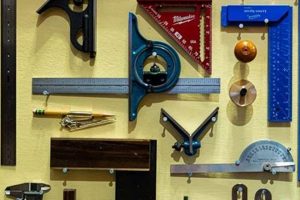
Equipment employed in shaping, cutting, and assembling wood components, often electric-powered and designed for precision and efficiency, allows for the creation of furniture, structures, and decorative items. Cordless drills, circular saws, and planers exemplify this category, facilitating a wide range of carpentry tasks.
The utilization of these implements provides enhanced accuracy, reduced labor time, and improved overall project quality. Historically, such equipment represents a significant evolution from manual methods, enabling larger-scale production and more complex designs while minimizing physical strain on the user.
The subsequent sections will delve into specific types of these implements, examining their features, applications, and considerations for optimal selection and use.
Optimizing Woodworking Projects
Effective employment of powered implements significantly enhances the accuracy and efficiency of woodworking endeavors. The following guidelines aim to maximize the performance and longevity of equipment, ensuring optimal results.
Tip 1: Blade Selection is Critical. Choosing the appropriate blade for the material being cut is paramount. A fine-tooth blade minimizes splintering when working with hardwoods, while a coarser blade excels at rapid stock removal in softer woods.
Tip 2: Regular Maintenance Extends Lifespan. Consistent cleaning and lubrication of moving parts, as well as periodic inspection for wear and tear, prevents premature failure and maintains performance.
Tip 3: Secure Workpiece Clamping. Proper clamping of the material being worked on minimizes vibration and movement during operation, enhancing accuracy and reducing the risk of kickback.
Tip 4: Variable Speed Control Enhances Versatility. Utilizing implements with variable speed settings allows for greater control when working with diverse materials and performing different tasks. Slower speeds are often preferable for intricate cuts or working with dense hardwoods.
Tip 5: Dust Extraction Optimizes Visibility. Implementing a dust extraction system significantly improves visibility during cutting and sanding operations, promoting accuracy and reducing respiratory hazards.
Tip 6: Prioritize Personal Protective Equipment. The consistent use of safety glasses, hearing protection, and dust masks mitigates the risk of injury from flying debris, loud noises, and airborne particles.
Tip 7: Cord Management Enhances Safety. Properly managing power cords prevents tripping hazards and entanglement, ensuring a safe and efficient work environment.
Adherence to these principles contributes to improved project outcomes, extended equipment longevity, and a safer working environment. The subsequent section will summarize the key benefits of utilizing high-quality equipment in woodworking projects.
The next section will summarize the key benefits and considerations for selecting the appropriate equipment.
1. Power and Precision

The interplay between power and precision directly influences the effectiveness of woodworking implements. Adequate power, measured in amperage or voltage for corded models and voltage for cordless variants, provides the necessary force to efficiently cut or shape dense materials. Precision, conversely, dictates the accuracy of these operations, minimizing material waste and ensuring the integrity of the final product. The ability to consistently and accurately execute cuts, joinery, and shaping tasks stems from this symbiotic relationship.
Consider the use of a plunge router. Sufficient power allows the tool to smoothly and consistently cut through hardwoods, while precise depth control mechanisms ensure that the cut is made exactly to specification. Similarly, a circular saw with a high-torque motor combined with a high-quality blade will deliver clean, accurate cuts, free from splintering or tear-out. In contrast, insufficient power can lead to stalling, burning, or uneven cuts, necessitating rework and compromising the overall quality of the project. Lack of precision introduces inaccuracies, which can be problematic in detailed woodworking projects such as crafting furniture or instruments.
In essence, the presence of both power and precision serves as a hallmark of a well-designed woodworking instrument. These attributes are not mutually exclusive but rather interdependent characteristics that contribute to optimal performance. Selecting implements that effectively balance power and precision is therefore critical for achieving professional-grade results and ensuring the longevity of both the equipment and the finished product.
2. Durability and Reliability

Durability and reliability are paramount considerations in the selection of woodworking implements, influencing longevity, performance consistency, and overall cost-effectiveness. Professional-grade tools must withstand rigorous use and maintain consistent performance under demanding conditions.
- Material Composition and Construction
The materials employed in the construction of woodworking implements directly correlate with their durability. High-quality steel alloys for blades and gears, impact-resistant polymers for housings, and robust bearings all contribute to resistance against wear, breakage, and deformation. For instance, tools utilizing hardened steel gears demonstrate superior resistance to stripping or failure under heavy loads, while reinforced composite housings withstand impacts and vibrations that could compromise less robust designs.
- Motor Design and Protection
The motor represents a critical component influencing the reliability of powered implements. Brushless motor designs, in particular, offer enhanced durability due to the absence of friction-prone brushes, resulting in reduced maintenance requirements and extended operational life. Overload protection mechanisms, such as thermal sensors and current limiters, prevent motor damage from excessive loads or prolonged use, contributing to improved reliability and minimizing downtime.
- Sealed Components and Environmental Resistance
Woodworking environments often expose implements to dust, debris, and moisture. Effective sealing of critical components, such as bearings, switches, and electronic circuitry, prevents the ingress of contaminants that could compromise performance and longevity. Tools designed with sealed housings and corrosion-resistant materials exhibit enhanced resistance to environmental degradation, ensuring consistent operation in challenging conditions.
- Quality Control and Testing Procedures
Rigorous quality control measures and comprehensive testing protocols during the manufacturing process are essential for ensuring consistent durability and reliability. Tools that undergo extensive testing for performance, endurance, and safety are more likely to meet or exceed user expectations. Certification by recognized standards organizations provides independent verification of product quality and reliability, offering added assurance to the end user.
The integration of these facetsmaterial selection, motor design, environmental protection, and quality assurancedirectly affects the long-term performance and dependability of woodworking implements. Tools engineered with these factors in mind provide a reliable and durable solution, minimizing downtime and maximizing productivity.
3. Versatility of Application

The adaptability of implements for a range of tasks represents a key attribute, particularly when considering efficiency and cost-effectiveness within woodworking. The capacity to perform multiple functions with a single instrument reduces the need for specialized equipment and expands the scope of projects that can be undertaken.
- Interchangeable Accessories and Attachments
The availability of interchangeable accessories and attachments significantly expands the functionality of woodworking implements. Drills equipped with various drill bits, sanding attachments, and driving tips can perform drilling, sanding, and screw-driving tasks. Circular saws compatible with different blade types can cut a variety of materials, including wood, metal, and plastic. The ability to quickly and easily switch between accessories maximizes versatility and minimizes downtime.
- Adjustable Settings and Controls
Adjustable settings and controls provide users with the ability to fine-tune the performance of implements to suit specific tasks and materials. Variable speed controls allow for precise speed adjustments based on the material being worked on, preventing burning or splintering. Adjustable depth stops ensure consistent cutting depths, while bevel adjustments enable angled cuts for joinery and decorative purposes. These adjustable settings enhance precision and control, expanding the range of applications that can be performed.
- Multifunctional Tool Designs
Certain woodworking implements are designed with multiple functions integrated into a single unit. Combination sanders, for example, may incorporate both belt and disc sanding capabilities, offering versatility for both coarse material removal and fine finishing. Multi-tools feature interchangeable heads that can be used for sawing, sanding, scraping, and grinding, providing a comprehensive solution for a wide range of tasks. These multifunctional designs reduce the need for multiple tools, saving space and minimizing investment.
- Compatibility with Different Materials
The ability to work with a variety of materials expands the versatility of woodworking implements. Sanders capable of handling wood, metal, and plastics can be used in diverse projects. Routers compatible with different bit types can shape a wide range of materials, from hardwoods to softwoods. Implements designed for compatibility with different materials enable users to tackle diverse projects with a single set of tools.
The facets described demonstrate the practical implications of versatility in woodworking equipment. Prioritizing implements with interchangeable accessories, adjustable settings, multifunctional designs, and broad material compatibility maximizes efficiency, minimizes costs, and expands the range of woodworking projects that can be effectively undertaken.
4. Ergonomic Design
Ergonomic design, within the context of woodworking implements, directly impacts user comfort, reduces fatigue, and enhances safety during operation. Instruments incorporating ergonomic principles are engineered to conform to the natural contours of the human body, minimizing strain on joints, muscles, and tendons. This focus on human factors engineering is crucial for mitigating the risk of musculoskeletal disorders associated with prolonged or repetitive tasks. The design of handles, grips, and overall tool balance contributes significantly to the user’s ability to maintain control and execute precise movements with minimal effort. Weight distribution across the tool’s structure also plays a vital role in minimizing strain and improving maneuverability.
In the context of woodworking implements, an example of effective ergonomic design is observed in the handle design of many drills. Contoured grips with textured surfaces offer a secure and comfortable hold, reducing hand fatigue during extended use. The positioning of switches and controls allows for easy access and operation without requiring awkward hand movements or excessive force. Furthermore, vibration dampening technologies incorporated into the tool’s construction minimize the transmission of vibrations to the user’s hands and arms, reducing the risk of vibration-induced white finger (VWF). Similarly, the balanced design of woodworking saws minimizes wrist strain and improves control during cutting operations. The practical significance of ergonomic design lies in its ability to enhance productivity, reduce injury risk, and improve the overall user experience.
In summary, the integration of ergonomic design principles into woodworking implements yields significant benefits for users, including enhanced comfort, reduced fatigue, and improved safety. These design considerations are essential for minimizing the risk of musculoskeletal disorders and maximizing productivity. By prioritizing ergonomics, manufacturers contribute to a safer and more efficient woodworking environment. Continual refinement of ergonomic designs, guided by user feedback and biomechanical research, remains critical for further enhancing the user experience and promoting long-term well-being.
5. Safety Features

Safety features represent an integral design component of modern woodworking implements. Their presence directly mitigates the inherent risks associated with high-speed cutting, shaping, and fastening operations. The effectiveness of these features in preventing injury is paramount, influencing both the immediate well-being of the operator and the long-term sustainability of woodworking practices. Specific protective mechanisms, such as blade guards, electronic brakes, and anti-kickback systems, function as critical safeguards against accidental contact, uncontrolled movement, and projectile debris. For example, a table saw equipped with a riving knife and anti-kickback pawls substantially reduces the likelihood of workpiece binding and subsequent kickback events, a leading cause of table saw-related injuries. Similarly, an orbital sander featuring vibration dampening technology minimizes the transmission of vibrations to the operator’s hands, mitigating the risk of hand-arm vibration syndrome.
The implementation of such safety features is not merely a regulatory requirement but also a reflection of the manufacturer’s commitment to user safety and product liability. Consistent adherence to safety standards and integration of innovative protective technologies are essential for fostering a safe and productive woodworking environment. For example, many models incorporate dual-switch activation mechanisms, requiring simultaneous engagement of two switches to initiate operation, thereby preventing accidental start-ups. Dust extraction ports, when connected to a suitable vacuum system, effectively remove airborne particulate matter, reducing respiratory hazards and improving visibility. Moreover, overload protection systems, integrated into the motor circuitry, prevent overheating and potential electrical hazards. These design elements, both active and passive, contribute to a layered safety approach, minimizing the potential for accidents and injuries.
In summary, safety features constitute a vital aspect of woodworking implements, contributing directly to the prevention of injuries and the promotion of a safe working environment. The selection of instruments with comprehensive safety features, coupled with adherence to established safety protocols, represents a responsible approach to woodworking. The integration of advanced technologies and ergonomic designs further enhances safety and reduces the risk of long-term health issues. Manufacturers who prioritize safety demonstrate a commitment to user well-being and foster a culture of responsible woodworking practices.
Frequently Asked Questions
This section addresses common inquiries concerning the selection, application, and maintenance of professional woodworking implements.
Question 1: What are the primary distinctions between brushed and brushless motor designs in woodworking implements?
Brushed motors employ carbon brushes to deliver current to the armature, leading to friction and eventual wear. Brushless motors utilize electronic commutation, eliminating the need for brushes, thereby reducing friction, increasing efficiency, and extending motor lifespan. Brushless designs generally offer superior performance and require less maintenance.
Question 2: What considerations should guide the selection of appropriate blade types for circular saws?
Blade selection is dependent on the material being cut and the desired finish. Fine-tooth blades are recommended for hardwoods and materials requiring a smooth, splinter-free cut. Coarse-tooth blades are suitable for rapid stock removal in softer woods. Specialized blades are available for cutting non-ferrous metals, plastics, and composite materials.
Question 3: What safety precautions should be observed when operating a woodworking router?
Proper safety protocols include wearing eye and ear protection, securing the workpiece with clamps, and using a router table for increased stability and control. The direction of cut should oppose the rotation of the router bit to prevent climb cutting and potential kickback. Regularly inspect bits for sharpness and damage.
Question 4: How frequently should woodworking implements undergo maintenance?
Maintenance frequency depends on usage intensity and environmental conditions. Daily cleaning to remove dust and debris is recommended. Lubrication of moving parts should be performed weekly or bi-weekly, depending on usage. Regular inspection for wear and tear, including blade sharpness, cord integrity, and switch functionality, is crucial for maintaining optimal performance and safety.
Question 5: What is the significance of variable speed control in woodworking applications?
Variable speed control enables the adjustment of motor speed to match the material being worked on and the task being performed. Slower speeds are typically used for hardwoods, intricate cuts, and routing operations, while higher speeds are suitable for softer woods and rapid material removal. This adjustability enhances precision, reduces burning, and optimizes tool performance.
Question 6: What factors contribute to the ergonomic design of woodworking implements?
Ergonomic design considers the physical interface between the user and the tool, aiming to minimize strain and fatigue. Features such as contoured grips, balanced weight distribution, vibration dampening, and strategically positioned controls enhance comfort, reduce the risk of musculoskeletal disorders, and improve overall user experience.
These answers provide foundational knowledge to enhance woodworking practices. Understanding these key aspects contributes to safer, more efficient, and higher-quality woodworking outcomes.
The subsequent section will address advanced woodworking techniques and best practices.
Conclusion
This article comprehensively addressed the salient aspects of implements designed to work with wood. It explored considerations ranging from power and precision to ergonomic design and essential safety features. A clear understanding of these elements is crucial for both novice and experienced woodworking professionals.
The proper selection and utilization of such equipment are essential for achieving quality outcomes and maintaining a safe and productive work environment. Continued awareness and adaptation to technological advancements in woodworking implements will undoubtedly shape the future of the craft.