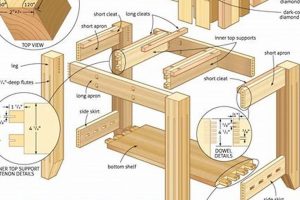
Crafting items from wood offers older adults opportunities for creative expression and skill development. These endeavors range from simple birdhouses to more complex furniture pieces, adapting to varying skill levels and physical capabilities. A small, easily managed example includes building a decorative wooden box, while a more advanced undertaking could involve crafting a rocking chair.
Engaging in these activities provides numerous advantages. It enhances cognitive function through planning and problem-solving, while the physical act of working with wood improves dexterity and motor skills. Historically, woodworking has offered a sense of accomplishment and purpose, connecting individuals to tangible results of their labor and fostering a sense of pride. Furthermore, these creations can provide a source of income or meaningful gifts for family and friends.
The subsequent sections will explore specific project ideas suitable for individuals with varying levels of experience, along with guidance on adapting workspaces and techniques to accommodate physical limitations, ensuring safety and maximizing enjoyment.
Guidance for Engaging with Woodcraft
This section provides practical guidance to ensure a safe and rewarding experience when crafting items from wood. Emphasis is placed on adapting techniques and environments to suit individual needs and abilities.
Tip 1: Prioritize Safety: Always wear appropriate personal protective equipment, including safety glasses and a dust mask. Utilize push sticks and clamps to maintain a safe distance from cutting tools.
Tip 2: Optimize Workspace Ergonomics: Adjust workbench height to minimize strain. Ensure adequate lighting to improve visibility and reduce eye fatigue. Organize tools within easy reach to prevent unnecessary stretching or bending.
Tip 3: Select Appropriate Projects: Begin with smaller, simpler projects to build confidence and skills. Gradually progress to more complex designs as proficiency increases. Consider kits designed specifically for beginners.
Tip 4: Modify Tools for Comfort: Add ergonomic grips to tools to improve comfort and reduce hand fatigue. Explore adaptive tools designed for individuals with limited strength or dexterity.
Tip 5: Utilize Pre-Cut Materials: Reduce physical exertion by purchasing pre-cut lumber or components. This minimizes the need for heavy lifting and repetitive sawing.
Tip 6: Break Down Tasks: Divide larger projects into smaller, more manageable steps. This prevents overexertion and allows for frequent breaks.
Tip 7: Seek Assistance When Needed: Do not hesitate to ask for help with tasks that are physically challenging or require specialized equipment. Local woodworking clubs or community centers may offer support and guidance.
Adhering to these recommendations promotes a safer, more comfortable, and ultimately more enjoyable pursuit, allowing for continued engagement and skill development.
The concluding section will summarize the benefits of engaging in these creative endeavors and provide resources for further exploration.
1. Safety Precautions

Prioritizing safety is paramount when considering crafting wood items, especially for those in their later years. Reduced physical strength, diminished eyesight, and slower reaction times necessitate a heightened awareness of potential hazards. These guidelines ensure a secure and enjoyable engagement with woodcraft.
- Eye Protection
Woodworking inevitably involves the creation of dust and flying debris. Safety glasses or goggles are essential to shield the eyes from particles that can cause irritation, injury, or long-term vision problems. A common scenario involves sawdust propelled during sanding, which can easily enter the eye if unprotected. Proper eye protection is not merely a recommendation but a fundamental requirement.
- Respiratory Protection
Sanding and cutting wood releases fine particles into the air, which can irritate the respiratory system and potentially lead to long-term health issues. A dust mask or respirator is crucial to filter out these particles and prevent them from being inhaled. The type of mask required depends on the type of wood being worked with; some woods are known to be more allergenic than others and necessitate a higher level of protection.
- Hearing Protection
The use of power tools, such as saws and routers, can generate significant noise levels, potentially causing hearing damage over time. Earplugs or earmuffs are vital to reduce the decibel level reaching the ears. Prolonged exposure to loud noises without protection can lead to irreversible hearing loss, making hearing protection an indispensable component of a safe woodworking environment.
- Ergonomic Considerations
Maintaining proper posture and utilizing ergonomically designed tools can prevent strain and injury. Adjusting workbench height to minimize bending and stretching is crucial. Additionally, using tools with comfortable grips and taking frequent breaks can help reduce fatigue and the risk of repetitive strain injuries. The physical demands of woodworking require careful attention to ergonomic principles to ensure long-term well-being.
Integrating these safety measures into woodworking activities allows older adults to engage in a fulfilling and productive hobby without compromising their health or well-being. The implementation of these precautions transforms a potentially hazardous activity into a safe and rewarding pursuit.
2. Adaptable Designs
Adaptable designs in the context of woodworking prioritize accessibility and safety for older adults. The inherent physical demands of woodworking require modifications to traditional plans and techniques to accommodate varying levels of mobility, strength, and dexterity. These adaptations ensure continued participation and enjoyment of the craft.
- Simplified Joinery
Traditional woodworking joinery techniques often require precision and significant physical exertion. Adaptable designs frequently replace complex joinery with simpler alternatives like screws, dowels, or glue. These methods reduce the force required for assembly and allow for greater margin of error, making projects more manageable for individuals with limited strength or dexterity. An example includes using pocket hole joinery instead of mortise and tenon for assembling a small table.
- Reduced Project Size
Larger projects demand more physical stamina and can be difficult to maneuver, especially in limited workspaces. Adaptable designs often focus on smaller projects, such as birdhouses, small storage boxes, or decorative items. These smaller-scale projects are less physically demanding and can be completed in shorter timeframes, reducing the risk of fatigue and injury. A comparison would be building a spice rack instead of a full-sized bookshelf.
- Pre-Cut Materials
Cutting lumber to precise dimensions can be a significant challenge, particularly for individuals with mobility limitations. Utilizing pre-cut materials or kits eliminates the need for heavy lifting and precise sawing, reducing the physical strain associated with woodworking. This allows individuals to focus on the assembly and finishing aspects of the project, maximizing enjoyment and minimizing risk. An example would be purchasing a pre-cut birdhouse kit instead of cutting the lumber from raw stock.
- Ergonomic Considerations
Adaptable designs incorporate ergonomic principles to minimize strain and discomfort. This includes modifications to workbench height, tool selection, and project layout. For instance, a project might be designed to be assembled on a raised platform to reduce bending, or tools with ergonomic grips might be recommended to reduce hand fatigue. These considerations enhance comfort and safety, allowing for longer and more enjoyable periods of engagement.
The application of adaptable designs broadens the accessibility of woodworking, enabling older adults to participate safely and confidently. By modifying traditional approaches to prioritize ease of use and physical limitations, these designs foster continued engagement with a rewarding and stimulating activity.
3. Skill Maintenance

Sustaining cognitive and physical abilities is a key concern during the aging process. Woodworking, through carefully chosen projects, offers a practical avenue for maintaining and even enhancing a range of skills relevant to overall well-being.
- Fine Motor Skills
Woodworking projects often involve intricate hand movements, such as sanding, carving, and assembling small components. These actions necessitate precise hand-eye coordination and dexterity. For example, crafting small wooden toys or intricate wooden boxes requires manipulating tools and materials with accuracy. The repeated execution of these tasks helps maintain and improve fine motor skills, which are essential for everyday activities like writing, eating, and buttoning clothing.
- Problem-Solving Abilities
Each woodworking project presents unique challenges, from interpreting plans to overcoming unexpected material flaws. Addressing these challenges requires problem-solving skills, including critical thinking, spatial reasoning, and adaptability. For instance, determining how to best join two pieces of wood or how to correct a misaligned cut demands analytical thought. Successfully navigating these challenges reinforces cognitive function and sharpens problem-solving abilities.
- Spatial Reasoning
Woodworking involves visualizing three-dimensional objects from two-dimensional plans and understanding spatial relationships between different components. This spatial reasoning is crucial for accurately cutting, shaping, and assembling wood. Constructing a birdhouse from a blueprint, for example, requires mental manipulation of shapes and sizes. Engaging in these activities helps maintain and potentially improve spatial reasoning abilities, which are important for navigation, map reading, and other everyday tasks.
- Concentration and Focus
Woodworking requires sustained attention and focus, especially during tasks that demand precision, such as using power tools or applying finishes. Minimizing distractions and maintaining concentration are essential for safety and successful project completion. Completing a detailed carving project, for example, necessitates prolonged focus to avoid mistakes. This sustained mental effort helps maintain cognitive sharpness and enhances the ability to concentrate on other tasks.
The benefits of woodworking extend beyond the specific skills employed during the crafting process. The sense of accomplishment and the tangible results of labor contribute to a feeling of purpose and self-efficacy, promoting overall cognitive and emotional well-being. The ability to maintain and even improve essential skills through woodworking provides a significant advantage in maintaining independence and quality of life.
4. Cognitive Stimulation
The engagement provided by crafting with wood presents a potent form of cognitive stimulation for older adults. The planning stages of projects necessitate mental organization and sequencing. Executing the designs requires problem-solving as unforeseen challenges arise during the construction process. For example, modifying a design to accommodate an irregularly shaped piece of wood necessitates adapting the original plan, stimulating critical thinking and creative problem-solving. This constant mental engagement serves as a continuous exercise for the brain.
The execution of projects also demands sustained attention and focus. Working with tools, following instructions, and ensuring accuracy requires concentrated mental effort. The act of visualizing the final product and mentally manipulating the components enhances spatial reasoning abilities. Further, learning new techniques or working with unfamiliar types of wood encourages intellectual curiosity and a willingness to adapt, staving off mental stagnation. A senior creating a complex marquetry pattern, for instance, maintains cognitive agility by working through intricate steps and visualizing the final composition.
In conclusion, woodworking provides a unique opportunity for cognitive stimulation that transcends simple recreation. The necessity for planning, problem-solving, and sustained attention promotes mental agility, mitigating cognitive decline. While some may encounter challenges related to project complexity or physical limitations, these are frequently overcome with adaptable designs and supportive resources, reinforcing the practical significance of woodworking as a valuable cognitive exercise.
5. Social Interaction

The sphere of social interaction offers significant benefits for senior citizens participating in crafting items from wood. Group activities promote cognitive engagement, emotional well-being, and a sense of community, enhancing the overall experience beyond the individual creation of objects.
- Shared Learning Environments
Group woodworking sessions provide opportunities for shared learning. Participants exchange knowledge, techniques, and tips, enriching their skill sets. Beginners benefit from the guidance of more experienced individuals, while seasoned woodworkers find value in collaborative problem-solving and exposure to alternative approaches. For example, a senior encountering difficulty with a particular joint can receive direct assistance and advice from peers in the group setting, facilitating a supportive learning environment.
- Community Building
Shared projects and group activities foster a sense of community. Regular participation in woodworking groups creates social bonds and reduces feelings of isolation. The shared experience of creating tangible items provides a common ground for conversation and camaraderie, strengthening social networks. Building a large-scale community project, such as benches for a local park, instills a sense of purpose and collective achievement.
- Mentorship Opportunities
Woodworking groups offer mentorship opportunities, benefiting both mentors and mentees. Experienced woodworkers can share their skills and knowledge with younger generations or less experienced seniors, passing on valuable traditions and techniques. The act of mentoring provides a sense of purpose and fulfillment for the mentor, while the mentee gains valuable guidance and support. A senior craftsman instructing a novice in the art of wood carving exemplifies this mutually beneficial relationship.
- Reduced Isolation
Participation in group woodworking activities combats social isolation, a common issue among older adults. Regular engagement with others provides social stimulation and reduces feelings of loneliness. The structured nature of woodworking sessions encourages interaction and collaboration, fostering a sense of belonging. Seniors who regularly attend woodworking workshops often report improved mood and reduced feelings of social isolation, demonstrating the positive impact of social interaction on mental health.
These facets demonstrate the intrinsic link between social interaction and the practice of crafting items from wood. The benefits extend beyond the creation of objects, encompassing social, emotional, and cognitive advantages that contribute to a richer, more fulfilling life for senior citizens. Engaging in group woodworking activities can serve as a powerful tool for promoting social well-being and enhancing the overall quality of life.
6. Therapeutic Benefits

The engagement in creating objects from wood offers a range of therapeutic benefits for senior citizens, impacting both physical and mental well-being. The repetitive motions involved, such as sanding or carving, can improve hand strength and dexterity, counteracting the effects of arthritis or other age-related conditions that limit mobility. Moreover, successfully completing a woodworking project provides a tangible sense of accomplishment and purpose, which can combat feelings of depression or low self-esteem. For example, a senior citizen who has lost a spouse may find solace and renewed purpose in crafting wooden toys for grandchildren, transforming grief into a creative and meaningful activity. This connection is not merely anecdotal; studies have demonstrated the positive impact of creative activities on mental health in older adults, highlighting the importance of these outlets for maintaining psychological well-being.
Beyond the immediate physical and emotional benefits, the focus and concentration required for woodworking can improve cognitive function and memory. The act of planning, designing, and executing a project stimulates various parts of the brain, promoting mental acuity and potentially delaying the onset of cognitive decline. Furthermore, the tactile nature of working with wood can be particularly beneficial for individuals with sensory processing issues or dementia. The feel of the wood, the smell of sawdust, and the visual satisfaction of creating something beautiful can provide a calming and grounding experience. For instance, a senior citizen with Alzheimer’s disease may find comfort and a sense of connection in sanding a piece of wood, triggering positive memories and stimulating sensory awareness. The design of projects can be tailored to be repetitive, straightforward, and have clear visual goals to assist seniors with cognitive impairments and maximize the benefit and enjoyment from the activity.
In summary, the therapeutic benefits of crafting objects from wood for senior citizens are multifaceted, encompassing physical, mental, and cognitive advantages. The activity provides a means of maintaining and improving motor skills, promoting emotional well-being, and stimulating cognitive function. While challenges such as physical limitations or access to resources may exist, these can often be overcome through adaptive techniques, supportive communities, and accessible programs, reinforcing woodworking’s practical significance as a valuable therapeutic outlet for senior citizens and is a worthy element for consideration.
Frequently Asked Questions
This section addresses common inquiries and misconceptions regarding engagement in creating wooden items by older adults. The aim is to provide clear, factual information to promote informed decision-making.
Question 1: What safety precautions are essential when older adults engage in woodworking?
Prioritizing safety is paramount. Essential precautions include wearing safety glasses, a dust mask or respirator, and hearing protection. Workspaces should be well-lit and organized to prevent trips and falls. Power tools should be used with caution, adhering strictly to manufacturer instructions. Adaptive aids, such as push sticks and clamps, are recommended to maintain a safe distance from cutting edges. Regular breaks are crucial to prevent fatigue and maintain focus.
Question 2: How can woodworking projects be adapted to accommodate physical limitations?
Adaptations include simplifying project designs, utilizing pre-cut materials, and employing ergonomic tools. Projects should be scaled down to manageable sizes, reducing the physical demands of lifting and maneuvering. Workbench height should be adjusted to minimize bending and stretching. Power tools should be selected based on ease of use and reduced vibration. Consider alternative joinery methods like screws or dowels instead of complex traditional joints.
Question 3: What are the cognitive benefits of woodworking for senior citizens?
Woodworking provides significant cognitive stimulation. Planning and executing projects enhance problem-solving abilities, spatial reasoning, and concentration. Learning new techniques and working with different types of wood encourages intellectual curiosity and adaptability. The act of visualizing the final product and mentally manipulating components reinforces cognitive function and helps to maintain mental acuity.
Question 4: How can woodworking contribute to social well-being among older adults?
Woodworking groups and workshops foster social interaction and community building. These environments provide opportunities for shared learning, peer support, and mentorship. Regular engagement in woodworking activities reduces feelings of isolation and promotes a sense of belonging. The shared experience of creating tangible items provides a common ground for conversation and camaraderie.
Question 5: Are there any specific types of woodworking projects that are particularly suitable for senior citizens?
Projects that are easily adaptable and offer a strong sense of achievement are generally well-suited. Simple birdhouses, small storage boxes, decorative items, and wooden toys are good starting points. Kits that include pre-cut materials and detailed instructions can further simplify the process. The focus should be on enjoyment and skill development, rather than striving for complex or physically demanding projects.
Question 6: How can older adults access resources and support for engaging in woodworking?
Local community centers, senior centers, and woodworking clubs often offer classes and workshops. Online resources, including instructional videos and project plans, are readily available. Hardware stores and lumberyards may provide assistance with material selection and cutting. Seeking guidance from experienced woodworkers can provide valuable tips and support. Funding for adaptive tools and equipment may be available through disability support organizations.
These FAQs offer foundational knowledge regarding woodworking projects, addressing safety concerns, project adaptation, cognitive and social advantages, appropriate project types, and accessibility of resources. Informed engagement will enhance both enjoyment and safety.
The subsequent section will summarize and conclude the information presented.
Conclusion
This exploration of woodworking projects for senior citizens has highlighted key benefits, safety considerations, and adaptation strategies. Engagement fosters cognitive stimulation, maintains physical dexterity, and promotes social interaction, enhancing overall well-being. Practical guidance emphasizes safety precautions, ergonomic adjustments, and the selection of appropriate projects, ensuring accessibility and enjoyment for individuals with varying abilities.
The pursuit of woodworking offers a tangible means of maintaining independence, fostering creativity, and connecting with both individual potential and a wider community. Continued exploration and support of these activities are vital to enriching the lives of older adults, promoting active aging, and preserving valuable skills. The impact extends beyond the crafted object, contributing to a richer, more fulfilling life and a greater sense of purpose.