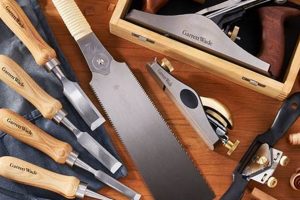
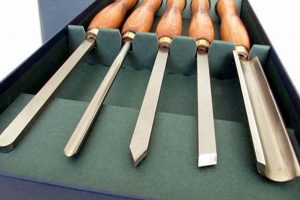
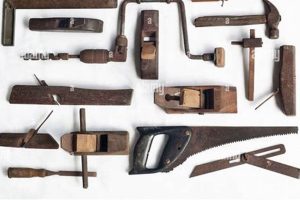
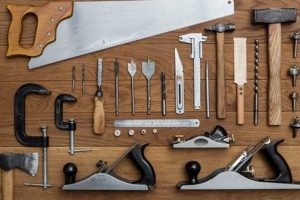
Implements employed by Norse craftsmen for shaping wood during the Viking Age represent a significant facet of their material culture. These items, typically forged from iron, facilitated the construction of dwellings, ships, furniture, and various utilitarian objects. Examples include axes, adzes, chisels, and saws, each designed for specific tasks.
The utilization of these instruments was fundamental to Viking society, enabling maritime exploration, trade, and settlement expansion. The efficiency and precision afforded by these tools contributed to the construction of robust longships and sturdy dwellings, essential for survival in challenging environments. Understanding the design and function of these historic implements provides insight into Viking ingenuity and resourcefulness.
Subsequent sections will delve into the specific types of shaping instruments used, the metallurgical techniques employed in their creation, and their impact on various aspects of Norse life and craftsmanship. Further analysis will cover their archeological context, how they shaped societal structure, and the legacy they have left to modern woodworking techniques.
Guidance on Viking-Age Woodcrafting
The following guidelines aim to provide insight into techniques mirroring those used by Norse artisans, emphasizing efficiency and precision.
Tip 1: Wood Selection is Crucial: Opt for locally sourced hardwoods like oak or ash, favored by Viking craftsmen for their durability and workability. Consider the wood’s grain and moisture content before initiating any project.
Tip 2: Sharpening Implements is Essential: Maintain a keen edge on axes, adzes, and chisels using a whetstone or honing steel. Sharp implements are safer and produce cleaner cuts, mirroring Viking techniques.
Tip 3: Employ the Axe with Precision: Utilize controlled swings and body weight to maximize the axe’s force while minimizing fatigue. Practice hewing techniques to achieve flat surfaces and consistent dimensions.
Tip 4: Adze for Shaping Curves: Master the use of the adze for creating curved surfaces, such as ship hulls or bowl interiors. Accurate adze work requires a stable stance and controlled, downward strokes.
Tip 5: Wedge-and-Lever Technique: Employ wedges and levers for splitting logs along the grain, minimizing waste and preserving the wood’s structural integrity. This method reduces reliance on brute force.
Tip 6: Carving with Precision: Employ smaller knives and chisels to carve intricate designs or functional joints. Slow, deliberate cuts are essential for achieving desired results.
Tip 7: Natural Finishes for Preservation: Use natural oils or beeswax to protect wood from moisture and decay. These finishes replicate the techniques employed by Viking-era artisans.
Mastery of these principles allows replication of historically accurate woodworking results, demonstrating a deep comprehension of Viking-age crafting techniques.
This foundation sets the stage for further exploration of advanced shaping methods and design considerations.
1. Iron Composition

The iron composition of Norse woodcrafting implements directly determined their efficacy and longevity. Forging techniques, often involving layering different grades of iron and steel through pattern welding, were essential. This process impacted hardness, flexibility, and resistance to corrosion, thereby defining the tool’s overall performance. Poorer-quality iron resulted in implements prone to fracturing or rapid blunting, significantly reducing productivity. Conversely, superior metal compositions produced durable implements capable of withstanding prolonged use in demanding environments. The quality of iron ore available, combined with the smith’s skill, dictated the functionality of axes, adzes, and chisels.
Consider the impact on shipbuilding, a cornerstone of Viking society. The axes and adzes used to shape planks for longships required exceptional strength and sharpness. The iron’s ability to hold an edge during the rigorous process of hewing and shaping directly influenced the speed and quality of ship construction. Inferior iron composition could lead to structural weaknesses in the vessel, posing risks during long voyages and affecting their dominance in maritime activities. Similarly, in constructing dwellings, robust tools were vital. Only durable instruments were able to build resilient structures for their everyday life.
In conclusion, the nature of the iron used in these tools was not merely a material characteristic but a central determinant of their value and utility. Mastery over ironworking techniques was a crucial component of Norse technological prowess. The selection of iron ore and subsequent processing into functional shapes played a pivotal role in Norse society’s ability to build ships, homes, and other essential elements of their world.
2. Edge Retention

Edge retention, the ability of a cutting implement to maintain a sharp working edge over time, was a critical performance parameter for shaping tools in the Viking Age. Given the limitations in material science and manufacturing capabilities of the period, achieving and maintaining optimal edge retention was essential for efficiency and productivity. A dull tool required more force, resulting in operator fatigue and imprecise work. The quality of the iron and the skill of the smith in hardening and tempering the steel were direct determinants of the tool’s ability to retain an edge. Tools frequently employed in shipbuilding, such as axes for felling trees and adzes for shaping planks, underwent significant stress, making edge retention a primary concern. Without consistent sharpness, construction projects would be severely hampered.
Metallurgical processes and sharpening techniques directly influenced edge retention. Norse smiths employed methods like pattern welding to combine different grades of iron and steel, creating composite blades with enhanced properties. Hardening and tempering processes also improved the steel’s ability to resist deformation and wear. In practical terms, frequent sharpening using whetstones was necessary to restore the edge lost through use. Historical records and archaeological finds indicate the widespread use of whetstones, attesting to the importance of maintaining a sharp cutting edge. The skill of the user in sharpening also factored into the equation; an improperly sharpened tool would quickly lose its edge, regardless of the initial quality of the steel.
In summary, edge retention was a vital attribute of Viking-age crafting tools, influencing both efficiency and output quality. The intersection of material quality, forging techniques, and sharpening practices determined a tool’s capacity to perform effectively over prolonged periods. Understanding this attribute and its contributing factors offers insight into the technological constraints and ingenuity of Norse craftsmen. It also highlights the practical challenges they faced in shaping wood for shipbuilding, construction, and other essential aspects of their lives. The ability to maintain a sharp edge was not merely a convenience; it was fundamental to their ability to thrive in their environment.
3. Ergonomic Design

Ergonomic design considerations, though not explicitly documented in Viking Age texts, are demonstrably present in the form and function of Norse shaping tools. The efficiency and safety of woodworking activities depended heavily on implements that minimized strain and maximized control. Thus, the physical attributes of axes, adzes, and other tools reveal an inherent understanding of human biomechanics and a practical approach to design.
- Handle Shape and Material
The handles of many Viking shaping tools, typically crafted from wood, exhibit shapes that conform naturally to the hand. Tapered designs and subtle curves allowed for a secure grip and efficient transfer of force. Archaeological evidence suggests the use of woods with inherent shock-absorbing properties, further reducing strain on the user’s hands and wrists. These attributes facilitated prolonged use without excessive fatigue.
- Weight Distribution
The distribution of weight within an implement directly impacted its usability. Axes, for example, often featured a head with a carefully calculated weight to provide sufficient force for felling or hewing. The balance point was strategically placed to minimize the effort required for each swing. Tools that were either too heavy or poorly balanced would have been less effective and more dangerous to operate.
- Blade Angle and Orientation
The angle and orientation of the blade relative to the handle were crucial for efficient cutting and shaping. Adzes, designed for creating curved surfaces, feature a blade angled to allow for controlled removal of material. Axes intended for splitting wood have a different blade geometry than those used for felling trees. These variations reflect a keen awareness of the biomechanics involved in different woodworking tasks.
- Tool Size and Proportions
The size and proportions of instruments were adapted to the user’s physical capabilities and the task at hand. Smaller axes and knives were employed for detailed carving, while larger axes were reserved for heavy work. The length of the handle was often proportionate to the blade size, allowing for optimal leverage and control. The tools size and proportions were not standardized, variations reflecting the needs of the user and materials they were working with.
These facets of ergonomic design, though not explicitly labeled as such by Viking-Age craftsmen, are evident in the surviving examples of shaping tools. The practical demands of woodworking necessitated implements that were both efficient and safe to use, resulting in designs that reflect a profound understanding of human biomechanics. The shaping tools design underscores the close relationship between form and function in Viking technology.
4. Multipurpose Adaptability
The multipurpose adaptability of Norse shaping instruments stemmed from resource constraints and the breadth of woodworking tasks demanded by Viking society. A single tool might serve multiple functions, reducing the need for an extensive and specialized collection. This adaptability was essential for efficient resource management and workforce optimization.
- Axe as a Universal Tool
The axe, a ubiquitous implement in Viking society, exemplifies multipurpose adaptability. Beyond felling trees, it functioned as a hewing tool for shaping timber, a splitting tool for firewood, and even a weapon for defense. Variations in axe head design and handle length allowed for task-specific modifications, but the underlying design remained adaptable across a wide range of applications. Examples include carpentry, building construction and also as a weapon.
- Adze for Shaping and Smoothing
The adze, primarily intended for shaping curved surfaces, also served as a smoothing tool for finishing flat surfaces. Skilled craftsmen could utilize the adze to create ship hulls, bowls, or structural components for dwellings. The angle of the blade and the technique of the user determined the tool’s versatility, allowing it to perform tasks beyond its primary design intention. Examples includes to create round surface, curve shapes, and as smoothing tools.
- Knives for Carving and Utility
Knives were not solely for woodworking but served a multitude of purposes, from carving intricate designs to preparing food and processing animal hides. The size and shape of the blade varied depending on the intended use, but the fundamental design remained consistent. Examples include tool for fine detailing, whittling, or as a common tools used for their daily basis.
- Limited Specialization, Broad Application
The limited degree of tool specialization underscored the need for adaptability. While specialized tools existed, their prevalence was less than multipurpose implements. This necessity drove innovations in technique and design, enabling craftsmen to accomplish diverse tasks with a smaller set of implements. Examples of non specialized tool usage is also impacted societal structure.
The emphasis on multipurpose adaptability in Norse shaping instruments reflects both practical constraints and technological ingenuity. This trait optimized resource utilization and allowed Viking craftsmen to accomplish a wide range of woodworking tasks with a limited number of tools, impacting their society’s ability to construct ships, build dwellings, and create essential goods.
5. Craftsmanship Precision

Craftsmanship precision represents a defining characteristic of Norse woodcraft, directly influencing the functionality, durability, and aesthetic qualities of objects created with Viking-age shaping instruments. The meticulous execution of woodworking tasks underscores a deep understanding of material properties and a commitment to high standards.
- Jointing Techniques
Precise jointing was paramount in Viking construction, particularly in shipbuilding and house building. Mortise-and-tenon, dovetail, and lap joints required accurate measurements and careful execution to ensure structural integrity. Poorly fitted joints compromised strength and increased the risk of failure under stress. Archaeological evidence reveals consistently tight and well-executed joints, demonstrating a high level of skill.
- Surface Finishing
The quality of surface finishing reflected the attention to detail invested in woodworking projects. Smooth, even surfaces enhanced the aesthetic appeal of objects and reduced the risk of splintering or cracking. Achieving a fine finish required sharp tools, steady hands, and a thorough understanding of wood grain. Polished surfaces found on furniture and decorative items indicate a dedication to craftsmanship beyond mere functionality.
- Decorative Carving
Norse carving traditions placed a premium on precision and intricacy. Intricate patterns, geometric designs, and zoomorphic motifs adorned a variety of wooden objects, from ship prows to household items. Executing these carvings demanded exceptional skill and control over the shaping tools. Symmetrical designs and clean lines are indicative of the craftsman’s mastery. The carvings were not mere decoration, but also held symbolic values.
- Tool Maintenance
Maintaining shaping instruments in optimal condition was essential for achieving craftsmanship precision. Sharp edges, properly aligned blades, and well-balanced handles allowed for accurate and controlled cuts. Regular sharpening, cleaning, and repair were integral to the woodworking process. The time and effort invested in tool maintenance directly impacted the quality of the final product.
These dimensions of craftsmanship precision highlight the dedication and skill of Norse woodworkers. The fusion of technical expertise, aesthetic sensibility, and meticulous execution resulted in durable, functional, and visually appealing objects that reflect the values and ingenuity of Viking society. The evidence observed with the shaping tools demonstrate how they shaped the society.
Frequently Asked Questions
This section addresses prevalent inquiries concerning instruments employed for shaping wood by craftsmen during the Viking Age, providing insight into their functionality, construction, and significance.
Question 1: What materials comprised these shaping implements?
The primary material was iron, often combined with steel through techniques such as pattern welding. Wooden handles, typically of ash or oak, were affixed to the metal components.
Question 2: What shaping tools were most commonly used?
Axes, adzes, chisels, and knives represent the most frequently encountered shaping instruments. Saws, though less common, also played a role in woodworking activities.
Question 3: How were these edges maintained?
Whetstones and honing steels were employed to regularly sharpen and maintain the edges of shaping implements. Consistent maintenance was crucial for optimal performance.
Question 4: Did specialization exist in the design of these crafting tools?
While some degree of specialization existed, most instruments were designed for multipurpose use. The axe, for instance, served as both a felling and hewing tool.
Question 5: What impact did the quality of iron have on their function?
The quality of iron directly influenced the durability, edge retention, and overall efficacy of these implements. Superior iron resulted in more robust and reliable tools.
Question 6: How were these shaping tools used to build ships?
Axes were employed for felling trees and hewing planks, while adzes shaped the curved surfaces of the hull. Precision in these tasks was essential for seaworthiness.
In summation, understanding the materials, types, maintenance, and impact of quality on these shaping tools provides essential insight into Viking-age woodworking techniques.
The subsequent section will explore the archaeological evidence supporting our understanding of Norse woodcraft.
Conclusion
The preceding analysis of “viking woodworking tools” has illuminated their central role in Norse society. These implements, characterized by iron composition, edge retention, ergonomic design, multipurpose adaptability, and craftsmanship precision, facilitated maritime exploration, architectural construction, and the creation of essential goods. The functional attributes of these instruments, as well as the skills required for their effective use, reflect a sophisticated understanding of materials and techniques.
Further research and archaeological discoveries will undoubtedly deepen our comprehension of Norse woodcraft and its impact on Viking culture. Continued investigation into “viking woodworking tools” remains essential for a more complete understanding of their technological prowess and societal structure. Future endeavors should focus on refining analytical methods, expanding archaeological surveys, and integrating interdisciplinary perspectives to unlock further insights into this critical aspect of Norse history.