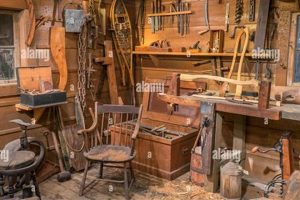
A curated collection of implements utilized in traditional Japanese carpentry, often featuring hand-forged steel and meticulously crafted handles, provides a means for shaping wood with precision. These sets typically include saws (nokogiri), chisels (nomi), planes (kanna), and marking tools, each designed with specific purposes and techniques in mind. A complete ensemble enables the creation of joinery known for its strength and aesthetic appeal.
The significance of these collections lies in their ability to achieve intricate and seamless wood connections without the use of nails or screws. This approach fosters durability and minimizes stress on the wood fibers. Historically, these tools were indispensable in the construction of temples, shrines, and homes, reflecting a deep respect for natural materials and a dedication to sustainable practices. The benefits extend beyond structural integrity to include the development of fine motor skills and an appreciation for craftsmanship.
Subsequent sections will delve into the specific types of saws included, detailing their unique cutting actions and applications. Further examination will address the properties of the steel used in the construction of chisels and planes, highlighting the importance of sharpness and proper maintenance. An analysis of traditional joinery techniques and the use of marking tools will also be presented.
Essential Guidance for Traditional Carpentry Implements
Effective utilization of a set of traditional Japanese carpentry implements requires meticulous attention to detail and a commitment to understanding the nuances of each tool. The following guidance aims to enhance performance and longevity.
Tip 1: Prioritize Sharpness. The efficiency of these tools is directly proportional to their sharpness. Regular honing and sharpening are critical. Dull edges increase effort, reduce precision, and can lead to unsafe practices.
Tip 2: Understand Grain Direction. Employ saws (nokogiri) and planes (kanna) in accordance with the wood grain. Improper grain orientation can result in tear-out and uneven surfaces.
Tip 3: Master Pull Stroke Techniques. Japanese saws cut on the pull stroke, requiring a different body posture and force application compared to Western saws. Practice to develop a smooth, controlled pull.
Tip 4: Maintain Proper Moisture Content. The wood’s moisture content significantly impacts the performance of chisels (nomi) and planes. Ensure that the wood is appropriately seasoned for the intended application.
Tip 5: Store Tools Properly. Protect the blades from rust and damage. Store each tool in a designated location, ideally within a protective case or wrap, to prevent accidental contact and maintain edge integrity.
Tip 6: Use Appropriate Pressure. Excessive force is rarely necessary. Sharp tools and correct technique minimize the need for strenuous pressure, improving control and reducing fatigue.
Tip 7: Learn Traditional Joinery. Understanding traditional Japanese joinery methods is essential for maximizing the potential of these tools. Research and practice various joinery techniques to achieve strong and aesthetically pleasing results.
These guidelines emphasize the importance of precision, maintenance, and technique when working with these specialized implements. Adherence to these principles ensures optimal performance and longevity of the equipment.
The following sections will address specific tool maintenance procedures and advanced joinery applications in greater detail.
1. Steel quality

Steel quality is a paramount determinant of performance and longevity within a collection of traditional Japanese carpentry implements. The composition and forging process of the steel directly influence the tool’s ability to hold a sharp edge, resist wear, and withstand the stresses inherent in demanding woodworking tasks. For instance, high-carbon steels, commonly employed in crafting chisels and plane blades, exhibit exceptional hardness, allowing for the creation of exceptionally keen edges capable of producing smooth, precise cuts. Conversely, inferior steel is prone to rapid dulling, requiring more frequent sharpening and compromising the quality of the work. Furthermore, the lamination of hard, high-carbon steel with softer, more malleable steel in some tools provides a balance between edge retention and structural integrity, preventing catastrophic failure under stress.
The impact of steel quality extends beyond edge retention. The resistance to corrosion, a crucial factor in maintaining the functionality of these tools, is also contingent upon the steel’s composition and heat treatment. Tools exposed to humid environments are particularly susceptible to rust, which can degrade the cutting edge and necessitate time-consuming restoration efforts. Moreover, the steel’s ability to withstand repeated sharpening cycles without significant material loss is a direct reflection of its quality. Lower-grade steels may exhibit excessive grinding during sharpening, shortening the tool’s lifespan and altering its intended geometry. In practice, a well-crafted chisel made from high-quality steel can maintain its edge through extensive use, requiring only occasional honing to restore its sharpness. A poorly made chisel, on the other hand, may require frequent and aggressive sharpening, ultimately diminishing its usefulness.
In summary, steel quality is an indispensable component of these tool sets, dictating both performance and durability. The selection of appropriate steel alloys and adherence to rigorous forging processes are essential for producing implements capable of meeting the exacting demands of traditional Japanese woodworking. Neglecting steel quality compromises the overall value and functionality of the kit, potentially leading to diminished results and increased maintenance requirements.
2. Blade geometry

Blade geometry is a critical determinant of the functionality and precision attainable within a collection of traditional Japanese woodworking implements. The specific angles, curves, and profiles of each blade dictate its cutting action, efficiency, and suitability for particular tasks. Variations in geometry are not arbitrary; they reflect a deep understanding of wood properties and the desired outcome of each woodworking operation.
- Saw Tooth Configuration
The arrangement and shape of saw teeth directly influence cutting speed and surface finish. Rip saws feature larger teeth with greater rake angles for efficient cutting along the grain. Crosscut saws employ smaller teeth with minimal rake, producing cleaner cuts across the grain. Specialized saws, such as dovetail saws, have fine teeth with minimal set, allowing for extremely precise cuts in joinery. The correct selection of saw tooth geometry is paramount for achieving optimal results and minimizing tear-out.
- Chisel Bevel Angle
Chisel bevel angle affects both cutting efficiency and edge durability. Steeper bevel angles are sharper but more fragile, suitable for paring softwoods. Shallower bevel angles are more robust but require greater force, appropriate for chopping hardwoods. The precise bevel angle is carefully chosen to balance sharpness and durability based on the intended application. Improper bevel angles can lead to chipped edges or inefficient cutting.
- Plane Blade Camber
The subtle curve (camber) on a plane blade influences the cutting width and ability to remove material. A more pronounced camber allows for aggressive stock removal but can leave visible tracks. A minimal camber produces a smoother finish but requires more passes. The degree of camber is adjusted based on the desired surface finish and the type of wood being planed. Incorrect camber can result in uneven surfaces or difficulty in achieving a flat plane.
- Knife Blade Profile
Japanese marking knives feature precisely angled and sharpened profiles for scoring wood fibers prior to sawing or chiseling. These knives create a clean, crisp line that guides subsequent cuts, minimizing errors and ensuring accurate joinery. The knife blade profile is designed to sever fibers rather than crush them, producing a sharp, well-defined edge. Inappropriate knife profiles can result in ragged edges and inaccurate layout marks.
The meticulous design and execution of blade geometry are hallmarks of quality Japanese woodworking tools. Understanding the relationship between blade geometry and specific woodworking tasks is essential for maximizing the potential of these implements and achieving superior results. Variations in blade geometry are carefully considered to optimize performance for different wood species, grain orientations, and joinery techniques. Proper maintenance and sharpening are crucial for preserving the intended geometry and ensuring continued optimal performance.
3. Handle ergonomics
Handle ergonomics, the science of designing tools to optimize human well-being and overall system performance, plays a crucial role in the effectiveness of implements within a Japanese woodworking tool kit. Poorly designed handles can lead to fatigue, reduced control, and increased risk of injury, directly impacting the precision and quality of the final product. The connection is causal: optimized handle design enhances user comfort and control, resulting in more accurate cuts, smoother surfaces, and stronger joinery. For example, consider the handle of a Japanese pull saw. Its elongated, often slightly curved, design allows for a full-handed grip and even distribution of force during the pull stroke. This minimizes strain on the wrist and allows the user to apply consistent pressure throughout the cut, contributing to a straighter, more precise kerf. The significance lies in its integration within the woodworking process, influencing both the efficiency and safety of the user.
Further illustrating the importance, the handle shape of a Japanese chisel is often octagonal or oval, providing a secure grip that prevents twisting during use. The specific wood chosen for the handle, frequently Japanese white oak, offers a balance of durability, shock absorption, and comfortable texture. The tang of the chisel extends through the handle, providing a robust connection that withstands repeated hammering. Similarly, plane handles, whether integral to the plane body or separate, are carefully shaped to conform to the users hand, facilitating smooth, controlled movements across the wood surface. The angle of the handle relative to the plane body is also a critical ergonomic consideration, affecting the users ability to apply downward pressure and maintain a consistent cutting depth. This attention to detail ensures that the user can work for extended periods without undue strain.
In conclusion, ergonomic handle design is not merely a superficial feature of Japanese woodworking tools; it is an integral component that directly influences performance, safety, and long-term user well-being. The commitment to optimizing handle shape, material, and connection methods reflects a broader philosophy of craftsmanship that prioritizes both the quality of the finished product and the experience of the artisan. Challenges may arise in adapting traditional designs to accommodate diverse hand sizes and physical capabilities, highlighting the need for ongoing innovation in ergonomic design. The connection to the overarching theme of Japanese woodworking emphasizes the holistic approach that values precision, efficiency, and the harmonious relationship between the user and the tool.
4. Joinery precision
Joinery precision, the accurate and secure interlocking of wooden components, stands as a defining characteristic of traditional Japanese woodworking. The achievement of such exacting joinery is inextricably linked to the tools within a specialized carpentry implement set. The tools themselves, including saws (nokogiri), chisels (nomi), and planes (kanna), are meticulously designed and crafted to facilitate this level of accuracy. The relationship is causal: precise tools enable precise joinery. Conversely, tools of lesser quality or condition inhibit the creation of tight, strong joints. Without accurate tools, complex joints such as dovetails, mortise-and-tenon, and various scarf joints cannot be executed with the required level of precision, resulting in structurally unsound or aesthetically displeasing constructions. Japanese joinery is reliant on the set.
Consider the example of creating a dovetail joint using a Japanese dovetail saw (dozuki) and chisels. The saw’s thin blade and fine teeth allow for extremely accurate cuts along the layout lines. The chisels, with their sharp edges and precisely ground bevels, enable the removal of waste material with minimal deviation. When properly executed, the resulting dovetail joint exhibits a seamless fit, providing exceptional strength and resistance to racking forces. The precision achieved is a direct consequence of the tool’s inherent capabilities and the carpenter’s skill in utilizing them. Moreover, the reliance on hand tools encourages a more intimate understanding of the wood’s properties and the mechanics of joinery, leading to greater overall precision. A specific example would be crafting a Kumiko screen that is totally made from a tool set.
In summary, joinery precision is a fundamental element of Japanese woodworking, and its attainment is directly dependent upon the quality and proper utilization of a specialized carpentry implement set. The tools are designed to facilitate accuracy, enabling the creation of strong and aesthetically pleasing joints. Challenges in achieving precision may arise from tool maintenance issues, wood selection, or a lack of experience in traditional techniques. However, a commitment to honing skills and maintaining tools will ensure successful execution of complex joinery, and this is directly a result of using the tool set. Understanding the correlation between tool quality and joinery outcomes is paramount for preserving the integrity and beauty of this art form.
5. Maintenance regime

A consistent and meticulous maintenance regime is indispensable for preserving the functionality and extending the lifespan of implements within a Japanese woodworking tool kit. These tools, often characterized by their high-carbon steel blades and intricate construction, require regular attention to maintain optimal performance.
- Sharpening and Honing
The sharpness of cutting edges is paramount. Saws, chisels, and planes demand frequent sharpening and honing to maintain their ability to cut cleanly and efficiently. Neglecting this aspect leads to increased effort, reduced precision, and potential damage to the wood being worked. For example, a dull chisel can crush wood fibers instead of cleanly severing them, resulting in a ragged surface. Regular sharpening, using water stones of varying grits, restores the blade’s edge to its intended geometry and sharpness.
- Rust Prevention
High-carbon steel is susceptible to rust, particularly in humid environments. Preventing rust is crucial to avoid degradation of the blade’s cutting edge and overall structural integrity. Applying a thin coat of camellia oil or a similar protectant after each use creates a barrier against moisture and oxidation. Storing tools in a dry, well-ventilated location further minimizes the risk of rust formation. Rust, if allowed to develop, requires time-consuming removal and can permanently compromise the tool’s performance.
- Handle Care
The wooden handles of Japanese woodworking tools require periodic maintenance to prevent cracking, splitting, or loosening. Applying linseed oil or a similar wood preservative helps to maintain the wood’s moisture content and prevent dimensional changes. Loose handles can compromise control and accuracy, potentially leading to unsafe practices. Proper handle care ensures a secure grip and prolonged tool usability.
- Adjustment and Alignment
Tools such as planes require periodic adjustment and alignment to maintain optimal cutting performance. The blade must be properly aligned with the sole of the plane to ensure a uniform cutting depth. Adjustment screws and other mechanisms should be lubricated and inspected regularly to prevent binding or wear. Misalignment can result in uneven surfaces and difficulty achieving a flat, smooth finish.
These facets of a maintenance regime are interconnected and essential for ensuring the longevity and optimal performance of implements within a Japanese woodworking tool kit. Neglecting any aspect of maintenance can lead to diminished results, increased effort, and a shortened tool lifespan. Adherence to a consistent and thorough maintenance schedule preserves the value and functionality of these specialized implements, enabling the continued practice of traditional Japanese woodworking techniques.
6. Historical context

The historical context profoundly influences the design, use, and appreciation of a Japanese woodworking tool kit. These implements are not merely functional objects; they are artifacts embodying centuries of tradition, technological evolution, and cultural values. Understanding this history provides insight into the tools’ unique characteristics and their significance within Japanese craftsmanship.
- Evolution of Steel Forging Techniques
The development of sophisticated steel forging techniques in Japan, particularly during the feudal era, directly impacted the quality and performance of woodworking tools. The use of tatara iron smelting and differential hardening processes allowed for the creation of blades with exceptional sharpness and durability. The katana sword-making tradition significantly influenced the techniques applied to crafting saw blades, chisel edges, and plane irons. This historical progression is reflected in the materials and construction of tools found in contemporary tool kits, many of which still employ similar methods. The importance of this is to have high quality.
- Influence of Architectural Styles
The evolution of Japanese architectural styles, from the simple structures of early Shinto shrines to the complex joinery of Buddhist temples and traditional homes (minka), necessitated the development of specialized woodworking tools. The increasing demand for intricate joinery techniques, such as dovetails, mortise-and-tenon joints, and complex roof structures, spurred innovations in tool design and precision. These historical architectural demands shaped the specific types of saws, chisels, and planes included in standard tool kits. If without a good tool you could not possibly build great structures.
- The Carpenter Guild System (Kumiai)
The traditional carpenter guild system played a vital role in preserving and transmitting woodworking knowledge and techniques. Guilds established standards for tool quality, apprenticeship programs, and ethical practices. These structures ensured the continuity of traditional skills and prevented the proliferation of substandard tools. The influence of the kumiai can be seen in the consistency of tool designs and the emphasis on craftsmanship that persists today. It can be said this is the “school system” of japanese tool world.
- Impact of Modernization and Globalization
The Meiji Restoration (1868) marked a period of rapid modernization and globalization in Japan. Western woodworking tools and techniques were introduced, leading to both innovation and challenges for traditional craftsmanship. While some Western tools were adopted, Japanese carpenters largely retained their reliance on hand tools and traditional methods, emphasizing precision and sustainability. This resistance to complete Westernization ensured the survival of unique Japanese tool designs and techniques, many of which are now experiencing a resurgence in popularity worldwide. Now that many carpenter try to keep the original tool for better work.
These historical facets collectively demonstrate that a Japanese woodworking tool kit is not merely a collection of instruments, but a tangible embodiment of centuries of accumulated knowledge, technological innovation, and cultural values. Appreciating this historical context enriches the user’s understanding of the tools and their significance within the broader landscape of Japanese craftsmanship, providing deeper insights into a set of woodworking instruments.
7. Cutting action
The cutting action of each tool within a Japanese woodworking tool kit is a defining characteristic, inextricably linked to the design and intended application of that tool. The distinct methodologies employed, whether by saw, chisel, or plane, dictate the quality, precision, and efficiency of the woodworking process. The connection is causal: the specific cutting action, determined by blade geometry and technique, directly impacts the final result. For instance, Japanese saws (nokogiri) cut on the pull stroke, a design that allows for thinner blades and reduced material waste compared to push-cut saws. This pulling action also places the blade in tension, resulting in a straighter cut with less binding. The impact of this approach is particularly evident in the creation of intricate joinery, where precise cuts are essential. Without understanding the specific nature of the cutting action, a woodworker cannot effectively utilize the tools within the set, leading to compromised outcomes. The relationship is crucial for Japanese woodworking.
The chisel (nomi), another fundamental tool, employs a chopping or paring cutting action. The angle of the bevel, the sharpness of the edge, and the technique used to apply force all influence the quality of the cut. A sharp chisel, properly used, severs wood fibers cleanly, creating a smooth, defined surface. Conversely, a dull chisel can crush the fibers, leading to a ragged or uneven finish. Furthermore, the plane (kanna) utilizes a shearing cutting action to create smooth, flat surfaces. The precise adjustment of the blade, the angle of attack, and the direction of the cut relative to the wood grain are critical factors in achieving the desired outcome. This shearing action minimizes tear-out and produces a surface that requires minimal sanding. Proper knowledge of the tool is the best to maximize performance.
In summary, the cutting action of each tool in a Japanese woodworking tool kit is a key determinant of its effectiveness and a critical factor in achieving high-quality results. Understanding the nuances of each cutting action requires both theoretical knowledge and practical experience. While challenges may arise in mastering the specialized techniques associated with each tool, the investment of time and effort yields significant rewards in terms of precision, efficiency, and the overall quality of craftsmanship. This mastery is central to realizing the full potential of the implement set, as a set, and to creating wooden work which will last for decades. Japanese Woodworking is more than cutting, but an art of a craftsman.
Frequently Asked Questions
This section addresses common inquiries regarding traditional Japanese woodworking implements. The information provided aims to clarify misconceptions and offer a comprehensive understanding of these specialized tools.
Question 1: What distinguishes a Japanese woodworking tool kit from Western equivalents?
The primary distinction lies in the cutting action. Japanese saws cut on the pull stroke, allowing for thinner blades and finer cuts. Planes and chisels often feature laminated steel construction for superior sharpness and edge retention. Handle designs and overall ergonomics also differ significantly.
Question 2: Is specialized training required to effectively utilize a Japanese woodworking tool kit?
While not strictly mandatory, formal training or extensive experience is highly recommended. The techniques for using these tools differ significantly from those employed with Western tools. Proper instruction minimizes the risk of injury and maximizes the quality of the work.
Question 3: What are the essential components of a basic Japanese woodworking tool kit?
A fundamental set typically includes a ryoba (double-edged saw), a dozuki (dovetail saw), a selection of chisels (nomi) in varying sizes, a smoothing plane (kanna), a marking gauge (kebiki), and a marking knife (kiridashi).
Question 4: How frequently should Japanese woodworking tools be sharpened?
Sharpening frequency depends on the type of wood being worked and the intensity of use. As a general guideline, tools should be sharpened whenever the cutting action becomes noticeably less efficient or the edge exhibits signs of dullness. Regular honing can extend the intervals between sharpening.
Question 5: What type of steel is commonly used in Japanese woodworking tools, and why is it significant?
High-carbon steel, often laminated with softer steel, is prevalent. This combination provides exceptional sharpness, edge retention, and resistance to breakage. The precise composition and forging process influence the tool’s overall performance and longevity.
Question 6: Are Japanese woodworking tools more expensive than their Western counterparts, and if so, why?
Japanese tools are often more expensive due to the use of high-quality materials, the labor-intensive manufacturing processes, and the emphasis on precision craftsmanship. The superior performance and longevity of these tools often justify the higher initial cost.
In summary, Japanese woodworking tool kits represent a distinct approach to woodworking, characterized by specialized designs, meticulous craftsmanship, and a commitment to precision. Proper training and maintenance are essential for realizing the full potential of these implements.
The next section will provide guidance on selecting a Japanese woodworking tool kit tailored to specific skill levels and woodworking projects.
Conclusion
The preceding analysis has comprehensively explored the characteristics, utilization, maintenance, and historical significance of the japanese woodworking tool kit. The critical factors of steel quality, blade geometry, handle ergonomics, joinery precision, and consistent maintenance are each essential elements that contribute to both the effectiveness and the longevity of these specialized implements. Proper understanding of these instruments requires both a knowledge of the materials and techniques applied, as well as a clear vision of the finished article being crafted. It provides insight and a deeper appreciation for the work being done.
The continued employment of the japanese woodworking tool kit preserves a valuable tradition that emphasizes precision, sustainability, and a deep connection to natural materials. The knowledge imparted by these implements remains relevant for any woodworker that wishes to craft high quality art which is beautiful and will endure through the ages. Future craftspeople that endeavor to undertake traditional methods are encouraged to embrace the values embedded in these tools and learn to utilize these techniques to craft with the same vision that others have done for centuries.