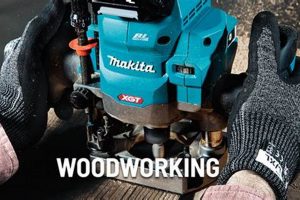
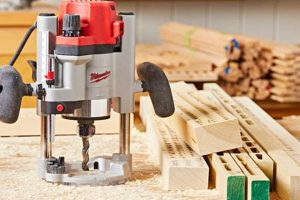
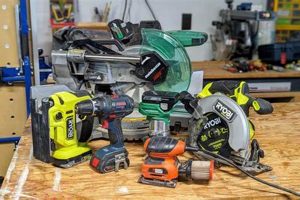
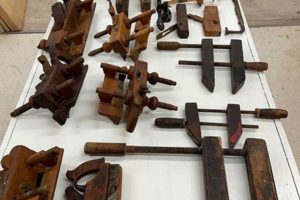
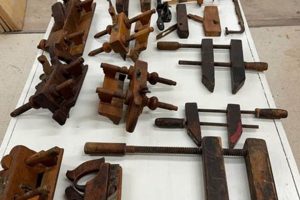
These implements are essential for the final stage of woodworking, enhancing both the appearance and longevity of a project. Examples include brushes for applying coatings, spray guns for even distribution of finishes, and specialized sanding devices for achieving a smooth surface.
Employing the correct instruments is paramount to achieving a professional outcome. They not only improve the aesthetic appeal of wood projects but also provide protection against environmental factors like moisture and ultraviolet radiation. Historically, achieving refined surfaces required laborious hand-tool techniques; modern implements significantly reduce time and increase precision.
The subsequent sections will delve into the specifics of various categories, outlining their uses, maintenance, and selection criteria to ensure optimal results in any woodworking endeavor.
Tips Regarding Woodworking Finishing Instruments
Optimizing the application and maintenance of instruments related to the final stage of woodworking will result in improved project quality and extended tool lifespan.
Tip 1: Select Appropriate Abrasives: Choose sandpaper grits based on the wood type and desired finish. Progress sequentially from coarser to finer grits to avoid deep scratches.
Tip 2: Utilize Proper Brush Technique: When applying coatings with brushes, maintain a wet edge and work with the grain to ensure an even, streak-free finish. Clean brushes immediately after use with appropriate solvents.
Tip 3: Maintain Spray Gun Cleanliness: Disassemble and thoroughly clean spray guns after each use to prevent clogging and ensure consistent atomization in subsequent applications.
Tip 4: Inspect and Replace Pads Regularly: For orbital sanders, routinely inspect sanding pads for wear or damage. Replace worn pads to maintain consistent sanding pressure and prevent surface imperfections.
Tip 5: Apply Finishes in Controlled Environments: Ensure adequate ventilation and consistent temperature and humidity when applying finishes to optimize drying times and minimize defects like blushing or orange peel.
Tip 6: Consider the Compatibility of Finishing Products: Ensure the products used are compatible with each other and the substrate, and that the correct procedures are being applied.
Tip 7: Prioritize Safety: Wear appropriate PPE. Gloves and eye protection will protect you from harmful substances.
Adhering to these guidelines will contribute to superior surface finishes, increased tool longevity, and a safer working environment.
The final section will discuss selecting the right implements for specific woodworking projects.
1. Application Techniques

The efficacy of woodworking finishing is inextricably linked to the application techniques employed. These techniques, involving tools like brushes, spray guns, and specialized applicators, directly influence the final appearance and protective qualities of the coating. Incorrect application can lead to undesirable outcomes such as uneven coverage, runs, bubbles, or inconsistencies in sheen. For example, applying varnish with an incorrect brush stroke can leave visible brush marks, detracting from the overall aesthetic. Proper application ensures the finish bonds effectively with the wood surface, providing optimal protection against moisture, UV radiation, and physical wear.
Variations in technique arise based on the type of finish being applied. Spray application of lacquer, for instance, demands a different skillset and implements compared to hand-rubbing oil. The choice of instrument also plays a crucial role. A high-volume, low-pressure (HVLP) spray gun, when used correctly, delivers a fine, even mist of finish, minimizing overspray and maximizing material efficiency. Conversely, a low-quality brush may shed bristles or fail to distribute the finish evenly, impacting the final result negatively. Understanding the nuances of each technique is thus essential for selecting the appropriate instruments and achieving the desired outcome.
Masterful utilization of coating instruments leads to an improved surface. Consistent practice and a dedication to proper technique are vital. Therefore, it becomes apparent that application strategies are paramount and must be at the center of discussion when examining instruments related to surface enhancement.
2. Material Compatibility

The successful application of a wood finish hinges critically on material compatibility. This encompasses the interaction between the wood species, the chosen finishing product, and the instruments used for application. Incompatibility can lead to a range of issues, from poor adhesion and discoloration to premature finish failure.
- Wood Species and Finish Type
Different wood species possess varying densities, porosities, and resin contents, influencing their ability to absorb and bond with finishes. For instance, open-grained woods like oak often require a grain filler to achieve a smooth surface before applying varnish. Applying an oil-based finish to a resinous wood like pine without proper preparation can result in uneven drying and a tacky surface. The choice of finish must be carefully matched to the inherent properties of the wood.
- Solvent-Based vs. Water-Based Finishes
Solvent-based and water-based finishes exhibit different chemical properties that impact their compatibility with various wood species and application instruments. Solvent-based finishes, such as lacquers, typically require specialized spray equipment designed to handle flammable materials and resist solvent degradation. Water-based finishes, while generally safer and easier to clean up, may raise the grain of some woods, necessitating additional sanding. The appropriate instruments must be selected based on the chemical composition of the finish.
- Application Tool Materials and Finish Composition
The materials used in brushes, spray guns, and other implements must be compatible with the chemical composition of the finish. Certain solvents can degrade synthetic brush bristles or corrode metal components in spray guns, leading to contamination of the finish and equipment failure. Natural bristle brushes are often preferred for applying oil-based finishes, while synthetic brushes are better suited for water-based products. Compatibility charts provided by finish manufacturers can guide instrument selection.
- Pre-existing Finishes and Subsequent Coats
When applying a new finish over an existing coating, compatibility becomes even more crucial. Applying an incompatible finish can cause lifting, cracking, or delamination. Thorough surface preparation, including sanding to remove the existing finish or applying a compatible primer, is essential. The instruments used for surface preparation, such as sanding blocks and scrapers, must also be appropriate for the existing finish type to avoid damage to the underlying wood.
Understanding and addressing the nuances of material compatibility is paramount to achieving a durable, aesthetically pleasing, and long-lasting wood finish. Careful consideration of the wood species, finish type, application instruments, and any existing coatings will minimize the risk of incompatibility issues and ensure a successful outcome. Proper material compatibility, therefore, directly influences the effectiveness of coating instruments.
3. Surface Preparation

Surface preparation is a critical determinant of the success of any woodworking finishing endeavor. Inadequate preparation directly impacts the adhesion, uniformity, and overall longevity of the applied finish, irrespective of the quality of the coating itself. The relationship between implements used for surface preparation and the final result is causal: imperfections left during this stage are often magnified, not concealed, by subsequent finishing. For instance, failure to thoroughly sand a wood surface prior to staining can result in uneven color absorption, highlighting scratches and inconsistencies in the wood grain. Similarly, residual dust or contaminants prevent proper bonding, leading to premature peeling or chipping of the finish.
The process involves a range of implements. Sandpaper, available in varying grits, is crucial for smoothing surfaces and removing imperfections. Scrapers are employed for removing old finishes or flattening localized areas. Wire brushes are utilized for texturing or cleaning. The choice of instrument depends on the wood species, the type of finish being applied, and the desired outcome. For example, when applying a delicate finish like shellac to a fine-grained wood, high-grit sandpaper and careful hand-sanding are essential to avoid scratching. Conversely, preparing a heavily textured wood for an opaque paint finish might require coarser abrasives and power sanding tools to achieve a uniform surface.
In summary, surface preparation represents an indispensable precursor to applying finishes. This stage’s meticulous execution, which involves the strategic use of specific instruments, directly determines the quality and durability of the final product. Neglecting proper surface preparation introduces significant challenges, potentially negating the benefits of even the most advanced finishing materials and techniques. Therefore, proficiency in surface preparation constitutes a core element of skilled woodworking.
4. Equipment Maintenance

Consistent equipment maintenance is integral to the performance and longevity of instruments involved in the application of surface coatings in woodworking. A direct causal relationship exists: neglected maintenance inevitably leads to diminished tool performance, compromised finish quality, and increased operational costs. The proper functioning of spray guns, for instance, relies on clean nozzles and fluid passages. Residue buildup restricts airflow and disrupts atomization, resulting in uneven finish distribution, runs, and orange peel texture. Regular cleaning, disassembly, and lubrication, as specified by the manufacturer, are crucial preventive measures. Similarly, abrasive instruments like sanding blocks and power sanders require routine inspection and replacement of worn components. Damaged sanding pads or belts compromise surface preparation, introducing scratches and inconsistencies that ultimately detract from the final appearance.
Beyond immediate performance, equipment maintenance extends tool lifespan and protects investment. Unattended tools are prone to corrosion, component failure, and irreversible damage. A spray gun left uncleaned after use risks clogging and nozzle damage, potentially rendering it unusable. Power sanders with neglected bearings or worn electrical cords pose safety hazards and compromise operational efficiency. The financial implications of neglecting maintenance are significant. Premature tool replacement, rework due to finish imperfections, and downtime caused by equipment failure contribute to increased costs. Conversely, a proactive maintenance regime minimizes these risks, ensuring reliable performance, consistent finish quality, and a maximized return on investment.
Effective equipment maintenance requires a combination of knowledge, resources, and consistent practice. Understanding the specific maintenance requirements of each tool, following manufacturer’s guidelines, and allocating sufficient time and resources are essential. Challenges include the perceived time commitment and the lack of readily available information. However, the long-term benefits of a proactive maintenance program far outweigh the initial investment. Prioritizing equipment maintenance is not merely an operational detail; it is a fundamental aspect of achieving professional-quality woodworking finishes and ensuring the sustainability of woodworking practices.
5. Protective Properties

The application of finishes to woodworking projects serves a crucial function beyond mere aesthetics: it imparts vital protective properties that safeguard the underlying wood from environmental stressors and physical wear. Specific instruments are essential for achieving these protective benefits.
- Moisture Resistance
Finishes create a barrier against moisture absorption, preventing swelling, warping, and decay. Instruments like brushes and spray guns facilitate the even application of sealants and varnishes, ensuring comprehensive coverage, especially in vulnerable areas like end grain. Example: Marine-grade varnish, applied with a quality brush, protects wooden boat components from constant water exposure.
- UV Protection
Ultraviolet radiation degrades wood fibers, leading to discoloration, cracking, and structural weakening. UV-resistant finishes, applied with spray systems, contain additives that absorb or reflect harmful rays, prolonging the life of outdoor furniture and structures. Example: Exterior-grade paints, applied with spray guns, protect wooden siding from sun damage.
- Scratch and Abrasion Resistance
Durable finishes provide a hard, protective layer that resists scratches, scuffs, and abrasions from everyday use. Application techniques, such as multiple thin coats applied with fine brushes or spray equipment, enhance the overall hardness and durability of the finish. Example: Polyurethane coatings, applied with a foam brush, protect hardwood floors from wear and tear.
- Chemical Resistance
Certain finishes offer protection against chemical spills and stains, preventing permanent damage to the wood surface. Instruments designed for applying these specialized coatings, such as applicators with chemical-resistant components, ensure proper and even distribution of the protective layer. Example: Epoxy resin coatings, applied with specialized mixing and dispensing tools, protect laboratory countertops from chemical corrosion.
The selection of appropriate implements for applying finishes with specific protective qualities is paramount. Furthermore, the application of these implements can further enhance the protective characteristics of the material, solidifying their importance in woodworking.
The following addresses prevalent inquiries regarding implements associated with the concluding phase of woodworking, providing factual and objective answers.
Question 1: What constitutes the primary difference between natural and synthetic bristle brushes in the context of finish application?
Natural bristle brushes are typically recommended for solvent-based finishes due to their ability to absorb and evenly distribute these coatings. Synthetic bristle brushes, conversely, are better suited for water-based finishes, as they do not absorb water and swell, maintaining their shape and stiffness.
Question 2: How frequently should sandpaper be replaced during surface preparation?
Sandpaper requires replacement when it becomes clogged with dust, loses its abrasive properties, or exhibits tears or creases. Prolonged use of worn sandpaper can result in uneven sanding and surface imperfections.
Question 3: What factors determine the appropriate spray gun settings for applying a specific type of wood finish?
The optimal spray gun settings depend on the finish viscosity, desired spray pattern, and air pressure. Thicker finishes generally require wider nozzle openings and higher air pressure, while thinner finishes necessitate finer atomization and lower air pressure. Referencing the finish manufacturer’s recommendations is crucial.
Question 4: What is the purpose of a tack cloth in the finishing process?
A tack cloth serves to remove residual dust and debris from the wood surface prior to finish application. The slightly sticky texture of the cloth effectively captures particles that could compromise the adhesion and smoothness of the finish.
Question 5: How should orbital sanders be properly maintained to ensure optimal performance?
Orbital sanders require regular cleaning of dust collection systems, inspection of sanding pad condition, and lubrication of moving parts. Worn or damaged sanding pads should be replaced promptly to maintain consistent sanding pressure and prevent surface imperfections.
Question 6: What safety precautions are essential when utilizing implements related to applying surface coatings in woodworking?
Adequate ventilation is paramount to minimize exposure to harmful fumes. Protective eyewear, gloves, and respirators are essential to prevent skin and respiratory irritation. Flammable finishes should be handled away from open flames or sources of ignition.
These answers should inform practical applications of the concepts discussed and demonstrate effective practices for superior results.
The next section will provide an in-depth comparison of various types of instruments for surface enhancements.
Conclusion
This exploration has illuminated the critical role of woodworking finishing tools in achieving professional-grade results. The nuances of application techniques, material compatibility, surface preparation, equipment maintenance, and protective properties have been detailed to emphasize their integrated influence on the final product. Selection criteria must be carefully considered when choosing instruments for surface enhancements.
Mastery of these elements fosters a commitment to both aesthetic excellence and enduring quality. The information provided serves as a foundation for informed decision-making, encouraging practitioners to pursue continuous refinement in their approach to the concluding phase of woodworking.