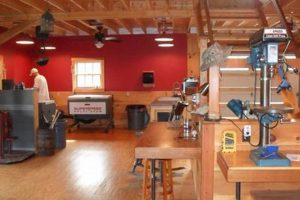
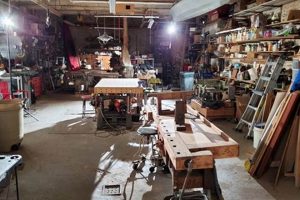
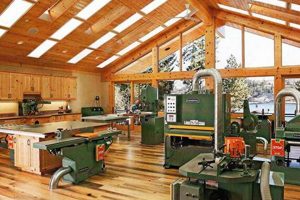
The arrangement of equipment, work surfaces, and storage within a woodworking space to optimize workflow and safety. A well-planned arrangement considers the sequence of operations, from raw material input to finished product output. For instance, a logical arrangement might position the lumber storage area near the initial processing station (such as a jointer or planer), followed by assembly and finishing areas in a progressive order.
Effective spatial organization directly influences efficiency, reduces the risk of accidents, and improves the overall quality of the finished product. Historically, workshops evolved from simple, often cramped spaces to more structured environments as woodworking techniques and machinery advanced. The ability to move materials and projects smoothly, minimize wasted movement, and maintain a clear workspace results in time and resource savings, contributing to higher productivity and improved safety for all personnel.
Understanding the principles of workspace design allows for the development of individualized solutions, tailored to specific project types, available space, and budget considerations. Careful consideration of factors such as workflow, dust collection, and power supply is essential for creating a functional and productive work environment. Subsequent discussions will delve into these elements in detail, offering specific strategies and examples for optimizing workspace organization.
Layout Optimization Strategies
The following recommendations provide guidance for establishing a functional and safe workspace, promoting efficiency and minimizing potential hazards.
Tip 1: Prioritize Workflow. Arrange equipment according to the natural sequence of operations. Lumber storage should feed into the initial milling station, followed by assembly, sanding, and finishing areas, minimizing unnecessary movement of materials.
Tip 2: Establish Zones. Designate specific areas for different tasks. A milling zone should house equipment such as the jointer, planer, and table saw. A separate assembly zone provides space for glue-ups and joinery. This separation minimizes cross-contamination and clutter.
Tip 3: Optimize Dust Collection. Integrate a comprehensive dust collection system. Position the collector centrally, with ductwork running to each machine. Ensure adequate airflow to prevent dust buildup, promoting a cleaner and safer environment.
Tip 4: Plan for Power. Strategically locate electrical outlets and circuits. Consider the power requirements of each machine and ensure sufficient amperage is available to avoid overloading circuits. Use dedicated circuits for high-draw equipment.
Tip 5: Maximize Natural Light. Position the workspace to take advantage of natural light sources. Supplement with artificial lighting to ensure adequate illumination in all areas, reducing eye strain and improving visibility.
Tip 6: Implement Storage Solutions. Utilize vertical storage to maximize floor space. Shelving, racks, and wall-mounted cabinets provide storage for lumber, hardware, and tools, keeping the workspace organized and clutter-free.
Tip 7: Ensure Adequate Workspace. Allocate sufficient space around each machine to allow for safe and comfortable operation. This includes space for maneuvering materials and operating controls. Overcrowding increases the risk of accidents.
Adhering to these guidelines enhances productivity, minimizes safety risks, and contributes to a more enjoyable and efficient woodworking experience. A well-designed work environment allows for the seamless execution of projects, resulting in higher quality craftsmanship.
The subsequent section will address specific equipment considerations, providing detailed recommendations for positioning and optimizing the functionality of key machines.
1. Workflow Optimization

Workflow optimization, in the context of woodworking, represents a systematic approach to arranging the shop to minimize movement and maximize efficiency. Its direct impact on productivity and safety necessitates careful planning during the design phase of the workshop.
- Sequential Arrangement of Stations
This facet emphasizes the logical progression of tasks. Raw material enters the shop, moves through milling (jointing, planing), fabrication (cutting, shaping), assembly, and finishing. A shop configured in this linear manner reduces the need to backtrack, preventing bottlenecks and minimizing wasted effort. An example is positioning lumber storage next to the jointer/planer, which feeds into the table saw, streamlining the initial processing stage.
- Minimization of Material Handling
Reducing the distance materials must travel is crucial for efficiency. Positioning frequently used tools and materials within easy reach reduces time wasted searching or moving. A small project cart, for instance, can transport components between stations, preventing strain and saving time. The organization of fastener storage and hand tools directly impacts the speed and accuracy of assembly.
- Elimination of Obstructions and Hazards
A clear and uncluttered workspace is paramount for safety and productivity. Obstructions, such as extension cords and piles of scrap wood, can lead to accidents and impede workflow. Designating specific storage areas for tools and materials, and implementing a consistent cleanup routine are vital to minimizing hazards. Regular sweeps of the floor also prevent slips and falls.
- Adaptability to Project Types
While a linear workflow is generally optimal, the layout must be adaptable to accommodate projects of varying scales and complexities. Movable workstations, such as portable workbenches or rolling tool cabinets, offer flexibility to reconfigure the space as needed. Consideration should be given to the potential for larger projects requiring more floor space during assembly, without disrupting other ongoing operations.
In summary, optimized workflow is not merely about arranging tools; it’s about creating a seamless system that supports the efficient and safe transformation of raw materials into finished products. A well-conceived layout that prioritizes material flow, minimizes handling, and eliminates hazards directly contributes to enhanced productivity and a more enjoyable woodworking experience.
2. Spatial Zoning

Spatial zoning, in the context of a woodworking shop, involves dividing the workshop into distinct areas based on function. This practice enhances safety, efficiency, and overall organization. Proper implementation of spatial zones directly impacts workflow and the quality of finished products.
- Material Storage Zone
This designated area provides organized storage for raw materials, such as lumber, sheet goods, and hardware. Proper storage prevents damage, allows for easy inventory management, and minimizes clutter in the working area. The material storage zone should be located near the point of entry for new materials and easily accessible from the initial processing zone.
- Milling and Machining Zone
This zone houses stationary power tools like table saws, jointers, planers, and band saws. Due to the dust and noise generated in this area, adequate dust collection and soundproofing measures are essential. The machining zone should be spatially separated from assembly and finishing areas to prevent contamination. Workbenches and outfeed support systems should be integrated to facilitate efficient material handling.
- Assembly Zone
The assembly zone is dedicated to assembling milled components into finished pieces. This area requires a large, flat work surface, ample lighting, and convenient access to hand tools, fasteners, and adhesives. This zone must be separate from dust-generating activities to avoid contamination of glue joints and finishes. Adequate ventilation is crucial for the safe use of adhesives and solvents.
- Finishing Zone
The finishing zone is reserved for applying protective coatings and decorative finishes. This area requires excellent ventilation to remove fumes and dust particles. A spray booth, if possible, is highly recommended. The finishing zone must be entirely separate from all other areas to prevent contamination from dust, debris, and other airborne particles that can compromise the finish quality. Temperature and humidity control are also important factors to consider.
The strategic implementation of spatial zones allows for a more streamlined and organized woodworking operation. By segregating tasks based on function, the risk of cross-contamination is minimized, efficiency is improved, and the overall safety of the workshop is enhanced. Careful consideration of each zone’s specific requirements is crucial for creating a productive and professional woodworking environment.
3. Dust Management
Effective dust management is integral to the design and functionality of a woodworking shop. Wood dust poses significant health risks and operational challenges, necessitating careful planning during the layout phase. Ignoring dust control measures can lead to decreased air quality, increased fire hazards, and reduced machine lifespan.
- Centralized Dust Collection Systems
A centralized system incorporates a powerful collector connected to ductwork that serves multiple machines. The collector should be sized appropriately for the shop’s equipment and usage. Placement is crucial: locating the collector outside the primary workspace minimizes noise. Duct runs must be optimized for airflow, with smooth bends and appropriately sized pipes. Blast gates, strategically positioned at each machine, allow users to control airflow and maximize suction at the point of use. Proper installation and maintenance of this system directly impacts air quality and reduces the overall dust burden within the shop environment.
- Local Dust Extraction
Local extraction systems capture dust at the source, typically using portable collectors or specialized attachments directly connected to power tools. These systems are particularly useful for hand tools and smaller machines that may not be easily integrated into a centralized system. Examples include dust shrouds for sanders and hose attachments for routers. While effective for point-source dust, local systems often lack the power and capacity of a centralized solution. Combining local and centralized dust collection strategies provides comprehensive dust control.
- Air Filtration
Air filtration systems remove airborne dust particles that escape collection at the source. These systems typically consist of ceiling-mounted units with multi-stage filters. Circulating and filtering the air within the shop reduces the concentration of fine dust particles, improving air quality and minimizing respiratory hazards. Air filtration systems are especially beneficial in enclosed spaces where ventilation is limited. Proper maintenance, including regular filter replacement, is critical for optimal performance.
- Shop Layout and Airflow
The physical arrangement of machines and work areas influences airflow patterns and dust distribution. Positioning dust-generating equipment near the dust collection system minimizes the distance dust travels. Strategically placing air filtration units to create a circular airflow pattern helps capture airborne dust particles. Avoiding dead zones and ensuring adequate ventilation are essential for maintaining clean air within the shop. Thoughtful consideration of shop layout and airflow patterns can significantly enhance the effectiveness of dust management strategies.
Integrating these facets into the woodworking shop blueprint transforms the space into a safer and more efficient work environment. A comprehensive approach to dust management reduces health risks, improves visibility, and minimizes the need for extensive cleaning, all contributing to increased productivity and a more enjoyable woodworking experience.
4. Power Accessibility

The correlation between power accessibility and woodworking shop design is fundamental to operational efficiency and safety. Power accessibility, defined as the availability of adequate and conveniently located electrical outlets to support woodworking equipment, directly influences workflow, equipment placement, and overall shop functionality. Inadequate power accessibility necessitates the use of extension cords and power strips, creating trip hazards and potentially overloading circuits, increasing the risk of electrical fires and equipment malfunction. Therefore, integrating power accessibility into the initial design phase is crucial for preventing future complications. A well-planned electrical system minimizes the need for temporary wiring solutions, ensuring a safer and more streamlined work environment.
Practical application of this understanding involves a detailed assessment of the power requirements of each machine and tool within the shop. This assessment informs the placement and amperage of electrical circuits and outlets. For example, a table saw or dust collector, with their high amperage demands, should be connected to dedicated circuits to prevent overloading. Outlets should be strategically located near each workstation to minimize the length of power cords and reduce clutter. Furthermore, consideration should be given to future expansion or the addition of new equipment, ensuring the electrical system has the capacity to support increased power demands. Utilizing a floor plan to map out equipment placement and outlet locations before commencing electrical work is a recommended practice for optimizing power accessibility.
In conclusion, power accessibility is not merely a matter of convenience but a critical element of a safe and productive woodworking shop. By prioritizing the assessment of power requirements, strategic placement of outlets, and adherence to electrical safety codes during the design phase, woodworkers can minimize hazards, optimize workflow, and ensure the longevity of their equipment. Overcoming the challenge of retrofitting inadequate electrical systems requires a proactive approach to planning and a commitment to maintaining a safe and efficient workspace. The deliberate integration of power accessibility into the workshop design is an investment in both safety and productivity.
5. Storage Solutions
Effective storage solutions are inextricably linked to a functional woodworking workspace. The nature and implementation of storage directly influence workflow efficiency, safety, and the conservation of available area. A poorly organized shop, characterized by inadequate storage, leads to wasted time searching for tools and materials, increased risk of accidents due to clutter, and diminished productivity. Conversely, a well-planned storage strategy maximizes space utilization, reduces material handling, and promotes a safer, more efficient working environment. Consider a small workshop: Vertical storage, such as wall-mounted shelves for lumber and pegboards for frequently used tools, becomes crucial for maintaining clear floor space. Without these solutions, the limited area quickly becomes congested, hindering movement and impeding project progress. The cause-and-effect relationship is evident; insufficient storage directly causes inefficiencies and safety hazards. The effect manifests in reduced output and an increased risk of injury. The practical significance of integrated storage is therefore substantial.
Real-life applications demonstrate the varied forms that effective storage can take. Lumber racks, constructed from steel or wood, provide organized storage for different species and sizes of lumber. Mobile tool carts, equipped with drawers and shelves, allow for easy transport of tools to the work area. Dust-sealed cabinets protect delicate finishing supplies from contamination. Clear plastic bins, labeled for easy identification, store fasteners and small hardware items. A specific example is the implementation of a French cleat system on a wall, allowing for the interchangeable mounting of various tool holders and storage containers. This versatility provides adaptability to changing project needs and prevents the accumulation of unused storage fixtures. These practical examples underscore the importance of tailoring storage solutions to the specific needs and constraints of the woodworking area. The design should anticipate the volume and type of materials to be stored, the frequency of access, and the available space to ensure optimal functionality.
In summary, strategic deployment of storage solutions is an essential component of successful woodworking space design. The consequences of inadequate planning are evident in decreased efficiency, increased safety risks, and underutilization of resources. The challenges associated with storage stem from the diverse nature of woodworking materials and tools, necessitating a customized approach to each situation. Integrating storage into the initial design phase, rather than as an afterthought, is vital for creating a sustainable, organized, and productive woodworking environment. The overarching theme revolves around the optimization of available resources, both space and materials, through thoughtful planning and the deliberate application of appropriate storage methodologies. The link between these solutions and the overall effectiveness of the workspace is undeniable.
Frequently Asked Questions
This section addresses common inquiries and misconceptions regarding workspace design, offering practical insights and expert guidance.
Question 1: What is the minimum space requirement for a functional woodworking shop?
The minimum space requirement varies significantly depending on the scope of projects and the size of equipment. However, a space of at least 200 square feet (approximately 14ft x 14ft) is generally considered the bare minimum to accommodate essential machinery and a small workbench. Smaller spaces may be viable for specific tasks, such as carving or model making, but are generally not suitable for larger-scale woodworking projects.
Question 2: How important is it to separate the finishing area from the rest of the shop?
Separating the finishing area is critically important for both safety and finish quality. The volatile organic compounds (VOCs) released by many finishes pose health hazards and can ignite. Furthermore, dust and debris from woodworking operations can contaminate the finish, resulting in imperfections. A dedicated finishing area with proper ventilation and dust control is strongly recommended.
Question 3: What is the most efficient way to arrange equipment for optimal workflow?
The most efficient arrangement follows the natural progression of woodworking operations. Raw materials should flow sequentially from storage to milling (jointer, planer), fabrication (table saw, router), assembly, and finally, finishing. This linear arrangement minimizes unnecessary movement and reduces the potential for bottlenecks.
Question 4: What are the key considerations for dust collection system design?
Key considerations include the size of the shop, the number and type of dust-generating machines, and the desired level of air quality. The dust collector should be sized to provide adequate airflow for all connected machines. Ductwork should be designed with smooth bends and minimal length to maximize efficiency. Regular maintenance, including filter cleaning and emptying the collection drum, is essential.
Question 5: Is it necessary to have dedicated circuits for woodworking equipment?
Dedicated circuits are highly recommended for high-amperage equipment, such as table saws, jointers, and dust collectors. Overloading circuits can lead to tripped breakers, equipment malfunction, and even electrical fires. Consulting a qualified electrician to assess the electrical load and install dedicated circuits is a prudent investment.
Question 6: What are the best strategies for maximizing storage space in a small woodworking shop?
Vertical storage solutions, such as wall-mounted shelves, pegboards, and lumber racks, are essential for maximizing space in smaller shops. Mobile storage units, such as rolling tool carts, provide flexibility and can be moved as needed. Decluttering regularly and disposing of unused materials can also significantly improve space utilization.
In summary, careful planning, attention to safety considerations, and a commitment to organization are paramount for creating a functional and productive woodworking environment.
Subsequent sections will delve into specific design examples, providing practical case studies and visual aids to illustrate effective workspace organization strategies.
Conclusion
The preceding discussion has elucidated the critical aspects of effective workspace design. From workflow optimization to strategic dust management, each element contributes to the overall functionality and safety of the woodworking environment. The deliberate integration of these principles is essential for maximizing productivity, minimizing hazards, and achieving consistent, high-quality results.
The meticulous planning and implementation of a well-conceived layout represents a significant investment in the long-term success of any woodworking endeavor. Continued refinement of these practices, coupled with adherence to safety protocols, will ensure a sustainable and rewarding experience. Further research and practical application of these principles are strongly encouraged to foster continuous improvement in the pursuit of woodworking excellence.