Equipment and implements critical for successful completion of woodworking projects undertaken by individuals form the basis for do-it-yourself (DIY) endeavors. This equipment enables individuals to craft furniture, decorative items, or undertake repairs around the home without professional assistance. A well-stocked workshop is a key factor for project success, requiring carefully selected items.
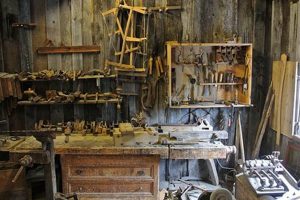
Possessing the correct implements offers several advantages. Projects are completed more efficiently and accurately. Furthermore, safety is enhanced when appropriate equipment is used for specific tasks. Historically, woodworking has relied on specialized tools handed down through generations, demonstrating the enduring need for the right implements.
The subsequent sections will outline several categories of equipment vital for the beginning woodworker. These include measuring and marking devices, cutting implements (both powered and manual), shaping and joinery instruments, and safety-related items. A selection of these items facilitates a broad range of woodworking tasks.
Guidance on Selecting Woodworking Implements
The acquisition of appropriate equipment is paramount to successful woodworking. Careful consideration should be given to the selection process, ensuring that purchases align with project requirements and skill level.
Tip 1: Prioritize Safety Equipment: Before acquiring any cutting or shaping implements, invest in essential safety gear. This includes safety glasses, hearing protection, and a dust mask. Protective measures mitigate the risk of injury.
Tip 2: Begin with Essential Hand Tools: A basic set of hand tools provides a foundation for learning fundamental woodworking techniques. This should include a hand saw, chisels, a smoothing plane, and a combination square.
Tip 3: Invest in Quality Measuring Tools: Accurate measurements are crucial for precise joinery and overall project success. A high-quality measuring tape, a set of combination squares, and a marking gauge are essential.
Tip 4: Choose Power Tools Strategically: When selecting power tools, consider the frequency of use and the types of projects undertaken. A circular saw, a drill/driver, and a sander are versatile additions to a workshop.
Tip 5: Maintain Sharp Cutting Edges: Dull tools are not only less efficient but also more dangerous. Invest in sharpening stones or a sharpening system to maintain the cutting edges of chisels, planes, and saw blades.
Tip 6: Consider Dust Collection: Woodworking generates significant amounts of dust, which can be harmful to respiratory health. A dust collection system or even a shop vacuum connected to power tools helps maintain a clean and safe work environment.
Tip 7: Opt for Versatile Equipment: Select equipment that can perform multiple functions. A combination square, for example, can be used for measuring, marking, and checking angles.
The informed selection and responsible utilization of quality equipment contribute significantly to the safety, efficiency, and ultimately, the success of woodworking endeavors.
The subsequent section will address proper maintenance and storage considerations to prolong the longevity and effectiveness of equipment.
1. Precision Measurement

Precision measurement is a cornerstone of successful DIY woodworking, directly impacting the quality and structural integrity of finished projects. Errors in measurement, however small, can compound over the course of a build, leading to misaligned joinery, dimensional inaccuracies, and overall instability. For instance, a cabinet door that is even slightly out of square due to inaccurate measurements will not fit properly within its frame, requiring rework or complete replacement. This underscores the necessity of utilizing high-quality measuring implements and employing meticulous techniques.
The connection between accurate measurement and essential woodworking equipment is manifest in several practical applications. The selection of appropriate measuring implements is critical, including steel rules, combination squares, marking gauges, and digital calipers. Each serves a specific purpose. A steel rule provides a reliable standard for length measurement, while a combination square ensures 90-degree accuracy, essential for square-edged construction. Marking gauges facilitate the precise transfer of dimensions onto workpieces, ensuring consistent material removal during joinery operations. Digital calipers offer exceptional precision for measuring internal and external dimensions, vital for crafting tightly fitting components.
In summary, precision measurement is inextricably linked to the acquisition and skillful utilization of equipment in DIY woodworking. Neglecting this fundamental aspect can lead to projects that are structurally unsound and aesthetically displeasing. A commitment to accuracy, coupled with the use of reliable implements, is therefore essential for achieving professional-quality results and maximizing the satisfaction derived from woodworking endeavors. Furthermore, challenges in precision measurement are frequently overcome through practice and the development of a thorough understanding of material properties and tool capabilities.
2. Effective Cutting

Effective cutting represents a core aspect of woodworking, impacting both the efficiency and the final quality of any project. The connection between effective cutting and woodworking equipment is intrinsically causal. Inefficient equipment or improper technique necessitates increased effort, extending project timelines, and potentially leading to imprecise results or material wastage. Conversely, properly selected and maintained cutting tools facilitate clean, accurate cuts, reducing the need for rework and ensuring components fit together as designed. For example, a dull saw blade used to cut a tenon joint will result in splintering, irregular edges, and a loose-fitting joint, necessitating the creation of a new tenon or the application of gap-filling measures.
The importance of effective cutting within the context of equipment extends beyond mere material removal. Control over the cutting process dictates the ability to execute intricate designs, create precise joinery, and shape wood to desired forms. Consider the creation of a dovetail joint, a complex interlocking structure renowned for its strength. Successful dovetail joints require precise cuts made with chisels and saws, demanding sharp cutting edges and practiced hand control. Without these elements, the joint will lack structural integrity and visual appeal. Similarly, shaping curved components requires band saws or coping saws capable of navigating intricate contours, coupled with smooth cutting techniques to minimize sanding and finishing.
In conclusion, effective cutting, enabled by appropriate equipment, is indispensable to woodworking. A focus on sharp, well-maintained implements and proper cutting techniques will inevitably lead to improved project outcomes. While challenges such as material hardness or complex cuts may arise, a commitment to quality equipment and continued skill development remains crucial for achieving professional-caliber results. Effective cutting ultimately contributes to the overall success and satisfaction derived from woodworking endeavors, supporting the broader theme of crafting durable and aesthetically pleasing items.
3. Secure Joinery

Secure joinery stands as a pivotal element in woodworking, dictating the structural integrity and longevity of finished pieces. The attainment of secure joints is directly contingent upon employing appropriate implements and techniques. A poorly executed joint compromises the overall stability of the structure, potentially leading to premature failure. Therefore, an understanding of essential implements and their roles in achieving secure joinery is critical for any woodworking endeavor.
- Chisel-Based Joinery
Mortise and tenon joints, frequently used in furniture construction, exemplify the role of chisels in secure joinery. A mortise (a socket) is carefully chiseled into one workpiece, while a corresponding tenon (a projection) is shaped on the other. The precision achieved with chisels determines the tightness and strength of the joint. Essential implements include mortise chisels, paring chisels, and a mallet, each contributing to the creation of accurate and structurally sound mortise and tenon connections. Inaccurate chisel work leads to weak or ill-fitting joints, jeopardizing the entire project.
- Saw-Dependent Joinery
Dovetail joints, renowned for their exceptional strength and resistance to pulling forces, rely heavily on precise sawing. These joints, often used in drawer construction, feature interlocking “tails” and “pins” cut into the mating workpieces. Key implements include dovetail saws, coping saws, and marking gauges. The meticulous cuts achieved with these tools enable the creation of tight-fitting, durable dovetail joints. Imprecise sawing will result in gaps and a compromised joint, diminishing its aesthetic and structural value.
- Fastener-Reinforced Joinery
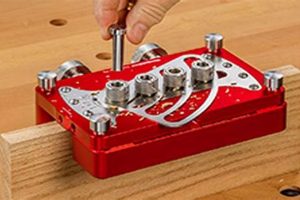
While traditional joinery methods rely primarily on the interlocking of wood, fastener-reinforced joints utilize screws, nails, or dowels to enhance strength and stability. Butt joints, often used in frame construction, can be significantly strengthened with screws or dowels. Essential tools for this approach include drills, countersink bits, and doweling jigs. These implements ensure accurate hole placement and consistent fastener depth, resulting in robust and reliable connections. Improper fastener placement weakens the joint and increases the risk of splitting the wood.
- Clamping for Secure Adhesion
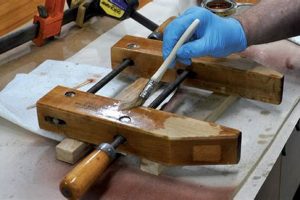
Regardless of the joinery method employed, clamping is critical for achieving secure adhesion when using glue. Clamps apply consistent pressure, ensuring intimate contact between the mating surfaces, thereby maximizing the bond strength. Essential implements include bar clamps, pipe clamps, and hand screw clamps. The choice of clamp depends on the size and shape of the workpiece. Inadequate clamping pressure leads to weak glue lines and a compromised joint. Therefore, appropriate clamping is an indispensable step in achieving secure joinery.
In summary, secure joinery is a multifactorial process reliant on selecting and skillfully employing appropriate woodworking implements. Whether utilizing traditional methods or incorporating fasteners, a commitment to precision and proper technique is paramount. The choice of implements and their skillful application directly influence the structural integrity and longevity of any woodworking project, underscoring the importance of careful consideration and continued skill development. Furthermore, variations in wood species, such as hardwoods versus softwoods, necessitate adjustments in technique and implement selection to ensure optimum joint performance.
4. Safe Operation

Safe operation is intrinsically linked to the use of implements in woodworking, representing a non-negotiable facet of all do-it-yourself projects. A direct causal relationship exists: inappropriate implement usage or a disregard for safety protocols elevates the risk of injury. Safety considerations must be integrated into every phase of a project, from initial material selection to final finishing. The selection of equipment, for instance, directly influences the potential hazards encountered during operation. A table saw without proper blade guards or a functioning anti-kickback mechanism poses a significant threat, potentially leading to severe lacerations or amputations. Conversely, utilizing a saw with integrated safety features reduces the likelihood of accidents.
The correct implementation of equipment further exemplifies the importance of safety. Employing push sticks when operating a table saw maintains a safe distance between the operator’s hands and the blade. Similarly, using clamps to secure workpieces prevents movement during drilling or cutting operations, minimizing the risk of slippage and subsequent injury. Personal protective equipment (PPE), including safety glasses, hearing protection, and dust masks, serves as a critical barrier against potential hazards. Safety glasses protect against flying debris, preventing eye injuries, while hearing protection mitigates the risk of noise-induced hearing loss. Dust masks safeguard against the inhalation of wood dust, reducing the likelihood of respiratory problems.
Therefore, safe operation is not merely an ancillary consideration; it forms an integral component of the comprehensive woodworking process. Neglecting safety protocols jeopardizes personal well-being and compromises project quality. A commitment to safe practices, achieved through informed equipment selection, proper technique, and the consistent use of PPE, ensures a safe and productive woodworking environment. It should be emphasized that adherence to safety protocols is a continuous process, requiring constant vigilance and a proactive approach to hazard identification and mitigation. This approach ensures a reduction in the potential for accidents, promoting a safe and enjoyable woodworking experience.
5. Durable Implements

The endurance of woodworking equipment directly impacts the efficiency and cost-effectiveness of do-it-yourself (DIY) projects. The essential nature of durable implements arises from their capacity to withstand repetitive use and demanding conditions without significant degradation in performance. Selecting tools built to endure translates to a long-term investment, minimizing the need for frequent replacements and reducing overall project expenses. For instance, a high-quality chisel crafted from hardened steel maintains its edge for a prolonged period, requiring less frequent sharpening and allowing for consistent, precise cuts over numerous projects. In contrast, a less durable chisel, fashioned from inferior materials, may chip or deform under stress, compromising its functionality and potentially leading to project delays or substandard results. The selection of durable implements is, therefore, a crucial component of effective DIY woodworking, influencing both the immediate outcome and the long-term sustainability of the craft.
The practical significance of durable implements extends beyond mere cost savings. Reliable equipment fosters confidence and encourages skill development. A novice woodworker is more likely to experiment and refine their techniques when equipped with tools that perform consistently and predictably. Conversely, unreliable equipment can lead to frustration and hinder the learning process. For example, a hand plane constructed with a robust body and a sharp, durable blade enables the user to achieve smooth, even surfaces, providing immediate positive feedback and motivating further exploration of planing techniques. In essence, durable implements serve as a catalyst for skill acquisition and project success. Moreover, the environmental impact of tool replacement is minimized when durable options are chosen. Reducing the consumption of resources associated with manufacturing and disposal aligns with sustainable practices and responsible resource management.
In summary, the selection of durable implements constitutes an integral element of successful DIY woodworking. The longevity, reliability, and consistent performance of high-quality tools contribute directly to project outcomes, skill development, and long-term cost savings. The challenge lies in identifying durable options from a market saturated with varying levels of quality. Researching materials, reading reviews, and seeking recommendations from experienced woodworkers are essential steps in making informed purchasing decisions. By prioritizing durability, DIY woodworkers can cultivate a robust and dependable tool collection, enabling them to pursue their craft with confidence and efficiency.
Frequently Asked Questions
The following section addresses common inquiries regarding implements integral to do-it-yourself (DIY) woodworking. The aim is to provide clarity on selection, usage, and maintenance practices.
Question 1: What constitutes a “starter set” of implements for a novice woodworker?
A foundational set typically comprises a measuring tape, combination square, hand saw, set of chisels, smoothing plane, drill/driver, and safety glasses. This selection enables the performance of basic cutting, shaping, and joining tasks, while also prioritizing user protection.
Question 2: Are power tools absolutely necessary for woodworking, or can projects be completed solely with hand tools?
While power tools enhance efficiency and facilitate the execution of complex operations, woodworking projects can indeed be completed using only hand tools. This approach emphasizes traditional techniques and can be particularly suitable for smaller-scale projects.
Question 3: How frequently should cutting implements, such as chisels and plane blades, be sharpened?
The sharpening frequency depends on the wood species being worked and the intensity of use. As a general guideline, implements should be sharpened whenever a noticeable decrease in cutting efficiency is observed. Regular honing between sharpening sessions helps to maintain a keen edge.
Question 4: What are the essential safety precautions to observe when operating power tools in a woodworking environment?
Essential safety practices include wearing safety glasses and hearing protection, using dust collection systems, ensuring adequate lighting, and thoroughly reading and understanding the tool’s operating manual before use. Additionally, avoiding loose clothing and jewelry is crucial to prevent entanglement.
Question 5: Is it necessary to invest in expensive, high-end equipment, or are more affordable options sufficient for DIY projects?
While high-end implements often offer superior performance and durability, affordable options can be adequate for many DIY projects, particularly for beginners. The key is to research and select tools that provide a reasonable balance between price and quality, prioritizing essential features and construction.
Question 6: What are the best practices for storing woodworking implements to ensure their longevity and prevent damage?
Best storage practices include cleaning implements after each use, applying rust preventative to metal surfaces, storing cutting implements in protective sheaths or cases, and keeping tools in a dry and organized environment. Proper storage minimizes the risk of corrosion, damage, and accidental injury.
The information above aims to provide insight on the essentials required in the field of woodworking. The careful implementation and understanding of these guidelines will aid in the success of any project.
The following section will provide information on maintaining and servicing your woodworking essentials.
Essential Tools for DIY Woodworking
This exploration has underscored the fundamental role of implements in successful do-it-yourself woodworking. Precision measurement, effective cutting, secure joinery, safe operation, and the utilization of durable tools were identified as critical elements. Each factor directly influences project outcomes, emphasizing the need for informed decision-making in tool selection and usage.
The careful consideration of equipment, from initial acquisition to ongoing maintenance, represents a continuous investment in the craft. By prioritizing safety, accuracy, and durability, woodworkers can realize their creative vision and build lasting, functional items. The pursuit of woodworking excellence requires a commitment to skill development and a thorough understanding of the implements and techniques employed.