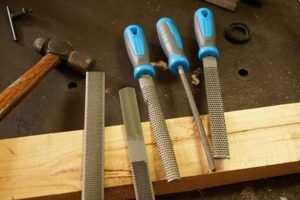
Precision instruments designed for dimensional verification and layout in woodworking are essential for achieving desired results. Examples encompass rulers, calipers, squares, and specialized devices calibrated to ensure minimal deviation from established standards. These instruments are indispensable for tasks ranging from cutting lumber to assembling intricate joinery.
The employment of these instruments yields several benefits. Projects exhibit improved structural integrity, aesthetic appeal, and functional reliability. Historically, the evolution of woodworking has been intrinsically linked to advancements in measurement technology, allowing for increasing complexity and refinement in crafted objects. Reliance on imprecise methods leads to material waste, structural instability, and ultimately, diminished quality in the final product.
Subsequent sections will examine specific types, proper usage techniques, maintenance protocols, and calibration methods. Attention will be given to selecting appropriate instruments based on project requirements and budget considerations. Understanding these nuances is vital for both hobbyists and professionals striving for superior craftsmanship.
Guidance on Maintaining Precision in Woodworking Measurement
The following guidelines address the proper use and care of devices crucial for dimensional control in woodworking. Adherence to these principles will promote accuracy and extend the service life of instrumentation.
Tip 1: Ensure proper illumination when making measurements. Insufficient light can lead to parallax errors and inaccurate readings. Supplemental lighting may be necessary in certain environments.
Tip 2: Verify the calibration of instruments periodically. Calibration blocks or certified squares should be used to confirm that devices conform to specified tolerances. Recalibration or replacement is warranted if deviations are detected.
Tip 3: Clean instruments meticulously before and after each use. Dust, debris, and wood shavings can interfere with accurate readings. A soft cloth and appropriate cleaning solutions should be employed.
Tip 4: Store instruments in a dedicated location. This prevents damage from impact, exposure to moisture, and contamination. Individual cases or tool rolls offer optimal protection.
Tip 5: Apply consistent pressure when using marking gauges and knives. Excessive or insufficient pressure can result in variations in marked lines. Practice to develop a uniform technique.
Tip 6: Double-check all measurements before committing to a cut. A simple confirmation can prevent costly errors and wasted material. Employ a systematic approach to verification.
Tip 7: Use the appropriate instrument for the task. A ruler may suffice for rough measurements, but a caliper or micrometer is necessary for high-precision applications. Selection should be based on the required level of accuracy.
Consistent application of these practices will contribute significantly to enhanced precision and reduced errors in woodworking projects. Furthermore, attention to detail in measurement processes leads to improved efficiency and resource utilization.
The subsequent conclusion will summarize the key principles discussed and emphasize the ongoing relevance of accurate measurement in achieving superior woodworking outcomes.
1. Calibration Integrity

Calibration integrity constitutes the foundation upon which reliable measurements in woodworking are built. It is the process of confirming that instruments conform to established standards, ensuring that readings are consistently accurate. Without this assurance, dimensional control is compromised, potentially leading to flawed designs and structural deficiencies.
- Traceability to Standards
Calibration involves comparing an instrument’s output to a known standard traceable to a national or international metrology institute. This establishes a documented chain of comparisons, ensuring that measurements are consistent with accepted benchmarks. Absence of traceability renders the calibration process unreliable.
- Frequency of Verification
The interval between calibrations is determined by factors such as instrument usage, environmental conditions, and required accuracy. High-usage environments necessitate more frequent checks. Inadequate verification schedules allow for cumulative errors to compromise measurements.
- Calibration Methods
Appropriate methods, employing calibrated gauge blocks, squares, and optical comparators, are essential for verifying instrument accuracy. Improper techniques can introduce systematic errors, negating the benefits of the calibration process. The methods must align with the instrument’s design and application.
- Documentation and Record Keeping
Comprehensive documentation of calibration activities is vital for maintaining accountability and identifying trends. Records should include dates, standards used, deviations found, and corrective actions taken. The absence of meticulous documentation undermines the credibility of the calibration process.
Adherence to these elements of calibration integrity is paramount for ensuring the reliability of devices used to achieve dimensional precision in woodworking. Instruments that lack proper calibration, or have untraceable calibration are not accurate woodworking measuring tools. A disciplined approach to calibration is therefore indispensable for achieving consistent and predictable outcomes in woodworking projects.
2. Material Composition

The selection of materials used in the construction of measuring instruments directly influences their accuracy, durability, and suitability for woodworking applications. Dimensional stability, resistance to wear, and susceptibility to environmental factors are all properties dictated by the constituent materials.
- Thermal Expansion Coefficient
Materials exhibit varying degrees of expansion and contraction in response to temperature fluctuations. A low thermal expansion coefficient is desirable for instruments used in environments where temperature is not strictly controlled. Steel alloys with minimal thermal expansion are often preferred to mitigate measurement inaccuracies resulting from temperature-induced dimensional changes. Instruments with high coefficients are susceptible to error in variable temperature conditions.
- Hardness and Wear Resistance
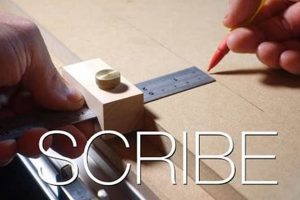
The hardness of the material directly correlates with its resistance to wear and deformation. Instruments made from hardened steel alloys retain their precision for extended periods, resisting the gradual degradation that occurs with repeated use and contact with abrasive materials. Softer materials, such as aluminum or brass, are more prone to wear, leading to inaccuracies over time. Edge retention is critical for scribes and marking knives.
- Corrosion Resistance
Exposure to moisture and certain chemicals can induce corrosion in metallic components. Corrosion degrades surface finishes, compromises dimensional integrity, and reduces the lifespan of measuring instruments. Stainless steel and coated alloys are frequently employed to enhance corrosion resistance, particularly in environments with high humidity or exposure to acidic compounds found in some wood species and finishes.
- Dimensional Stability
Dimensional stability refers to the material’s ability to maintain its shape and size over time, resisting warping, bending, or other forms of deformation. High-quality measuring instruments are constructed from materials with inherent dimensional stability, ensuring that their accuracy is not compromised by long-term changes in the material structure. Instruments made from less stable materials are prone to drift, necessitating frequent recalibration.
These facets highlight the critical role of material composition in determining the reliability and longevity of measuring instruments. The optimal selection of materials ensures consistent and accurate measurements, contributing to the overall quality and precision of woodworking projects. Disregarding these factors results in instruments that are inherently unreliable and prone to error.
3. Ergonomic Design

Ergonomic design considerations significantly impact the user’s ability to effectively utilize devices intended for precision tasks in woodworking. The physical interaction between the user and the instrument can either enhance or detract from the accuracy of the measurement process. The design should minimize fatigue and promote stability, allowing for consistent and reliable readings.
- Handle Geometry and Grip Texture
The shape and surface texture of the handle directly influence the user’s ability to maintain a secure and controlled grip. Handles with contours that conform to the natural shape of the hand reduce strain and prevent slippage. Knurled or textured surfaces enhance grip security, particularly when working with oily or dusty materials. Instruments with poorly designed handles can lead to inconsistent pressure and increased measurement variability.
- Weight Distribution and Balance
Proper weight distribution and balance are crucial for minimizing hand and arm fatigue during prolonged use. Instruments with a well-balanced design require less effort to hold steady, reducing the likelihood of unintentional movement or drift. A poorly balanced tool necessitates constant muscular compensation, leading to fatigue and potential measurement errors. The center of gravity should ideally be located close to the user’s grip point.
- Visual Clarity and Readability
The ease with which measurements can be read directly affects the accuracy and efficiency of the process. Clear, high-contrast markings and scales minimize the risk of misinterpretation. Digital displays should be appropriately sized and illuminated for optimal visibility under varying lighting conditions. Instruments with obscured or poorly legible scales contribute to reading errors and reduced productivity.
- Adjustability and Customization
The ability to adjust certain features, such as the angle of a bevel gauge or the position of a marking knife, enhances the versatility and adaptability of measuring tools. Instruments that can be customized to suit individual preferences and specific task requirements promote greater accuracy and comfort. Lack of adjustability can limit the tool’s applicability and increase the risk of operator error.
These ergonomic considerations demonstrate the importance of designing devices that not only provide accurate measurements but also optimize the user’s experience. The intersection of form and function is paramount for maximizing precision and minimizing the potential for error when employing measuring devices in woodworking applications. Attention to ergonomic design principles contributes to a more efficient, comfortable, and accurate measurement process.
4. User Proficiency

Effective utilization of measuring instruments in woodworking necessitates a considerable degree of user proficiency. While advanced tools offer enhanced precision, their potential remains unrealized absent adequate skill and knowledge on the part of the operator. Proficiency encompasses the understanding of instrument capabilities, the application of correct measurement techniques, and the consistent interpretation of readings. For example, a highly accurate digital caliper is rendered useless if the user fails to zero the instrument correctly or applies excessive pressure, thereby distorting the material being measured. The inherent accuracy of a tool is, therefore, contingent upon the operator’s ability to mitigate sources of error.
Consider the use of a precision square. While the instrument itself may be manufactured to extremely tight tolerances, its effectiveness hinges on the user’s ability to align it correctly against the workpiece and account for parallax. A novice user may introduce significant errors simply by failing to maintain proper alignment or by misreading the scale. Conversely, an experienced woodworker, through years of practice, develops an intuitive understanding of these factors and consistently achieves accurate results even with less sophisticated instruments. Training programs and apprenticeship opportunities contribute directly to fostering user proficiency and ensuring the proper application of measuring techniques.
In summary, user proficiency represents a critical component of the “accurate woodworking measuring tools” equation. The most sophisticated instruments are only as accurate as the individuals who employ them. Investment in quality tooling should be accompanied by a corresponding investment in training and skill development to maximize the value of those tools and ensure consistent, predictable outcomes in woodworking projects. Neglecting the human element undermines the potential for precision and diminishes the overall quality of the final product.
5. Environmental Factors

The surrounding conditions exert a demonstrable influence on the reliability and precision of devices used to obtain dimensional data in woodworking. Temperature, humidity, and exposure to contaminants can all induce variations in material dimensions and instrument performance. Consequently, a comprehensive understanding of these elements is crucial for maintaining the efficacy of measurement processes.
- Temperature Variation
Temperature fluctuations cause materials to expand or contract, thereby affecting measurement accuracy. Metal instruments, while generally stable, exhibit some thermal expansion. Wood, being hygroscopic, is significantly more susceptible to dimensional changes with temperature. For example, a steel ruler calibrated at 20C will yield a slightly different reading at 30C. Maintaining a stable temperature environment or applying thermal compensation techniques is essential for mitigating this source of error. Instruments should be stored in temperature-controlled environments when not in use.
- Humidity Levels
Humidity affects the moisture content of wood, leading to expansion or contraction. High humidity causes wood to swell, while low humidity causes it to shrink. This phenomenon directly impacts the accuracy of measurements taken on wooden workpieces. For example, measuring a board in a humid environment and then machining it in a dry environment will result in a final dimension different from the initial measurement. Maintaining consistent humidity levels in the workshop is advisable. The use of kiln-dried lumber and acclimation periods can reduce the impact of humidity variations.
- Contamination from Dust and Debris
Airborne particles, such as sawdust and metal shavings, can accumulate on measuring surfaces, interfering with accurate readings. Dust and debris can create a gap between the instrument and the workpiece, leading to parallax errors and dimensional inaccuracies. Regular cleaning of instruments and work surfaces is essential. Protective covers should be used when instruments are not in use to prevent contamination. Additionally, maintaining adequate ventilation in the workshop reduces the concentration of airborne particles.
- Light Conditions
Insufficient or inconsistent illumination can hinder the ability to accurately read scales and graduations on measuring instruments. Poor lighting increases the risk of misinterpreting markings and introducing parallax errors. Adequate lighting, preferably with a consistent color temperature, is necessary for clear visibility. Supplemental lighting, such as task lamps, may be required in areas with limited natural light. Furthermore, the angle of illumination can affect the visibility of engraved lines and scales.
The integration of these environmental considerations into woodworking practices enables the consistent attainment of precise and reliable measurements. Controlling temperature and humidity, maintaining cleanliness, and ensuring adequate illumination contribute significantly to minimizing errors and maximizing the effectiveness of devices employed in dimensional verification. Ignoring these factors compromises the accuracy of measurements and increases the likelihood of project failure.
Frequently Asked Questions
The following section addresses common inquiries concerning the application of precision instruments in woodworking, offering concise and authoritative responses to prevalent questions and misconceptions.
Question 1: What constitutes an acceptable level of precision for general woodworking projects?
An acceptable level of precision varies based on project complexity and functional requirements. For structural elements, deviations exceeding 1/16 inch may compromise integrity. Aesthetic components often require tolerances within 1/32 inch. High-precision joinery demands accuracy to within 0.001 inch, necessitating specialized instruments such as digital calipers and micrometers.
Question 2: How frequently should measuring tools be calibrated?
Calibration frequency depends on tool usage, storage conditions, and criticality of measurements. Instruments subjected to frequent use or harsh environments should be calibrated at least annually. Infrequently used tools may require calibration every two to three years. Any instrument suspected of yielding inaccurate readings warrants immediate recalibration.
Question 3: Is it necessary to purchase expensive measuring tools for hobbyist woodworking?
While high-end instruments offer enhanced accuracy and durability, satisfactory results can be achieved with well-maintained, mid-range tools. Essential instruments include a steel rule, combination square, marking gauge, and bevel gauge. Prioritizing accuracy and proper technique is more critical than investing in overly expensive equipment.
Question 4: What is the most common source of measurement error in woodworking?
The most prevalent source of error stems from parallax, wherein the observer’s viewing angle affects the perceived position of a measurement mark. Maintaining a direct line of sight perpendicular to the scale minimizes parallax. The utilization of tools with fine graduations and magnification aids in mitigating this error.
Question 5: How does humidity affect the accuracy of measurements on wood?
Wood is a hygroscopic material, meaning it absorbs and releases moisture in response to changes in humidity. This process causes dimensional changes, affecting the accuracy of measurements. Acclimating lumber to the workshop environment prior to machining reduces the impact of humidity. Measurements should be taken in conditions similar to those in which the final product will reside.
Question 6: What is the best method for storing devices to prevent damage and maintain accuracy?
Instruments should be stored in a clean, dry environment away from direct sunlight and extreme temperature fluctuations. Individual cases or tool rolls provide optimal protection against physical damage and contamination. Rust-inhibiting compounds can be applied to steel components to prevent corrosion. Avoid storing devices in close proximity to magnets or other sources of electromagnetic interference.
The consistent application of proper measurement techniques, coupled with diligent instrument maintenance, ensures the attainment of accurate and reliable results in woodworking endeavors.
The subsequent section will provide a comprehensive overview of different types of instrumentation and their specific applications.
Accurate Woodworking Measuring Tools
The preceding discussion has underscored the critical role of “accurate woodworking measuring tools” in achieving dimensional precision and project success. Calibration integrity, material composition, ergonomic design, user proficiency, and environmental control have been identified as pivotal factors influencing the reliability of measurement processes. Consistent application of best practices, coupled with a thorough understanding of potential error sources, is essential for realizing the full potential of these instruments.
Continued advancements in metrology promise even greater accuracy and efficiency in woodworking measurement. A commitment to ongoing education and the adoption of innovative technologies will ensure that woodworkers, both amateur and professional, are equipped to meet the increasingly stringent demands of modern craftsmanship. The pursuit of precision remains a fundamental cornerstone of quality and enduring value in woodworking.