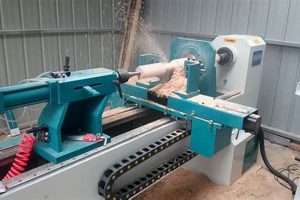
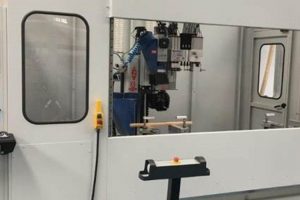
Computer-controlled automation applied to wood processing allows for precise and repeatable execution of complex designs. This technology replaces or augments traditional hand-tool and manual machine operations. An example includes a milling machine guided by digital instructions to carve intricate patterns into cabinet doors, effectively eliminating inconsistencies common in human-operated processes.
The integration of digital control offers significant advantages for woodworking businesses. Increased production speed, improved accuracy, and the capacity to create intricate designs contribute to higher efficiency and reduced material waste. Historically, these machines represent a shift from skilled craftsmanship relying on manual dexterity to automated production based on programmed instructions, enabling mass customization and increased output.
The subsequent sections of this article will delve into specific applications of automated wood processing systems, exploring different types of equipment, their operational principles, and the considerations for selecting the appropriate system for various woodworking tasks. Detailed analysis of software integration and maintenance requirements will also be provided.
Operational Best Practices
The following guidelines are designed to optimize the performance and longevity of automated woodworking equipment. Implementing these practices will contribute to increased efficiency and reduced downtime.
Tip 1: Environmental Control: Maintain a consistent temperature and humidity within the operating environment. Fluctuations can affect the dimensional stability of wood and the accuracy of the machinery.
Tip 2: Regular Maintenance: Adhere to a strict maintenance schedule, including lubrication, cleaning, and inspection of critical components. Preventative maintenance minimizes the risk of unexpected failures.
Tip 3: Software Updates: Ensure the control software and associated drivers are consistently updated. Software updates often include performance enhancements, bug fixes, and security patches.
Tip 4: Tooling Selection: Employ high-quality cutting tools designed for the specific material being processed. Inappropriate tooling can result in poor surface finishes, increased tool wear, and potential damage to the machine.
Tip 5: Material Preparation: Properly prepare the raw material prior to processing. Ensure the material is free from defects, properly seasoned, and accurately dimensioned.
Tip 6: Operator Training: Provide comprehensive training to operators on the safe and efficient operation of the equipment. Well-trained operators are less likely to cause errors or damage the machinery.
Tip 7: Vibration Dampening: Employ vibration dampening techniques, such as mounting the machine on a stable platform, to reduce noise and improve accuracy. Excessive vibration can negatively impact the machine’s performance and lifespan.
Implementing these operational best practices will enhance the efficiency, precision, and lifespan of automated woodworking operations, leading to improved productivity and reduced operational costs.
The subsequent sections will address troubleshooting common operational issues and strategies for maximizing the return on investment in automated woodworking technologies.
1. Precision Cutting

Automated woodworking relies fundamentally on precision cutting, wherein machine-guided tooling executes pre-programmed designs with minimal deviation. This capability represents a core benefit. Deviation from specified dimensions can lead to structural weaknesses in assembled products, increased material waste, and the need for extensive manual correction. Equipment equipped with precise cutting technology mitigates these issues. For instance, in cabinet manufacturing, repeatable accuracy ensures consistent door and drawer fits, thereby improving the final products quality and reducing assembly time.
Precision manifests through several hardware and software components. High-resolution encoders on servo motors provide accurate positional feedback, enabling the control system to adjust tool paths in real-time. Sophisticated CAD/CAM software optimizes tool paths to minimize stress on the material and cutting tools, thus improving cut quality and extending tool life. The rigidity of the machine frame is crucial, as any vibration or flexure can compromise accuracy. Regular calibration and maintenance are essential to maintain the machines designed precision over time. Consider the manufacturing of musical instruments, where minute dimensional variations affect the instrument’s tone and playability; precise cutting is paramount.
In summation, precision cutting is not merely a feature of automated woodworking equipment; it is an integral component defining its effectiveness and value. The capacity to consistently produce parts within tight tolerances drives efficiency, reduces waste, and enhances product quality. Ensuring accurate and reliable cutting operations remains a central challenge, requiring careful selection of equipment, proper maintenance, and skilled operation. Continuous advancements in machine design, control systems, and cutting tool technology will further refine and elevate the role of precise cutting in the woodworking industry.
2. Automated Design

The functionality of computer-controlled woodworking machinery is intrinsically linked to automated design processes. Automated design, typically employing CAD/CAM software, serves as the genesis for all operations executed by the equipment. Without precise digital designs, the machinery remains inert, unable to perform its intended function. The digital design specifies toolpaths, cutting depths, feed rates, and other critical parameters that govern the machining process. The precision and efficiency of the resulting output are therefore directly proportional to the quality and accuracy of the initial design.
Consider the fabrication of intricate furniture components. An automated design system allows a designer to create a complex chair leg featuring elaborate carvings and contours. This design is then translated into machine-readable code, guiding the cutting tool with micrometer precision. Without this automated design-to-production workflow, such intricate parts would require highly skilled manual labor, significantly increasing production time and cost, while introducing potential for human error. Similarly, in the mass production of cabinet doors, automated design enables rapid variations in style and dimension, accommodating customer customization requests with minimal disruption to the production line. This flexibility is unattainable using traditional woodworking methods. The impact of well executed automated design on product turnaround is a competitive advantage that justifies investment in compatible systems.
In essence, automated design forms the intellectual core of automated woodworking machinery. It enables complex geometries, precise replications, and customizable production workflows. While the machinery provides the physical means of execution, it is the design process that dictates the what, how, and why. Challenges remain in optimizing design software for specific materials and tool types, and in training personnel to effectively use these sophisticated tools. The future trajectory of the field will likely see increased integration of AI to assist in design optimization and the development of adaptive toolpaths, further enhancing the synergy between automated design and automated wood processing capabilities.
3. Material Optimization

Material optimization, in the context of computer-controlled woodworking machinery, refers to the efficient and economical use of raw materials during the manufacturing process. This facet represents a critical performance parameter, directly impacting both the cost-effectiveness and environmental sustainability of woodworking operations. Automated machinery, when properly programmed and maintained, minimizes waste by strategically nesting parts within the raw material sheet, optimizing cutting paths, and reducing the likelihood of human error that contributes to material spoilage. For example, specialized software algorithms analyze part geometries and automatically arrange them on a virtual sheet of plywood to minimize offcuts. This software then generates optimized toolpaths that guide the automated cutting equipment, maximizing material yield.
The implementation of sophisticated material optimization strategies translates directly to quantifiable benefits. Woodworking businesses experience reduced raw material expenditures, lower disposal costs associated with waste material, and decreased labor time spent handling and processing unusable scraps. A case study involving a cabinet manufacturer revealed that implementing a optimized software significantly reduced plywood waste by 15%, leading to substantial annual cost savings. Beyond economic advantages, efficient resource utilization aligns with broader sustainability objectives, reducing the demand for raw materials and minimizing the environmental impact of woodworking activities. Practical implications extend to industries reliant on specialty hardwoods or exotic veneers, where material scarcity and high costs necessitate meticulous optimization.
Challenges remain in achieving complete material optimization due to variations in material quality, the complexity of part geometries, and the need for human intervention to address unforeseen issues. Ongoing research focuses on developing more advanced algorithms, integrating sensor technologies for real-time material defect detection, and enhancing user interfaces to facilitate efficient manual adjustments. Effectively harnessing automated woodworking equipment for material optimization represents a strategic imperative for businesses seeking to enhance profitability, minimize environmental impact, and remain competitive in an evolving market landscape. The understanding of this synergy between machinery capabilities and resource management is paramount for businesses focused on sustainable practices and efficient operations.
4. Operational Efficiency

Operational efficiency, in the context of automated woodworking, refers to the ability of a woodworking operation to maximize output while minimizing resource consumption encompassing time, labor, and materials. Its alignment with the capabilities of computer-controlled woodworking machinery (c m c woodworking machinery) is fundamental to achieving competitive advantage in the modern woodworking industry. Effective implementation of this machinery directly correlates to improved efficiency through streamlined processes, reduced waste, and enhanced precision.
- Reduced Cycle Times
The automation inherent in c m c woodworking machinery significantly reduces manufacturing cycle times. Processes that previously required multiple manual steps, such as cutting, shaping, and drilling, can be integrated into a single, automated operation. For instance, a cabinet door that once required individual setup and machining on several different machines can now be completed in a single pass, drastically decreasing the time required per unit. This time saving allows for increased production volume and faster order fulfillment.
- Minimized Material Waste
Computer-controlled systems enable precise material utilization through optimized cutting patterns and nesting algorithms. These systems minimize waste by strategically arranging parts on raw material sheets to maximize yield and reduce offcuts. Additionally, accurate machining reduces the incidence of errors that lead to unusable parts. Minimizing waste directly translates to reduced material costs and improved environmental sustainability.
- Lower Labor Costs
Automated woodworking machinery reduces the reliance on manual labor for repetitive and physically demanding tasks. A single operator can oversee multiple machines, reducing the labor hours required per unit of output. This shift frees up skilled workers to focus on more complex tasks such as design, programming, and quality control, optimizing workforce allocation and improving overall productivity.
- Enhanced Production Flexibility
Computer-controlled systems offer unparalleled flexibility in adapting to changing production requirements. New designs and modifications can be implemented quickly through software updates and program adjustments, without requiring extensive machine reconfiguration or tooling changes. This flexibility enables woodworking operations to efficiently handle customized orders, small batch production runs, and frequent product changes, enhancing responsiveness to market demands.
These facets of operational efficiency, realized through the strategic application of automated woodworking machinery, underscore the transformative impact of technology on the woodworking industry. The ability to produce more with less positions businesses to achieve greater profitability, enhance competitiveness, and adapt to the evolving needs of the marketplace. Integrating these technologies provides long-term advantages and positions companies for sustained success in increasingly demanding environments.
5. Cost Reduction

The integration of computer-controlled woodworking machinery (c m c woodworking machinery) directly impacts cost structures within woodworking operations. The primary driver of cost reduction stems from increased efficiency and reduced waste. Automation enables precise material usage, minimizing scrap and optimizing yields from raw materials. This contrasts sharply with manual methods, where human error and less-precise techniques often result in higher material losses. The reduced need for manual labor, particularly in repetitive tasks, further contributes to decreased operational expenses. The investment in automated equipment, while significant upfront, generates long-term savings through streamlined production.
A practical example is the production of cabinet components. A traditional woodworking shop might require multiple skilled operators to cut, shape, and assemble various cabinet parts. With automated machinery, a single operator can oversee the entire process, from loading raw materials to unloading finished components. This results in a substantial reduction in labor costs per unit produced. Furthermore, the ability to quickly and accurately replicate designs allows for mass customization without the need for extensive retooling or setup, enabling businesses to cater to diverse customer demands while maintaining cost efficiency. Additionally, consider the reduction in errors, and how the need for rework are reduced.
In summary, automated woodworking machinery facilitates cost reduction through a multifaceted approach encompassing material optimization, labor efficiency, and minimized waste. Understanding these mechanisms is crucial for woodworking businesses seeking to enhance profitability and competitiveness. While initial investment and specialized training are necessary, the long-term benefits of reduced operating costs and increased production capacity justify the adoption of this technology in an increasingly competitive market. The ongoing development of software and hardware solutions promises to further optimize these cost-saving benefits, solidifying the role of automated machinery as a cornerstone of modern woodworking operations.
Frequently Asked Questions about Computer-Controlled Woodworking Machinery
The following questions address common concerns and misconceptions regarding computer-controlled woodworking machinery, providing clear and concise answers to aid in informed decision-making.
Question 1: What are the primary benefits of integrating automated equipment into a woodworking operation?
The integration of automated equipment offers several key advantages, including increased production speed, improved accuracy and repeatability, reduced material waste, and enhanced operational efficiency. These benefits collectively contribute to lower production costs and improved profitability.
Question 2: How complex is the programming and operation of computer-controlled woodworking machinery?
The complexity of programming and operation varies depending on the sophistication of the equipment and the intricacy of the designs being produced. Basic operation is typically straightforward, requiring trained operators to load materials and initiate programs. Complex designs may necessitate advanced CAD/CAM software skills for generating precise toolpaths.
Question 3: What is the typical return on investment (ROI) for automated woodworking equipment?
The return on investment varies depending on factors such as initial investment, production volume, material costs, and labor savings. However, businesses that effectively integrate automated equipment typically experience a significant reduction in operating costs and an increase in production capacity, leading to a favorable ROI over time.
Question 4: What are the key maintenance requirements for ensuring the longevity and optimal performance of computer-controlled woodworking machinery?
Key maintenance requirements include regular lubrication of moving parts, inspection and replacement of worn components, cleaning of debris and dust, and periodic calibration to maintain accuracy. Adhering to a strict maintenance schedule is crucial for preventing breakdowns and extending the lifespan of the equipment.
Question 5: How does automated woodworking equipment impact the skills required of woodworking professionals?
Automated equipment shifts the focus from manual dexterity to technical skills. While traditional woodworking skills remain valuable, operators must also possess expertise in CAD/CAM software, machine programming, and troubleshooting. This necessitates ongoing training and professional development for woodworking professionals.
Question 6: What are the primary considerations when selecting automated woodworking machinery for a specific application?
Key considerations include the type of materials being processed, the size and complexity of the parts being produced, the required level of precision, the available floor space, and the budget. Conducting a thorough needs assessment is essential for selecting equipment that aligns with specific operational requirements.
In essence, while the move to computer-controlled equipment requires investment and training, the improvements in efficiency, waste reduction, and product turnaround offer substantial returns.
The subsequent section of this article will delve into case studies illustrating the successful integration of automated woodworking machinery in various woodworking sectors.
Conclusion
The preceding exploration of computer-controlled woodworking machinery has elucidated its transformative impact on the woodworking industry. Key points include enhanced precision, automated design capabilities, optimized material utilization, increased operational efficiency, and significant cost reductions. These factors collectively contribute to improved profitability and competitiveness for businesses that strategically integrate this technology.
Adopting c m c woodworking machinery necessitates careful consideration of initial investment, training requirements, and maintenance protocols. However, the long-term benefits derived from streamlined operations and reduced waste position businesses for sustained success in an increasingly demanding market landscape. Continued advancements in automation, software integration, and machine design promise further refinements and efficiencies, solidifying the critical role of automated solutions in modern woodworking operations.