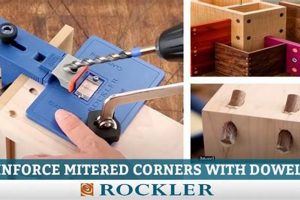
The creation of implements for shaping wood, constructed by individuals rather than purchased commercially, represents a significant aspect of woodworking. These self-fabricated instruments can range from simple hand tools like mallets and marking gauges to more complex devices such as jigs and specialized clamps. A common example is a customized workbench designed to meet specific project requirements, built using readily available lumber and hardware.
Constructing these implements offers several advantages, including cost savings, customization, and enhanced understanding of tool mechanics. Historically, many woodworking tools were crafted by the woodworkers themselves due to limited access to commercially produced alternatives. This practice fostered ingenuity and resourcefulness, leading to innovative solutions for specific woodworking challenges. The ability to create personalized tools directly tailored to the user’s needs often results in increased efficiency and precision.
The following sections will delve into specific categories of these shop-built woodworking aids, exploring design considerations, material selection, and construction techniques. Furthermore, it will highlight the role of these implements in promoting safety and improving the overall woodworking experience. This will provide practical guidance for those interested in augmenting their workshop capabilities through self-sufficiency.
Guidance for Fabricating Woodworking Aids
The successful creation of implements for shaping wood requires careful planning and execution. The following tips offer guidance for those undertaking such projects.
Tip 1: Prioritize Safety: Implement robust safety measures during fabrication. Wear appropriate personal protective equipment, including eye protection and respiratory masks, particularly when working with power tools or adhesives.
Tip 2: Accurate Measurement and Layout: Precise measurements and clear layouts are crucial. Use high-quality measuring tools and marking devices to ensure accuracy and minimize errors during construction. Employ templates or patterns when replicating shapes or components.
Tip 3: Material Selection is Paramount: Choose materials appropriate for the intended application. Consider factors such as strength, durability, resistance to moisture, and ease of workability. Hardwoods like maple or oak are often suitable for components requiring structural integrity.
Tip 4: Employ Sound Joinery Techniques: Utilize strong and reliable joinery methods to assemble components. Mortise-and-tenon, dovetail, or rabbet joints offer superior strength compared to simple butt joints. Ensure accurate fit and proper adhesive application.
Tip 5: Focus on Functionality: Prioritize functionality over aesthetics. Design tools and jigs that effectively address specific woodworking tasks. Prototype designs and test them thoroughly before finalizing construction.
Tip 6: Consider Ergonomics: Design tools that are comfortable and easy to use. Optimize handle shapes, sizes, and orientations to minimize strain and fatigue during extended use. Adjust tool dimensions to suit the user’s physical characteristics.
Tip 7: Implement Durable Finishes: Apply protective finishes to enhance durability and resistance to wear. Consider using oil-based finishes, varnishes, or epoxy coatings to protect the wood from moisture, scratches, and abrasion.
Adherence to these guidelines increases the likelihood of producing effective and durable woodworking implements. This approach maximizes the benefits of creating shop-built tools, including cost savings and customization.
The subsequent section will address common pitfalls encountered during the construction of these implements and offer strategies for mitigating these challenges, further enhancing the likelihood of success.
1. Functionality

Functionality serves as the primary determinant of value in the realm of self-fabricated woodworking implements. The effectiveness of a shop-built tool is inextricably linked to its ability to perform its intended task reliably and efficiently. Achieving optimal functionality requires careful consideration of design, material selection, and construction techniques.
- Task-Specific Design
Design considerations must directly address the specific woodworking task the implement is intended to perform. A marking gauge, for example, should be designed to produce consistent and accurate markings, featuring a sharp cutting edge and a stable, adjustable fence. A poorly designed marking gauge, regardless of aesthetic appeal, compromises precision and diminishes its practical value.
- Ergonomic Considerations
Functionality extends beyond simply performing the task; it includes user comfort and efficiency. An ergonomically designed hand tool, such as a hand plane or chisel, minimizes strain and fatigue during extended use. Handle shape, size, and weight distribution should be optimized for comfortable grip and effective force application. Failure to address ergonomic factors can result in reduced productivity and increased risk of injury.
- Efficiency and Precision
A functional woodworking implement should enhance efficiency and improve the precision of woodworking operations. A well-designed jig for cutting dovetails, for example, facilitates repeatable and accurate cuts, significantly reducing the time required to complete the task. An inefficiently designed jig, conversely, can hinder workflow and compromise the quality of the joint.
- Durability and Reliability
Functionality is closely tied to the implement’s ability to withstand repeated use and maintain its performance over time. Robust construction, utilizing durable materials and sound joinery techniques, is essential for ensuring long-term reliability. A poorly constructed tool that quickly degrades or fails under stress loses its functionality and requires frequent repair or replacement.
The facets of task-specific design, ergonomic considerations, efficiency and precision, and durability and reliability collectively define the functionality of these implements. Ultimately, the success of “diy homemade woodworking tools” hinges on their ability to deliver tangible improvements in the woodworking process, enhancing both the quality and efficiency of the work produced.
2. Materials

Material selection exerts a profound influence on the performance, longevity, and safety of shop-fabricated woodworking tools. The properties of the chosen materials directly dictate the tool’s suitability for its intended purpose. Careful consideration of material characteristics is therefore paramount in the construction process.
- Wood Species Selection
The selection of wood species dictates the tool’s structural integrity and resistance to wear. Hardwoods such as maple, oak, and hickory offer superior durability for components subjected to high stress, such as mallet heads or vise jaws. Softer woods, such as pine or fir, may be suitable for jigs or fixtures where strength is less critical. Proper species selection ensures the tool withstands the rigors of regular use.
- Metal Properties and Applications
Metal components within shop-built tools often require specific properties to function effectively. High-carbon steel, known for its hardness and edge retention, is suitable for cutting edges in marking gauges or plane blades. Mild steel offers adequate strength for structural components like clamp bodies or jig frames. Aluminum provides a lightweight alternative for components where portability is a concern. Matching the metal type to the application ensures optimal performance and prevents premature failure.
- Fasteners and Adhesives
The selection of fasteners and adhesives significantly impacts the structural integrity of assembled tools. Screws, bolts, and rivets provide mechanical fastening strength, while adhesives bond components together for added stability. Epoxy resins offer superior strength and moisture resistance compared to traditional wood glues. Proper fastener and adhesive selection ensures the tool remains structurally sound under load.
- Recycled and Repurposed Materials
The incorporation of recycled or repurposed materials can reduce costs and promote sustainable practices in the construction of shop-built tools. Discarded metal scraps can be fashioned into custom clamps or jigs. Reclaimed wood can be used for workbenches or storage solutions. Mindful utilization of salvaged materials minimizes waste and provides cost-effective alternatives to purchasing new materials.
In essence, informed material selection constitutes a cornerstone of successful shop-built tool construction. By carefully considering the properties of various materials and matching them to the specific requirements of each component, woodworkers can create durable, functional, and cost-effective implements that enhance their woodworking capabilities.
3. Precision
Precision constitutes a critical factor in the creation and utilization of shop-built woodworking implements. The accuracy with which these tools are designed, constructed, and employed directly impacts the quality of the finished product and the efficiency of the woodworking process.
- Accurate Measurement and Marking
The foundation of precision lies in accurate measurement and marking. Shop-built measuring tools, such as marking gauges and rulers, must be calibrated to ensure reliable results. Inaccurate measurements propagate errors throughout the construction process, leading to misaligned joints and compromised structural integrity. Employing high-quality measuring instruments and verifying their accuracy are essential for achieving precise outcomes.
- Repeatability and Consistency
Precision also encompasses repeatability and consistency. Jigs and fixtures designed to perform repetitive tasks, such as cutting dovetails or routing dados, must consistently produce identical results. Variability in the jig’s construction or setup introduces inconsistencies in the finished product. Careful attention to detail and adherence to established procedures are necessary for achieving repeatable and consistent results.
- Tool Calibration and Maintenance
Maintaining precision requires regular tool calibration and maintenance. Shop-built tools, like any other woodworking implements, are subject to wear and tear over time. Saw blades dull, cutting edges lose their sharpness, and adjustments drift. Regular maintenance, including sharpening, cleaning, and recalibration, ensures that tools continue to operate within acceptable tolerances. Neglecting maintenance compromises accuracy and reduces the tool’s effectiveness.
- Material Stability and Tolerances
Precision is also influenced by the stability of the materials used in tool construction. Wood is susceptible to changes in moisture content, which can affect its dimensions. Metal components expand and contract with temperature fluctuations. These material properties must be taken into account when designing and constructing tools to minimize the impact of environmental factors on accuracy. Adhering to appropriate tolerances and allowing for material movement ensures dimensional stability and maintains precision over time.
The interrelationship between accurate measurement, repeatability, tool maintenance, and material stability underscores the importance of precision in shop-built woodworking implements. By prioritizing accuracy and consistency throughout the design, construction, and utilization phases, woodworkers can maximize the effectiveness of these tools and achieve high-quality results in their woodworking projects.
4. Safety

The construction and use of shop-fabricated woodworking implements introduce inherent safety considerations that must be addressed proactively. Unlike commercially manufactured tools, these implements may lack standardized safety features and undergo rigorous testing protocols. Consequently, the individual constructing the tool bears the responsibility for ensuring its safe operation. The absence of robust safety measures in self-made tools can result in increased risk of injury, emphasizing the critical need for meticulous design and construction practices.
Numerous examples illustrate the potential hazards associated with inadequately designed or constructed woodworking aids. A poorly built jig for a router, if not securely clamped or constructed from sufficiently durable materials, can fail catastrophically during operation, resulting in projectile debris and potential injury. Similarly, a homemade sharpening jig that lacks proper stability can lead to uncontrolled movement of the tool being sharpened, posing a risk of cuts or abrasions. The selection of appropriate materials and the implementation of sound engineering principles are crucial for mitigating these risks and ensuring operator safety.
In summary, safety must be integrated as a fundamental component in the design and construction of “diy homemade woodworking tools.” A comprehensive understanding of potential hazards, coupled with the application of sound engineering principles and meticulous attention to detail, are essential for minimizing the risk of injury and ensuring the safe and effective utilization of shop-fabricated implements. Ignoring safety protocols can lead to serious consequences, underscoring the importance of prioritizing safety above all else when engaging in these activities.
5. Durability

The longevity of “diy homemade woodworking tools” is intrinsically linked to the concept of durability. The ability of these implements to withstand repeated use, resist wear and tear, and maintain their functionality over an extended period directly influences their value and practicality within a woodworking setting. Without adequate durability, shop-fabricated tools become a liability, requiring frequent repair or replacement, thereby negating the cost-saving benefits often associated with their creation. The selection of appropriate materials, the application of sound construction techniques, and the implementation of protective finishes contribute significantly to the overall durability of these tools.
Numerous examples illustrate the importance of durability in the context of “diy homemade woodworking tools”. A shop-built workbench, constructed from dimensionally unstable lumber and employing weak joinery, will quickly become unserviceable under the stresses of daily use. Conversely, a workbench fabricated from seasoned hardwood, utilizing robust joinery methods and protected with a durable finish, will provide years of reliable service. Similarly, a marking gauge crafted from soft, easily dented metal will soon lose its accuracy and require replacement, whereas a marking gauge constructed from hardened steel will maintain its precision over time. The selection of durable materials and sound construction practices are, therefore, paramount for ensuring the long-term utility of these tools.
In conclusion, durability is a fundamental attribute of successful “diy homemade woodworking tools.” By prioritizing material selection, construction techniques, and protective finishes, woodworkers can create implements that withstand the rigors of regular use, maintain their functionality over time, and provide a lasting contribution to their woodworking endeavors. The absence of durability compromises the tool’s effectiveness and negates the economic and practical advantages associated with shop-fabricated implements, emphasizing the critical importance of considering this factor throughout the design and construction process.
6. Customization

Customization stands as a central tenet in the philosophy and practice of constructing implements for shaping wood. The ability to tailor tools and accessories to specific tasks, individual preferences, and unique workshop environments represents a primary driver for pursuing self-fabrication over purchasing commercially available alternatives. This capacity for personalization extends beyond mere aesthetics, influencing functionality, ergonomics, and overall efficiency.
- Tailored Ergonomics
One prominent aspect of customization lies in the ability to adapt tool dimensions and features to accommodate individual physical characteristics and working styles. Handle sizes, shapes, and orientations can be modified to optimize grip, reduce strain, and enhance control. A small-handed woodworker, for instance, can create a chisel with a slimmer handle profile than that typically found on mass-produced models, leading to improved comfort and precision. Similarly, a left-handed woodworker can construct tools specifically configured for left-handed operation, addressing a common limitation of commercially available implements.
- Task-Specific Optimization
Another significant dimension of customization involves tailoring tools to the precise requirements of particular woodworking tasks. A custom-built jig for cutting dovetails, for example, can be designed to accommodate specific wood thicknesses and joint geometries, surpassing the versatility of generic, adjustable jigs. This level of task-specific optimization allows for increased efficiency, improved accuracy, and the creation of joinery that would be difficult or impossible to achieve with standard tools.
- Material Adaptation
The customization process also extends to the selection and utilization of materials. Woodworkers can choose specific wood species for handles based on their aesthetic preferences, durability requirements, and tactile qualities. Similarly, they can repurpose scrap materials or salvaged components to create unique and cost-effective tools. This level of material customization allows for the expression of individual style and resourcefulness, while simultaneously reducing waste and promoting sustainability.
- Integration with Workshop Environment
Shop-built tools and accessories can be customized to seamlessly integrate with the unique layout and infrastructure of a particular workshop. A custom-built workbench, for instance, can be designed to fit a specific space, incorporate specialized storage solutions, and accommodate the woodworker’s preferred workflow. This integration with the workshop environment enhances efficiency, minimizes clutter, and creates a more personalized and productive workspace.
These customizable aspects underscore the value of creating personalized instruments for woodworking. The ability to tailor implements to individual needs and preferences fosters creativity, improves efficiency, and enhances the overall woodworking experience, distinguishing shop-built tools from their mass-produced counterparts.
Frequently Asked Questions
The following addresses common inquiries and misconceptions regarding the construction and use of shop-fabricated implements for shaping wood. These questions are designed to provide clarity and guidance to those interested in exploring this aspect of woodworking.
Question 1: Are self-fabricated woodworking tools inherently less safe than commercially manufactured alternatives?
The safety of such instruments is contingent upon the skill, knowledge, and diligence of the individual constructing them. Commercially manufactured tools undergo rigorous testing and adhere to established safety standards. The onus falls upon the builder to ensure the instrument meets or exceeds these standards through careful design, material selection, and construction techniques. Neglecting safety considerations can indeed render these implements more hazardous.
Question 2: Is it possible to achieve professional-grade precision with self-fabricated woodworking tools?
Achieving professional-grade precision is possible but requires meticulous attention to detail and the utilization of high-quality materials. Precision hinges on accurate measurement, precise construction, and proper calibration. The user must possess the requisite skills to create tools that meet stringent accuracy requirements. While challenging, achieving professional-level results is within reach with dedication and expertise.
Question 3: Can constructing woodworking tools be a cost-effective alternative to purchasing them?
Cost savings can be realized, but this depends on several factors. The availability of materials, the complexity of the tool, and the woodworker’s skill level all influence the overall cost. Constructing simple tools from readily available materials can be significantly cheaper than purchasing them. However, complex tools requiring specialized materials or intricate machining may prove more expensive to fabricate than to buy.
Question 4: What are the essential tools required to begin constructing shop-fabricated woodworking implements?
A basic set of woodworking tools is necessary. This typically includes measuring instruments (rulers, squares, marking gauges), cutting tools (saws, chisels), shaping tools (planes, rasps), and fastening tools (screwdrivers, clamps). Access to power tools such as a drill press, bandsaw, and sander can greatly facilitate the construction process. The specific tools required will vary depending on the complexity of the intended project.
Question 5: Are there legal or regulatory restrictions on constructing and using self-fabricated woodworking tools?
Generally, no. However, if such tools are intended for commercial use or resale, they may be subject to specific regulations or liability considerations. It is advisable to consult with legal professionals to ensure compliance with all applicable laws and regulations. The individual is solely responsible for ensuring safe usage.
Question 6: Where can individuals find reliable plans and instructions for constructing shop-fabricated woodworking tools?
Numerous resources exist, including woodworking books, magazines, online forums, and instructional videos. It is crucial to critically evaluate the source of information and ensure that the plans are accurate, comprehensive, and promote safe construction practices. Consulting multiple sources and verifying the accuracy of the information is recommended.
The above offers a summary of common concerns. Careful consideration during planning contributes to project success.
The subsequent section transitions to recommended resources.
DIY Homemade Woodworking Tools
The exploration of diy homemade woodworking tools reveals a complex interplay of functionality, material science, precision engineering, safety protocols, durability considerations, and personalized customization. Constructing one’s own implements offers considerable advantages, including cost savings, tailored ergonomics, and task-specific optimization. However, it simultaneously demands a heightened awareness of safety risks, adherence to rigorous construction standards, and a commitment to continuous refinement.
The creation of diy homemade woodworking tools, therefore, represents more than simply an exercise in woodworking. It embodies a philosophy of self-reliance, resourcefulness, and a deep engagement with the craft. Continued exploration and rigorous testing of these implements contribute to improved woodworking practices and enhanced safety standards within the craft. Such endeavors underscore the enduring significance of ingenuity in woodworking.