



Devices used to securely hold frame components together during assembly and glue drying in woodworking operations are essential tools. These tools apply pressure evenly to ensure tight joints and prevent warping, resulting in robust and aesthetically pleasing finished products. For instance, when constructing a picture frame or a cabinet door, these devices are crucial for maintaining squareness and alignment.
The use of such tools provides multiple benefits, including improved accuracy, enhanced structural integrity, and reduced assembly time. Historically, woodworkers relied on rudimentary versions of these tools; however, contemporary designs incorporate adjustable features, allowing for application to a wide variety of frame sizes and shapes. This evolution reflects a commitment to efficiency and precision in woodworking practices.
The following sections will delve into various types of these tools, outlining their specific applications, advantages, and disadvantages. Furthermore, proper techniques for employing these tools will be discussed, along with guidelines for selecting the most suitable options based on project requirements and budget considerations. Understanding these aspects is critical for achieving professional-quality results in woodworking projects.
Tips for Effective Frame Assembly
The following tips outline best practices for utilizing clamping devices during frame construction. Proper technique is critical for achieving square, durable, and visually appealing finished products.
Tip 1: Ensure Squareness Before Clamping: Before applying any pressure, verify the frame is perfectly square using a precision square. Adjust components until the corners align at 90 degrees. Clamping a non-square frame will only exacerbate the problem.
Tip 2: Use Corner Reinforcements: Employ corner reinforcements, such as corner blocks or miter keys, to strengthen joints, particularly when working with softwoods or creating large frames. These reinforcements minimize the risk of joint failure under stress.
Tip 3: Apply Even Pressure: Avoid overtightening. Excessive pressure can damage the wood fibers or distort the frame. Strive for firm, even pressure at all corners to ensure consistent glue adhesion.
Tip 4: Protect Wood Surfaces: Place protective pads, such as softwood blocks or felt, between the clamping jaws and the wood surface to prevent indentation or marring of the finish.
Tip 5: Alternate Clamping Points: When using multiple devices, alternate the clamping points to distribute pressure evenly across the frame. This prevents localized stress and minimizes the risk of warping.
Tip 6: Allow Adequate Drying Time: Adhere to the adhesive manufacturer’s recommended drying time before removing the clamping devices. Premature removal can compromise the integrity of the joints.
Tip 7: Choose the Appropriate Clamp Type: Select the appropriate type of clamp based on the frame’s size and shape. Corner clamps are ideal for mitered corners, while band clamps are suitable for irregular shapes. Using the correct tool significantly enhances efficiency and precision.
Adhering to these guidelines promotes accurate and durable frame construction, leading to professional-quality results. Diligence in these steps will significantly reduce the likelihood of structural weaknesses and aesthetic imperfections.
The subsequent section will explore common challenges encountered during frame assembly and offer solutions for overcoming these obstacles.
1. Joint Alignment

Joint alignment is paramount in frame construction, directly impacting the structural integrity and aesthetic appeal of the finished product. Accurate alignment ensures proper load distribution, prevents stress concentrations, and provides a seamless visual transition between frame components. Clamping devices are instrumental in achieving and maintaining this alignment during the adhesive setting process.
- Mitered Corner Precision
Achieving tight, gap-free mitered corners necessitates precise alignment before clamping. Even slight misalignments can result in visible gaps, weakened joints, and a compromised aesthetic. Specialized miter clamps are designed to apply pressure evenly across the mitered joint, ensuring consistent contact and optimal glue adhesion. The accuracy of the initial alignment dictates the effectiveness of the clamping process.
- Tenon and Mortise Integrity
In frame construction employing tenon and mortise joinery, accurate alignment is critical for maximizing the joint’s strength. Clamping devices secure the tenon within the mortise, ensuring a tight fit and preventing movement during glue drying. Misalignment can lead to a weakened joint, reducing the frame’s overall structural capacity. Proper alignment also facilitates even distribution of stress across the joint, prolonging its lifespan.
- Squareness Maintenance
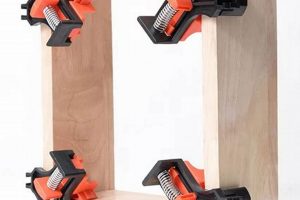
Maintaining squareness throughout the frame assembly process is essential for functionality and visual appeal. Clamping devices, particularly corner clamps, assist in holding the frame at a perfect 90-degree angle. Loss of squareness results in skewed frames, rendering them unsuitable for their intended purpose. Continuous monitoring of squareness during clamping is necessary to correct any deviations before the adhesive sets.
- Surface Plane Consistency
Maintaining consistent surface planes across adjoining frame members requires careful alignment during clamping. Variations in surface height can create unsightly ridges or uneven transitions. Clamping devices provide the necessary pressure to bring all components into a single plane, resulting in a smooth and uniform surface. Proper alignment ensures that subsequent finishing operations, such as sanding and painting, are simplified and yield superior results.
The aforementioned facets demonstrate the fundamental relationship between joint alignment and the application of clamping devices in frame construction. Achieving precise alignment is not merely an aesthetic consideration; it is a structural necessity. Effective utilization of clamping devices ensures that the desired alignment is maintained throughout the assembly process, resulting in strong, durable, and visually appealing frames. The selection of appropriate clamping methods and meticulous attention to detail are crucial for achieving optimal results.
2. Pressure Distribution

Consistent pressure across all joints during the adhesive curing phase is critical to the structural integrity of framed structures. Frame clamps are the primary tool for applying this pressure. Uneven pressure results in weak or failing joints, compromising the overall strength and longevity of the assembly. Therefore, understanding and achieving proper pressure distribution is fundamental to effective woodworking using these tools.
- Clamp Placement and Spacing
The positioning and quantity of clamps directly influence pressure distribution. Insufficient clamps lead to concentrated pressure points, potentially damaging the wood fibers, while excessive spacing leaves areas with inadequate clamping force. Optimal clamp placement involves strategic positioning near joints and along frame members to ensure uniform compression. A general guideline is to space clamps no more than six inches apart for most frame projects.
- Clamp Jaw Profile and Contact Area
The shape and surface area of the clamp jaws determine the effectiveness of pressure transfer to the wood. Flat, wide jaws distribute force over a larger area, reducing the risk of indentation or crushing. Conversely, narrow or contoured jaws can concentrate pressure on specific points, potentially causing damage. The selection of clamps with appropriate jaw profiles is essential for achieving even pressure distribution, especially when working with softer wood species.
- Adjustable Pressure Mechanisms
Clamps featuring adjustable pressure mechanisms, such as ratcheting or screw-driven designs, allow for precise control over the applied force. This is particularly important when working with delicate materials or complex frame geometries. The ability to modulate pressure prevents overtightening, which can distort the frame, while also ensuring sufficient force for proper joint adhesion. Consistent monitoring and adjustment of clamp pressure are necessary to maintain uniform compression throughout the curing process.
- Use of Cauls and Protective Pads
Cauls, rigid boards or blocks placed between the clamp jaws and the workpiece, enhance pressure distribution by spreading the force over a wider area. Protective pads, such as cork or felt, prevent direct contact between the clamp jaws and the wood surface, minimizing the risk of marring or indentation. The strategic use of cauls and protective pads ensures that pressure is applied evenly and without causing damage to the wood fibers, thereby optimizing joint strength and aesthetic quality.
The aforementioned aspects highlight the intricate relationship between pressure distribution and the effective application of frame clamps. Achieving consistent and controlled pressure is not merely a matter of tightening the clamps; it requires careful consideration of clamp placement, jaw profile, adjustment mechanisms, and the use of auxiliary tools. The result of diligent application of these principles is a strong, aesthetically pleasing, and enduring framed structure, fulfilling the goals of the woodworking endeavor.
3. Material Compatibility
The effectiveness of tools designed for frame construction hinges significantly on material compatibility. The interaction between clamping devices and the properties of the wood being used dictates the success of the joint and the integrity of the overall frame. Hardwoods, softwoods, and manufactured wood products exhibit varying degrees of density, elasticity, and porosity, each necessitating a tailored approach to clamping pressure and technique. Failure to account for these variations can result in damage to the wood, compromised joints, and diminished structural integrity. For example, applying excessive clamping pressure to a softwood like pine can crush the wood fibers, weakening the joint. Conversely, insufficient pressure on a dense hardwood like maple may not achieve adequate adhesion, leading to joint failure over time. The selection of appropriate clamping accessories, such as cauls and padding, further mediates the interaction between the clamp and the material, minimizing the risk of damage.
The adhesive used in conjunction with clamping devices also plays a critical role in material compatibility. Different adhesives exhibit varying strengths and bonding characteristics with different wood species. For instance, polyvinyl acetate (PVA) glue is generally suitable for hardwoods and softwoods, while polyurethane adhesives offer superior performance with engineered wood products like MDF or particleboard. Furthermore, the clamping pressure must be commensurate with the adhesive’s requirements for proper curing and bonding. Excessive pressure can squeeze out too much adhesive, while insufficient pressure may prevent proper contact between the wood surfaces. An informed understanding of both the wood’s properties and the adhesive’s characteristics is essential for achieving optimal results in frame construction.
In conclusion, material compatibility is an indispensable consideration in frame construction. The selection of appropriate tools, clamping pressure, and adhesives must be carefully aligned with the specific properties of the wood being used. Ignoring this critical aspect can lead to compromised structural integrity, aesthetic imperfections, and premature failure of the framed structure. Attention to detail and a thorough understanding of material properties are essential for achieving professional-quality results and ensuring the longevity of woodworking projects.
4. Clamp Selection

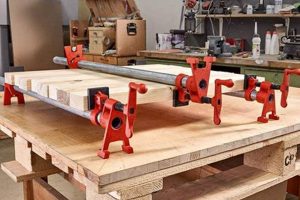
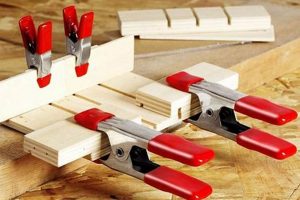
The selection of appropriate clamping devices is integral to successful frame construction. This process is not arbitrary; rather, it necessitates a comprehensive understanding of the project’s requirements, including frame size, material type, joint configuration, and desired precision. Inadequate clamp selection results in compromised structural integrity, aesthetic imperfections, and increased assembly time. Conversely, judicious clamp selection facilitates efficient, accurate, and robust frame assembly, contributing directly to the overall quality of the finished product. For example, employing lightweight spring clamps for a large, heavy frame would likely result in insufficient pressure, leading to weak joints. Alternatively, utilizing heavy-duty pipe clamps on a delicate picture frame could damage the wood fibers.
Further analysis reveals that clamp selection is influenced by several interrelated factors. Frame size dictates the necessary clamping capacity and reach. Material type, as previously discussed, impacts the required clamping pressure and the need for protective cauls or padding. Joint configuration, whether mitered, mortise-and-tenon, or butt joint, necessitates specific clamp types designed to apply pressure effectively to the joint. Miter clamps, band clamps, and corner clamps are examples of specialized tools designed for particular joint types. Furthermore, the desired precision level influences the choice between adjustable and fixed-pressure clamps. Adjustable clamps provide greater control over the clamping force, minimizing the risk of over-tightening or under-tightening.
In conclusion, effective clamp selection is a critical component of frame construction, directly influencing the strength, durability, and visual appeal of the finished product. Challenges in this area arise from a lack of understanding of the interrelation between frame requirements and clamp characteristics. However, with careful consideration of factors such as frame size, material type, joint configuration, and desired precision, practitioners can make informed decisions, optimizing the assembly process and achieving professional-quality results. This understanding is essential for anyone involved in frame construction, from hobbyists to professional woodworkers.
5. Assembly Sequencing
Proper ordering of assembly steps is crucial for effective application of frame clamps and achieving desired outcomes in woodworking. Deviations from optimal sequencing can lead to compromised structural integrity, misaligned components, and inefficient use of resources, ultimately impacting the final product’s quality and longevity. Therefore, a deliberate and well-planned assembly sequence is integral to successful frame construction.
- Dry Fitting and Pre-Clamping
Prior to adhesive application, dry fitting frame components is essential. This involves assembling the frame without glue to verify proper fit and alignment. During this phase, clamps are used to temporarily hold the pieces together, allowing for adjustments and identification of potential issues before the permanent bond is established. Dry fitting with clamps minimizes errors and ensures accurate alignment during final assembly.
- Adhesive Application and Initial Clamping
Following dry fitting, adhesive is applied to the joint surfaces. The sequence in which adhesive is applied and clamps are engaged is critical. Applying adhesive to all joints simultaneously and then attempting to clamp the entire frame can result in uneven distribution and premature drying. Instead, applying adhesive to a section of the frame and immediately clamping it before moving to the next section ensures optimal adhesion and alignment.
- Corner Clamping and Squareness Verification
Corner clamps are frequently employed to maintain squareness during frame assembly. The sequence in which these clamps are applied is important. Typically, opposite corners are clamped first to establish the overall shape and then intermediate clamps are added to ensure uniform pressure distribution and prevent warping. Continuous verification of squareness using a precision square is essential throughout this phase.
- Progressive Tightening and Monitoring
After initial clamp placement, a progressive tightening sequence is employed. This involves gradually increasing the clamping pressure across all joints, rather than fully tightening one clamp at a time. Progressive tightening distributes stress evenly across the frame, minimizing the risk of distortion or joint failure. Continuous monitoring of alignment and joint tightness is crucial throughout the curing process. Any necessary adjustments should be made before the adhesive sets completely.
The aforementioned facets underscore the critical relationship between assembly sequencing and the effective use of frame clamps. Each step, from dry fitting to progressive tightening, contributes to the overall strength, alignment, and aesthetic quality of the finished frame. Adhering to a well-defined and carefully executed assembly sequence is fundamental to achieving professional results in woodworking projects that rely on frame clamps.
Frequently Asked Questions
This section addresses common inquiries regarding the use of clamping devices in frame construction, providing concise and informative answers to enhance understanding and improve woodworking practices.
Question 1: What are the key considerations when selecting clamps for frame construction?
Clamp selection is dictated by frame size, material type, joint configuration, and desired precision. Larger frames necessitate clamps with greater capacity; delicate materials require clamps with adjustable pressure mechanisms to prevent damage; and specialized clamps are available for mitered, mortise-and-tenon, and other joint types.
Question 2: How does clamping pressure impact joint strength in frame construction?
Optimal clamping pressure is crucial for maximizing joint strength. Insufficient pressure prevents proper adhesive bonding, while excessive pressure can damage the wood fibers. The correct pressure ensures tight joints and optimal adhesive performance, contributing to the structural integrity of the frame.
Question 3: What is the significance of maintaining squareness during frame clamping?
Maintaining squareness is essential for ensuring that the finished frame is functional and aesthetically pleasing. Loss of squareness results in skewed frames unsuitable for their intended purpose. Corner clamps and continuous monitoring with a precision square are recommended to prevent deviations.
Question 4: How can woodworkers prevent clamp-induced damage to wood surfaces?
Protective pads, such as cork or felt, should be placed between the clamp jaws and the wood surface to prevent indentation or marring. Additionally, employing cauls distributes pressure more evenly, minimizing the risk of concentrated force on specific areas.
Question 5: What role does assembly sequencing play in successful frame clamping?
A well-planned assembly sequence ensures efficient and accurate frame construction. Dry fitting, progressive tightening, and strategic clamp placement contribute to optimal alignment, pressure distribution, and overall structural integrity. Deviations from an optimal sequence can lead to misalignment and weakened joints.
Question 6: How does material compatibility affect the choice of clamps and clamping techniques?
Material compatibility dictates the required clamping pressure and the need for protective measures. Softwoods are more susceptible to damage from excessive pressure, while hardwoods may require greater clamping force to achieve adequate bonding. The selected clamp type should be appropriate for the specific wood species being used.
Mastery of these elements is crucial for producing robust and aesthetically appealing frames. Careful attention to clamp selection, pressure management, and assembly sequencing leads to consistent and professional results.
The following section will provide a comparative analysis of different types of clamps commonly used in frame construction.
Conclusion
This exploration has underscored the essential role of devices in frame construction. From joint alignment to pressure distribution, assembly sequencing, material compatibility, and appropriate tool selection, each factor significantly contributes to the structural integrity and aesthetic quality of the finished frame. Understanding these interrelated elements facilitates refined woodworking practices, ultimately leading to durable and visually appealing results.
The ongoing pursuit of enhanced precision and efficiency in woodworking necessitates a continued focus on optimizing the utilization of these clamping devices. Diligent application of the principles outlined herein provides a foundation for achieving consistently high-quality outcomes in frame construction projects. Mastery of these devices is paramount for any woodworker seeking to elevate the craftsmanship and longevity of their work.
![Top-Rated: Best Quick Clamps for Woodworking Projects [2024] | Step-by-Step Guides, Tools & Inspiration to Build Beautiful Wooden Decor on a Budget](https://woodfromhome.com/wp-content/uploads/2026/04/th-264-300x200.jpg "Top-Rated: Best Quick Clamps for Woodworking Projects [2024] Step-by-Step Guides, Tools & Inspiration to Build Beautiful Wooden Decor on a Budget")