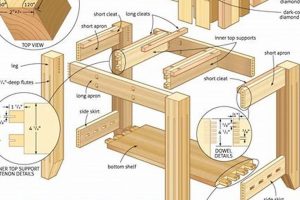
The creation of a wooden surface designed for food preparation represents a common and accessible entry point into the realm of woodworking. These items serve a practical purpose in the kitchen, providing a stable platform for slicing, chopping, and dicing ingredients. A simple example includes a rectangular board constructed from maple, cherry, or walnut, offering a durable and aesthetically pleasing surface for culinary tasks.
The importance of crafting such an item extends beyond mere functionality. It provides an opportunity to develop essential woodworking skills, such as measuring, cutting, joining, and finishing. Furthermore, the creation of a personalized food preparation surface allows for a degree of customization and self-expression, transforming a utilitarian object into a handcrafted piece. Historically, these items have been essential kitchen tools, evolving from simple hewn planks to more refined and decorative forms.
The following sections will delve into various aspects of constructing this type of project, including material selection, design considerations, essential tools and techniques, and finishing processes. This exploration aims to equip the reader with the knowledge and understanding required to successfully undertake this satisfying woodworking endeavor.
Essential Considerations for Construction
The following tips provide critical guidance for the successful fabrication of a durable and aesthetically pleasing wooden food preparation surface. Attention to these details will enhance both the functionality and longevity of the finished product.
Tip 1: Material Selection is Paramount: Hardwoods such as maple, cherry, and walnut are generally preferred due to their density and closed grain structure. These properties contribute to resistance against moisture absorption and bacterial growth. Avoid softwoods like pine, as they are too porous and may harbor bacteria more readily.
Tip 2: Grain Orientation Influences Stability: End-grain construction, where the end of the wood fibers is exposed, offers superior resistance to knife marks and is less prone to warping. Edge-grain orientation is a suitable alternative, providing a balance of durability and visual appeal. Avoid face-grain orientation, as it is the weakest and most susceptible to damage.
Tip 3: Precise Joinery Ensures Longevity: Secure and well-executed joints are crucial for structural integrity. Butt joints reinforced with glue and clamps are acceptable for simpler designs, while more intricate designs may benefit from mortise and tenon or dovetail joinery for added strength.
Tip 4: Proper Gluing Techniques are Essential: Utilize a food-safe, waterproof glue specifically designed for wood. Apply glue evenly to all joining surfaces and ensure adequate clamping pressure during the curing process. Excess glue should be removed before it dries to prevent unsightly blemishes.
Tip 5: Sanding is Critical for a Smooth Finish: Begin with a coarse grit sandpaper (e.g., 80-grit) to remove imperfections and gradually progress to finer grits (e.g., 220-grit) for a smooth, tactile surface. Sand with the grain to avoid creating scratches.
Tip 6: Food-Safe Finishes are Non-Negotiable: Apply a food-grade mineral oil or beeswax finish to protect the wood and enhance its natural beauty. Avoid using varnishes, lacquers, or other finishes that are not specifically approved for contact with food.
Tip 7: Regular Maintenance Prolongs Lifespan: Clean with mild soap and water after each use. Periodically apply a fresh coat of mineral oil or beeswax to maintain moisture levels and prevent cracking.
Adhering to these guidelines will result in a durable, hygienic, and visually appealing food preparation surface that will serve its purpose for years to come. The careful selection of materials, precise construction methods, and appropriate finishing techniques are all critical components of a successful woodworking project.
The subsequent sections will explore specific design ideas and advanced woodworking techniques that can elevate this fundamental kitchen tool into a personalized and artistic creation.
1. Wood Selection

The selection of wood directly dictates the functionality, longevity, and safety of a food preparation surface. Careful consideration of wood properties is paramount when undertaking such woodworking projects, ensuring the final product meets intended use requirements and safety standards.
- Hardness and Density
Wood hardness, measured by the Janka hardness scale, influences the surface’s resistance to knife marks and wear. Denser woods, such as hard maple or jatoba, withstand repeated cutting and chopping better than softer woods. Higher density also contributes to reduced liquid absorption, inhibiting bacterial growth and extending the board’s lifespan. Wood hardness and density directly impact the board’s capacity to withstand heavy use without excessive damage. Choosing wood species with adequate hardness and density is, therefore, critical for creating durable, long-lasting cutting boards.
- Pore Size and Grain Structure
The pore size and grain structure affect liquid absorption and the potential for bacterial contamination. Closed-grain hardwoods like maple and cherry possess smaller pores than open-grain woods like oak or ash. Smaller pores minimize liquid penetration, thereby reducing the risk of bacteria harboring within the wood. The direction of the grain (end-grain vs. edge-grain) impacts the surface’s resistance to knife marks. End-grain surfaces, with their self-healing properties, are less prone to visible cut marks and associated contamination risks. Wood grain is significant in determining liquid intrusion and ensuring hygiene.
- Toxicity and Food Safety
Certain wood species contain natural oils or compounds that may be toxic or allergenic. Black walnut, for example, can be allergenic to some individuals. It is crucial to select wood species known to be non-toxic and safe for food contact. Additionally, any finishes applied to the surface must be food-safe, as they can leach into food if improperly chosen. Choosing materials certified safe for use in food-handling situations is essential when working with wood.
- Stability and Warp Resistance
Wood stability refers to its ability to resist warping, cracking, or movement due to changes in humidity and temperature. Woods with low shrinkage rates, such as teak or mahogany, are less prone to dimensional changes and are, therefore, better suited for environments with fluctuating humidity levels. A stable food preparation surface maintains a flat, even surface, minimizing the risk of uneven cutting and ensuring consistent performance over time. Resistance to warping ensures structural stability and safety in the kitchen.
These considerations underscore the importance of informed wood selection in relation to woodworking projects centered on food preparation surfaces. Employing appropriate wood enhances the usability, safety, and longevity of the resulting item, thus elevating a simple kitchen tool into a durable and aesthetically pleasing creation.
2. Grain Orientation

Grain orientation, referring to the direction of wood fibers relative to the cutting surface, significantly affects the durability, hygiene, and aesthetic qualities of any food preparation surface resulting from woodworking projects. The orientation impacts the susceptibility of the surface to knife marks, moisture absorption, and overall structural integrity. For instance, end-grain construction, where the wood fibers run perpendicular to the cutting surface, offers a resilient surface less prone to visible scoring because the knife blade slides between fibers rather than severing them. This self-healing property also reduces the risk of bacteria accumulating in knife grooves. Conversely, face-grain orientation, with fibers running parallel to the surface, presents a less desirable outcome, as the wood is more easily damaged and prone to warping.
The practical implications of understanding grain orientation are far-reaching. In the production of professional-grade food preparation surfaces, end-grain construction is often prioritized despite its increased complexity and cost. This choice reflects a commitment to longevity and hygiene, aligning with the demands of commercial kitchens and discerning home cooks. Edge-grain orientation, positioned between end-grain and face-grain, provides a compromise, offering a balance between durability and cost-effectiveness. However, even with edge-grain orientation, careful attention must be paid to selecting pieces with consistent grain direction to minimize the risk of warping and cracking over time.
Ultimately, the choice of grain orientation in woodworking projects intended as food preparation surfaces should be driven by a consideration of the intended use, budget, and aesthetic preferences. While end-grain surfaces represent the gold standard for durability and hygiene, edge-grain construction can provide a viable alternative for less demanding applications. Ignoring grain orientation can lead to a product that is prone to damage, difficult to clean, and aesthetically unappealing. Therefore, awareness and informed decision-making regarding grain direction are crucial to achieving a successful outcome.
3. Joint Strength
Joint strength is a critical determinant of the longevity and structural integrity of wooden food preparation surfaces. It refers to the ability of the connections between individual wood pieces to withstand stress and resist separation under load, moisture, and repeated use. Inadequate joint strength leads to warping, cracking, and eventual failure of the board.
- Glue Selection and Application
The type of adhesive employed significantly affects joint strength. Food-safe, waterproof glues, such as those based on polyvinyl acetate (PVA) or polyurethane, are necessary. Proper application involves even distribution across joint surfaces, sufficient clamping pressure during curing, and adherence to the manufacturer’s recommended drying time. Insufficient glue or inadequate clamping results in weak bonds and premature joint failure. Examples of consequences include separation of the boards after repeated washing or chopping, resulting in gaps and potential contamination.
- Joint Design and Geometry
The physical design of the joint influences its load-bearing capacity. Simple butt joints, while easy to execute, offer minimal surface area for adhesion and are inherently weak. More complex joints, such as mortise and tenon, dovetails, or finger joints, increase the surface area and provide mechanical interlocking, enhancing strength. The selection of appropriate joint geometry should be based on the expected stress levels and the properties of the wood being used. For example, end-grain joints inherently lack gluing surface and require mechanical reinforcement. Mortise and tenon joints are often more suitable for resisting shear forces, while dovetails excel at resisting tension.
- Wood Preparation and Surface Cleanliness
Proper preparation of wood surfaces prior to jointing is crucial for maximizing bond strength. Surfaces must be clean, dry, and free of dust, grease, or other contaminants that inhibit adhesion. Planing or sanding surfaces immediately before gluing ensures optimal contact and penetration of the adhesive into the wood fibers. Failure to properly prepare surfaces can lead to weak bonds and premature joint failure. For instance, the presence of sawdust on the surface can create a barrier, preventing the glue from properly bonding with the wood fibers.
- Clamping Pressure and Curing Environment
The application of adequate clamping pressure during the glue curing process ensures proper alignment of the joint and promotes intimate contact between the adhesive and wood surfaces. Insufficient pressure leads to gaps and weak bonds. Conversely, excessive pressure can starve the joint of glue. The curing environment, including temperature and humidity, also influences the adhesive’s performance. Adhering to the manufacturer’s recommendations for clamping pressure and curing environment is essential for achieving optimal joint strength. For example, polyurethane glues require moisture to cure properly, so maintaining appropriate humidity levels is important. Variations in clamping pressure or drying conditions may create structural instability.
The interplay between glue selection, joint design, wood preparation, clamping, and environment are directly tied to the long-term structural performance of wooden food preparation surfaces. Neglecting these facets compromises the overall quality and safety of the item. Strong joints enhance the longevity and usability of the finished product and reduce potential health risk.
4. Finish Safety

The selection and application of a finish to wooden food preparation surfaces constitutes a critical step, directly impacting user safety and the suitability of the item for contact with food. The finish acts as a protective barrier, preventing moisture absorption, bacterial growth, and potential contamination of food items. However, not all finishes are created equal; certain substances are inherently unsafe for use on surfaces intended for culinary applications.
- Food-Grade vs. Non-Food-Grade Finishes
The primary distinction lies between finishes specifically formulated and certified for contact with food and those that are not. Food-grade finishes, typically composed of mineral oil, beeswax, or specialized plant-based oils, are non-toxic and do not leach harmful chemicals into food. Conversely, varnishes, lacquers, paints, and other industrial coatings often contain volatile organic compounds (VOCs) and other substances that are hazardous if ingested. In woodworking projects involving food preparation surfaces, the exclusive use of food-grade finishes is paramount to safeguard user health. An example is using a linseed oil and beeswax finish, or a commercial product labeled “food safe,” compared to a polyurethane varnish, which would be an inappropriate choice.
- Potential for Leaching and Migration
Even finishes marketed as “food-safe” can pose a risk if improperly applied or maintained. The potential for leaching, or the migration of finish components into food, exists with all surface coatings. This risk is heightened by exposure to heat, moisture, and acidic substances. Regular maintenance, including reapplication of the finish, is essential to ensure an adequate protective barrier and minimize leaching. Choosing a finish with minimal migration characteristics is crucial. For example, polymerized tung oil forms a durable, water-resistant barrier that reduces the rate of leaching compared to a simple mineral oil application that requires frequent reapplication.
- Allergenicity and Sensitivity
Certain individuals may exhibit allergic reactions or sensitivities to specific finish components. Plant-based oils, such as nut oils, can trigger allergic responses in susceptible individuals. It is, therefore, crucial to consider potential allergenicity when selecting a finish, particularly when catering to individuals with known allergies. Transparent labeling of finish ingredients is essential to facilitate informed decision-making. Examples include avoiding walnut oil finishes for those with nut allergies and clearly labeling any finish containing potential allergens.
- Application Techniques and Curing Times
Proper application techniques and adherence to recommended curing times are critical for ensuring finish safety. Inadequate drying or curing can leave residual solvents or other volatile compounds on the surface, posing a health risk. Multiple thin coats are generally preferred over a single thick coat to promote even drying and minimize the risk of trapped solvents. Following manufacturer’s guidelines for application and curing is essential. One instance of this would be failing to allow sufficient time for a linseed oil finish to fully oxidize, which would result in a sticky surface that is not food-safe.
In summary, the selection and application of a finish represents a vital consideration in all woodworking projects intended for creating food preparation surfaces. Food-grade status, leaching potential, allergenicity, and proper application techniques are all interconnected facets that determine the ultimate safety and suitability of the finished item. Prioritizing these elements contributes to a safe and hygienic culinary experience.
5. Board Thickness

The thickness of a food preparation surface, integral to woodworking projects focused on such items, directly correlates with its stability, durability, and overall functionality. Insufficient thickness compromises the board’s resistance to warping and cracking, particularly under repeated stress from cutting and cleaning. A thin board is more susceptible to deflection, creating an uneven and potentially unsafe cutting platform. Conversely, excessive thickness, while enhancing stability, can increase the board’s weight and unwieldiness, diminishing its usability in a typical kitchen environment. The selection of an appropriate thickness, therefore, becomes a crucial design decision in crafting functional and durable wooden surfaces.
Practical examples demonstrate the impact of board thickness. A thin, decorative board, often less than 0.75 inches thick, may suffice for light tasks such as slicing fruit or cheese but lacks the structural integrity to withstand the rigorous chopping and dicing common in meal preparation. These boards are prone to rapid wear and tear, exhibiting knife marks and surface imperfections relatively quickly. Professional-grade food preparation surfaces, typically ranging from 1.5 to 2 inches in thickness, offer a robust and stable platform capable of enduring heavy use. These thicker boards resist warping and cracking, maintaining a flat cutting surface for extended periods. Intermediate thicknesses, such as 1 to 1.25 inches, provide a compromise between weight, cost, and durability, suitable for most home kitchens. Ultimately, the chosen thickness should reflect the anticipated use and the desired balance between stability and manageability.
The proper determination of thickness in woodworking projects involving food preparation surfaces represents a nuanced balance between structural requirements, ergonomic considerations, and material costs. Neglecting this aspect can lead to a product that is either structurally unsound, aesthetically unpleasing, or impractical for everyday use. By carefully considering the intended function and selecting an appropriate thickness, the craftsman ensures the creation of a durable, safe, and enjoyable cutting surface that will serve its purpose for years to come.
6. Design Style

Design style significantly influences the aesthetic appeal, functionality, and overall value of wooden food preparation surfaces. It extends beyond mere ornamentation, encompassing considerations of form, proportion, and material selection to create a cohesive and purposeful object.
- Form and Shape Considerations
The form of a surface, whether rectangular, circular, or organic, impacts its usability and visual harmony within a kitchen environment. Rectangular shapes offer efficient use of space and ease of storage, while circular forms provide a more ergonomic cutting surface for certain tasks. Organic shapes can introduce a natural, artistic element. The choice of shape should complement the user’s cutting style and the overall aesthetic of the kitchen. For example, a minimalist kitchen might benefit from a sleek rectangular design, while a rustic setting could accommodate a more free-form, naturally edged surface.
- Edge Profile and Detail
The edge profile contributes significantly to both the aesthetic and tactile qualities of a food preparation surface. Sharp edges can present safety hazards and visual discomfort, while rounded or chamfered edges provide a more comfortable grip and a softer appearance. Decorative edge treatments, such as ogee or Roman ogee profiles, can add a touch of elegance and sophistication. The selection of an appropriate edge profile should consider both functional and aesthetic factors. A simple, rounded edge might be suitable for everyday use, while a more elaborate profile could enhance a surface intended for entertaining.
- Material Combination and Inlay
The incorporation of different wood species or materials, such as metal or stone inlays, can create visual interest and enhance the functional properties of a food preparation surface. Combining woods with contrasting colors and grain patterns can add depth and complexity. Metal inlays can provide a durable and hygienic cutting surface for specific tasks. Stone inlays, such as marble or granite, can offer a cool and stable surface for pastry preparation. The strategic use of material combinations and inlays allows for customization and personalization, transforming a functional object into a work of art.
- Surface Texture and Finish Effects
The texture of a food preparation surface, whether smooth, rough, or textured, impacts its tactile qualities and cleaning ease. A smooth, finely sanded surface provides a comfortable and hygienic cutting platform. Textured surfaces can offer improved grip for certain tasks but may be more difficult to clean. The application of different finishes, such as oil, wax, or varnish, can enhance the wood’s natural beauty and provide additional protection. The choice of surface texture and finish effects should consider both functional and aesthetic factors. A smooth, oiled surface might be suitable for general use, while a textured surface with a durable varnish could be ideal for heavy-duty applications.
These design elements are interconnected and collectively contribute to the creation of aesthetically pleasing and functionally superior food preparation surfaces. Skillful integration of these design principles elevates the simple utility of an ordinary item into a piece of woodworking art, thereby adding value and utility to any kitchen setting.
Frequently Asked Questions
The following section addresses common inquiries regarding the construction and maintenance of wooden surfaces designed for food preparation. This aims to provide clarity and guidance to those undertaking such woodworking projects.
Question 1: What wood species are most suitable for woodworking projects involving food preparation surfaces?
Hardwoods with closed-grain structures, such as maple, cherry, and walnut, are generally recommended due to their density, durability, and resistance to moisture absorption. Avoid porous softwoods like pine, as they are more prone to harboring bacteria.
Question 2: Is end-grain construction superior to edge-grain construction for a wooden cutting board?
End-grain construction, where the wood fibers run perpendicular to the cutting surface, offers greater resistance to knife marks and is less likely to dull knife blades. However, it is more labor-intensive and may be more expensive. Edge-grain construction provides a suitable compromise between durability and cost.
Question 3: What type of glue should be used when joining wood pieces for a food preparation surface?
A food-safe, waterproof glue specifically designed for wood is essential. Options include certain polyvinyl acetate (PVA) or polyurethane glues that meet these criteria. Always verify the product label to ensure compliance with food safety standards.
Question 4: What type of finish is safe for use on woodworking projects aimed at creating a cutting board?
Food-grade mineral oil or beeswax is commonly used to protect and enhance wooden surfaces designed for food preparation. These finishes are non-toxic and do not leach harmful chemicals into food. Avoid using varnishes, lacquers, or paints that are not specifically approved for food contact.
Question 5: How often should a wooden cutting board be oiled or waxed to maintain its condition?
The frequency of oiling or waxing depends on the board’s usage and environmental conditions. Generally, regular application every few weeks or months is recommended to prevent drying and cracking. Apply a fresh coat when the surface appears dry or feels rough to the touch.
Question 6: What are the best practices for cleaning and sanitizing a wooden cutting board?
Wash the surface with warm, soapy water after each use. Avoid prolonged soaking or dishwasher use. For sanitizing, a diluted solution of vinegar or hydrogen peroxide can be applied, followed by thorough rinsing. Ensure the board is completely dry before storage.
These answers provide foundational knowledge for crafting safe and durable wooden food preparation surfaces. Adherence to these guidelines will contribute to a successful and long-lasting woodworking endeavor.
The following section will address advanced techniques and design considerations for woodworking projects cutting boards.
Conclusion
This exploration of woodworking projects cutting board has highlighted critical aspects from material selection and grain orientation to joint strength, finish safety, board thickness, and design style. Careful consideration of these factors is paramount in creating functional, durable, and aesthetically pleasing wooden surfaces for food preparation. Prioritizing food-safe materials and construction methods ensures user safety and longevity of the finished item.
The information presented aims to equip woodworkers with the knowledge necessary to undertake these projects successfully. Mastering these techniques elevates a simple kitchen tool into a personalized and enduring creation, contributing to both culinary practice and the craft of woodworking. Continued attention to detail and commitment to quality craftsmanship will ensure the enduring value of such endeavors.