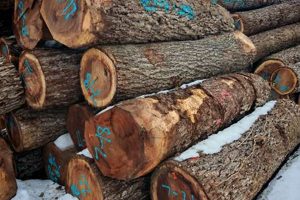
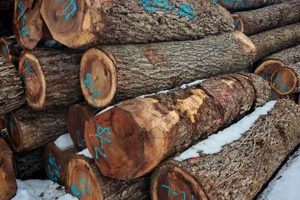
Utilizing lumber with high moisture content presents unique challenges and opportunities within the craft. The presence of significant water within the cellular structure of the material impacts its workability, stability, and long-term performance. An example includes crafting bowls from freshly felled timber, allowing the subsequent drying process to contribute to the final form and character of the piece.
Understanding the properties of green or unseasoned material is vital for achieving desired outcomes. Its pliability allows for techniques like bending and shaping that are difficult or impossible with drier stock. Historically, shipbuilders and wheelwrights extensively relied on this characteristic to create curved components. The dimensional changes occurring during drying, however, necessitate careful consideration to avoid warping, cracking, or joint failure.
This article will delve into specific methods for working with high-moisture-content lumber, including joinery techniques, drying strategies, and appropriate finishing approaches. It will also address the selection of species suitable for this type of fabrication and the tools best suited to handle the demands of the process. Understanding the implications of moisture content is essential for successful outcomes.
Guidance for Using High-Moisture Lumber
This section outlines essential practices for effective utilization of recently harvested or unseasoned timber in woodworking projects. Adherence to these guidelines will mitigate potential issues arising from shrinkage, movement, and susceptibility to fungal growth.
Tip 1: Understand Species Variation: Different tree species exhibit varying degrees of shrinkage during drying. Select species known for dimensional stability and reduced warping tendencies when working with high-moisture-content stock. Research specific wood properties before commencing a project.
Tip 2: Employ Appropriate Joinery: Traditional mortise and tenon joints or dovetails, while robust, may not adequately accommodate the movement associated with drying timber. Consider using pegged mortise and tenon joints or sliding dovetails to allow for controlled shrinkage. Regularly inspect joints for tightness as the wood dries.
Tip 3: Control the Drying Process: Gradual drying is crucial to minimize cracking and warping. Apply end grain sealant to prevent rapid moisture loss from the ends of boards. Stack lumber with stickers to promote air circulation. Monitor moisture content regularly using a moisture meter.
Tip 4: Utilize Green Woodworking Techniques: Explore methods specifically designed for unseasoned materials, such as shave horses and drawknives. These tools excel at shaping and smoothing soft, pliable timber.
Tip 5: Anticipate Movement: Design projects with expansion gaps to accommodate dimensional changes. Avoid rigidly fixing panels or components that will experience significant shrinkage. Consider incorporating floating tenons or breadboard ends to manage movement.
Tip 6: Protect Against Fungal Growth: High-moisture lumber is susceptible to decay. Apply a wood preservative or fungicide, particularly to areas prone to prolonged dampness. Ensure adequate ventilation around projects to promote drying and inhibit fungal activity.
Tip 7: Choose Appropriate Finishes: Select finishes that allow the wood to breathe and continue to dry. Avoid impermeable coatings that trap moisture within the wood. Oil-based finishes or penetrating sealers are often preferable for projects involving high-moisture lumber.
Adopting these strategies enhances the longevity and stability of woodworking endeavors utilizing material with elevated water content. Understanding and accommodating the properties of green or unseasoned wood is fundamental to successful craftsmanship.
Following these tips will serve as a foundation for the remaining sections of this article, where each point will be explored in more detail.
1. Shrinkage considerations

Shrinkage represents a primary concern when utilizing lumber with elevated moisture content in woodworking. The reduction in volume as water evaporates from the wood cells introduces dimensional changes that can compromise the integrity and aesthetics of a project.
- Tangential Shrinkage
Tangential shrinkage, the dimensional change perpendicular to the wood’s growth rings, typically exceeds radial shrinkage. This disparity can lead to cupping or warping, especially in wide boards. Flat-sawn lumber is more susceptible to tangential shrinkage effects than quarter-sawn lumber.
- Radial Shrinkage
Radial shrinkage, occurring along the radius of the tree, is generally less pronounced than tangential shrinkage. However, its cumulative effect can still be significant, particularly in thicker pieces. The interplay between radial and tangential shrinkage dictates the overall stability of the wood.
- Longitudinal Shrinkage
Longitudinal shrinkage, along the length of the grain, is typically minimal. However, it can become relevant when working with short grain or highly figured wood. Restrained longitudinal shrinkage can contribute to internal stresses and subsequent cracking.
- Moisture Content Gradient
Uneven drying leads to moisture content gradients within the wood. The outer layers dry faster than the inner core, creating stress differentials that can cause surface checking or internal splits. Controlling the drying rate is essential for mitigating these gradients.
The interplay of tangential, radial, and longitudinal shrinkage, coupled with potential moisture gradients, directly impacts the structural stability of projects employing lumber with high moisture content. Appropriate joinery and drying strategies are essential to accommodate these dimensional changes and prevent failures in woodworking applications.
2. Joinery adjustments

The utilization of recently felled or unseasoned lumber necessitates modifications to traditional joinery techniques. The inherent presence of elevated moisture levels within the wood structure introduces significant dimensional instability as the material dries. Consequently, joints designed for seasoned wood may fail as the component shrinks, leading to structural compromise. Standard mortise and tenon joints, for instance, might become loose, while rigid dovetails could induce cracking around the joint area. Failure to account for this inherent movement can negate the strength and longevity typically associated with these joinery methods. For example, a table constructed with tightly fitted mortise and tenon joints using timber that is still high in moisture content is highly likely to develop loose joints and potential instability as the wood dries and shrinks over time.
Adaptive joinery strategies focus on accommodating the expected shrinkage. Floating tenons, which allow the tenon to move within the mortise as the wood shrinks, are a common modification. Pegged mortise and tenons, where the tenon is secured with a pin but not glued, allow for controlled movement while maintaining structural integrity. Another approach involves using sliding dovetails, which permit the components to slide relative to each other as they shrink or expand. The selection of specific adjustments depends on the species of wood, the dimensions of the component, and the anticipated degree of shrinkage. Additionally, the careful application of flexible adhesives may contribute to joint stability while allowing for limited movement. Wheelwrights, traditionally working with green wood for wagon wheels, employed specific jointing techniques that embraced the wood’s inevitable shrinkage, resulting in strong and durable wheels despite the initial moisture content.
Understanding the relationship between joint design and lumber moisture content is paramount for successful woodworking outcomes. Incorrect joinery, ignoring potential shrinkage, almost inevitably leads to structural weaknesses. By modifying techniques to accommodate the inevitable movement, a woodworker can harness the inherent workability of unseasoned lumber while mitigating the long-term risks associated with its use. The correct joinery adaptation is not merely a modification; it represents an essential component in the process of working timber with high moisture content.
3. Drying techniques

The controlled removal of moisture from recently felled or unseasoned lumber is fundamentally linked to the success of woodworking projects employing high-moisture-content wood. Without appropriate drying protocols, internal stresses develop within the wood, leading to warping, cracking, and dimensional instability. These defects compromise structural integrity and negate aesthetic appeal. Air drying, a common technique, involves stacking lumber with stickers to promote air circulation, gradually reducing the moisture content over time. Kiln drying, a more accelerated process, utilizes controlled temperature and humidity to achieve targeted moisture levels efficiently. The selection of drying method depends on species, thickness, and end-use requirements. Failure to adequately manage the drying process during woodworking with high-moisture wood directly translates into unacceptable outcomes, rendering the material unusable or structurally unsound. For instance, a furniture maker crafting a table from fresh-sawn oak must implement a carefully managed drying schedule to prevent the tabletop from cupping or splitting during the seasoning process.
Different drying methods have different use cases. Air drying requires significant time, often several months or even years per inch of thickness. However, this slow drying pace reduces the chance of case hardening and internal stresses. Kiln drying can reduce drying time to weeks or even days, but demands expertise and equipment to avoid damaging the wood. Combining methods offers a middle ground; air drying to a certain moisture content followed by kiln drying to the final level is a common and effective approach. The optimal approach depends on a variety of factors. For example, a luthier building a guitar from freshly harvested maple may air dry the wood for several months followed by a period of gentle kiln drying to reach the precise moisture content required for optimal tonal characteristics.
Appropriate drying techniques constitute an inseparable element of the broader practice of woodworking utilizing high-moisture lumber. Ignoring this stage ultimately undermines the integrity and workability of the material, precluding successful project completion. The investment in time, equipment, and knowledge to properly dry lumber is a critical step, determining the ultimate success or failure of any woodworking project reliant on green or unseasoned materials. The challenge lies in striking a balance between minimizing drying time and mitigating potential defects. Ultimately, the proficiency in implementing appropriate drying techniques dictates the long-term quality and durability of woodworking projects featuring recently felled timber.
4. Species selection

The choice of wood species is critical when working with lumber exhibiting high moisture content. Different species possess inherent characteristics that significantly impact their behavior during drying and subsequent performance in woodworking applications. Careful selection mitigates potential issues related to warping, cracking, and overall stability.
- Shrinkage Rates
Different species exhibit varying degrees of shrinkage as they dry. Woods with low shrinkage rates, such as teak or redwood, are less prone to distortion than woods with high shrinkage rates, such as beech or sycamore. Understanding shrinkage coefficients is crucial for predicting dimensional changes.
- Grain Orientation and Stability
Grain orientation influences stability. Quartersawn lumber, with growth rings oriented perpendicular to the face, generally exhibits greater stability than flatsawn lumber. Species with tight, consistent grain patterns tend to be more stable than those with irregular or coarse grain.
- Natural Durability and Decay Resistance
Some species possess natural compounds that resist decay and insect infestation. Cypress, cedar, and redwood are examples of durable woods suitable for outdoor applications or situations where moisture exposure is likely. The presence of these compounds reduces the risk of degradation in high-moisture environments.
- Workability and Drying Characteristics
Certain species are easier to work with when green, while others become challenging as moisture content increases. Softwoods like pine are generally more pliable than hardwoods like oak. Similarly, some species dry more evenly and are less prone to checking or splitting during the drying process.
These factors collectively influence the suitability of various wood types for projects involving unseasoned lumber. Careful evaluation of species-specific properties enhances the likelihood of successful outcomes when working with high-moisture-content wood, minimizing potential complications arising from dimensional instability and susceptibility to decay. For instance, constructing outdoor furniture from green oak may lead to significant cracking and warping, whereas using green cedar offers a much more stable and durable result.
5. Fungal prevention

The presence of elevated moisture content in recently felled or unseasoned lumber creates an environment conducive to fungal growth. Various fungal species thrive in damp conditions, causing degradation of the wood’s cellular structure. This, in turn, compromises its strength, dimensional stability, and aesthetic qualities. Woodworking wet wood, therefore, necessitates proactive fungal prevention measures to maintain the material’s integrity and longevity. Failure to address this biological threat can result in significant structural weakening and the ultimate failure of woodworking projects. A common example involves improperly stored green wood that develops significant fungal decay, rendering it unsuitable for use in furniture construction.
Effective fungal prevention strategies include both chemical and non-chemical approaches. Chemical treatments involve the application of wood preservatives containing fungicides, penetrating the wood and inhibiting fungal growth. These treatments are especially critical for applications where the lumber will be exposed to prolonged dampness or direct contact with soil. Non-chemical strategies center on proper drying and ventilation techniques. Rapid and even drying reduces the window of opportunity for fungal establishment. Furthermore, ensuring adequate air circulation around woodworking projects minimizes moisture accumulation, thereby deterring fungal activity. For example, stacking newly harvested lumber with stickers allows airflow to all surfaces, promoting even drying and inhibiting fungal growth.
Addressing fungal prevention is not merely a precautionary measure but a fundamental aspect of responsible woodworking practices when utilizing high-moisture-content lumber. Overlooking this critical element can negate even the most meticulous joinery and finishing techniques. The effective implementation of fungal prevention strategies safeguards the long-term viability of woodworking projects, protecting the investment of time and materials. Understanding and actively managing the risk of fungal decay is therefore central to successful woodworking when working with green or unseasoned wood.
6. Finishing choices

The selection of appropriate finishes constitutes a critical consideration when working with high-moisture-content lumber. The moisture level within the wood significantly impacts the adhesion, penetration, and overall performance of various finishing products. Incompatibility between finish and moisture content can lead to premature failure, aesthetic defects, and compromised wood protection.
- Breathable Finishes
Penetrating oils and waxes allow for continued moisture evaporation from the wood. These finishes are often preferable for woodworking projects involving high-moisture lumber as they minimize the risk of trapping moisture within the wood, which can lead to fungal growth and dimensional instability. For example, applying linseed oil to a green wood carving allows the wood to dry gradually while providing some protection from the elements.
- Impermeable Coatings
Polyurethane and epoxy finishes form a barrier that restricts moisture movement. Applying these coatings to wood with high moisture content can trap moisture, resulting in blistering, peeling, or cracking of the finish. These finishes are generally unsuitable for recently felled or unseasoned lumber. Consider a scenario where a thick layer of polyurethane is applied to a green wood tabletop; the finish is likely to fail as the wood dries and shrinks.
- Solvent-Based vs. Water-Based Finishes
Solvent-based finishes often penetrate wood more effectively and may offer better adhesion to surfaces with slightly elevated moisture content. Water-based finishes, while environmentally friendly, may not adhere as well to damp wood and may raise the grain, requiring additional sanding. When finishing a bowl turned from green wood, a solvent-based oil finish might provide better initial adhesion than a water-based acrylic.
- UV Protection
Regardless of the finish type, UV protection is vital for exterior applications. Sunlight exposure can accelerate the degradation of both the wood and the finish, leading to discoloration and embrittlement. Incorporating UV inhibitors into the finish or using a topcoat with UV protection helps extend the lifespan of projects exposed to sunlight. A wooden bench made from green wood intended for outdoor use requires a finish with UV protection to prevent premature weathering.
The careful matching of finish characteristics to the moisture content of the wood is essential for achieving durable, aesthetically pleasing results. Ignoring the interaction between finish and moisture can lead to costly repairs and diminished longevity of woodworking projects utilizing recently felled lumber. The long-term success of woodworking projects hinges on selecting finishes compatible with the lumber’s properties and the intended application.
Frequently Asked Questions
This section addresses common inquiries regarding the practice of woodworking with recently felled or unseasoned lumber. The information presented aims to clarify key concepts and provide practical guidance.
Question 1: What defines “wet wood” in woodworking?
Wet wood, in the context of woodworking, refers to lumber that has not been dried or seasoned to reduce its moisture content. This category includes freshly sawn timber and lumber that retains a significant percentage of its original moisture.
Question 2: Why is working with wet wood considered challenging?
The primary challenges stem from the wood’s dimensional instability as it dries. Shrinkage, warping, and cracking are common issues that can compromise the structural integrity and aesthetic appeal of woodworking projects.
Question 3: What are the benefits of woodworking with wet wood?
Benefits include enhanced workability due to the wood’s pliability, making it easier to shape and carve. Additionally, certain techniques, such as steam bending, are more effectively executed with green wood. Lower cost can also be a motivator, since unseasoned lumber is often sold at lower price point.
Question 4: Which wood species are best suited for woodworking with wet wood?
Species with low shrinkage rates and high natural durability are generally preferred. Examples include cedar, cypress, and redwood. Consideration should be given to the intended application and exposure to environmental factors.
Question 5: What joinery techniques are recommended for wet wood?
Joinery methods that accommodate wood movement are essential. Floating tenons, pegged mortise and tenons, and sliding dovetails allow for dimensional changes without compromising joint integrity.
Question 6: How can fungal growth be prevented in woodworking with wet wood?
Proper drying techniques, including air drying with adequate ventilation, are crucial. Wood preservatives containing fungicides can also be applied to inhibit fungal development, particularly in outdoor applications.
In summary, while woodworking with unseasoned lumber presents unique challenges, understanding the material’s properties and implementing appropriate techniques can yield successful and durable results. Attention to species selection, joinery methods, and fungal prevention is paramount.
The following section will provide a case study of a woodworking project completed with green wood, illustrating the principles discussed in this article.
Conclusion
This exploration of woodworking wet wood has underscored the inherent challenges and opportunities presented by unseasoned lumber. Understanding the impact of moisture content on dimensional stability, joinery selection, and fungal prevention is paramount for successful outcomes. Techniques adapted to accommodate shrinkage and promote gradual drying are not merely suggestions but essential requirements for projects utilizing green timber.
The practice of woodworking wet wood demands a commitment to informed craftsmanship and a respect for the material’s dynamic properties. Continued research and adherence to established best practices are crucial for mitigating risks and maximizing the potential of this traditional, yet often misunderstood, approach to woodworking. Future endeavors should prioritize sustainable harvesting practices and the development of innovative drying methods to further enhance the viability of working with unseasoned lumber.